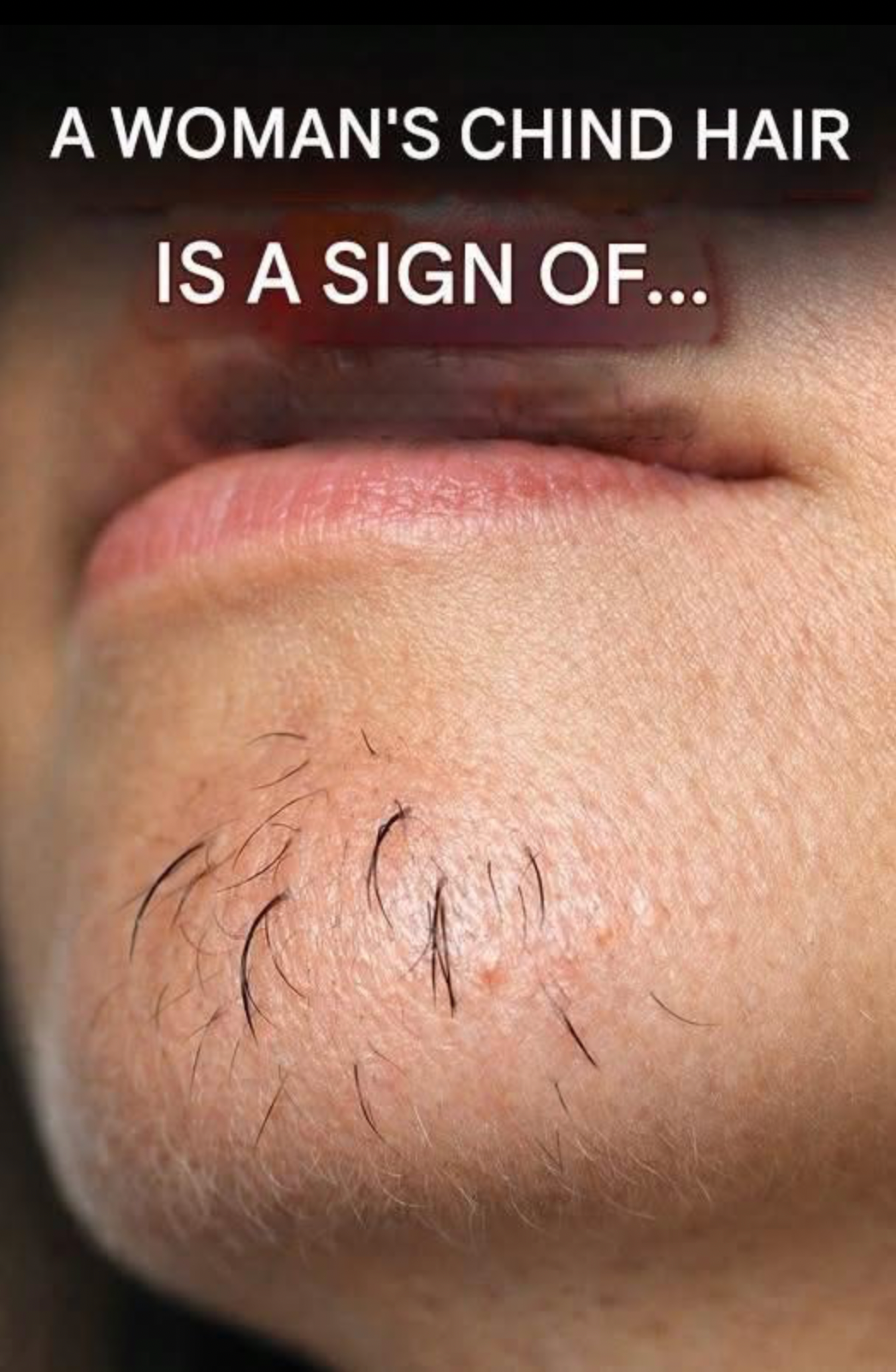
For many women, it happens in exactly the same way. You’re standing in front of the bathroom mirror, perhaps applying moisturizer, brushing your teeth, or getting ready for work, when something catches your eye. You lean in a little closer, tilt your head toward the light, and there it is—a single, dark chin hair that seems to have appeared overnight.
Your first reaction may be surprise, followed by a quick trip to the tweezers. Questions begin racing through your mind. Where did this come from? Why didn’t I notice it yesterday? Is something wrong with my hormones? Will more appear?
If you’ve ever experienced this, you’re certainly not alone. In fact, discovering an occasional chin hair is one of the most common experiences among adult women. While it can feel unexpected or even frustrating, it is often a completely normal part of aging and the body’s natural hormonal changes.
The internet is filled with dramatic claims suggesting that every facial hair is a sign of a serious medical condition. In reality, the answer is usually much more balanced. A single coarse hair—or even a few—does not automatically indicate a health problem. Hair growth is influenced by genetics, hormones, age, ethnicity, and many other factors that vary from person to person.
Understanding why chin hairs appear, when they are considered normal, and when they may warrant a conversation with a healthcare professional can help replace worry with knowledge and confidence.
Why Do Chin Hairs Suddenly Appear?
Although it may seem like a chin hair appeared overnight, the hair follicle has usually been present for years.
Every person has thousands of tiny hair follicles across the face. Many produce fine, nearly invisible hairs known as vellus hairs, often called “peach fuzz.”
Over time, certain follicles may begin producing terminal hairs, which are:
- Darker.
- Thicker.
- Coarser.
- More noticeable.
This change often occurs gradually, even though the hair itself may become visible quite suddenly once it reaches the surface of the skin.
The Role of Hormones
Hormones play an important role in hair growth throughout the body.
Women naturally produce small amounts of androgens, sometimes referred to as “male hormones,” including testosterone. These hormones are completely normal and are present in both women and men, although in different amounts.
Hair follicles respond differently to these hormones depending on:
- Genetics.
- Age.
- Hormone sensitivity.
- Location on the body.
Some follicles become more responsive over time, leading to the growth of coarse hairs on the chin, upper lip, or jawline.
Aging and Hormonal Changes
One of the most common reasons for new chin hairs is simply getting older.
As women age, hormone levels naturally shift.
During perimenopause and menopause, estrogen levels gradually decline while androgen levels decrease more slowly. This changes the balance between these hormones, making facial hair more noticeable in some women.
At the same time, hair on the scalp may become thinner while facial hairs become thicker—a normal part of aging for many people.
Genetics Matter More Than Many People Realize
If your mother, grandmother, sisters, or other close relatives have experienced chin hairs, there’s a good chance you may as well.
Genetics influence:
- Hair color.
- Hair thickness.
- Hair density.
- Growth patterns.
- Follicle sensitivity to hormones.
Some women naturally develop a few coarse facial hairs throughout adulthood without any underlying medical condition.
Ethnicity Can Influence Hair Growth
Normal facial hair patterns vary widely among different populations.
Women from certain ethnic backgrounds may naturally have:
- Darker facial hair.
- Thicker individual hairs.
- More noticeable chin or upper lip hair.
These differences are usually genetic rather than medical.
When Chin Hair Is Usually Normal
Occasional chin hairs are generally considered a normal variation, especially if:
- Only one or a few hairs are present.
- Growth develops gradually over several years.
- Menstrual cycles remain regular (for premenopausal women).
- No other unusual symptoms are present.
- There are similar patterns among family members.
Many women periodically remove a few stray facial hairs without any health concerns.
When You Should Speak With a Healthcare Professional
While occasional chin hairs are common, it is a good idea to seek medical advice if you notice:
- Rapid or excessive facial hair growth.
- Hair appearing suddenly in multiple new areas.
- Irregular or absent menstrual periods (before menopause).
- Severe acne developing at the same time.
- Deepening of the voice.
- Increased muscle mass without explanation.
- Hair loss on the scalp.
- Significant weight gain or difficulty losing weight.
- Other symptoms of hormone imbalance.
These changes do not necessarily indicate a serious condition, but they deserve proper evaluation by a healthcare professional.
Possible Medical Causes
Excess facial hair may sometimes be associated with conditions such as:
Polycystic Ovary Syndrome (PCOS)
PCOS is one of the most common hormonal conditions affecting women of reproductive age. It can be associated with increased androgen levels and symptoms such as irregular periods, acne, difficulty becoming pregnant, and increased facial or body hair.
Menopause
As estrogen levels decline, existing facial hairs may become darker or thicker, and new coarse hairs may appear.
Certain Medications
Some medications may contribute to increased hair growth as a side effect.
Rare Hormonal Disorders
Less commonly, disorders affecting the adrenal glands or ovaries can influence hormone production and hair growth.
Only a healthcare professional can determine whether additional evaluation or testing is needed.
Safe Ways to Remove Chin Hair
There are many effective methods for managing unwanted facial hair.
Tweezing
Tweezing is ideal for one or two isolated hairs.
It removes the hair from the root and can keep the area smooth for several weeks.
Shaving
Contrary to a common myth, shaving does not make hair grow back thicker or darker.
The blunt tip left after shaving may feel coarser, but the hair itself has not changed.
Waxing
Waxing removes multiple hairs from the root at once.
Results generally last several weeks.
Threading
Threading is a precise hair-removal technique commonly used for facial hair.
It works well for small areas.
Hair Removal Creams
Depilatory creams dissolve hair near the skin’s surface.
Products intended specifically for facial use should always be patch-tested first to reduce the risk of irritation.
Laser Hair Removal
Laser treatments can significantly reduce hair growth over time by targeting the pigment within hair follicles.
They tend to work best on darker hair and often require multiple sessions.
Electrolysis
Electrolysis treats individual hair follicles using a tiny probe and electrical current.
It is currently the only FDA-recognized method of permanent hair removal, though several treatment sessions are usually needed.
Myths About Chin Hair
Myth: Plucking one hair causes several more to grow.
Reality: Removing a hair does not create new follicles. If more hairs appear over time, it is usually due to natural hormonal or genetic changes rather than the act of plucking.
Myth: Only older women get chin hairs.
Reality: Chin hairs can appear at any adult age. They are simply more common as hormone levels change over time.
Myth: Shaving makes hair thicker.
Reality: Shaving does not change the thickness, color, or growth rate of hair. The blunt end of a freshly shaved hair may feel stiffer as it grows out, creating the illusion of increased thickness.
Myth: Every chin hair indicates a hormone problem.
Reality: A few isolated coarse hairs are extremely common and often occur without any underlying medical condition.
Caring for Your Skin After Hair Removal
After removing facial hair:
- Wash the area gently.
- Avoid picking at the skin.
- Apply a fragrance-free moisturizer if needed.
- Protect the skin from excessive sun exposure.
- Use clean tweezers or other sanitized tools to reduce the risk of irritation or infection.
Frequently Asked Questions
Why does it seem like the hair appeared overnight?
Facial hair grows slowly beneath the skin before becoming visible. Once it reaches a certain length or catches the light, it may seem as though it suddenly appeared, even though it has been developing for some time.
Is one chin hair normal?
Yes. Finding one or a few coarse chin hairs is very common among adult women and is often related to normal hormonal changes, aging, or genetics.
Should I remove it?
That is entirely a personal choice. Some women prefer to remove stray hairs, while others leave them alone. Neither approach is medically necessary if the hair is not causing discomfort.
Can stress cause chin hair?
Stress can influence hormone levels in complex ways, but it is not usually considered a direct cause of isolated chin hairs. Genetics and age are generally much stronger influences.
When should I see a doctor?
If facial hair appears suddenly in large amounts, is accompanied by irregular menstrual cycles, severe acne, scalp hair loss, or other signs of hormone imbalance, it is wise to discuss your symptoms with a healthcare professional.
Can chin hair be permanently removed?
Laser hair removal can provide long-lasting reduction, while electrolysis is recognized as a permanent method of hair removal for treated follicles. Both procedures typically require multiple treatment sessions.

Welcome to my kitchen!
I’m a passionate home cook and recipe creator who loves turning simple ingredients into delicious, comforting meals that everyone can enjoy. Through this website, I share carefully prepared recipes, practical cooking tips, and easy-to-understand food education to help you feel more confident in the kitchen.
My goal is to make cooking simple, enjoyable, and accessible. Whether you are looking for a quick family dinner, a delicious dessert, healthy meal ideas, or traditional recipes with a modern touch, you’ll find inspiration here.
More Than Just Recipes
I believe that cooking is also a way to learn. That’s why this website is not only about recipes. I also create educational articles about ingredients, cooking techniques, kitchen tips, food preparation, and the stories behind different dishes.
Each article is designed to give you useful knowledge that you can apply in your own kitchen. From understanding how ingredients work together to learning better cooking methods, my aim is to help you become a more confident and creative cook.
My Philosophy
Good food doesn’t always require complicated ingredients or professional equipment. With a little knowledge, patience, and creativity, simple ingredients can become something truly special.
I believe in sharing recipes that are practical, clearly explained, and enjoyable to make. I also love exploring new flavors while appreciating traditional cooking and the recipes passed down through generations.
Thank you for visiting my kitchen and being part of this food-loving community. I hope my recipes and articles inspire you to cook, learn, experiment, and most importantly, enjoy every bite!
Happy cooking!