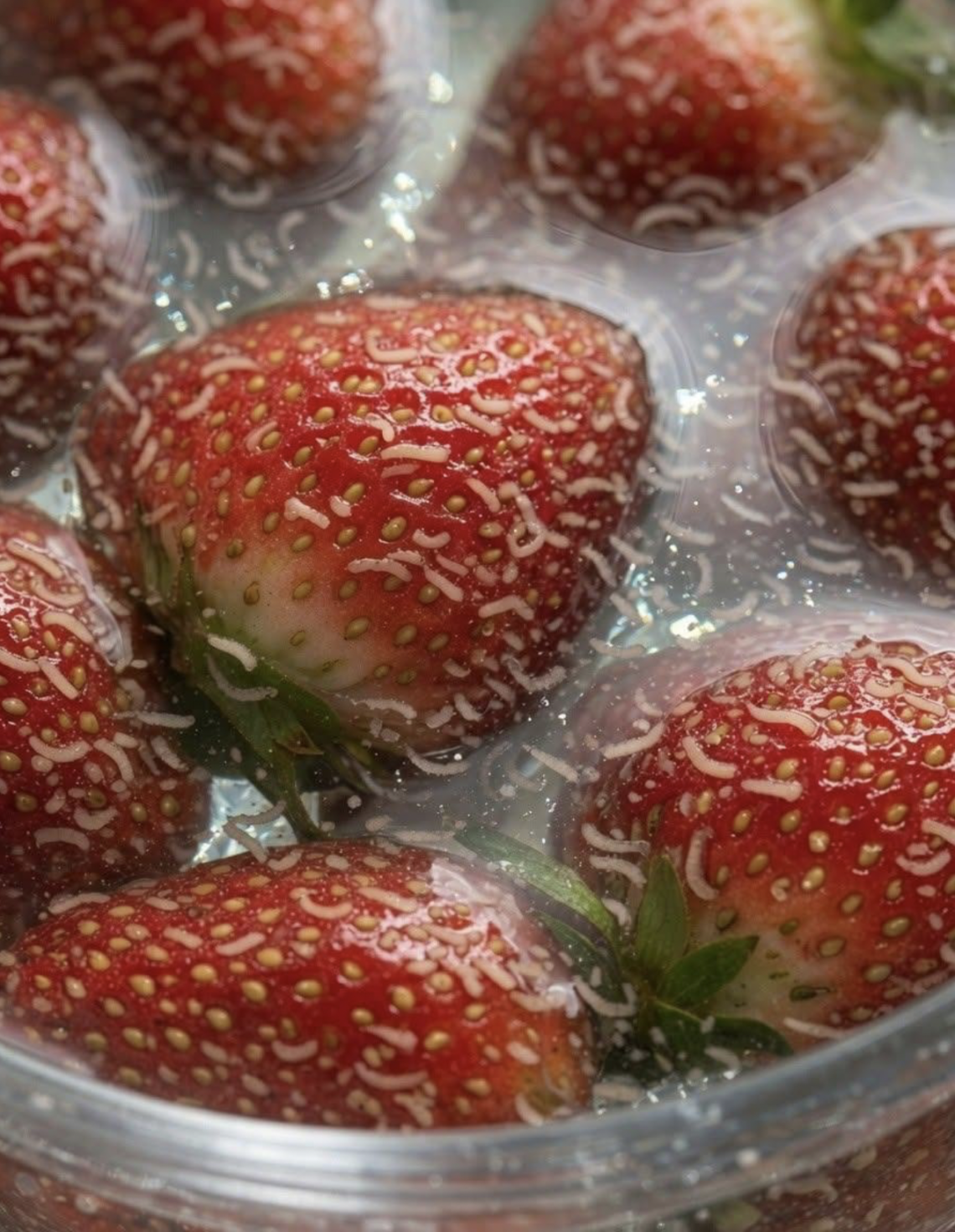
Few things capture the taste of summer quite like a bowl of fresh strawberries. Their bright red color, sweet aroma, and juicy flavor make them a favorite for everything from breakfast parfaits and smoothies to homemade pies and fresh fruit salads. But for some people, that excitement has turned into surprise after seeing videos online showing tiny white creatures emerging from strawberries soaked in salt water.
If you’ve ever watched one of these videos—or experienced it yourself—you may have wondered whether your strawberries are still safe to eat. It’s an understandable reaction. Seeing tiny organisms moving inside fruit can be unsettling, especially when you were just about to enjoy a healthy snack.
The good news is that there is usually no reason to panic. The phenomenon has been widely discussed by gardeners, farmers, entomologists, and food safety experts, and while the videos can look alarming, they often lack important context. Understanding what these tiny creatures are, why they may be present, and how to properly wash strawberries can help you enjoy your fruit with confidence instead of worry.
Fresh produce grows outdoors, where it naturally shares its environment with insects, birds, soil microorganisms, rain, wind, and countless other parts of nature. Farmers work hard to protect crops, but it is impossible to create a completely insect-free environment in open fields. Occasionally, tiny insects or larvae may be found on or inside some fruits, particularly berries with thin skins.
Learning why this happens—and what simple steps you can take before eating fresh berries—can make the experience much less concerning.
Why Tiny Creatures Sometimes Appear in Strawberries
Strawberries grow close to the ground in open fields and gardens, making them accessible to many insects throughout the growing season.
One insect that has received particular attention is the spotted wing drosophila, a small species of fruit fly. Unlike many fruit flies that lay eggs only in damaged or overripe fruit, this species can lay eggs inside healthy, ripening soft fruits by piercing the skin with a specialized egg-laying organ. The eggs can hatch into tiny white larvae while the fruit is still developing.
However, not every strawberry contains larvae. In fact, most commercially sold strawberries are free from noticeable insect activity thanks to careful farming practices, pest monitoring, and quality control. The videos circulating online often focus on unusual examples rather than what people typically find in everyday fruit.
What Is the Salt Water Test?
The salt water test became popular after videos showed strawberries soaking in a bowl of water mixed with salt. In some cases, tiny white larvae appeared to emerge from the fruit after several minutes.
The basic idea is that the salt solution may irritate certain small insects or larvae, causing them to move out of hiding.
Although many people perform this test out of curiosity, it’s important to understand its limitations:
- Not every strawberry will produce visible insects.
- Tiny particles of pulp or seeds can sometimes be mistaken for larvae.
- Salt water is not a guaranteed method for detecting or removing every insect.
- Seeing movement does not necessarily indicate a widespread problem with the fruit.
The test has become popular largely because of social media, where dramatic videos often spread quickly without explaining the full scientific context.
Are Strawberries Still Safe to Eat?
For most healthy people, strawberries remain a safe and nutritious food when they are properly handled and washed.
Food safety agencies generally recommend washing fresh produce under clean running water before eating it. This helps remove dirt, dust, pesticide residues, and many microorganisms that may be present on the surface.
Finding an occasional tiny insect on fresh produce is not unusual. Because fruits and vegetables are grown outdoors, complete elimination of all naturally occurring insects is impossible. Modern farming, harvesting, and packing methods greatly reduce their presence, but they cannot guarantee that every berry will be entirely free of insect contact.
If strawberries show signs of mold, spoilage, or an unpleasant odor, they should be discarded. Otherwise, washing them thoroughly before eating is usually all that is needed.
The Best Way to Wash Strawberries
Proper washing is simple and effective.
Step 1: Wait Until You’re Ready to Eat
Avoid washing strawberries immediately after bringing them home.
Extra moisture can encourage mold growth during storage.
Instead, wash only the amount you plan to eat.
Step 2: Leave the Green Caps Attached
Keep the leafy tops on while washing.
Removing them first can allow water to enter the berry, making it softer and reducing flavor.
Step 3: Rinse Under Cool Running Water
Place the strawberries in a colander or hold them gently under cool running tap water.
Rub each berry lightly with your fingers to remove surface dirt.
Step 4: Dry Thoroughly
Spread the berries on a clean towel or paper towel.
Pat them dry gently before storing or serving.
Dry fruit generally keeps longer than fruit left wet.
Should You Use Vinegar?
Many people choose to soak strawberries briefly in a diluted vinegar solution.
A common mixture is:
- 1 part white vinegar
- 3 parts water
After soaking for a few minutes:
- Rinse thoroughly with clean water.
- Dry completely before refrigerating.
Some people find this method helpful for reducing surface microbes and extending freshness, although it is not required for routine washing.
Should You Use Salt Water?
Some people use salt water after seeing online videos.
While it may cause certain tiny insects to emerge if they are present, it is not considered a standard food safety recommendation.
If you choose to try it:
- Rinse the berries thoroughly afterward to remove any salty residue.
- Avoid soaking for extended periods, which can affect texture and flavor.
Why Fresh Produce Naturally Contains Insects
It’s easy to forget that fruits and vegetables begin their lives outdoors.
Unlike packaged foods produced entirely indoors, strawberries grow in fields where they interact with nature every day.
Their environment includes:
- Bees and other pollinators.
- Butterflies.
- Ladybugs.
- Spiders.
- Earthworms.
- Tiny flies.
- Birds.
- Rain.
- Wind.
- Soil microorganisms.
The presence of occasional insects is simply part of agriculture and does not necessarily indicate poor farming practices.
Choosing the Best Strawberries
When shopping, look for berries that are:
- Bright red.
- Firm.
- Dry.
- Free from mold.
- Fresh-smelling.
- With healthy green leaves still attached.
Avoid berries that appear:
- Mushy.
- Leaking juice.
- Covered with mold.
- Strongly fermented.
- Severely bruised.
Proper Storage Tips
To keep strawberries fresh longer:
- Refrigerate them soon after purchase.
- Store them unwashed until ready to eat.
- Keep them in a breathable container.
- Remove damaged berries promptly to slow the spread of mold.
- Avoid sealing them tightly while excess moisture is present.
Nutritional Benefits of Strawberries
Despite recent online discussions, strawberries remain one of the most nutritious fruits available.
They provide:
- Vitamin C.
- Fiber.
- Folate.
- Potassium.
- Antioxidants.
- Natural plant compounds called polyphenols.
Regularly eating a variety of fruits, including strawberries, supports a balanced diet and overall health.
Common Myths About Strawberry Videos
Myth: Every strawberry contains worms.
Reality: Most strawberries do not contain visible larvae. Viral videos often feature unusual examples and do not represent every package of berries.
Myth: Salt water guarantees clean fruit.
Reality: Salt water may cause some insects to emerge if present, but it is not an officially recommended or foolproof cleaning method.
Myth: Store-bought strawberries are unsafe.
Reality: Commercial strawberries are grown under agricultural standards and are generally safe to eat when properly washed.
Myth: Organic strawberries never contain insects.
Reality: Both conventionally grown and organically grown strawberries are cultivated outdoors and may occasionally encounter insects.
Frequently Asked Questions
Why do some videos show tiny white larvae coming out of strawberries?
Some soft fruits can occasionally contain larvae from certain fruit flies that lay eggs in ripening fruit. The salt solution may encourage movement, making the larvae easier to see. However, these videos usually highlight uncommon situations rather than what most consumers experience.
Should I stop eating strawberries?
No. Strawberries remain a nutritious and widely enjoyed fruit. Washing them properly before eating is the most important step for routine food preparation.
Is vinegar better than plain water?
For everyday use, rinsing strawberries under cool running water is generally sufficient. Some people choose to use a diluted vinegar solution to reduce surface microbes or help prolong freshness, but it is optional.
Does washing remove every insect or microorganism?
No cleaning method removes every possible microorganism from fresh produce. However, thorough washing under running water significantly reduces dirt and many contaminants on the surface.
Can I wash strawberries as soon as I buy them?
It’s usually better to wait until you’re ready to eat them. Washing before storage can add moisture that encourages mold growth.
Are strawberries still one of the healthiest fruits?
Absolutely. Strawberries are rich in vitamin C, antioxidants, fiber, and other nutrients, making them an excellent addition to a healthy diet.

Welcome to my kitchen!
I’m a passionate home cook and recipe creator who loves turning simple ingredients into delicious, comforting meals that everyone can enjoy. Through this website, I share carefully prepared recipes, practical cooking tips, and easy-to-understand food education to help you feel more confident in the kitchen.
My goal is to make cooking simple, enjoyable, and accessible. Whether you are looking for a quick family dinner, a delicious dessert, healthy meal ideas, or traditional recipes with a modern touch, you’ll find inspiration here.
More Than Just Recipes
I believe that cooking is also a way to learn. That’s why this website is not only about recipes. I also create educational articles about ingredients, cooking techniques, kitchen tips, food preparation, and the stories behind different dishes.
Each article is designed to give you useful knowledge that you can apply in your own kitchen. From understanding how ingredients work together to learning better cooking methods, my aim is to help you become a more confident and creative cook.
My Philosophy
Good food doesn’t always require complicated ingredients or professional equipment. With a little knowledge, patience, and creativity, simple ingredients can become something truly special.
I believe in sharing recipes that are practical, clearly explained, and enjoyable to make. I also love exploring new flavors while appreciating traditional cooking and the recipes passed down through generations.
Thank you for visiting my kitchen and being part of this food-loving community. I hope my recipes and articles inspire you to cook, learn, experiment, and most importantly, enjoy every bite!
Happy cooking!