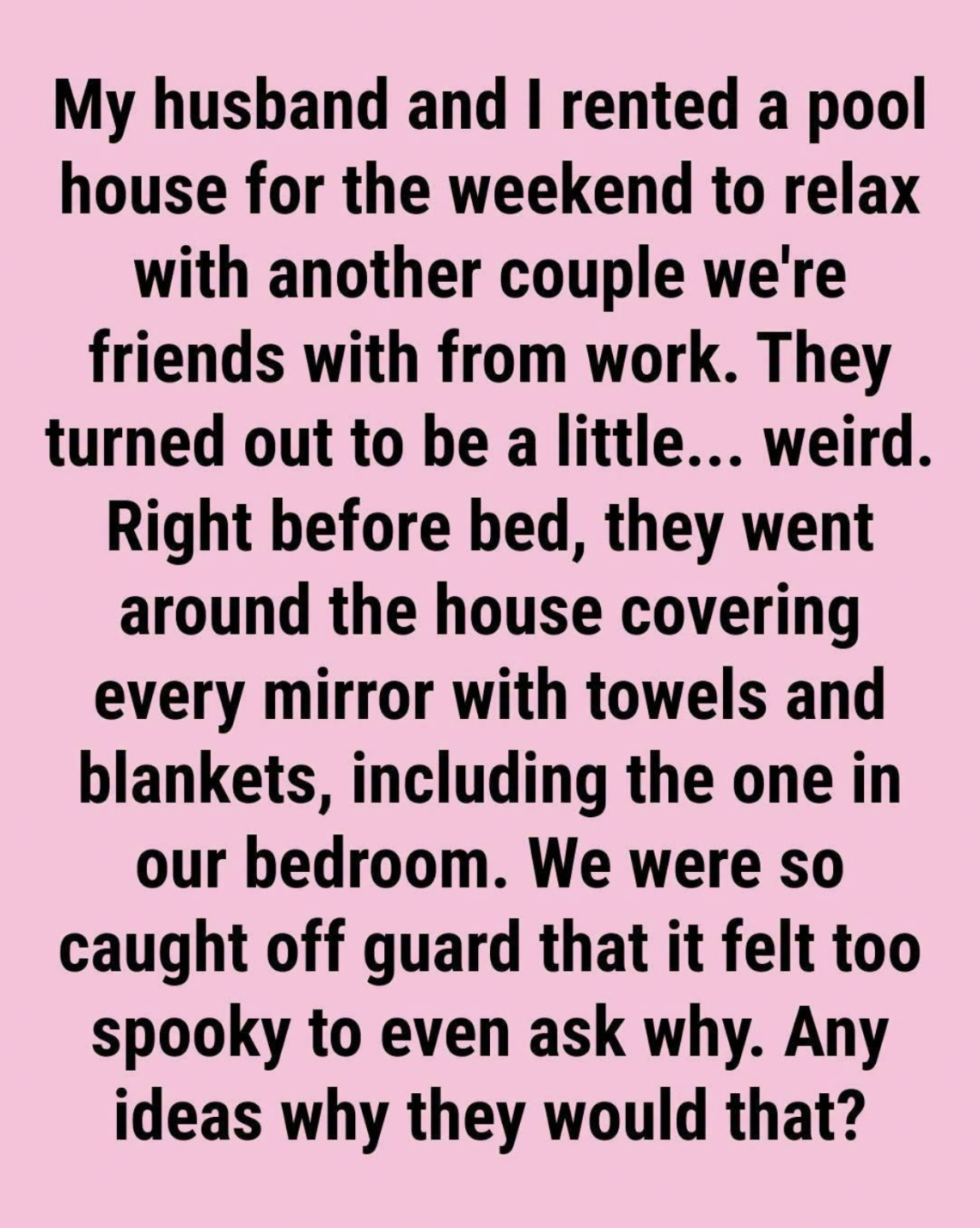
Almost everyone has experienced it at least once. The house has grown quiet, the dishes are done, the lights have been switched off one by one, and you’re finally settling into bed after a long day. Perhaps you’ve spent the evening reading a favorite novel, catching up on a television series, or simply enjoying a few peaceful moments before sleep.
Your bedroom feels calm and familiar.
Then, almost without thinking, your eyes wander across the room.
There it is—a mirror reflecting the dim light from a hallway, a streetlamp outside, or the glow of a digital clock. During the day it’s just another ordinary household object. But at night, especially in a darkened room, it can seem strangely different. The reflective surface appears deeper, darker, almost mysterious. For a brief moment, your imagination takes over, and the ordinary mirror suddenly feels far less ordinary.
Many people describe a slight sense of unease when looking into mirrors after dark. It’s a feeling that has inspired countless ghost stories, folklore traditions, and superstitions throughout history. Across cultures and centuries, mirrors have often been viewed as objects of mystery—believed by some to reflect more than just a person’s appearance.
Whether or not you believe in these old traditions, there’s an interesting reason why so many people have covered mirrors at night for generations. While ancient customs were often rooted in spiritual beliefs, modern psychology suggests that reducing reflective surfaces in the bedroom may actually help some people relax and sleep more comfortably.
Let’s explore the fascinating blend of history, folklore, science, and interior design behind one of the world’s oldest nighttime traditions.
Why Mirrors Have Fascinated People for Thousands of Years
Mirrors have always held a special place in human history.
Long before modern glass mirrors existed, people gazed into still ponds, polished metal, and smooth stones to see their reflections. The ability to look at one’s own face was once considered remarkable, even magical.
As mirrors became more sophisticated, many cultures began attaching symbolic meanings to them.
Throughout history, mirrors have been associated with:
- Self-reflection.
- Beauty.
- Truth.
- Wisdom.
- Mystery.
- Protection.
- Vanity.
- Spiritual symbolism.
Because reflections can appear almost lifelike, mirrors often inspired myths and legends long before people understood the science of optics.
Ancient Beliefs About Mirrors at Night
Many traditional cultures believed that nighttime was a period when the boundary between the ordinary world and the unknown became thinner.
Within these traditions, mirrors sometimes carried special significance.
Various beliefs suggested that mirrors could:
- Attract wandering spirits.
- Reflect supernatural energy.
- Capture dreams.
- Disturb restful sleep.
- Reveal hidden truths.
- Symbolize a doorway between worlds.
Although these ideas are part of folklore rather than scientific fact, they demonstrate how deeply mirrors have influenced human imagination.
The Tradition of Covering Mirrors
Covering mirrors before bedtime has been practiced in different parts of the world for many generations.
Reasons have varied widely.
Some traditions viewed it as:
- A form of spiritual protection.
- A sign of respect during periods of mourning.
- A way to encourage peaceful sleep.
- A method of avoiding frightening nighttime reflections.
In some households, covering mirrors became such a routine habit that people continued doing it simply because previous generations always had.
Mirrors During Times of Mourning
One of the best-known mirror traditions appears in several mourning customs around the world.
In some communities, mirrors were temporarily covered after the death of a family member.
The reasons differed depending on local beliefs, but explanations often included:
- Allowing mourners to focus on remembrance rather than appearance.
- Symbolizing respect for the deceased.
- Reflecting cultural beliefs about the soul.
- Creating a calmer home environment during grief.
Today, many people observe this practice as a cultural or religious tradition rather than because of supernatural beliefs.
Why Mirrors Can Feel Unsettling at Night
Interestingly, modern psychology offers a practical explanation for why mirrors sometimes feel eerie after dark.
Human vision changes significantly in low-light conditions.
When lighting is dim:
- Colors become less vivid.
- Depth perception decreases.
- Peripheral vision becomes less accurate.
- Shadows appear more dramatic.
- Reflections become less detailed.
Our brains naturally try to interpret incomplete visual information.
As a result, harmless reflections can sometimes appear unfamiliar or surprising, especially if you’re tired or expecting to see movement.
The Brain Loves Patterns
The human brain is remarkably good at recognizing faces.
In fact, it is so efficient that it sometimes identifies faces where none actually exist.
This phenomenon, known as pareidolia, explains why people occasionally see:
- Faces in clouds.
- Expressions on tree bark.
- Features in rock formations.
- Shapes in wallpaper.
- Images in shadows.
A dimly lit mirror can encourage this same effect, making ordinary reflections briefly appear unusual until your brain processes what you’re actually seeing.
Mirrors and Sleep Quality
While there is no scientific evidence that mirrors possess supernatural properties, their placement in a bedroom may influence comfort for some people.
Mirrors can:
- Reflect passing headlights.
- Bounce electronic lights around the room.
- Reflect movement from pets or partners.
- Create visual distractions.
For light sleepers, these reflections may occasionally interrupt relaxation or contribute to a feeling of restlessness.
Why Some Interior Designers Recommend Limiting Bedroom Mirrors
Many interior designers suggest carefully considering mirror placement in bedrooms.
Reasons include:
- Reducing visual clutter.
- Creating a calmer atmosphere.
- Minimizing nighttime light reflections.
- Encouraging a more restful environment.
These recommendations focus on comfort and aesthetics rather than folklore.
Feng Shui and Mirrors
In the traditional Chinese practice of Feng Shui, mirrors are believed to influence the flow of energy, or qi, within a home.
Some Feng Shui practitioners recommend avoiding mirrors that directly face the bed because they believe this arrangement may create a more stimulating environment that feels less conducive to restful sleep.
Others interpret mirrors as amplifying movement or visual activity within the room.
These ideas are part of a traditional design philosophy rather than established scientific findings, but many people appreciate the calming bedroom layouts that result from following these guidelines.
Simple Ways to Make Your Bedroom Feel More Relaxing
Whether or not you choose to cover a mirror, creating a peaceful sleeping environment can make a noticeable difference.
Helpful ideas include:
- Using blackout curtains to reduce outside light.
- Dimming bright electronics before bedtime.
- Keeping the room tidy and uncluttered.
- Choosing soft, warm lighting in the evening.
- Positioning mirrors so they don’t reflect the bed directly if you find it distracting.
- Maintaining a comfortable room temperature.
Small changes often contribute to a greater sense of relaxation.
Should You Cover Your Mirror?
There is no universal answer.
Some people enjoy sleeping with uncovered mirrors and never think twice about them.
Others find that covering a large mirror:
- Makes the room feel cozier.
- Reduces distracting reflections.
- Creates a darker environment.
- Improves their overall comfort.
Ultimately, it’s a matter of personal preference rather than necessity.
Interesting Mirror Traditions Around the World
Throughout history, mirrors have inspired many fascinating customs.
Examples include:
- Covering mirrors during mourning in certain cultures.
- Avoiding looking into mirrors by candlelight in some folklore traditions.
- Using mirrors in ceremonial rituals.
- Hanging mirrors near entrances as decorative or symbolic objects.
- Incorporating mirrors into traditional architecture to increase natural light.
These practices reflect cultural beliefs and historical traditions rather than scientific principles.
Frequently Asked Questions
Is there scientific evidence that mirrors are harmful at night?
No. There is no scientific evidence that mirrors themselves become harmful or supernatural after dark. However, reflections and light bouncing from mirrors may distract some people or make it harder to relax, particularly in dim lighting.
Why do mirrors sometimes seem frightening in low light?
Low-light conditions reduce visual clarity, and the brain naturally fills in missing details. Combined with the tendency to recognize faces and patterns, this can make ordinary reflections seem briefly unusual or unsettling.
Does covering a mirror improve sleep?
For some people, yes. Covering a mirror may reduce reflected light or visual distractions, helping create a calmer bedroom. Others notice no difference at all.
What is pareidolia?
Pareidolia is the brain’s tendency to perceive familiar patterns—especially faces—in random or ambiguous visual information. It helps explain why reflections, shadows, or ordinary objects can sometimes appear strange in dim lighting.
Should mirrors face the bed?
There is no scientific rule against it. Some interior designers and Feng Shui practitioners prefer to position mirrors elsewhere to reduce visual stimulation, but the best arrangement depends on your comfort and the layout of your room.
Why have mirrors inspired so many legends?
For centuries, mirrors were rare and remarkable objects that allowed people to see detailed reflections of themselves. Before the science of optics was widely understood, this mysterious quality naturally inspired stories, symbolism, and folklore that have been passed down through generations.

Welcome to my kitchen!
I’m a passionate home cook and recipe creator who loves turning simple ingredients into delicious, comforting meals that everyone can enjoy. Through this website, I share carefully prepared recipes, practical cooking tips, and easy-to-understand food education to help you feel more confident in the kitchen.
My goal is to make cooking simple, enjoyable, and accessible. Whether you are looking for a quick family dinner, a delicious dessert, healthy meal ideas, or traditional recipes with a modern touch, you’ll find inspiration here.
More Than Just Recipes
I believe that cooking is also a way to learn. That’s why this website is not only about recipes. I also create educational articles about ingredients, cooking techniques, kitchen tips, food preparation, and the stories behind different dishes.
Each article is designed to give you useful knowledge that you can apply in your own kitchen. From understanding how ingredients work together to learning better cooking methods, my aim is to help you become a more confident and creative cook.
My Philosophy
Good food doesn’t always require complicated ingredients or professional equipment. With a little knowledge, patience, and creativity, simple ingredients can become something truly special.
I believe in sharing recipes that are practical, clearly explained, and enjoyable to make. I also love exploring new flavors while appreciating traditional cooking and the recipes passed down through generations.
Thank you for visiting my kitchen and being part of this food-loving community. I hope my recipes and articles inspire you to cook, learn, experiment, and most importantly, enjoy every bite!
Happy cooking!