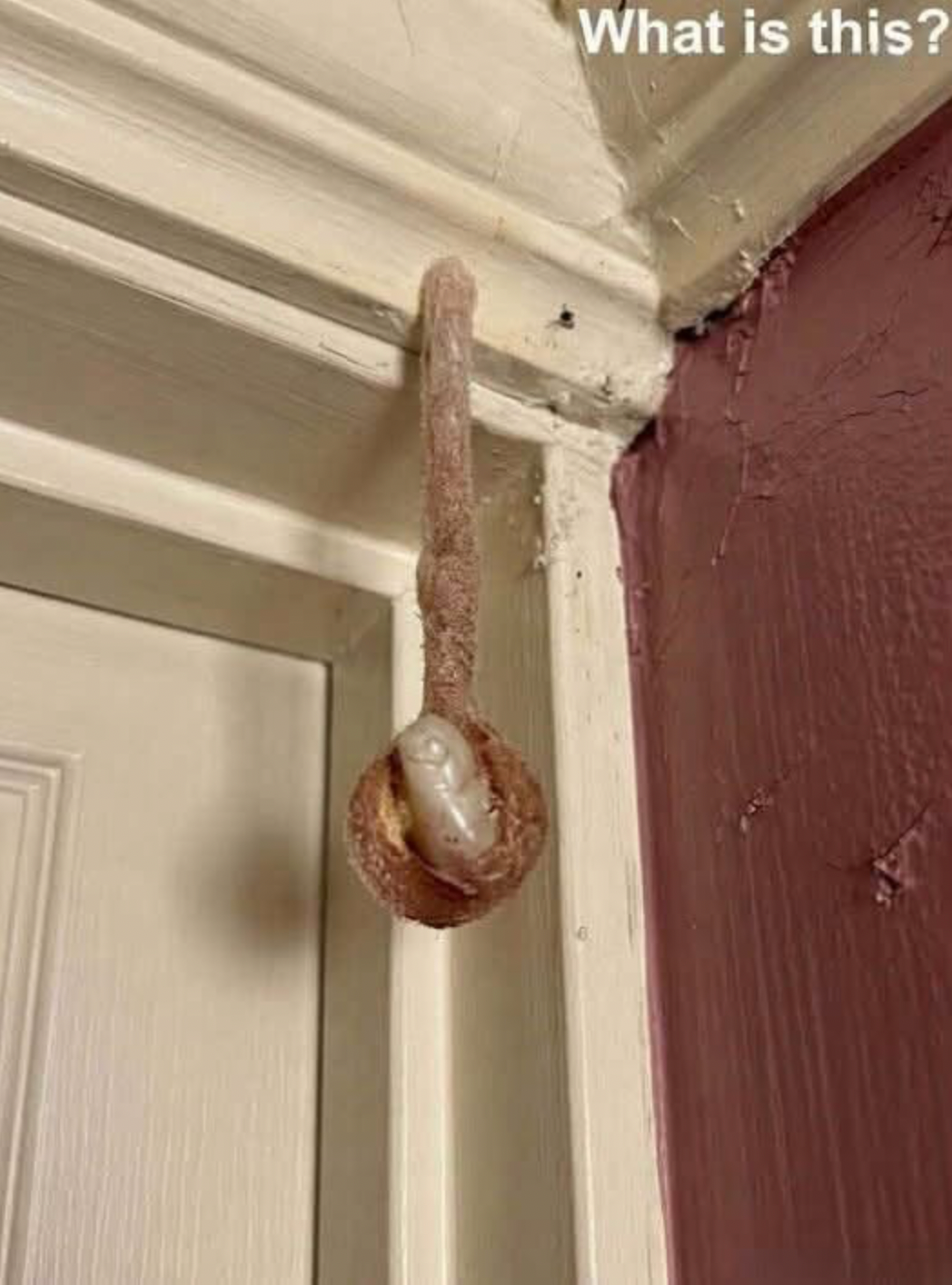
Imagine you’ve finally arrived at your hotel after a long day of traveling. Your suitcase is safely tucked in the bathtub while you give the room a quick inspection, you begin unpacking, and then something catches your eye near the ceiling. Tucked into the corner where the wall meets the ceiling, or hidden behind a curtain rod, is a small cluster of narrow, tube-shaped structures made entirely of dried mud.
Your first thought might be, “Are those wasps? Is my room safe?”
Finding any insect nest inside a room can certainly be surprising, and it’s natural to feel uneasy at first. However, if the structure belongs to a mud dauber, there’s often less reason for alarm than many people assume. Mud daubers are solitary wasps known for building remarkable nests from tiny pellets of mud. Unlike social wasps such as yellowjackets or paper wasps, mud daubers generally avoid people and are far less defensive of their nests.
That said, while mud daubers are usually not aggressive, a nest inside an occupied hotel room should still be reported to hotel staff. The room should be inspected and the nest handled by trained personnel rather than by guests.
Let’s explore what mud dauber nests are, why they sometimes appear in buildings, what they mean, and how you should respond if you discover one during your travels.
What Is a Mud Dauber?
Mud daubers are solitary wasps belonging to several different species.
Unlike social wasps that live together in large colonies, each female mud dauber builds and provisions her own nest.
They are often recognized by:
- long, slender bodies
- narrow “waist”
- long legs
- slow, graceful flight
- black, metallic blue, or black-and-yellow coloration depending on the species
Because they live alone, they behave quite differently from colony-forming wasps.
Why Are They Called Mud Daubers?
The name comes from the remarkable way they construct their nests.
A female mud dauber gathers:
- tiny pellets of wet mud
- small amounts of water
- bits of soil
She carefully shapes these materials into narrow tubes or small mud chambers that harden as they dry.
The finished nest often resembles:
- clay pipes
- short organ tubes
- little cylinders
- clusters of dried mud
Each chamber is individually built with remarkable precision.
Why Would There Be a Nest in a Hotel?
Mud daubers look for quiet, sheltered places protected from rain and wind.
Potential nesting sites include:
- ceiling corners
- garages
- sheds
- attics
- barns
- porches
- storage rooms
- warehouses
- window frames
- behind outdoor lighting
Occasionally, if a hotel room has been vacant for some time or if a window or door has been left open, a mud dauber may build a nest inside.
Although uncommon, it can happen.
How Long Does It Take to Build a Nest?
A female mud dauber may spend several days constructing a nest.
She repeatedly flies back and forth carrying tiny pellets of mud.
Each chamber is carefully formed before the next one begins.
The finished structure may contain multiple separate cells.
What’s Inside the Nest?
One of the most fascinating aspects of mud daubers is how they prepare each chamber.
After building a cell, the female hunts spiders.
She captures them, stings them to paralyze them, and places several inside the chamber as food for her future offspring.
She then lays a single egg and seals the chamber with mud.
When the egg hatches, the developing larva feeds on the immobilized spiders before eventually emerging as an adult wasp.
This is a natural part of the mud dauber’s life cycle and an example of how different species have evolved unique survival strategies.
Are Mud Daubers Aggressive?
Generally, no.
Mud daubers are considered among the least aggressive wasps.
Unlike yellowjackets or paper wasps, they do not defend large communal colonies.
Many people can observe mud daubers working nearby without being stung.
However, like almost any wild insect, they can sting if handled, trapped, or threatened. For that reason, it’s best to avoid touching either the insect or its nest.
Do They Sting?
Yes.
Female mud daubers possess a stinger.
However, stings are relatively uncommon because these wasps usually avoid confrontation.
Most people are never stung by mud daubers.
Anyone with a known allergy to insect stings should still exercise caution around any wasp species.
Are Mud Daubers Beneficial?
Surprisingly, yes.
Mud daubers help control spider populations because spiders serve as food for their developing larvae.
By hunting spiders, they become part of the natural ecological balance.
Although many people fear wasps, mud daubers provide a form of natural pest control.
Should You Remove the Nest Yourself?
If you discover a mud dauber nest in a hotel room, the safest approach is not to remove it yourself.
Instead:
- avoid disturbing the nest
- keep a safe distance
- notify hotel management or the front desk
- request that the room be inspected
Hotel staff can determine whether the room should be changed or whether maintenance or pest control should remove the nest safely.
How Can You Tell It’s a Mud Dauber Nest?
Mud dauber nests usually appear as:
- narrow mud tubes
- clay-like cylinders
- rough brown structures
- hardened soil attached to walls or ceilings
Paper wasp nests, by contrast, are made from a gray, paper-like material with visible open cells.
Bee hives have an entirely different wax structure.
Why Do Mud Daubers Choose Buildings?
Buildings provide:
- shelter from rain
- stable temperatures
- protected corners
- fewer disturbances
- solid surfaces for attaching nests
To a mud dauber, a quiet corner beneath an overhang or ceiling may seem like an ideal nesting location.
What If the Nest Looks Old?
Many mud dauber nests are abandoned after the young emerge.
Old nests may remain attached for months or even years unless removed.
An abandoned nest does not necessarily mean live wasps are still present.
However, only someone inspecting it closely can determine whether it is active.
How Hotels Can Help Prevent Nesting
Regular maintenance can reduce the chances of insects nesting indoors.
Helpful measures include:
- sealing gaps around windows and doors
- repairing damaged screens
- inspecting vacant rooms regularly
- removing old nests safely
- keeping windows closed when rooms are unoccupied
Frequently Asked Questions
Is finding a mud dauber nest a sign the hotel is dirty?
Not necessarily. Mud daubers build nests in sheltered places, and their presence does not automatically indicate poor cleanliness. However, it may suggest that the area was accessible to insects or that the room had not been occupied for some time.
Should I panic if I see one?
No. While it is understandable to feel startled, mud daubers are generally not aggressive. Stay calm, avoid disturbing the nest, and notify hotel staff so they can assess the situation.
Can mud daubers damage the building?
Their small mud nests rarely cause significant structural damage, though they can leave residue or marks that require cleaning after removal.
Should I remove the nest myself?
It is better to leave removal to hotel maintenance or a licensed pest management professional, especially if there is any uncertainty about whether the nest is active.
Are mud daubers the same as hornets?
No. Mud daubers, hornets, yellowjackets, and paper wasps are different types of wasps with distinct behaviors. Mud daubers are solitary and are generally much less defensive than social wasps.
Travel Tips If You Discover a Nest
If you notice what appears to be a mud dauber nest in your hotel room:
- Keep your distance.
- Do not touch the nest.
- Avoid swatting at any wasps you may see.
- Inform the front desk promptly.
- Request another room if you are uncomfortable or if the nest appears active.
- If you have a known allergy to insect stings, mention this to hotel staff when requesting assistance.

Welcome to my kitchen!
I’m a passionate home cook and recipe creator who loves turning simple ingredients into delicious, comforting meals that everyone can enjoy. Through this website, I share carefully prepared recipes, practical cooking tips, and easy-to-understand food education to help you feel more confident in the kitchen.
My goal is to make cooking simple, enjoyable, and accessible. Whether you are looking for a quick family dinner, a delicious dessert, healthy meal ideas, or traditional recipes with a modern touch, you’ll find inspiration here.
More Than Just Recipes
I believe that cooking is also a way to learn. That’s why this website is not only about recipes. I also create educational articles about ingredients, cooking techniques, kitchen tips, food preparation, and the stories behind different dishes.
Each article is designed to give you useful knowledge that you can apply in your own kitchen. From understanding how ingredients work together to learning better cooking methods, my aim is to help you become a more confident and creative cook.
My Philosophy
Good food doesn’t always require complicated ingredients or professional equipment. With a little knowledge, patience, and creativity, simple ingredients can become something truly special.
I believe in sharing recipes that are practical, clearly explained, and enjoyable to make. I also love exploring new flavors while appreciating traditional cooking and the recipes passed down through generations.
Thank you for visiting my kitchen and being part of this food-loving community. I hope my recipes and articles inspire you to cook, learn, experiment, and most importantly, enjoy every bite!
Happy cooking!