For most people, grocery shopping is such a familiar routine that very little attention is paid to the design of the shopping cart itself. We collect a cart at the entrance, wipe the handle, make our way through the aisles, fill it with groceries, and head toward the checkout without giving much thought to the many small features built into the cart. Yet modern shopping carts are carefully engineered to improve safety, convenience, organization, and efficiency for both customers and retailers.
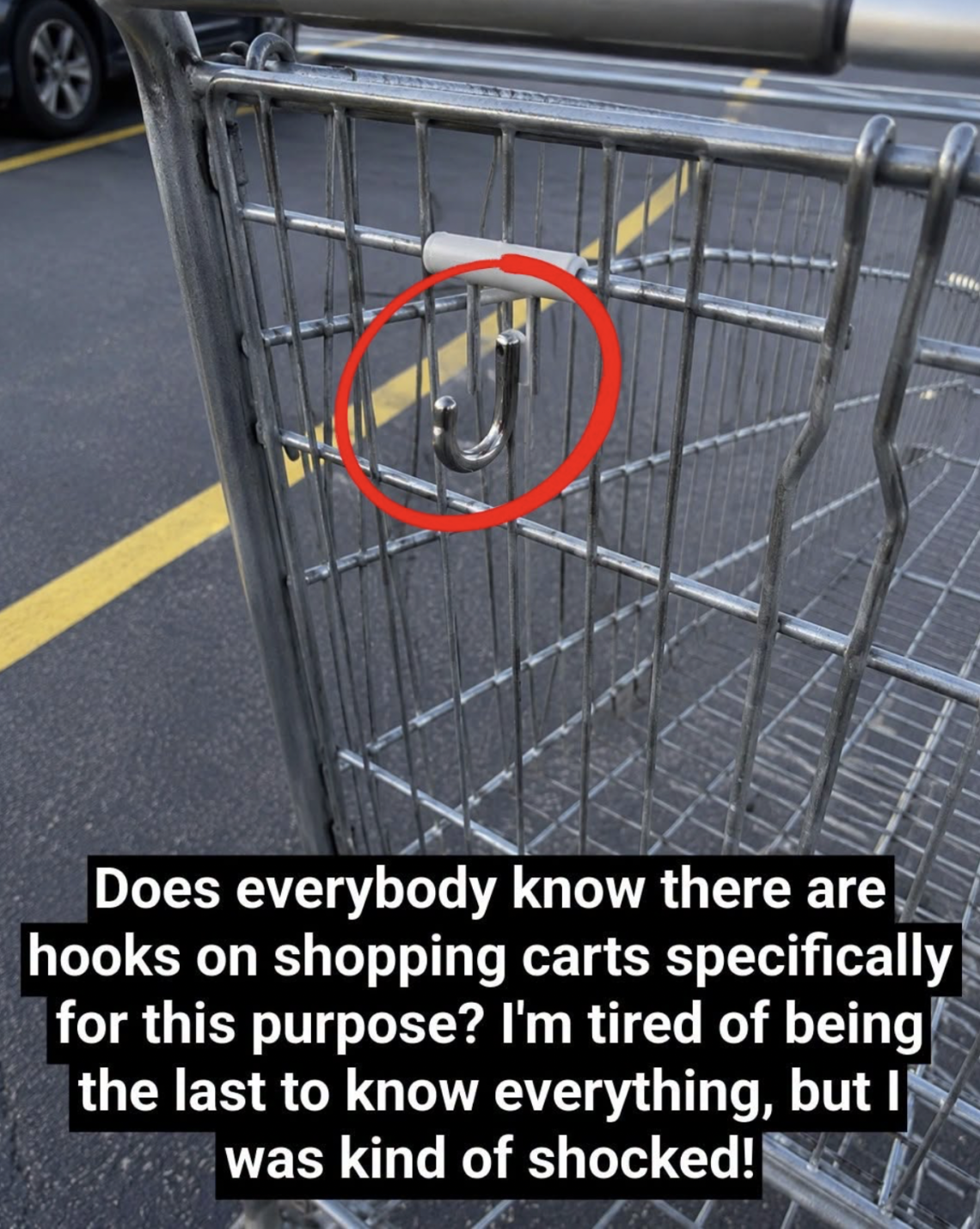
One feature that frequently goes unnoticed is the pair of small hooks, loops, or molded tabs found on the shopping cart handle or near the basket. Because they are relatively small and blend into the overall design, many shoppers assume they are decorative, manufacturing components, or simply part of the cart’s frame. In reality, these hooks often serve a practical purpose that can make shopping more organized and comfortable, particularly when purchasing delicate or unusually shaped items.
Although the exact design varies depending on the manufacturer and the supermarket, these hooks demonstrate how even the smallest details can improve everyday experiences. Understanding their intended purpose can help shoppers protect fragile groceries, organize purchases more effectively, and make better use of the space inside the cart.
Why Do Shopping Carts Have Hooks?
Shopping cart hooks are designed to provide additional carrying options for items that may not fit comfortably inside the main basket.
They are especially useful for:
- Reusable shopping bags.
- Delicate grocery bags.
- Fresh flowers.
- Lightweight purchases.
- Small handbags.
- Umbrellas.
- Clothing bags.
- Fragile packaged goods.
Instead of placing these items underneath heavier groceries, the hooks allow them to remain suspended and protected throughout the shopping trip.
Protecting Fragile Items
One of the most practical uses for shopping cart hooks is protecting easily damaged products.
Certain groceries can become crushed under the weight of heavier items such as:
- Bottled drinks.
- Large detergent containers.
- Bags of potatoes.
- Watermelons.
- Bulk food packages.
Using the hooks helps keep delicate purchases separate.
Examples include:
- Bread.
- Pastries.
- Eggs.
- Fresh herbs.
- Soft fruit.
- Bakery items.
- Flowers.
Keeping these products elevated reduces the risk of damage.
A Convenient Place for Reusable Bags
Many shoppers now bring reusable shopping bags to reduce plastic waste.
Rather than placing empty bags inside the cart where they occupy valuable basket space, the hooks provide a convenient place to hang them until checkout.
This offers several advantages:
- Frees basket space.
- Keeps bags clean.
- Makes bags easier to access.
- Helps shoppers remember to use them.
Better Organization During Shopping
Shopping becomes more efficient when different categories of items remain separated.
Hooks can help organize purchases by keeping:
- Frozen foods apart.
- Personal belongings separate.
- Fragile groceries protected.
- Cleaning supplies isolated from food.
- Fresh produce undisturbed.
Good organization also makes unloading groceries at checkout easier.
Protecting Personal Belongings
Many shoppers place their:
- Handbags.
- Tote bags.
- Backpacks.
- Small purses.
inside the shopping cart.
Unfortunately, this reduces shopping space and may expose personal belongings to food spills or heavy products.
Hanging lightweight bags on designated hooks can keep them more organized while leaving additional room inside the basket.
However, valuables should always remain within sight, and bags should never be left unattended.
Carrying Fresh Flowers
Fresh flowers are particularly vulnerable during shopping.
Their stems, petals, and leaves can easily become bent or crushed.
Many shoppers use cart hooks to suspend flower bouquets safely away from heavier groceries.
This simple solution helps preserve their appearance until checkout.
Keeping Clothing Clean
In supermarkets that also sell clothing, customers occasionally purchase:
- Jackets.
- Sweaters.
- Dresses.
- Children’s clothing.
Rather than laying garments underneath groceries, they can often be hung from the hooks to reduce wrinkles and help keep them clean.
Supporting Small Lightweight Purchases
Hooks are ideal for carrying lightweight items such as:
- Small gift bags.
- Greeting cards.
- Pharmacy purchases.
- Lightweight household goods.
These items remain visible and are less likely to become buried beneath larger products.
Different Hook Designs
Shopping carts vary significantly between manufacturers.
Depending on the design, the hooks may appear as:
- Metal hooks.
- Plastic loops.
- Molded tabs.
- Integrated handle clips.
- Hanging rails.
Although their appearance differs, their purpose is generally similar.
Other Hidden Features of Modern Shopping Carts
Shopping carts include many thoughtful design elements beyond the hooks.
These often include:
- Child safety seats.
- Cup holders.
- Smartphone holders.
- Coin-lock systems.
- Bottom storage racks.
- Swiveling wheels.
- Ergonomic handles.
- Basket dividers.
Each feature contributes to making shopping more comfortable and efficient.
Safety Considerations
While shopping cart hooks are convenient, they should be used responsibly.
Avoid hanging:
- Heavy grocery bags.
- Glass bottles.
- Large containers.
- Excessive weight.
Overloading the hooks could affect the cart’s balance or damage the hook itself.
Always follow any instructions provided by the store.
Tips for Smarter Grocery Shopping
Using the shopping cart efficiently can make the experience more pleasant.
Helpful habits include:
- Place heavy items on the bottom of the basket.
- Store fragile foods on top.
- Use hooks for lightweight bags.
- Keep reusable bags accessible.
- Organize groceries by category.
- Separate cleaning products from food.
- Avoid overloading the cart.
These simple techniques help protect purchases while making checkout quicker.
Environmental Benefits
Reusable shopping bags have become increasingly popular as communities seek to reduce single-use plastic waste.
Using the cart hooks for reusable bags encourages:
- Less plastic consumption.
- Better organization.
- Cleaner shopping bags.
- More efficient packing at checkout.
Small design features can support environmentally friendly shopping habits.
Common Misconceptions
Myth 1: The Hooks Are Only Decorative
False.
Most hooks are included for practical purposes, even though many shoppers never use them.
Myth 2: They Can Hold Unlimited Weight
No.
They are generally intended for lightweight items rather than heavy grocery bags.
Myth 3: Every Shopping Cart Uses the Same Design
Not at all.
Cart features vary between manufacturers, retailers, and countries.
Frequently Asked Questions
Are shopping cart hooks available on every cart?
No. Different manufacturers use different designs, and some carts may not include hooks at all.
Can I hang my purse on the hook?
You can if the hook is designed for light items, but valuables should always remain within your sight and control.
Are the hooks strong enough for full grocery bags?
Generally, they are intended for lighter items rather than heavily loaded bags.
Why are the hooks located near the handle?
Their location allows shoppers to access hanging items easily without reaching into the basket.
What is the biggest advantage of using them?
They help protect delicate purchases, improve organization, and free valuable basket space.
Small Design Details That Improve Everyday Life
The shopping cart is a perfect example of how thoughtful engineering can make everyday activities easier without attracting much attention. Features such as hooks, basket dividers, ergonomic handles, and lower storage racks may seem insignificant individually, but together they improve comfort, organization, and efficiency throughout the shopping experience. These subtle design elements reflect years of practical refinement based on the needs of millions of shoppers around the world.
Welcome to my kitchen!
I’m a passionate home cook and recipe creator who loves turning simple ingredients into delicious, comforting meals that everyone can enjoy. Through this website, I share carefully prepared recipes, practical cooking tips, and easy-to-understand food education to help you feel more confident in the kitchen.
My goal is to make cooking simple, enjoyable, and accessible. Whether you are looking for a quick family dinner, a delicious dessert, healthy meal ideas, or traditional recipes with a modern touch, you’ll find inspiration here.
More Than Just Recipes
I believe that cooking is also a way to learn. That’s why this website is not only about recipes. I also create educational articles about ingredients, cooking techniques, kitchen tips, food preparation, and the stories behind different dishes.
Each article is designed to give you useful knowledge that you can apply in your own kitchen. From understanding how ingredients work together to learning better cooking methods, my aim is to help you become a more confident and creative cook.
My Philosophy
Good food doesn’t always require complicated ingredients or professional equipment. With a little knowledge, patience, and creativity, simple ingredients can become something truly special.
I believe in sharing recipes that are practical, clearly explained, and enjoyable to make. I also love exploring new flavors while appreciating traditional cooking and the recipes passed down through generations.
Thank you for visiting my kitchen and being part of this food-loving community. I hope my recipes and articles inspire you to cook, learn, experiment, and most importantly, enjoy every bite!
Happy cooking!