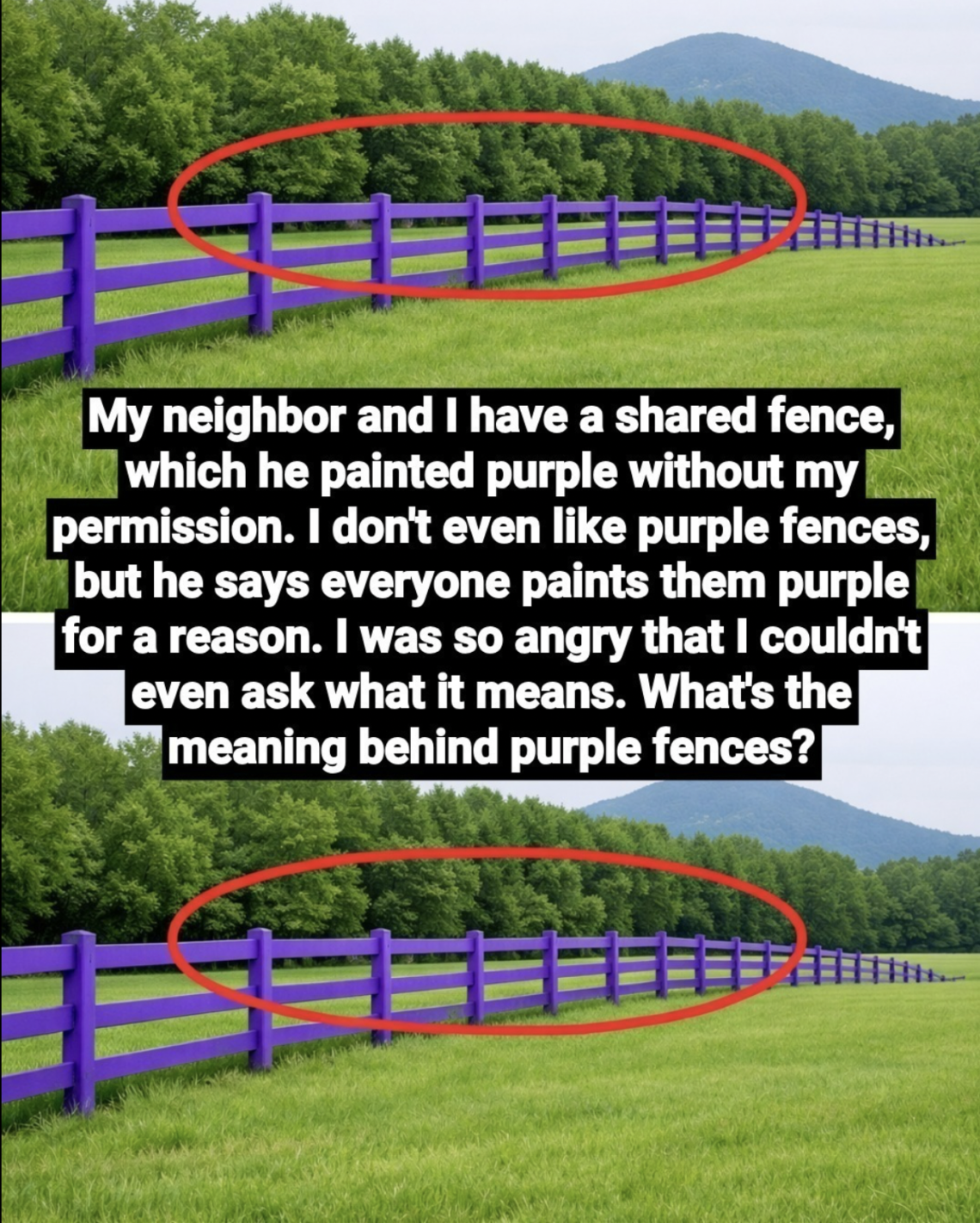
Imagine walking through a rural area, hiking near woods, driving along farmland, or exploring the countryside when suddenly you notice something unusual: sections of fence posts or trees painted bright purple. To many people, the markings seem mysterious. Some assume they are decorative, while others think they might indicate property lines, hunting zones, or utility markings.
In reality, painted purple fences and trees often carry a very important meaning.
In several parts of the United States, a purple paint marking serves as a legal warning equivalent to a “No Trespassing” sign. This practice is commonly known as the Purple Paint Law, and it allows landowners to mark private property boundaries without relying entirely on traditional posted signs.
The system may seem strange at first, but it was created for practical reasons and has become an important part of rural property management in certain regions.
Understanding the meaning of these purple markings is important because ignoring them can potentially lead to:
- Trespassing violations
- Legal trouble
- Dangerous situations during hunting seasons
- Conflicts with landowners
What looks like a simple stripe of paint can actually carry legal significance.
What Does a Purple Fence or Purple Paint Mean?
In areas where Purple Paint Laws exist, purple paint markings typically mean:
“Private property — no trespassing.”
The markings are usually painted on:
- Fence posts
- Trees
- Boundary markers
These painted symbols legally communicate that entry is not allowed without permission.
Why Purple?
Many people wonder why purple was chosen instead of another color.
The answer is practical.
Purple was selected because it is:
- Highly visible outdoors
- Uncommon in nature
- Distinct from many utility paint colors
- Long-lasting on trees and wood surfaces
It is also easier to notice from a distance compared to smaller signs.
The Problem with Traditional “No Trespassing” Signs
Before Purple Paint Laws became common, landowners relied mainly on posted signs.
However, signs created several problems:
1. Signs Can Be Removed
Paper or metal signs may:
- Fall off
- Be stolen
- Become damaged
- Fade from weather exposure
2. Signs Require Maintenance
Maintaining property signs across large rural areas can be expensive and time-consuming.
3. Rural Land Can Cover Huge Distances
Large farms, ranches, and wooded properties may stretch for:
- Acres
- Miles of fencing
- Long forest boundaries
Painting markers became easier than installing hundreds of signs.
How the Purple Paint Law Works
Although laws vary by state, the idea is generally similar.
Purple markings act as:
- Official legal notice
- Boundary warning
- No-entry signal
The paint legally informs others that they are approaching private property.
Where the Purple Paint Law Exists
The law is used in several U.S. states, particularly rural areas where:
- Hunting is common
- Large properties exist
- Land boundaries are extensive
States may include:
- Texas
- Missouri
- Arkansas
- North Carolina
- Illinois
- Pennsylvania
- Florida
- Kansas
- Indiana
and others.
Each state may have slightly different regulations about:
- Paint size
- Placement
- Spacing between marks
How the Markings Are Usually Applied
Purple paint is commonly placed:
- Vertically
- At eye level
- On trees or fence posts
The marks are designed to be:
- Clearly visible
- Difficult to remove naturally
- Recognizable from a distance
Why Rural Landowners Prefer Paint
For farmers and landowners, paint offers several advantages.
Cost Efficiency
Paint is cheaper than replacing damaged signs repeatedly.
Durability
Paint lasts longer outdoors.
Visibility
Bright purple stands out clearly against:
- Wood
- Trees
- Grassland backgrounds
Simplicity
Large boundaries can be marked quickly.
Hunting and Safety Concerns
One major reason these laws became important involves hunting safety.
In rural areas:
- Hunters may accidentally enter private property
- People may wander into active hunting zones
- Landowners may need clearer warnings
Purple paint helps reduce confusion and improve safety.
Why Ignoring Purple Paint Can Be Serious
Some people mistakenly assume painted trees are decorative or unimportant.
However, in many places, ignoring these markings may legally qualify as trespassing.
Consequences can include:
- Fines
- Legal charges
- Removal from property
- Potentially dangerous encounters
Respecting property boundaries is extremely important.
The Historical Background
The Purple Paint Law emerged mainly during the late 20th century.
Rural landowners wanted:
- More reliable boundary marking systems
- Reduced costs
- Easier maintenance
Legislators recognized that signs alone were not always practical.
Paint became an efficient legal solution.
Why This System Works So Well
The success of the system comes from several factors:
- Purple is visually memorable
- Paint withstands weather better than paper
- It reduces ambiguity
- It creates consistent legal communication
Once people learn the meaning, the markings become instantly recognizable.
Common Misunderstandings
“Purple paint means dangerous chemicals”
False in most cases.
Purple boundary paint usually relates to trespassing laws rather than hazardous materials.
“It marks hunting land only”
Not always.
It generally marks private property regardless of hunting activity.
“It is decorative”
Usually not.
The markings are typically intentional legal notices.
Differences Between States
Not every state uses Purple Paint Laws.
Additionally, states that do use them may define:
- Exact paint dimensions
- Required placement height
- Distance between marks
For example:
- Some require vertical lines
- Others allow rectangular marks
The legal details vary.
Similar Systems in Other Countries
Outside the United States, purple paint systems are less common.
Other regions may use:
- Signs
- Fences
- Stone markers
- Colored posts
Property boundary traditions differ globally.
Why People Find the System Fascinating
The idea attracts curiosity because it feels:
- Mysterious
- Secretive
- Unusual
Many people encounter purple paint accidentally without knowing its meaning, leading to internet discussions and viral posts.
Social Media and Viral Curiosity
In recent years, photos of purple fences and painted trees have spread online because:
- The markings look unusual
- Many people have never heard of the law
- The explanation surprises viewers
The mystery itself helps fuel interest.
Respecting Property Boundaries
Whether or not laws exist in a particular region, respecting private property remains important.
Landowners may use markings to:
- Protect crops
- Prevent accidents
- Maintain privacy
- Control hunting access
- Protect livestock
Entering marked land without permission can create both legal and safety issues.
Why Awareness Matters
People who enjoy:
- Hiking
- Hunting
- Camping
- Exploring rural areas
should understand these markings to avoid accidental trespassing.
Simple awareness can prevent misunderstandings.
The Psychology of Color Warnings
Purple works effectively because bright warning colors naturally attract attention.
Humans associate unusual markings with:
- Caution
- Boundaries
- Restrictions
The uniqueness of purple makes it memorable.
How Landowners Typically Maintain Markings
Property owners often repaint markings periodically because:
- Weather fades color
- Trees grow
- Fence surfaces age
Maintaining visibility helps preserve legal clarity.
Are Purple Paint Laws Effective?
Many rural landowners believe they are highly effective because they:
- Reduce sign theft
- Simplify maintenance
- Provide clear warnings
- Lower costs
Critics sometimes argue that not everyone understands the markings, but public awareness has increased over time.

Welcome to my kitchen!
I’m a passionate home cook and recipe creator who loves turning simple ingredients into delicious, comforting meals that everyone can enjoy. Through this website, I share carefully prepared recipes, practical cooking tips, and easy-to-understand food education to help you feel more confident in the kitchen.
My goal is to make cooking simple, enjoyable, and accessible. Whether you are looking for a quick family dinner, a delicious dessert, healthy meal ideas, or traditional recipes with a modern touch, you’ll find inspiration here.
More Than Just Recipes
I believe that cooking is also a way to learn. That’s why this website is not only about recipes. I also create educational articles about ingredients, cooking techniques, kitchen tips, food preparation, and the stories behind different dishes.
Each article is designed to give you useful knowledge that you can apply in your own kitchen. From understanding how ingredients work together to learning better cooking methods, my aim is to help you become a more confident and creative cook.
My Philosophy
Good food doesn’t always require complicated ingredients or professional equipment. With a little knowledge, patience, and creativity, simple ingredients can become something truly special.
I believe in sharing recipes that are practical, clearly explained, and enjoyable to make. I also love exploring new flavors while appreciating traditional cooking and the recipes passed down through generations.
Thank you for visiting my kitchen and being part of this food-loving community. I hope my recipes and articles inspire you to cook, learn, experiment, and most importantly, enjoy every bite!
Happy cooking!