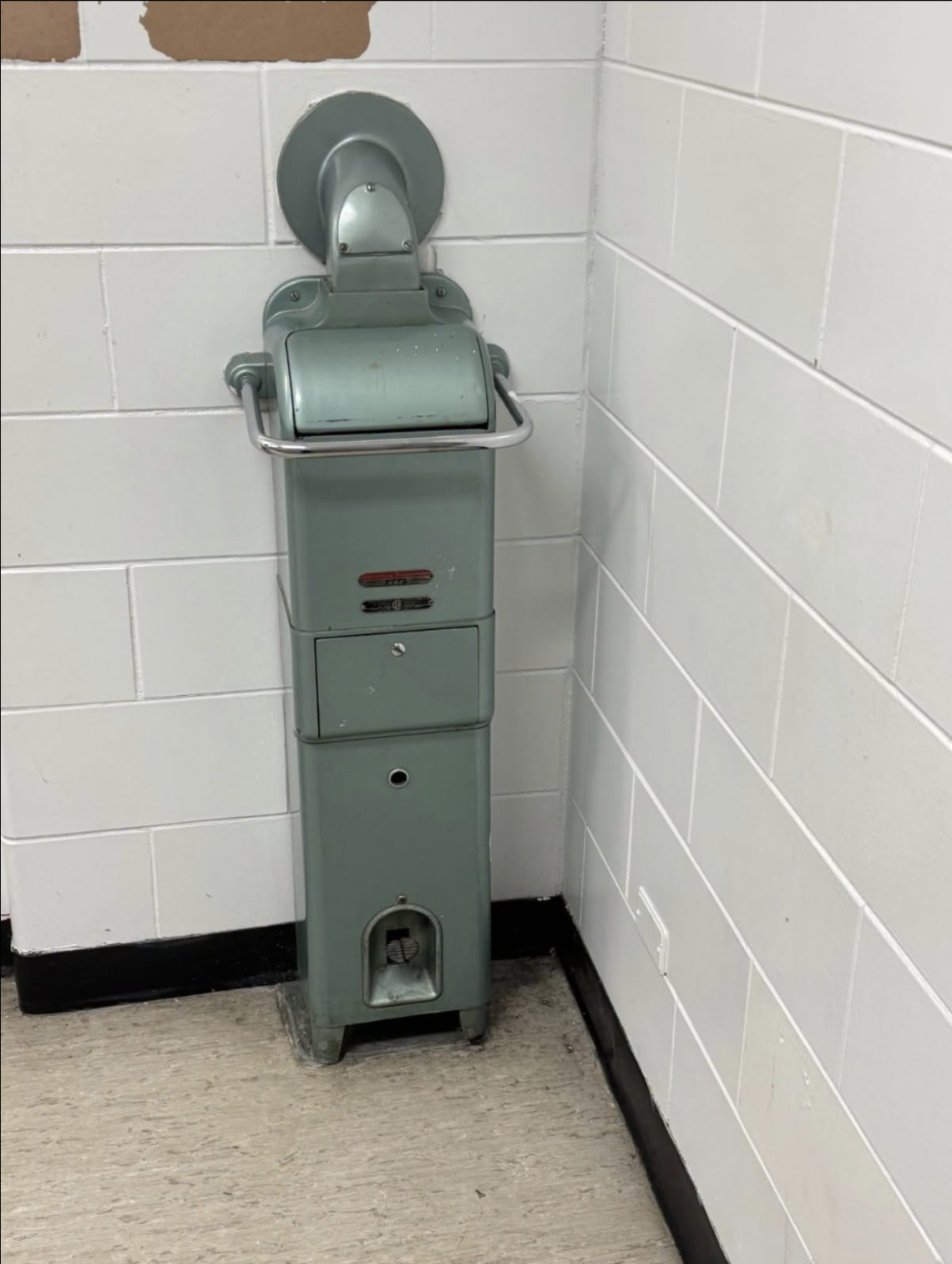
Have you ever walked into an old school, hospital, government building, or historic home and noticed a strange metal compartment built into the bathroom wall? It may look like a tiny furnace, an oversized mailbox, or a thick iron door with a handle and a warning label. To modern eyes, it seems completely out of place, and many people assume it was once used for storing cleaning supplies or hiding plumbing pipes.
In reality, this unusual fixture had a very different purpose.
It was a trash incinerator, a device designed to burn waste directly inside the building. Decades ago, these heavy cast-iron units were considered an innovative solution to one of society’s growing challenges—how to dispose of everyday garbage quickly, conveniently, and hygienically.
Today, the idea of burning rubbish inside a school or bathroom may sound surprising or even alarming. Yet for much of the late nineteenth and early twentieth centuries, incinerators were viewed as symbols of cleanliness, modern engineering, and public health.
Understanding why they were installed offers a fascinating glimpse into how people once managed waste, how cities evolved, and how changing knowledge about health and the environment transformed everyday life.
What Was a Bathroom Trash Incinerator?
A bathroom trash incinerator was a small built-in furnace designed specifically for burning lightweight waste.
Typically constructed from thick cast iron or heavy steel, these units were installed directly into masonry walls.
Most featured:
- A sturdy metal door.
- A fire-resistant chamber.
- Air vents for combustion.
- A connection to a chimney or flue.
- Heat-resistant construction.
Waste placed inside could be burned, leaving behind only a small amount of ash.
Why Were They Installed?
Modern garbage collection systems were not always available.
In many communities, especially during the late 1800s and early 1900s, household and institutional waste accumulated quickly.
People needed practical ways to dispose of:
- Paper
- Cardboard
- Food wrappers
- Cloth scraps
- Hygiene products
- Medical waste
- Packaging materials
Burning appeared to offer a fast and convenient solution.
A Different World Before Modern Waste Collection
Today, most people simply place trash into a bin, where it is collected regularly by municipal sanitation services.
A century ago, conditions were very different.
Many towns had:
- Limited garbage collection.
- Dirt roads.
- Horse-drawn transportation.
- Open dumping grounds.
- Minimal recycling.
- Few organized sanitation systems.
People often had to manage much of their own waste.
Public Health and Sanitation
Growing cities faced increasing concerns about sanitation.
Rotting garbage attracted:
- Rats
- Flies
- Cockroaches
- Other pests
Officials worried that poor waste management contributed to unsanitary living conditions and the spread of disease.
Although modern science has refined our understanding of disease transmission, improving sanitation was—and remains—an important public health goal.
Incineration was seen as one way to reduce waste accumulation and discourage pests.
Why Were They Found in Bathrooms?
Many older public buildings installed incinerators in restrooms because bathrooms generated a steady stream of lightweight, combustible waste.
Examples included:
- Paper towels.
- Tissue paper.
- Sanitary products.
- Small paper items.
Rather than transporting these materials elsewhere, staff could dispose of them directly using the built-in unit.
Hospitals and Medical Facilities
Hospitals were among the most common users of small incinerators.
Medical facilities needed methods for disposing of certain waste safely and efficiently.
Incinerators helped reduce the volume of combustible materials before modern medical waste systems became widespread.
Today’s healthcare facilities follow much stricter regulations and use specialized waste treatment methods that differ significantly from these older practices.
Schools and Public Buildings
Schools also installed bathroom incinerators.
Administrators believed they offered:
- Cleaner facilities.
- Reduced odors.
- Less frequent trash removal.
- Better sanitation.
At the time, these benefits were considered significant improvements.
Homes with Built-In Incinerators
Some private homes—particularly those built during the early and mid-twentieth century—included small residential incinerators.
Homeowners could burn:
- Junk mail.
- Newspapers.
- Cardboard.
- Paper packaging.
- Dry household waste.
In neighborhoods lacking regular waste collection, this was often viewed as a practical convenience.
How Did They Work?
The process was relatively simple.
- Waste was placed inside the fire chamber.
- The heavy metal door was closed.
- The contents were ignited.
- Air vents supplied oxygen for combustion.
- Smoke exited through a chimney or flue.
- After cooling, the remaining ash was removed.
Because these units generated high temperatures, they were built from durable, heat-resistant materials.
Why Were They So Heavy?
Most incinerators were made from cast iron.
Cast iron offered several advantages:
- Excellent heat resistance.
- Long service life.
- Fire containment.
- Structural durability.
- Resistance to warping under high temperatures.
Many units have survived for decades because of this robust construction.
The Growing Awareness of Air Pollution
As cities expanded and scientific understanding improved, attitudes toward waste burning began to change.
Researchers and public health officials recognized that uncontrolled burning could release:
- Smoke.
- Fine particles.
- Unpleasant odors.
- Harmful pollutants, depending on the materials being burned.
These concerns, combined with improvements in municipal waste collection, gradually reduced the need for small building incinerators.
Advances in Waste Management
During the twentieth century, communities increasingly invested in:
- Regular garbage collection.
- Sanitary landfills.
- Recycling programs.
- Composting.
- Waste sorting.
- Modern transfer stations.
- Centralized waste treatment facilities.
These developments offered safer and more efficient alternatives to burning trash inside buildings.
Environmental Considerations
Modern environmental science emphasizes reducing waste through:
- Reuse.
- Recycling.
- Composting.
- Responsible disposal.
Many materials commonly found in today’s waste stream—such as plastics and certain synthetic products—can release harmful substances if burned improperly.
For this reason, open burning and small-scale incineration are often restricted or prohibited in many areas.
Why Some Old Incinerators Still Exist
Even though they are no longer used, many old buildings still contain their original incinerators.
Reasons include:
- Historical preservation.
- Cost of removal.
- Thick masonry construction.
- Architectural significance.
Some have been sealed permanently, while others remain as reminders of earlier engineering practices.
A Window into Everyday History
These forgotten fixtures tell an interesting story about daily life in another era.
They reflect a time when:
- Convenience meant burning waste immediately.
- Municipal services were limited.
- Public sanitation was rapidly evolving.
- Buildings were designed with self-contained waste solutions.
What seems strange today once represented modern technology.
Frequently Asked Questions
Are old bathroom incinerators still functional?
Most surviving units have been permanently decommissioned, sealed, or disconnected from their original chimneys.
Are they safe to use today?
Generally, no. Older incinerators were designed for a different era and typically do not meet modern building, fire, or environmental standards. They should not be put back into service without appropriate professional evaluation and compliance with current regulations.
Why were they removed?
Improved garbage collection, stricter environmental regulations, advances in public health, and concerns about air quality made them largely unnecessary.
Can they be preserved?
Yes. In some historic buildings, they are retained as architectural features or museum pieces that illustrate past approaches to waste management.
Fascinating Facts
Cast-iron bathroom incinerators are now considered intriguing artifacts of architectural history. Historians and preservationists often study them because they reveal how engineers once addressed sanitation challenges before the development of today’s sophisticated waste management systems. Although obsolete by modern standards, these durable fixtures continue to spark curiosity among visitors exploring older schools, hospitals, hotels, and public buildings.

Welcome to my kitchen!
I’m a passionate home cook and recipe creator who loves turning simple ingredients into delicious, comforting meals that everyone can enjoy. Through this website, I share carefully prepared recipes, practical cooking tips, and easy-to-understand food education to help you feel more confident in the kitchen.
My goal is to make cooking simple, enjoyable, and accessible. Whether you are looking for a quick family dinner, a delicious dessert, healthy meal ideas, or traditional recipes with a modern touch, you’ll find inspiration here.
More Than Just Recipes
I believe that cooking is also a way to learn. That’s why this website is not only about recipes. I also create educational articles about ingredients, cooking techniques, kitchen tips, food preparation, and the stories behind different dishes.
Each article is designed to give you useful knowledge that you can apply in your own kitchen. From understanding how ingredients work together to learning better cooking methods, my aim is to help you become a more confident and creative cook.
My Philosophy
Good food doesn’t always require complicated ingredients or professional equipment. With a little knowledge, patience, and creativity, simple ingredients can become something truly special.
I believe in sharing recipes that are practical, clearly explained, and enjoyable to make. I also love exploring new flavors while appreciating traditional cooking and the recipes passed down through generations.
Thank you for visiting my kitchen and being part of this food-loving community. I hope my recipes and articles inspire you to cook, learn, experiment, and most importantly, enjoy every bite!
Happy cooking!