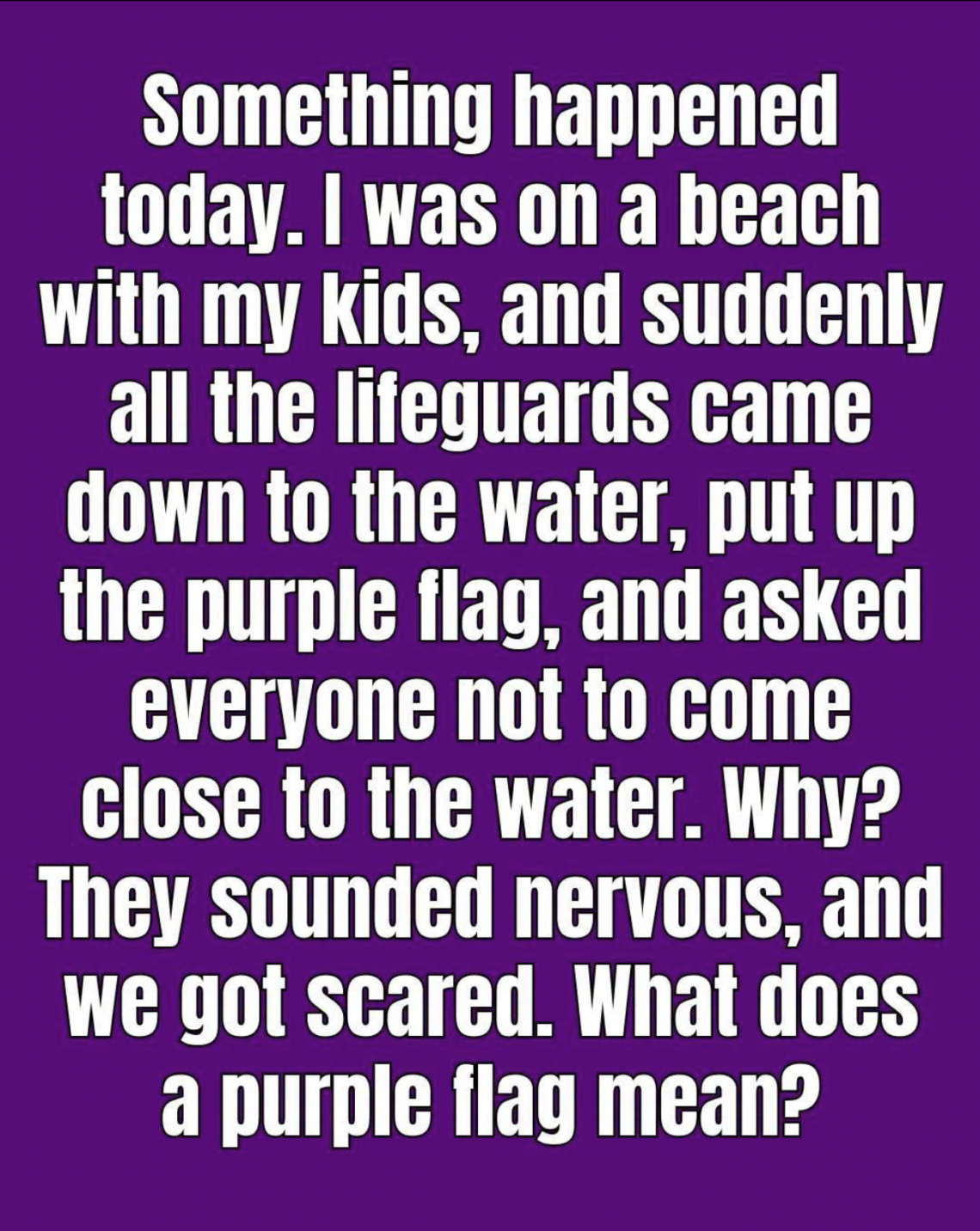
A Colorful Warning That Many People Overlook
A day at the beach is often associated with sunshine, gentle waves, warm sand, and carefree relaxation. Whether you’re planning to swim, surf, build sandcastles with the kids, or simply enjoy the ocean breeze, safety should always be part of the experience.
Most people recognize common beach warning flags like the red flag, which signals dangerous water conditions, or the yellow flag, which advises swimmers to use extra caution. However, there’s one flag that often causes confusion because it’s less commonly discussed—the purple flag.
If you’ve ever spotted a purple flag flying near a lifeguard tower, you may have wondered what it means. Is it warning about rough water? Pollution? Jellyfish? Should you stay out of the ocean entirely?
The answer is both simple and important.
A purple flag is typically used to alert beach visitors that dangerous marine life has been observed in the water or along the shoreline. It doesn’t necessarily mean the beach is closed, but it does mean you should be extra cautious before entering the water.
Understanding what this flag represents can help you make informed decisions and avoid painful—or even dangerous—encounters with marine animals.
What Does a Purple Beach Flag Mean?
In many coastal regions, especially in the United States, a purple flag indicates that potentially hazardous marine life is present.
This may include:
- Jellyfish
- Portuguese man o’ war
- Stingrays
- Sea urchins
- Venomous fish
- Certain species of sharks (depending on local flag systems)
- Other marine creatures capable of causing injury
The exact meaning can vary slightly depending on local authorities, so it’s always a good idea to read the posted beach safety information or ask a lifeguard if you’re unsure.
Why Is the Purple Flag Important?
The ocean is home to thousands of fascinating species.
Most are harmless and prefer to avoid people, but some can:
- Sting
- Bite
- Inject venom
- Cause allergic reactions
- Leave painful wounds
The purple flag serves as an early warning so visitors can take appropriate precautions before entering the water.
Rather than creating fear, it encourages awareness.
Does a Purple Flag Mean You Can’t Swim?
Not necessarily.
Unlike a double red flag, which often indicates that the water is closed to the public because conditions are extremely dangerous, a purple flag usually does not automatically prohibit swimming.
Instead, it advises beachgoers to:
- Stay alert.
- Watch where you step.
- Avoid touching marine animals.
- Follow lifeguard instructions.
- Keep children close.
If lifeguards recommend staying out of the water because of the specific hazard, it’s wise to follow their advice.
Marine Animals Commonly Associated With Purple Flags
Jellyfish
Jellyfish are among the most common reasons a purple flag is raised.
Their tentacles contain specialized cells capable of delivering painful stings.
Symptoms can include:
- Burning pain
- Red welts
- Swelling
- Itching
Most stings are mild, but some species can cause more serious reactions.
Portuguese Man o’ War
Although often mistaken for a jellyfish, the Portuguese man o’ war is a different type of marine organism.
Its long tentacles can deliver extremely painful stings, even after washing ashore.
Never touch one, whether it appears alive or dead.
Stingrays
Stingrays typically rest beneath shallow sand.
Most injuries occur when swimmers accidentally step on them.
Many coastal areas recommend the “stingray shuffle”—sliding your feet through the sand instead of taking large steps—to reduce the chance of surprising one.
Sea Urchins
Sea urchins are covered with sharp spines that can easily puncture bare feet.
They are often found near rocky shorelines, reefs, and tide pools.
Protective water shoes can help reduce the risk of injury.
Venomous Fish
Certain fish species possess venomous spines used for defense.
Although encounters are uncommon, they can occur in shallow coastal waters.
Why Marine Life Comes Close to Shore
Marine animals don’t usually approach beaches to interact with people.
Instead, they may be drawn closer because of:
- Ocean currents
- Seasonal migrations
- Water temperature changes
- Food availability
- Storm activity
- Tides
Sometimes large numbers of jellyfish arrive together after strong winds or changing currents.
Seasonal Patterns
Certain times of year bring increased marine activity.
Depending on the region, beaches may experience seasonal increases in:
- Jellyfish blooms
- Stingray populations
- Sea turtle nesting
- Fish migrations
Lifeguards monitor these conditions closely.
How Lifeguards Decide to Raise a Purple Flag
Beach safety teams monitor:
- Reports from swimmers
- Marine life sightings
- Water patrols
- Environmental conditions
- Recent injuries
- Local wildlife activity
If enough evidence suggests an increased risk, the purple flag is raised to inform visitors.
What Should You Do If You See a Purple Flag?
A purple flag doesn’t mean you need to panic.
Instead:
- Read all posted warning signs.
- Ask lifeguards what has been observed.
- Stay aware of your surroundings.
- Avoid swimming through visible groups of jellyfish.
- Wear appropriate footwear in rocky or shallow areas.
- Supervise children carefully.
What If You Are Stung?
If you believe you’ve been stung by marine life:
- Leave the water carefully.
- Notify a lifeguard immediately.
- Follow local first-aid guidance.
- Seek medical attention if symptoms become severe or if you experience difficulty breathing, widespread swelling, severe pain, dizziness, or signs of an allergic reaction.
Treatment depends on the type of marine animal involved, so local lifeguards or healthcare professionals are the best source of advice.
Other Common Beach Warning Flags
While flag systems vary by country and beach, many locations use colors to communicate hazards.
Common examples include:
- Green Flag: Low hazard; conditions are generally calm, though normal water safety still applies.
- Yellow Flag: Moderate surf or currents; swim with caution.
- Red Flag: High hazard with dangerous surf or currents.
- Double Red Flag: Water closed to the public.
- Black-and-White Checkered Flag: Designated area for surfing or other watercraft, where swimming may not be allowed.
Always remember that flag meanings can differ by location, so check local signage.
Safety Tips for Swimming When Marine Life Is Present
Even if the beach remains open:
- Never touch unfamiliar marine animals.
- Wear water shoes where appropriate.
- Avoid swimming alone.
- Keep a safe distance from wildlife.
- Listen to lifeguard announcements.
- Leave the water if instructed.
- Watch children closely.
Frequently Asked Questions
Is a purple flag only used for jellyfish?
No. Jellyfish are one of the most common reasons, but the flag may also indicate other potentially dangerous marine life depending on local beach policies.
Does a purple flag mean sharks are nearby?
Not always. Some beaches have separate warning systems for sharks, while others may include certain shark-related advisories under broader marine-life alerts. Follow local guidance.
Can I still enjoy the beach?
Absolutely. Many people continue to enjoy the beach by walking along the shore, relaxing on the sand, or participating in activities outside the water while remaining aware of posted warnings.
Should children stay out of the water?
That depends on the specific hazard and the advice of local lifeguards. Young children are generally more vulnerable to stings and injuries, so extra caution is recommended.
Interesting Facts
Beach flag systems were created to provide quick, easily recognizable safety information regardless of language. A simple colored flag can communicate important hazards in seconds, helping both local residents and international visitors make safer decisions. Lifeguards rely on these visual signals because they can be seen from a distance and understood even in noisy beach environments.

Welcome to my kitchen!
I’m a passionate home cook and recipe creator who loves turning simple ingredients into delicious, comforting meals that everyone can enjoy. Through this website, I share carefully prepared recipes, practical cooking tips, and easy-to-understand food education to help you feel more confident in the kitchen.
My goal is to make cooking simple, enjoyable, and accessible. Whether you are looking for a quick family dinner, a delicious dessert, healthy meal ideas, or traditional recipes with a modern touch, you’ll find inspiration here.
More Than Just Recipes
I believe that cooking is also a way to learn. That’s why this website is not only about recipes. I also create educational articles about ingredients, cooking techniques, kitchen tips, food preparation, and the stories behind different dishes.
Each article is designed to give you useful knowledge that you can apply in your own kitchen. From understanding how ingredients work together to learning better cooking methods, my aim is to help you become a more confident and creative cook.
My Philosophy
Good food doesn’t always require complicated ingredients or professional equipment. With a little knowledge, patience, and creativity, simple ingredients can become something truly special.
I believe in sharing recipes that are practical, clearly explained, and enjoyable to make. I also love exploring new flavors while appreciating traditional cooking and the recipes passed down through generations.
Thank you for visiting my kitchen and being part of this food-loving community. I hope my recipes and articles inspire you to cook, learn, experiment, and most importantly, enjoy every bite!
Happy cooking!