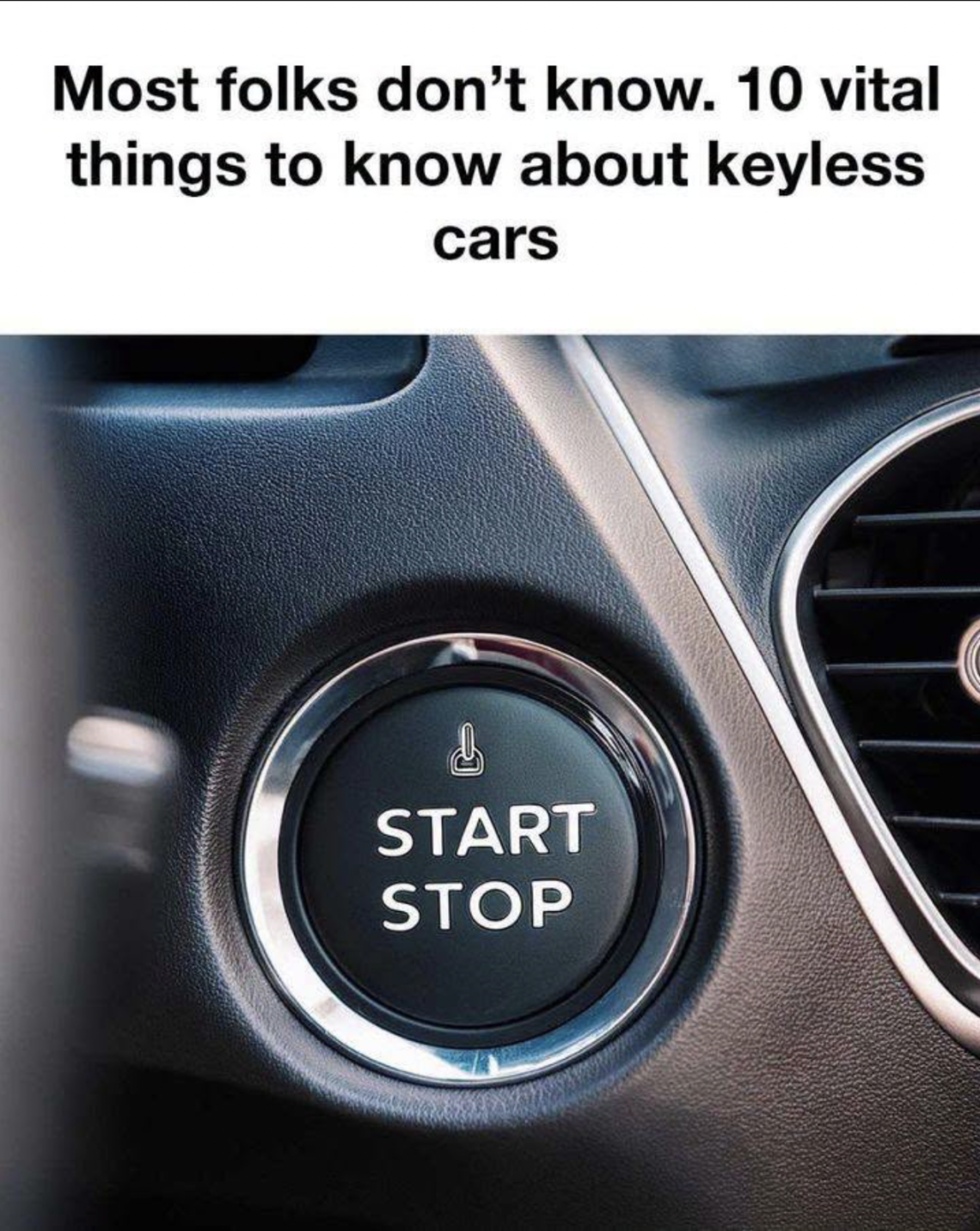
Modern automotive technology has changed the way people interact with their vehicles. One of the most noticeable developments is the move away from traditional metal keys toward keyless entry and keyless-start systems.
With these systems, a driver can often unlock the vehicle simply by approaching it with the key fob in a pocket or bag. In many models, the engine can then be started by pressing a button while the vehicle detects that the authorized fob is inside.
The convenience is undeniable. There is no need to search through a bag for a conventional key, and drivers can often lock, unlock, and start their vehicles with remarkably little effort.
However, keyless technology also introduces new considerations involving security, battery life, accidental activation, and electronic communication. Understanding how the system works can help drivers use it more confidently and recognize situations in which extra care may be useful.
What Exactly Is a Keyless Car?
The phrase “keyless car” can describe several related technologies.
A vehicle may have:
- remote keyless entry,
- passive keyless entry,
- push-button ignition,
- keyless trunk or tailgate access,
- smartphone-based vehicle access.
These features don’t necessarily all appear together.
A vehicle might allow remote unlocking with a button on the fob while still requiring the driver to insert a key to start the engine. Another vehicle may allow both entry and starting without physically removing the fob from a pocket.
The exact system varies considerably between manufacturers and models.
How Keyless Entry Works
A modern keyless system generally involves communication between the vehicle and an electronic key fob.
The fob contains electronic components that allow it to communicate with the vehicle using short-range wireless signals.
When you approach a compatible vehicle, the car may detect the presence of the authorized fob.
Depending on the system, the vehicle and fob exchange information to verify that the correct key is present.
If the authentication succeeds, the vehicle can permit certain functions, such as unlocking the doors.
This process happens extremely quickly, often without the driver noticing the electronic communication taking place.
What Happens When You Press the Start Button?
In a push-button-start vehicle, pressing the ignition button doesn’t simply act like a traditional mechanical key.
Instead, the vehicle’s electronic control systems check whether an authorized key fob is present.
If the system determines that the correct fob is available and other required conditions are satisfied, the vehicle can authorize engine starting.
Depending on the vehicle, those conditions may include having the brake pedal pressed or the transmission selector in the appropriate position.
The precise procedure differs by manufacturer, so the owner’s manual remains the best source for model-specific instructions.
Keyless Entry Isn’t Exactly the Same as RFID
Keyless systems are sometimes described broadly as RFID technology, but the reality is more complicated.
Modern vehicle access systems can use combinations of radio-frequency communication, low-frequency signals, encrypted authentication, and other wireless technologies.
The vehicle and key fob may communicate in multiple stages rather than relying on a single simple radio signal.
This is one reason keyless systems can perform functions such as determining whether the fob is near the vehicle or whether it is inside the cabin.
Rolling Codes and Modern Security
Many remote vehicle systems use changing or cryptographically protected authentication information rather than transmitting one permanent unlock code every time.
A rolling-code system changes the relevant code or authentication information between uses.
This makes simple replay attacks more difficult because an intercepted transmission may not remain useful indefinitely.
Modern vehicles can use more sophisticated cryptographic authentication than the basic rolling-code systems associated with older remote key systems.
However, no electronic security system should be considered completely immune to attack.
The Convenience of Keyless Entry
The greatest advantage is obvious: convenience.
Imagine carrying groceries to your car.
Instead of putting everything down to search for your keys, you can often simply touch the door handle or use the vehicle’s designated access feature.
The same convenience can be useful when:
- it’s raining,
- you’re carrying luggage,
- you’re holding a child,
- your hands are occupied,
- you’re wearing gloves,
- you’re entering the vehicle at night.
For many drivers, these small conveniences make a surprisingly large difference in everyday life.
Push-Button Starting
Push-button ignition is another major change from traditional keys.
Instead of inserting and turning a physical key, the driver typically presses a button after the vehicle confirms that the authorized fob is present.
This can make starting the vehicle faster and easier.
It also eliminates the possibility of physically breaking a conventional ignition key inside the ignition cylinder.
Automatic Locking and Unlocking
Some vehicles can automatically lock when the driver walks away.
Others require the driver to touch a particular area of the door handle or press a button on the fob.
Because systems vary, it is important not to assume your car has automatically locked simply because you walked away.
If you’re unsure, check the vehicle’s lock indicator or use the manufacturer’s recommended method for confirming that the doors are secured.
What Happens If the Key Fob Battery Dies?
This is one of the most important things for every keyless-car owner to understand.
The key fob contains a small battery, and eventually that battery will need replacement.
Fortunately, many vehicles have a backup procedure.
Depending on the model, the physical emergency key inside the fob may allow you to unlock the driver’s door.
The vehicle may also have a designated location where the fob can be placed so that the car can recognize it even when the fob’s battery is weak or depleted.
The exact procedure differs by vehicle.
Check your owner’s manual before you need it.
Knowing the backup procedure in advance can prevent a frustrating situation later.
What Are Relay Attacks?
One of the major security concerns associated with some passive keyless systems is the possibility of a relay attack.
In a relay attack, criminals attempt to extend or relay communication between a vehicle and its key fob.
The goal can be to make the vehicle believe the authorized key is closer than it actually is.
This is fundamentally different from someone simply guessing your key code.
The attack takes advantage of the way some passive-entry systems determine whether the authorized fob is nearby.
How Can Drivers Reduce Their Risk?
You don’t need to become a cybersecurity expert to take sensible precautions.
Consider:
- keeping your key fob somewhere secure when you’re at home,
- checking whether your vehicle manufacturer recommends a specific security setting,
- using the vehicle’s available anti-theft features,
- keeping vehicle software and security updates current when applicable,
- following manufacturer guidance regarding keyless-entry protection.
Some key fobs offer features that allow wireless communication to be disabled temporarily, although availability and activation methods vary by manufacturer.
Don’t assume a particular trick works for every vehicle.
Don’t Leave the Key Fob Somewhere Obvious
Treat an electronic key fob with the same basic care you would give a traditional car key.
Avoid leaving it in an easily accessible location near doors or windows if your vehicle uses passive keyless entry.
The best location depends on your home, vehicle, and manufacturer’s recommendations.
The goal is simply to avoid making the key unnecessarily accessible.
Smartphone-Based Keyless Entry
Some newer vehicles can use a smartphone as a digital vehicle key.
Depending on the manufacturer and phone, the system may use technologies such as Bluetooth or near-field communication.
This can provide additional convenience because many people already carry their phones everywhere.
However, it introduces another consideration: keeping your phone charged, secured, and protected with a strong device passcode.
What If the Car Doesn’t Detect the Key?
There are several possible reasons.
The fob battery may be weak.
The fob could be outside the vehicle.
Radio interference may occasionally affect communication.
The vehicle may have a system fault.
Or the fob may simply be in an unusual location where the vehicle has difficulty detecting it.
If this happens, consult the owner’s manual for the emergency detection procedure rather than repeatedly pressing buttons and hoping the system responds.
Keyless Systems Can Still Have Physical Backup Features
Many modern vehicles retain some form of mechanical backup.
A key fob may contain a small physical key that can be removed and used to unlock the door manually.
This feature is easy to overlook because the emergency key is often concealed within the fob.
Knowing where it is before an emergency occurs is worthwhile.
Keyless Technology and Driver Habits
Electronic convenience can sometimes encourage people to become less conscious of basic vehicle security.
With a traditional key, physically locking the car is a deliberate action.
With passive entry, it’s possible to become accustomed to simply walking away.
That’s why good habits still matter.
Before leaving your vehicle, make sure:
- the doors are locked,
- windows are closed,
- the key fob is with you,
- valuables aren’t unnecessarily visible,
- the vehicle is parked somewhere appropriate.
Technology can help with security, but it doesn’t replace sensible habits.
What Happens When You Walk Away While the Engine Is Running?
This depends heavily on the vehicle.
Some vehicles provide warnings or continue running under certain circumstances.
Others may have different restrictions.
A keyless system does not necessarily mean the vehicle will shut itself off automatically simply because the fob leaves the area.
Never assume the car will handle everything for you.
If you are unsure about your particular vehicle, check the owner’s manual for its exact behavior.
Keyless Cars and Convenience vs. Security
The biggest lesson is that convenience and security aren’t necessarily opposites, but every new technology creates new considerations.
Keyless systems eliminate many frustrations associated with traditional keys.
At the same time, they depend on electronic authentication and wireless communication, which introduces different kinds of risks.
The best approach is not to fear the technology.
Instead, understand it.
Know how your particular system works, know what happens when the fob battery is weak, understand how the emergency key works, and learn which security features your vehicle provides.