The Forgotten Household Tool That Once Made Laundry Day Possible
There’s something magical about wandering through a yard sale.
You move slowly from table to table, surrounded by:
- faded photographs
- chipped dishes
- handwritten recipe cards
- worn tools
- stacks of old magazines
- objects whose stories have long outlived their original owners
Most items feel familiar, even if outdated.
But every now and then, you encounter something completely puzzling:
an object from another era whose purpose is no longer immediately obvious.
That’s exactly the kind of moment many people experience when they discover a vintage laundry wringer for the first time.
At first glance, the device looks unusual:
- wooden frame
- heavy metal rollers
- hand crank or pressure system
- sturdy cast-iron construction
To modern eyes, it can resemble:
- a strange kitchen gadget
- an antique printing press
- or even an industrial machine component.
But decades ago, this humble tool was an essential part of household life.
Before electric washing machines became standard, laundry wringers helped families complete one of the most exhausting weekly chores imaginable.
What Is a Vintage Laundry Wringer?
A laundry wringer was a manual device used to squeeze excess water from freshly washed clothing.
It typically featured:
- two tightly pressed rollers
- a crank mechanism
- adjustable pressure controls
- a frame that attached to a wash tub or basin
After clothing was washed by hand, the fabric would be fed carefully through the rollers.
As the rollers turned, they compressed the fabric and forced water out.
The result:
- drier clothing
- shorter drying times
- less physical strain compared to hand twisting heavy wet fabric.
Why Laundry Used to Be So Physically Demanding
Modern laundry is largely invisible labor.
Today, most people simply:
- load clothes into a machine
- add detergent
- press a button
- transfer items to a dryer
But historically, laundry day was one of the hardest household responsibilities.
Washing clothes involved:
- hauling water
- heating water manually
- scrubbing fabric by hand
- rinsing repeatedly
- wringing out soaked garments
- hanging everything to dry
Large families generated enormous amounts of laundry, especially before synthetic fabrics existed.
Heavy cotton, wool, and linen absorbed huge quantities of water, making wet clothing extremely difficult to handle.
Why the Wringer Was Such an Important Innovation
Before wringers, people removed water from clothing by:
- twisting garments manually
- squeezing them by hand
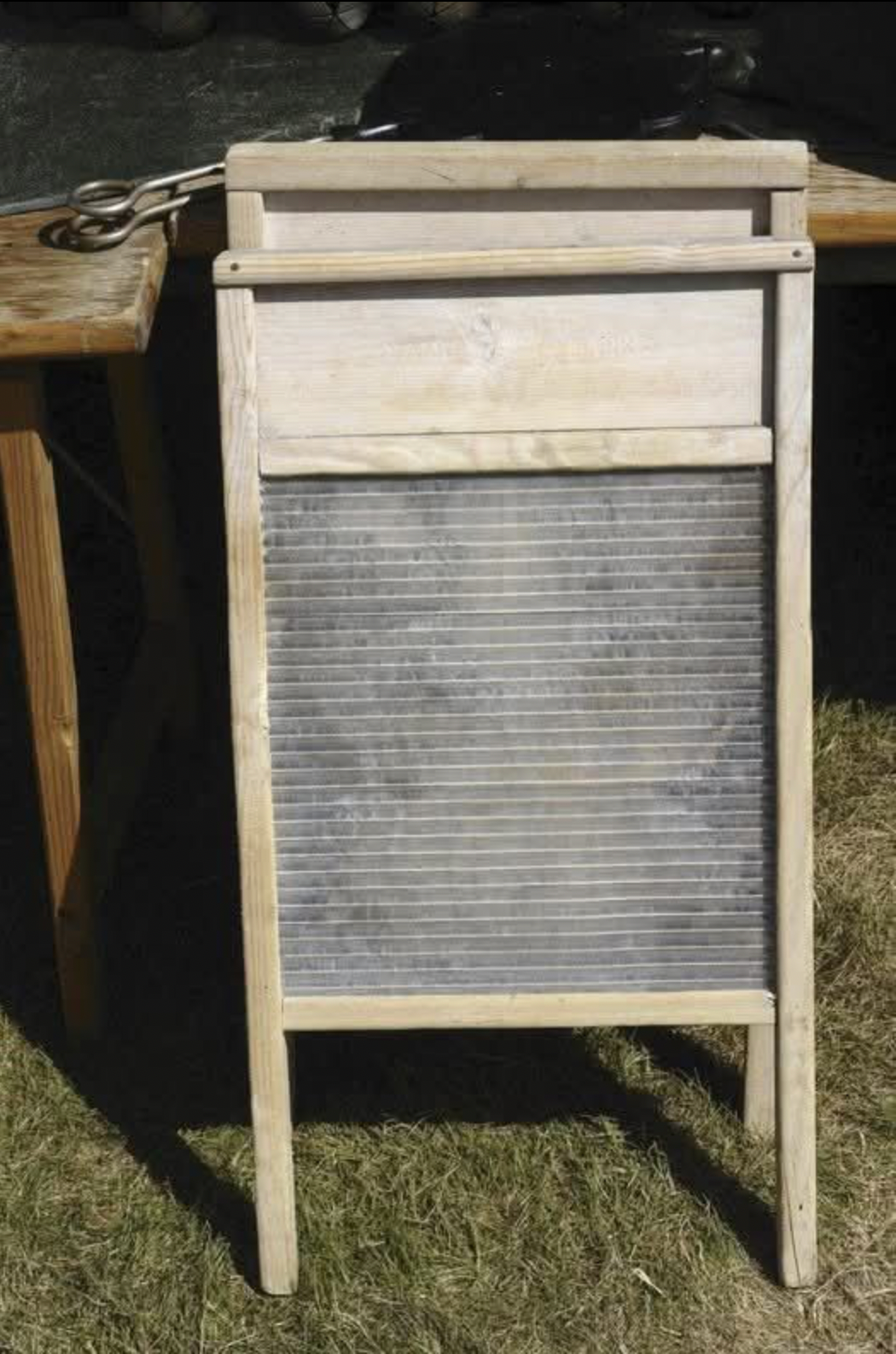
- pressing fabric against washboards or tubs
This was:
- exhausting
- time-consuming
- rough on the hands and wrists
The wringer dramatically reduced physical effort.
By mechanically squeezing water from fabric, it:
- saved labor
- sped up drying
- reduced strain on the body
For many households, it represented a meaningful improvement in daily life.
How the Wringer Worked
The design was simple but effective.
Clothing was fed between:
- two rubber or wooden rollers
Pressure forced water out as the garment passed through.
Many wringers used:
- spring-loaded tension
- adjustable knobs
- hand cranks
Some later models attached directly to early washing machines.
Others stood independently beside wash tubs.
Why Old Wringers Were Built So Solidly
One thing that surprises people today is the weight and craftsmanship of vintage laundry tools.
Many were made from:
- cast iron
- hardwood
- steel gears
because they needed to survive years of constant use.
Unlike many modern appliances designed for replacement, these tools were built to:
- last decades
- be repaired
- withstand moisture and heavy pressure
Some families passed them down across generations.
The Dangers of Early Laundry Wringers
Although useful, wringers could also be dangerous.
Hands, fingers, sleeves, or hair could become caught in the rollers if users weren’t careful.
Children were especially vulnerable around them.
As a result, many later wringers added:
- quick-release safety mechanisms
- easier pressure adjustment
- safer roller spacing
These improvements reflected growing awareness of household safety during the industrial age.
Laundry Day Was Once an Entire Event
For many families, laundry wasn’t a quick chore—it was an all-day process.
In the late 19th and early 20th centuries:
- Monday was often designated “wash day”
- large batches were cleaned only once weekly
- women often spent entire days washing clothes manually
The process included:
- heating water
- scrubbing garments
- rinsing repeatedly
- wringing clothes
- hanging everything outdoors
A laundry wringer represented efficiency in an otherwise exhausting routine.
The Emotional Power of Antique Household Objects
What makes vintage tools so fascinating isn’t just how they worked—it’s what they represent.
A laundry wringer tells a story about:
- domestic labor
- survival
- family life
- resourcefulness
- patience
- physical work that modern generations rarely experience firsthand.
These objects remind us that everyday life once required:
- far more time
- more manual effort
- more endurance
especially for women managing households before automation transformed domestic work.
Why People Feel Nostalgic About These Objects
Even people who never used wringers themselves often feel emotional when seeing them because they connect to:
- grandparents
- old family homes
- childhood memories
- stories passed through generations
Vintage laundry tools evoke an era when:
- chores were slower
- objects lasted longer
- repairs were common
- households depended heavily on durable physical tools.
The Rise of Electric Washing Machines
As electricity became widespread in the early-to-mid 20th century, laundry technology changed rapidly.
Electric washing machines gradually replaced:
- washboards
- hand washing
- manual wringers
Later innovations added:
- spin cycles
- automatic draining
- electric dryers
Over time, wringers disappeared from most homes.
Why Vintage Laundry Tools Still Fascinate Collectors
Today, antique wringers are collected because people appreciate:
- craftsmanship
- industrial design
- household history
- nostalgia
Some are restored for:
- decorative use
- museums
- historical reenactments
- farmhouse décor
Others remain functional and are occasionally still used in off-grid or rural settings.
What These Objects Teach Us About the Past
Vintage household tools reveal how much unseen labor existed in everyday life.
Modern convenience often hides:
- the historical difficulty of ordinary chores
- the physical demands once required simply to maintain a household
Something as routine as clean clothing once required:
- planning
- physical strength
- specialized tools
- entire days of work.
The laundry wringer represents one small step in the long evolution toward modern convenience.
Why Yard Sales Feel Like Time Capsules
Part of the magic of discovering an object like this at a yard sale is realizing how quickly ordinary life changes.
An item once found in nearly every household can become:
- mysterious
- obsolete
- unrecognizable
within just a few generations.
Yard sales often preserve these quiet pieces of history:
not famous artifacts, but ordinary tools that shaped daily life.
Welcome to my kitchen!
I’m a passionate home cook and recipe creator who loves turning simple ingredients into delicious, comforting meals that everyone can enjoy. Through this website, I share carefully prepared recipes, practical cooking tips, and easy-to-understand food education to help you feel more confident in the kitchen.
My goal is to make cooking simple, enjoyable, and accessible. Whether you are looking for a quick family dinner, a delicious dessert, healthy meal ideas, or traditional recipes with a modern touch, you’ll find inspiration here.
More Than Just Recipes
I believe that cooking is also a way to learn. That’s why this website is not only about recipes. I also create educational articles about ingredients, cooking techniques, kitchen tips, food preparation, and the stories behind different dishes.
Each article is designed to give you useful knowledge that you can apply in your own kitchen. From understanding how ingredients work together to learning better cooking methods, my aim is to help you become a more confident and creative cook.
My Philosophy
Good food doesn’t always require complicated ingredients or professional equipment. With a little knowledge, patience, and creativity, simple ingredients can become something truly special.
I believe in sharing recipes that are practical, clearly explained, and enjoyable to make. I also love exploring new flavors while appreciating traditional cooking and the recipes passed down through generations.
Thank you for visiting my kitchen and being part of this food-loving community. I hope my recipes and articles inspire you to cook, learn, experiment, and most importantly, enjoy every bite!
Happy cooking!