The Surprisingly Practical Purpose Behind That “Strange” Kitchen Tool
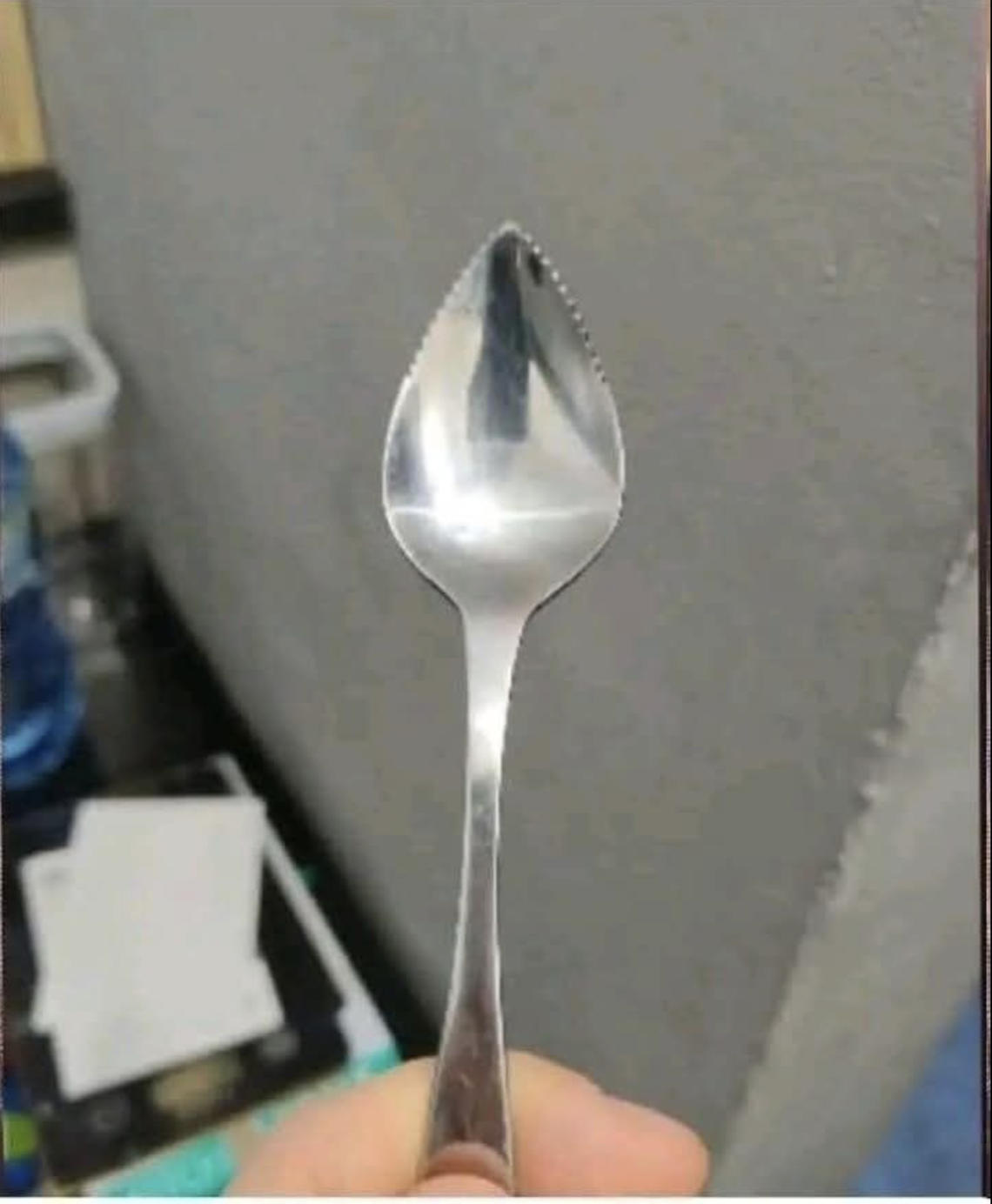
Finding an unusual utensil in a rented place can be confusing. At first glance, a spoon with small ridges or tiny teeth along the edge looks like something specialized—or even broken.
It doesn’t resemble a normal spoon used for soup, cereal, or dessert. Instead, it feels oddly engineered, almost like a hybrid between a spoon and a tiny cutting tool.
But this design is actually intentional. In most cases, what you found is a specialized fruit spoon, sometimes called a citrus spoon or grapefruit spoon.
What That Ridged Spoon Actually Is
A spoon with serrated or ridged edges is commonly designed for eating fruits that are:
- juicy
- segmented
- soft but structured
- difficult to separate cleanly with a regular spoon
The most common use is for:
- grapefruit
- oranges (in some cases)
- kiwi fruit
- melons
- other soft fruits with membranes or sections
The ridges are not decorative—they serve a functional purpose.
Why the Edge Has Ridges or “Teeth”
The small serrations along the spoon’s edge help in two main ways:
1. Cutting Through Fruit Membranes
Many fruits, especially citrus fruits like grapefruit, are divided by thin membranes.
A regular spoon:
- slips over the surface
- struggles to separate sections cleanly
A ridged spoon:
- gently slices through the membranes
- separates segments more easily
- reduces the need for a knife
2. Scooping More Cleanly
The spoon shape still allows you to scoop out the flesh, but the ridges help:
- grip the fruit slightly
- reduce slipping
- lift pieces more neatly
This makes eating messy fruits much easier and more controlled.
The Most Common Use: Grapefruit Spoon
The most classic version of this utensil is the grapefruit spoon, specifically designed for eating grapefruit halves.
Grapefruit is:
- juicy
- segmented
- surrounded by bitter membranes
Without a special spoon, eating it can be messy and slow.
With a ridged spoon:
- you cut along the segment lines
- scoop out clean wedges
- avoid squeezing juice everywhere
This design became especially popular in traditional breakfasts.
How It’s Used Step by Step
If you want to try it properly:
- Cut the fruit in half (like grapefruit or kiwi)
- Insert the ridged spoon near the edge
- Slide it along the natural segment lines
- Use the teeth to gently separate the fruit
- Scoop out clean pieces
The ridges act like a very mild cutting edge—not sharp enough to hurt you, but enough to separate soft tissue.
Other Fruits It Can Be Used For
Even though it’s mainly associated with grapefruit, it can also be useful for:
Kiwi
- helps separate flesh from skin more neatly
Melons (in some cases)
- useful for scooping soft, ripe sections
Oranges
- especially peeled oranges with membrane sections
Avocado (less common)
- can help scoop soft ripe avocado cleanly
Why It Might Be Found in a Rental Kitchen
Many people don’t recognize this utensil today because:
- modern diets rely less on grapefruit breakfasts
- fewer households use specialized fruit tools
- it often gets mixed into generic cutlery sets
So in rentals, Airbnb places, or inherited kitchens, it can easily look “mysterious” or out of place.
It’s usually just leftover from someone who:
- enjoyed citrus fruits regularly
- kept older kitchen tools
- or bought a mixed utensil set
Is It a Dangerous or Medical Tool?
No—despite the sharp-looking ridges, it is not a medical or industrial instrument.
It is:
- safe for normal kitchen use
- not sharp enough to cut skin easily
- designed only for soft fruit
The “teeth” are mild and meant for gentle separation, not cutting hard materials.
Why This Design Still Exists Today
Even though it looks old-fashioned, it’s still produced because:
- grapefruit is still widely eaten
- citrus breakfast traditions continue in some regions
- people like tools that reduce mess
- it makes fruit eating easier for kids or elderly people
It is a small but practical example of “task-specific design” in kitchen tools.
Why It Feels So Confusing at First
Most modern utensils are multipurpose:
- one spoon for everything
- one knife for most cutting tasks
So when you see something specialized like this, it can feel strange because:
- it has a very narrow purpose
- it doesn’t match everyday expectations
- it looks slightly “technical” or unusual
But once you understand it, the design actually makes a lot of sense.

Welcome to my kitchen!
I’m a passionate home cook and recipe creator who loves turning simple ingredients into delicious, comforting meals that everyone can enjoy. Through this website, I share carefully prepared recipes, practical cooking tips, and easy-to-understand food education to help you feel more confident in the kitchen.
My goal is to make cooking simple, enjoyable, and accessible. Whether you are looking for a quick family dinner, a delicious dessert, healthy meal ideas, or traditional recipes with a modern touch, you’ll find inspiration here.
More Than Just Recipes
I believe that cooking is also a way to learn. That’s why this website is not only about recipes. I also create educational articles about ingredients, cooking techniques, kitchen tips, food preparation, and the stories behind different dishes.
Each article is designed to give you useful knowledge that you can apply in your own kitchen. From understanding how ingredients work together to learning better cooking methods, my aim is to help you become a more confident and creative cook.
My Philosophy
Good food doesn’t always require complicated ingredients or professional equipment. With a little knowledge, patience, and creativity, simple ingredients can become something truly special.
I believe in sharing recipes that are practical, clearly explained, and enjoyable to make. I also love exploring new flavors while appreciating traditional cooking and the recipes passed down through generations.
Thank you for visiting my kitchen and being part of this food-loving community. I hope my recipes and articles inspire you to cook, learn, experiment, and most importantly, enjoy every bite!
Happy cooking!