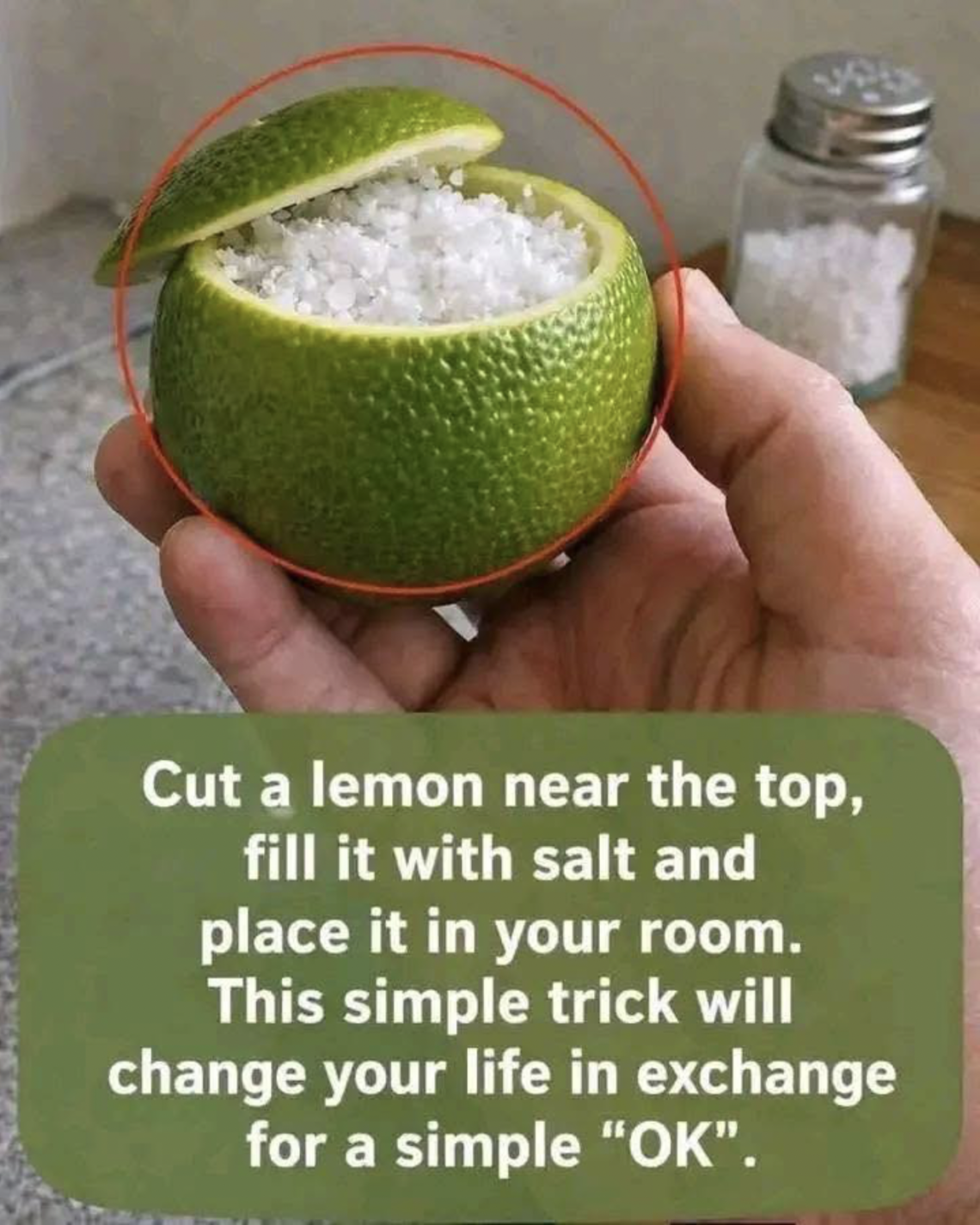
The Viral “Lemon and Salt” Trick Explained — What It Really Does and What It Doesn’t
Every few months, a simple household “life-changing” trick spreads across social media again. One of the most popular versions involves:
- cutting a lemon into four sections
- sprinkling salt over it
- placing it somewhere in a room overnight.
The claims surrounding this trick are often dramatic:
- “It purifies the air”
- “It removes bad energy”
- “It absorbs negativity”
- “It helps you sleep”
- “It naturally freshens the room”
- “It keeps bugs away”
- or even “it changes your life.”
The reality is more grounded—but still interesting.
While lemons and salt are not magical cure-alls, there are a few practical reasons why people enjoy this old household trick, especially because of the scent and mild antimicrobial properties associated with citrus.
Let’s break down what’s actually happening.
Why Lemons Smell So Powerful
The strong fresh scent of lemons comes mainly from compounds in the peel, especially:
- limonene
- citral
- other citrus essential oils.
These aromatic compounds are released more strongly when the lemon is cut open.
That’s why even one sliced lemon can make a room smell noticeably fresher.
The brain often associates citrus smells with:
- cleanliness
- freshness
- energy
- brightness.
This psychological association is very strong because lemon scents are commonly used in:
- cleaning products
- soaps
- air fresheners
- detergents.
So when people place cut lemons in a room, the space can genuinely feel cleaner and more pleasant—even though the effect is mostly sensory and psychological.
What the Salt Does
Salt itself does not magically “pull toxins” out of the air, but it does serve a few practical functions.
Salt:
- draws moisture from surfaces
- slows some microbial growth
- helps preserve the lemon slightly longer
- creates a drying effect on exposed fruit.
When sprinkled over cut lemon flesh, the salt can:
- intensify the release of juices and scent
- slightly reduce rapid spoilage
- create a stronger citrus aroma temporarily.
Can It Actually Purify the Air?
Not in the dramatic way viral posts often claim.
A lemon sitting in a room:
- will not remove pollution
- will not sterilize the air
- will not eliminate viruses or dangerous bacteria from an entire room.
However, citrus oils may contribute to:
- a fresher smell
- reduced perception of odors
- mild localized antimicrobial effects on surfaces.
That’s very different from true air purification systems.
Why People Feel Better Around Citrus Scents
This part is real and supported by research into scent and mood.
Certain citrus aromas may help some people feel:
- more alert
- refreshed
- calmer
- mentally “cleaner.”
Smell has a strong connection to:
- memory
- emotion
- stress response.
So even a simple lemon scent can psychologically change how a room feels.
That’s one reason this trick remains popular.
Does It Help With Sleep?
Indirectly, maybe—for some people.
A pleasant-smelling, calmer-feeling room may:
- reduce stress perception
- encourage relaxation
- create bedtime comfort rituals.
But lemons themselves are not sleep medicine.
The effect is more environmental and emotional than biological.
Can It Reduce Odors?
Yes, to some extent.
Cut lemons can help mask or neutralize mild household smells because:
- citrus oils are strong and fresh-smelling
- acidic compounds interact with some odor molecules.
This is why lemon is often used in:
- garbage disposal cleaning
- kitchen deodorizing
- refrigerator freshening.
Does It Repel Insects?
Possibly a little—but not reliably.
Some insects dislike strong citrus oils, especially:
- ants
- certain mosquitoes
- fruit flies in some situations.
But a cut lemon alone is not a dependable pest-control solution.
In fact, if left too long, exposed fruit may attract insects instead.
Why the Trick Feels “Powerful”
Part of the appeal comes from ritual.
Humans naturally enjoy:
- simple household traditions
- symbolic cleansing acts
- visible freshness cues.
Cutting a bright lemon, sprinkling salt, and placing it carefully in a room creates a feeling of:
- intention
- care
- renewal.
Even if the science is modest, the emotional experience can still feel meaningful.
How People Typically Do the Trick
The common version involves:
- Taking a fresh lemon
- Cutting it into four attached sections (not fully separated)
- Sprinkling salt generously over the exposed flesh
- Placing it on a plate or small dish
- Leaving it in:
- bedroom
- kitchen
- bathroom
- living room.
The strongest scent usually occurs during the first several hours.
What Happens Overnight
Over time:
- the lemon releases aroma compounds
- moisture begins evaporating
- the salt draws liquid outward
- the fruit slowly dries.
The room may smell fresher temporarily, especially in smaller spaces.
Important Reality Check
It’s important not to exaggerate claims.
The lemon-and-salt trick:
- is not medical treatment
- does not detoxify your body
- does not remove dangerous airborne contamination
- does not replace proper cleaning or ventilation.
Its benefits are mainly:
- scent-based
- mood-related
- mildly deodorizing.
When the Trick Works Best
People tend to enjoy it most:
- in stuffy rooms
- after cooking smells
- during cleaning routines
- as part of relaxation rituals
- in small enclosed spaces.
Potential Downsides
If left too long:
- mold can develop
- fruit may rot
- insects may appear.
It’s best to discard the lemon after 1–2 days.

Welcome to my kitchen!
I’m a passionate home cook and recipe creator who loves turning simple ingredients into delicious, comforting meals that everyone can enjoy. Through this website, I share carefully prepared recipes, practical cooking tips, and easy-to-understand food education to help you feel more confident in the kitchen.
My goal is to make cooking simple, enjoyable, and accessible. Whether you are looking for a quick family dinner, a delicious dessert, healthy meal ideas, or traditional recipes with a modern touch, you’ll find inspiration here.
More Than Just Recipes
I believe that cooking is also a way to learn. That’s why this website is not only about recipes. I also create educational articles about ingredients, cooking techniques, kitchen tips, food preparation, and the stories behind different dishes.
Each article is designed to give you useful knowledge that you can apply in your own kitchen. From understanding how ingredients work together to learning better cooking methods, my aim is to help you become a more confident and creative cook.
My Philosophy
Good food doesn’t always require complicated ingredients or professional equipment. With a little knowledge, patience, and creativity, simple ingredients can become something truly special.
I believe in sharing recipes that are practical, clearly explained, and enjoyable to make. I also love exploring new flavors while appreciating traditional cooking and the recipes passed down through generations.
Thank you for visiting my kitchen and being part of this food-loving community. I hope my recipes and articles inspire you to cook, learn, experiment, and most importantly, enjoy every bite!
Happy cooking!