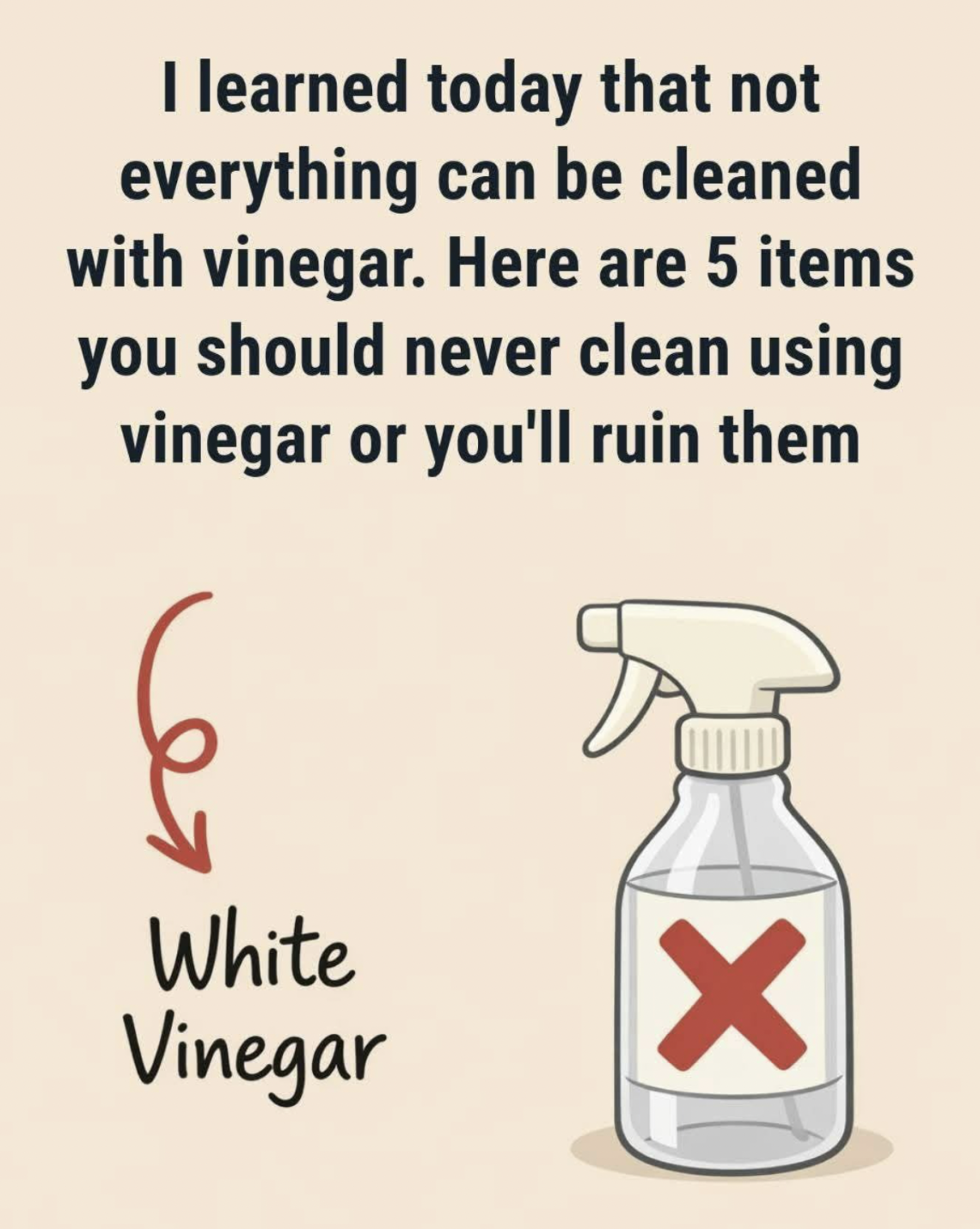
And What to Use Instead for Safe, Effective Cleaning
Vinegar has earned a reputation as the ultimate natural cleaning solution.
People use it for:
- windows
- coffee makers
- microwaves
- kettles
- laundry
- deodorizing
- removing mineral buildup.
And in many situations, it works surprisingly well.
That’s because vinegar contains acetic acid, a mild acid capable of:
- dissolving mineral deposits
- cutting through some grease
- reducing odors
- breaking down soap scum.
But despite its popularity, vinegar is not universally safe.
In fact, using vinegar on the wrong surface can:
- dull finishes
- weaken protective coatings
- damage stone
- degrade rubber
- permanently ruin expensive materials.
The problem is that many viral cleaning tips treat vinegar like a miracle product that can clean absolutely everything.
It cannot.
Understanding where vinegar should not be used is just as important as knowing where it works well.
Why Vinegar Can Be Damaging
The key issue is acidity.
Most household white vinegar contains about:
- 5% acetic acid.
Even though that sounds mild, repeated exposure can slowly:
- etch surfaces
- dissolve minerals
- strip sealants
- weaken adhesives
- corrode certain materials.
Some surfaces tolerate acid very poorly.
1. Natural Stone Countertops
Never Use Vinegar on Marble, Granite, Limestone, or Travertine
This is one of the biggest and most expensive vinegar mistakes.
Natural stone contains minerals that react with acid.
When vinegar touches surfaces like:
- marble
- limestone
- travertine
- some granite finishes
it can slowly cause:
- dull spots
- etching
- loss of shine
- surface weakening.
Why It Happens
Many stones contain calcium carbonate, which reacts chemically with acids.
Over time, vinegar literally begins dissolving tiny amounts of the stone surface.
The damage may first appear as:
- cloudy patches
- faded areas
- rough texture under light.
And unfortunately, etched stone often cannot simply be wiped clean—it may require professional polishing.
What to Use Instead
Use:
- pH-neutral stone cleaners
- warm water with mild dish soap
- microfiber cloths.
These clean effectively without damaging the finish.
2. Hardwood Floors
Vinegar Can Slowly Damage the Finish
Many people use vinegar solutions on wood floors thinking it’s a gentle natural cleaner.
But repeated acidic exposure can:
- wear down polyurethane finishes
- dull protective coatings
- reduce shine
- dry certain wood surfaces over time.
Why Wood Is Sensitive
Wood flooring relies heavily on protective sealants.
Even if vinegar doesn’t immediately harm the wood itself, it may gradually weaken the finish protecting it.
Once finishes degrade:
- moisture damage becomes easier
- scratches appear faster
- discoloration can occur.
What to Use Instead
Use:
- wood-floor-specific cleaners
- lightly damp microfiber mops
- manufacturer-approved products.
Avoid soaking wood floors with excessive liquid altogether.
3. Electronic Screens
Vinegar Can Damage Protective Coatings
Phones, tablets, laptops, TVs, and monitors often have delicate coatings designed to:
- reduce glare
- resist fingerprints
- improve visibility.
Vinegar may damage these coatings over time.
Risks Include
- streaking
- coating deterioration
- cloudy appearance
- reduced screen clarity.
Even diluted vinegar may be too harsh for repeated screen cleaning.
What to Use Instead
Use:
- microfiber cloths
- distilled water
- screen-safe cleaning solutions specifically designed for electronics.
Never spray liquid directly onto the screen.
4. Rubber Seals and Appliance Gaskets
Acid Can Gradually Break Down Rubber
Dishwashers, refrigerators, washing machines, and coffee makers often contain rubber seals or gaskets.
Frequent vinegar exposure may:
- dry rubber
- weaken elasticity
- accelerate cracking
- shorten gasket lifespan.
Why This Matters
Rubber seals help prevent:
- leaks
- moisture escape
- pressure problems.
Damaged gaskets can eventually lead to expensive repairs.
What to Use Instead
Use:
- warm soapy water
- manufacturer-approved appliance cleaners
- diluted gentle detergents.
For mold or odor issues, check appliance care instructions first.
5. Cast Iron Cookware
Vinegar Can Strip the Seasoning
Cast iron pans rely on a seasoned surface created by polymerized oil.
This layer:
- prevents rust
- creates natural nonstick properties
- protects the metal.
Vinegar can:
- weaken seasoning
- expose raw iron
- encourage rust formation if overused.
Small Amounts vs. Heavy Cleaning
Tiny amounts used briefly are usually not catastrophic.
But soaking cast iron in vinegar or using it repeatedly for routine cleaning can damage the protective surface.
What to Use Instead
Best methods:
- hot water
- coarse salt scrubbing
- chainmail scrubbers
- soft brushes.
Dry immediately and lightly oil afterward.
Bonus: Never Mix Vinegar With Bleach
This is extremely important.
Combining vinegar and bleach can create:
- toxic chlorine gas
- dangerous respiratory irritation
- serious health risks.
Even small enclosed spaces can become hazardous.
Always keep cleaning chemicals separate unless specifically designed to mix safely.
Why Vinegar Became Such a Popular Cleaner
Several reasons explain its popularity:
1. Cheap
Very inexpensive compared to specialty cleaners.
2. Readily available
Almost every kitchen already has it.
3. Effective on mineral buildup
Excellent for:
- kettles
- coffee makers
- hard water stains.
4. Less fragranced
Many people prefer avoiding heavily perfumed cleaners.
5. Internet cleaning culture
Social media often promotes “natural cleaning hacks.”
But “natural” does not automatically mean universally safe.
Where Vinegar Actually Works Well
Vinegar can still be very useful for:
- glass cleaning
- mineral deposits
- coffee maker descaling
- showerhead buildup
- deodorizing certain surfaces
- removing hard water stains.
The key is using it selectively.
Why So Many Cleaning Myths Spread Online
Cleaning advice spreads quickly because:
- people love inexpensive hacks
- “natural” sounds appealing
- dramatic before-and-after videos attract attention.
But many viral tips ignore:
- material science
- long-term damage
- manufacturer recommendations.
A cleaner that works wonderfully on one surface may quietly destroy another.
The Science of pH Matters
Cleaning products are carefully designed around chemistry.
Some surfaces tolerate:
- alkaline cleaners better
while others require: - neutral pH formulas.
Acidic cleaners like vinegar are powerful tools—but only when matched correctly to the material.

Welcome to my kitchen!
I’m a passionate home cook and recipe creator who loves turning simple ingredients into delicious, comforting meals that everyone can enjoy. Through this website, I share carefully prepared recipes, practical cooking tips, and easy-to-understand food education to help you feel more confident in the kitchen.
My goal is to make cooking simple, enjoyable, and accessible. Whether you are looking for a quick family dinner, a delicious dessert, healthy meal ideas, or traditional recipes with a modern touch, you’ll find inspiration here.
More Than Just Recipes
I believe that cooking is also a way to learn. That’s why this website is not only about recipes. I also create educational articles about ingredients, cooking techniques, kitchen tips, food preparation, and the stories behind different dishes.
Each article is designed to give you useful knowledge that you can apply in your own kitchen. From understanding how ingredients work together to learning better cooking methods, my aim is to help you become a more confident and creative cook.
My Philosophy
Good food doesn’t always require complicated ingredients or professional equipment. With a little knowledge, patience, and creativity, simple ingredients can become something truly special.
I believe in sharing recipes that are practical, clearly explained, and enjoyable to make. I also love exploring new flavors while appreciating traditional cooking and the recipes passed down through generations.
Thank you for visiting my kitchen and being part of this food-loving community. I hope my recipes and articles inspire you to cook, learn, experiment, and most importantly, enjoy every bite!
Happy cooking!