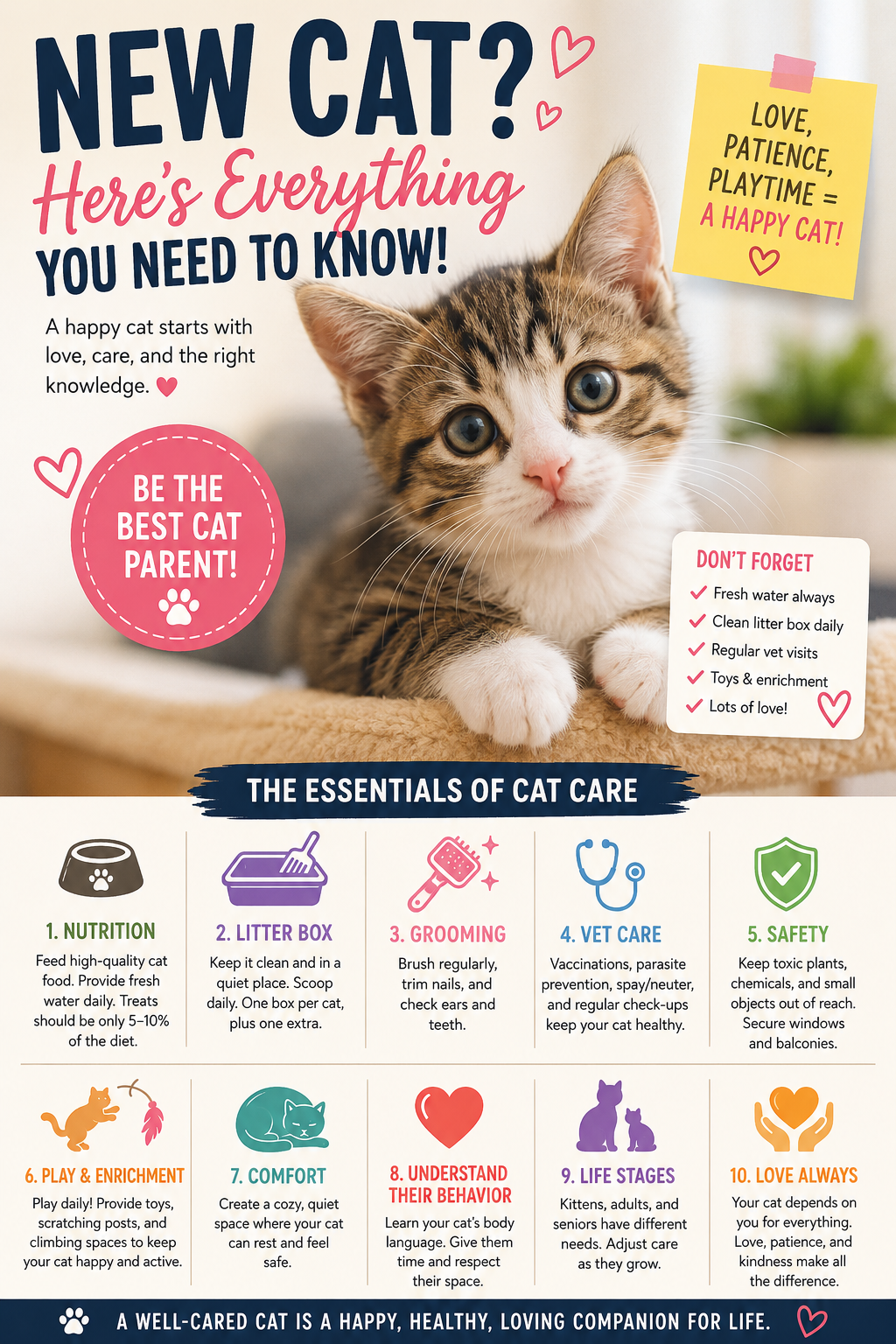
Caring for Your New Cat: A Complete Guide for New Cat Parents
Have you recently welcomed a feline friend into your home? Congratulations! Bringing home a new cat or kitten is an exciting experience filled with companionship, fun, and affection. Cats can become loving members of the family, but they also depend on you for proper care, safety, and attention.
If you are thinking about adopting a cat, consider visiting your local animal shelter or rescue organization. Many wonderful cats and kittens are waiting for loving homes. Adoption not only gives an animal a second chance but also helps shelters care for more pets in need.
Whether you are a first-time cat owner or simply want to refresh your pet care knowledge, this guide covers everything you need to know about keeping your cat healthy, comfortable, and happy.
Basic Cat Care
Feeding Your Cat Properly
Providing balanced nutrition is one of the most important parts of caring for a cat. Cats have unique dietary needs, and feeding them high-quality food helps support healthy growth, strong muscles, a shiny coat, and a strong immune system.
Choosing the Right Food
We recommend purchasing high-quality, brand-name kitten or cat food. Your veterinarian can help determine the best diet based on your cat’s:
- Age
- Weight
- Activity level
- Breed
- Medical conditions
Kittens need food specially formulated for growth and development, while adult cats require maintenance diets. Senior cats may benefit from special foods designed for aging pets.

Important Nutrients
Cats require taurine, an essential amino acid necessary for:
- Heart health
- Vision
- Reproductive health
- Proper digestion
A lack of taurine can lead to serious health problems. Properly balanced commercial cat foods contain the right amount of taurine and other important nutrients.
Wet Food vs. Dry Food
Both wet and dry food have benefits:
- Wet food helps increase water intake and may support urinary health.
- Dry food is convenient and may help reduce plaque buildup.
Many cat owners choose to feed a combination of both.
Fresh Water
Always provide fresh, clean water. Wash and refill water bowls daily to prevent bacteria buildup. Some cats prefer moving water, so a pet water fountain may encourage them to drink more.
Treats
Treats should make up no more than 5–10% of your cat’s daily diet. Too many treats can lead to obesity and nutritional imbalance.
Foods to Avoid
Certain foods are toxic to cats and should never be given, including:
- Chocolate
- Onions
- Garlic
- Grapes and raisins
- Alcohol
- Caffeine
- Raw dough
- Bones
- Xylitol sweetener
Many people offer baby food to cats that are sick or refusing food, but always read labels carefully. If the food contains onion or garlic powder, it can be dangerous or even poisonous to your cat.

If your cat shows signs of:
- Loss of appetite
- Vomiting
- Diarrhea
- Lethargy
for more than two days, contact your veterinarian immediately.
Litter Box Care
A clean litter box is essential for your cat’s comfort and hygiene.
Choosing a Litter Box
Most cats prefer:
- Large litter boxes
- Unscented litter
- Quiet locations with privacy
A good rule is:
One litter box per cat, plus one extra.
For example:
- One cat = two litter boxes
- Two cats = three litter boxes
Cleaning the Litter Box
- Scoop waste daily
- Change litter regularly
- Wash the box with mild soap and water
Dirty litter boxes may cause cats to avoid using them.
Grooming and Coat Care
Cats spend a large part of their day grooming themselves, but they still benefit from regular brushing.
Benefits of Brushing
Brushing helps:
- Remove loose fur
- Prevent mats
- Reduce hairballs
- Improve skin health
- Strengthen your bond with your cat
Long-haired cats often need daily brushing, while short-haired cats may only need weekly grooming.
Nail Trimming
Trim your cat’s nails every few weeks to prevent overgrowth and scratching injuries. Use cat nail clippers and trim only the sharp tip.
Bathing
Most cats rarely need baths unless they get into something sticky or dirty. If bathing is necessary, always use shampoo specifically made for cats.

Veterinary Care
Regular veterinary visits are important for maintaining your cat’s health.
First Vet Visit
Schedule a veterinary appointment soon after adoption. Your veterinarian will:
- Check overall health
- Test for parasites
- Recommend vaccinations
- Discuss nutrition
- Answer behavior questions
- Recommend flea and tick prevention
Vaccinations
Vaccines help protect cats from serious diseases. Kittens usually require several vaccinations during their first months of life.
Common vaccines may include protection against:
- Rabies
- Feline distemper
- Respiratory viruses
Spaying and Neutering
Spaying or neutering helps:
- Prevent unwanted litters
- Reduce spraying and roaming
- Lower the risk of certain cancers and infections
Dental Care
Dental disease is common in cats. Regular dental care can help prevent:
- Bad breath
- Tooth loss
- Gum disease
Your veterinarian may recommend:
- Dental treats
- Tooth brushing
- Professional cleanings
Creating a Safe Home Environment
Cats are naturally curious and love to explore, so safety is very important.
Keep Dangerous Items Away
Store these safely out of reach:
- Cleaning products
- Human medications
- Electrical cords
- Toxic plants
- String, ribbons, and rubber bands
Some common plants toxic to cats include:
- Lilies
- Aloe vera
- Pothos
- Tulips
Indoor vs. Outdoor Cats
Indoor cats generally live longer because they are protected from:
- Traffic
- Predators
- Diseases
- Poisoning
- Harsh weather
If you allow your cat outdoors, supervise them carefully or consider a secure outdoor enclosure.
Mental Stimulation and Exercise
Cats need physical and mental activity to stay healthy and prevent boredom.
Toys and Playtime
Cats enjoy:
- Feather toys
- Balls
- Laser pointers
- Puzzle feeders
- Cat tunnels
Interactive play strengthens your relationship and helps prevent obesity.
Scratching
Scratching is normal cat behavior. Provide scratching posts or pads to:
- Protect furniture
- Help cats stretch
- Maintain healthy claws
Climbing and Hiding
Cats love high places and cozy hiding spots. Cat trees, shelves, and soft beds help them feel secure.
Understanding Cat Behavior
Cats communicate through body language, sounds, and behavior.
Signs of a Happy Cat
A relaxed and happy cat may:
- Purr
- Knead with paws
- Blink slowly
- Rub against you
- Hold their tail upright
Signs of Stress
Cats may become stressed by:
- Loud noises
- New pets
- Changes in routine
- Moving homes
Signs of stress include:
- Hiding
- Aggression
- Over-grooming
- Loss of appetite
- Litter box problems
Give your cat time and patience while they adjust.
Introducing Your Cat to Other Pets
Slow introductions are important.
Tips for Introductions
- Keep pets separated at first
- Exchange bedding scents
- Allow supervised meetings
- Reward calm behavior
Rushing introductions may create fear and conflict.
Common Health Problems in Cats
Watch for signs of illness and contact your veterinarian if you notice:
- Weight loss
- Vomiting
- Diarrhea
- Difficulty breathing
- Sneezing
- Eye discharge
- Trouble urinating
- Sudden behavior changes
Cats often hide illness, so small changes can be important.
Caring for Kittens
Kittens require extra attention and supervision.
Kitten Care Tips
- Feed kitten-specific food
- Keep them warm
- Provide gentle socialization
- Schedule vaccinations
- Offer safe toys for teething and play
Young kittens are energetic, curious, and can easily get into dangerous situations.
Senior Cat Care
Older cats may develop:
- Arthritis
- Kidney disease
- Dental problems
- Vision or hearing loss
Senior cats benefit from:
- Softer bedding
- Easier access to litter boxes
- Regular health checks
- Senior-specific diets
Building a Strong Bond With Your Cat
Cats thrive on trust and consistency. Spend time:
- Playing
- Grooming
- Talking softly
- Respecting their boundaries
Some cats are very social, while others are more independent. Learning your cat’s personality helps create a loving relationship.
Final Thoughts
Caring for a cat is a long-term commitment filled with rewards. With proper nutrition, veterinary care, grooming, mental stimulation, and lots of love, your cat can enjoy a healthy and happy life for many years.
Patience, kindness, and attention to your cat’s needs will help your new companion feel safe and truly at home.

Welcome to my kitchen!
I’m a passionate home cook and recipe creator who loves turning simple ingredients into delicious, comforting meals that everyone can enjoy. Through this website, I share carefully prepared recipes, practical cooking tips, and easy-to-understand food education to help you feel more confident in the kitchen.
My goal is to make cooking simple, enjoyable, and accessible. Whether you are looking for a quick family dinner, a delicious dessert, healthy meal ideas, or traditional recipes with a modern touch, you’ll find inspiration here.
More Than Just Recipes
I believe that cooking is also a way to learn. That’s why this website is not only about recipes. I also create educational articles about ingredients, cooking techniques, kitchen tips, food preparation, and the stories behind different dishes.
Each article is designed to give you useful knowledge that you can apply in your own kitchen. From understanding how ingredients work together to learning better cooking methods, my aim is to help you become a more confident and creative cook.
My Philosophy
Good food doesn’t always require complicated ingredients or professional equipment. With a little knowledge, patience, and creativity, simple ingredients can become something truly special.
I believe in sharing recipes that are practical, clearly explained, and enjoyable to make. I also love exploring new flavors while appreciating traditional cooking and the recipes passed down through generations.
Thank you for visiting my kitchen and being part of this food-loving community. I hope my recipes and articles inspire you to cook, learn, experiment, and most importantly, enjoy every bite!
Happy cooking!