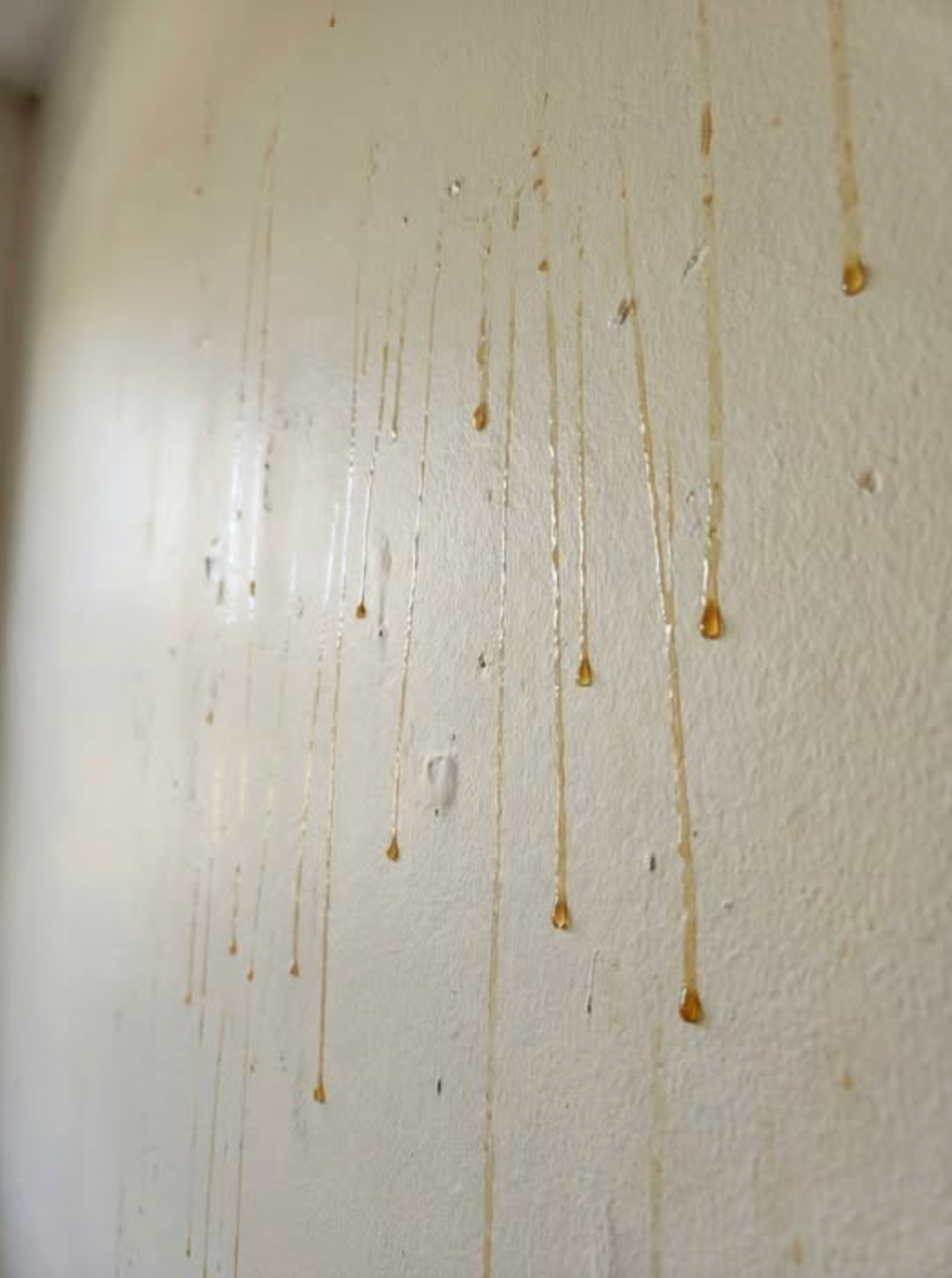
Walking into your bathroom and noticing mysterious yellow streaks slowly running down the walls can be both confusing and frustrating. At first glance, it may look like someone splashed a colored liquid on the paint or that the walls are somehow “bleeding.” The stains can appear as sticky droplets, thin yellow lines, or amber-colored streaks that become more noticeable after a hot shower. Many homeowners immediately worry about mold, plumbing leaks, or expensive repairs.
The good news is that yellow drips on bathroom walls are often caused by relatively common household issues rather than a serious structural problem. However, because several different conditions can produce similar-looking stains, it’s important to identify the underlying cause before attempting to clean or repaint the affected area.
Bathrooms create the perfect environment for moisture, condensation, and temperature changes. Every hot shower fills the room with warm, humid air. As that moisture cools, it condenses on walls, ceilings, mirrors, and fixtures. If there are residues on painted surfaces, or if moisture is moving through the building materials, those droplets can carry discoloration that eventually appears as yellow streaks.
Understanding what causes these stains can help you choose the right cleaning method, prevent them from returning, and recognize when professional help may be needed.
Why Do Yellow Streaks Appear on Bathroom Walls?
Several different issues can cause yellow or brownish drips to develop on painted bathroom surfaces.
Some are harmless and easy to fix, while others may require repairs or improved ventilation.
1. Condensation Mixing With Household Residue
One of the most common explanations is simple condensation.
Every time someone takes a hot shower, steam fills the bathroom. As the warm air cools, water droplets form on walls and ceilings.
If the painted surfaces have accumulated:
- dust
- cooking grease carried through the home
- airborne oils
- cleaning product residue
- hairspray
- perfume particles
- body oils
- cosmetic residue
the water can dissolve these materials and create yellow or brown streaks as it runs down the wall.
This is especially common in bathrooms with poor ventilation.
2. Nicotine and Tobacco Residue
If anyone currently smokes inside the home—or if previous occupants smoked indoors—nicotine and tar can build up on walls over many years.
These residues are often invisible until moisture activates them.
After a hot shower, condensation dissolves the sticky residue, causing:
- yellow drips
- brown streaks
- sticky patches
- unpleasant odors
Even homes that haven’t been smoked in for years may still develop these stains if the walls were never thoroughly cleaned and sealed before repainting.
3. Surfactant Leaching From Latex Paint
One of the most common causes in newer bathrooms is surfactant leaching.
Modern water-based (latex) paints contain ingredients called surfactants that help the paint spread evenly during application.
Under certain conditions, particularly:
- high humidity
- poor ventilation
- recently painted walls
- repeated condensation
these surfactants may migrate to the paint surface.
As moisture runs down the wall, they can appear as:
- yellow drips
- amber streaks
- shiny sticky residue
Although this looks alarming, surfactant leaching usually does not mean the paint has failed.
It is primarily a cosmetic issue.
4. High Humidity
Bathrooms naturally produce large amounts of humidity.
Without adequate ventilation, moisture remains trapped.
Repeated exposure can contribute to:
- recurring condensation
- mineral deposits
- paint discoloration
- residue buildup
High humidity also increases the likelihood of mold growth if surfaces remain damp for long periods.
5. Hard Water Deposits
In some homes, mineral-rich water can contribute to staining.
As condensation evaporates, minerals may leave behind:
- yellowish deposits
- white residue
- chalky streaks
Although hard water more commonly affects glass, faucets, and shower doors, it can occasionally contribute to wall staining when moisture repeatedly evaporates.
6. Water Leaks
Not every yellow stain comes from inside the bathroom.
Water leaking through ceilings or walls may carry:
- rust
- wood tannins
- insulation particles
- dirt
- dissolved building materials
These leaks often produce:
- yellow stains
- brown patches
- expanding watermarks
- peeling paint
- bubbling drywall
Unlike simple condensation, leak-related stains usually continue growing even when the bathroom isn’t being used.
7. Mold and Mildew
Mold is usually associated with black, green, or gray discoloration.
However, some mildew or fungal growth may appear:
- yellow
- orange
- brown
If yellow staining is accompanied by:
- musty odors
- fuzzy growth
- persistent dampness
further inspection is worthwhile.
How to Identify the Cause
Ask yourself a few questions:
- Do the stains appear only after hot showers?
- Was the bathroom recently painted?
- Does the residue feel sticky?
- Has anyone smoked inside the home?
- Is there peeling paint?
- Do the stains continue spreading even when the bathroom stays dry?
The answers can often point toward the most likely explanation.
How to Clean Yellow Bathroom Wall Stains
Before cleaning, test any product on a small, hidden area.
For general residue:
Mix:
- warm water
- a few drops of mild dish soap
Wipe gently using a soft microfiber cloth.
Rinse with clean water.
Dry thoroughly.
Cleaning Nicotine Residue
Nicotine stains often require stronger cleaning products.
Many homeowners use cleaners specifically designed to remove grease and smoke residue.
Follow the manufacturer’s instructions carefully and ensure good ventilation while cleaning.
Cleaning Surfactant Leaching
If surfactant leaching is the cause:
- wait until the wall is completely dry
- wipe gently with warm water and a soft cloth
- avoid aggressive scrubbing
- repeat if necessary
Once the paint has fully cured and humidity is controlled, the problem often becomes much less noticeable.
Improve Bathroom Ventilation
Reducing humidity is one of the best long-term solutions.
Helpful strategies include:
- using the exhaust fan during showers
- leaving the fan running for 20–30 minutes afterward
- opening a window if possible
- wiping excess condensation from walls
- keeping the bathroom door open after showering to improve airflow
Good ventilation not only helps reduce yellow drips but also lowers the risk of mold growth.
When Is Repainting Necessary?
Repainting may be appropriate if:
- stains repeatedly return after cleaning
- nicotine has permanently penetrated the paint
- water damage has been repaired
- paint is peeling extensively
Before repainting, the underlying problem should always be addressed first.
Otherwise, the stains may eventually reappear.
When Should You Call a Professional?
Seek professional help if you notice:
- expanding water stains
- soft drywall
- persistent leaks
- mold covering large areas
- bubbling paint
- structural damage
- recurring stains despite cleaning and improved ventilation
These situations may require plumbing repairs, moisture assessment, or professional mold remediation.
Frequently Asked Questions
Are yellow bathroom wall drips dangerous?
Usually not. Many cases result from condensation interacting with residue or surfactant leaching. However, if the stains are caused by leaks or mold, they should be investigated.
Can new paint cause yellow drips?
Yes. Newly painted bathrooms with latex paint can sometimes experience surfactant leaching, especially if exposed to high humidity before the paint has fully cured.
Is mold always black?
No. Mold and mildew can appear in several colors, including white, gray, green, yellow, orange, or brown.
Why do the stains only appear after showers?
Hot showers produce condensation. As water runs down the walls, it can dissolve surface residues or bring paint additives to the surface, making the streaks visible.
Can poor ventilation make the problem worse?
Yes. Excess humidity allows condensation to remain on surfaces longer, increasing the likelihood of stains, surfactant leaching, and mold growth.
Welcome to my kitchen!
I’m a passionate home cook and recipe creator who loves turning simple ingredients into delicious, comforting meals that everyone can enjoy. Through this website, I share carefully prepared recipes, practical cooking tips, and easy-to-understand food education to help you feel more confident in the kitchen.
My goal is to make cooking simple, enjoyable, and accessible. Whether you are looking for a quick family dinner, a delicious dessert, healthy meal ideas, or traditional recipes with a modern touch, you’ll find inspiration here.
More Than Just Recipes
I believe that cooking is also a way to learn. That’s why this website is not only about recipes. I also create educational articles about ingredients, cooking techniques, kitchen tips, food preparation, and the stories behind different dishes.
Each article is designed to give you useful knowledge that you can apply in your own kitchen. From understanding how ingredients work together to learning better cooking methods, my aim is to help you become a more confident and creative cook.
My Philosophy
Good food doesn’t always require complicated ingredients or professional equipment. With a little knowledge, patience, and creativity, simple ingredients can become something truly special.
I believe in sharing recipes that are practical, clearly explained, and enjoyable to make. I also love exploring new flavors while appreciating traditional cooking and the recipes passed down through generations.
Thank you for visiting my kitchen and being part of this food-loving community. I hope my recipes and articles inspire you to cook, learn, experiment, and most importantly, enjoy every bite!
Happy cooking!