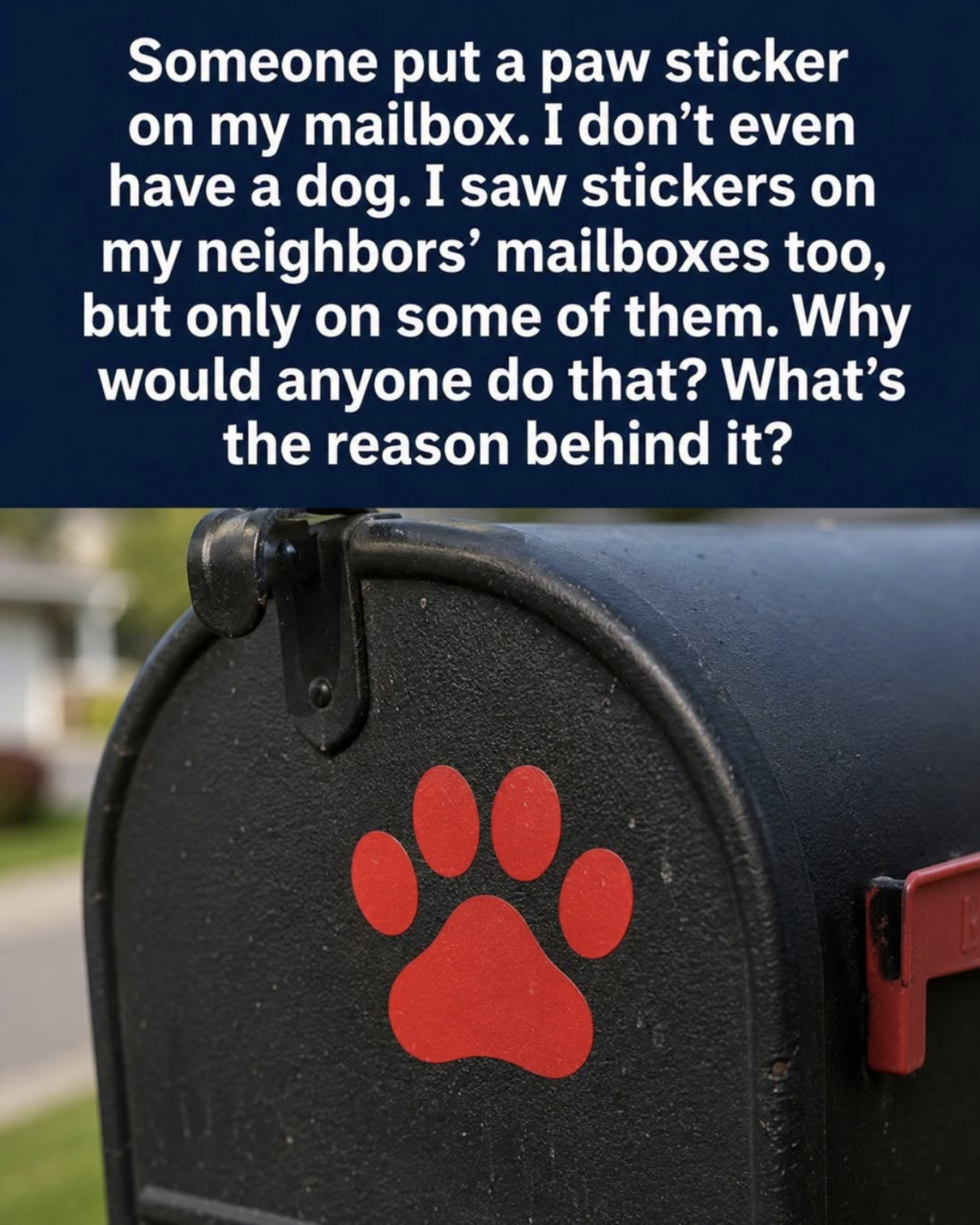
Have you ever noticed a small paw-print sticker attached to a mailbox and wondered if it had a special meaning? At first glance, it may seem like a simple decorative touch chosen by a pet lover. However, in many neighborhoods, this small symbol can carry a practical purpose, helping communicate useful information about the household, its pets, or simply expressing the residents’ love for animals.
Unlike official postal markings or government-issued symbols, paw-print stickers are generally not standardized. Their meaning depends on the homeowner, local customs, neighborhood programs, or even the organization that provided the sticker. While many people assume the symbol always has one specific purpose, the reality is far more interesting.
This article explores the various reasons why someone might place a paw-print sticker on their mailbox, what it can mean in different situations, and why this simple decoration has become increasingly popular.
A Symbol of Love for Pets
The most common reason for displaying a paw-print sticker is simply to celebrate the family’s love of animals.
For millions of people, pets are cherished members of the household. Adding a paw-print decal to a mailbox is an easy way to express that affection while giving the home’s exterior a personal touch.
Dog owners, cat owners, and even families with multiple types of pets often use these stickers as a cheerful decoration that reflects their lifestyle and interests.
Much like garden ornaments, seasonal wreaths, or personalized address signs, a paw-print sticker can make a home feel more welcoming and unique.
A Friendly Reminder That Pets Live There
In some neighborhoods, a paw-print sticker serves as an informal reminder that animals may be present on the property.
Although the sticker does not replace proper warning signs or secure fencing, it can encourage visitors—including delivery drivers, maintenance workers, neighbors, and guests—to be mindful when approaching gates, fences, or front doors.
For example, a homeowner may have a curious dog that enjoys greeting visitors or an indoor cat that could try to slip outside when the door opens.
The sticker simply suggests that extra awareness may be helpful.
Supporting Animal Shelters and Rescue Organizations
Many animal shelters, rescue groups, veterinary clinics, and pet charities distribute paw-print decals during fundraising campaigns or community events.
Homeowners sometimes display these stickers to show their support for:
- Local animal shelters.
- Pet adoption programs.
- Animal rescue organizations.
- Veterinary fundraising campaigns.
- Community pet-awareness initiatives.
In these cases, the sticker functions much like a charity ribbon or awareness decal, expressing support for a cause that is important to the homeowner.
Helping Emergency Responders
Some families choose to place a paw-print sticker near their mailbox or on a front window to indicate that pets may be inside the home.
The idea is that, during an emergency such as a fire or natural disaster, responders might become aware that animals could also require assistance.
However, it is important to understand that these stickers are not official emergency notification systems and should never be relied upon as the sole way to communicate the presence of pets.
Many emergency preparedness experts instead recommend keeping updated pet emergency information inside the home and ensuring family members have evacuation plans that include animals.
Community Pet-Friendly Programs
Certain residential communities, apartment complexes, or neighborhood associations promote pet-friendly environments.
In these areas, paw-print symbols may identify homes participating in neighborhood pet activities such as:
- Community dog walks.
- Pet social events.
- Lost-pet awareness programs.
- Adoption campaigns.
- Responsible pet ownership initiatives.
The exact meaning depends on the local program, so it is always best to check with the organization if you are unsure.
Personalized Mailbox Decoration
For many homeowners, the explanation is much simpler: they simply enjoy decorating their mailbox.
Mailboxes often feature:
- Family names.
- House numbers.
- Seasonal decorations.
- Holiday magnets.
- Floral decals.
- Wildlife artwork.
- Sports logos.
- Paw-print designs.
The paw-print has become one of the most recognizable decorative symbols because it is simple, attractive, and meaningful to many pet owners.
Is It an Official Postal Symbol?
No.
Postal services generally do not use paw-print stickers as official delivery instructions or mailbox identification markers.
Mail carriers rely on addresses, approved mailbox standards, and official postal procedures rather than decorative decals.
While some individual postal workers may become familiar with homes that have pets during their regular routes, the sticker itself carries no official postal meaning.
Common Myths About Paw-Print Mailbox Stickers
Several myths have circulated online suggesting that paw-print stickers secretly communicate information to delivery companies or government agencies.
Examples include claims that they indicate:
- Dangerous dogs.
- Homes under surveillance.
- Security system codes.
- Postal service warnings.
- Animal control records.
There is no broadly recognized evidence supporting these claims. In most situations, paw-print stickers are simply decorative or locally meaningful rather than part of any universal coding system.
Choosing a Paw-Print Sticker
If you would like to add one to your own mailbox, many styles are available.
Popular options include:
- Black silhouette paw prints.
- Colorful decorative designs.
- Reflective safety decals.
- Personalized stickers featuring a pet’s name.
- Breed-specific artwork.
- Waterproof vinyl decals.
- Custom family pet graphics.
Choose weather-resistant materials designed for outdoor use so the sticker remains attractive despite sun, rain, snow, and changing temperatures.
Caring for Outdoor Mailbox Stickers
To help your sticker last longer:
- Clean the mailbox surface before applying it.
- Remove dirt, grease, and moisture.
- Apply during mild weather if possible.
- Press firmly to eliminate air bubbles.
- Avoid placing the sticker over damaged or peeling paint.
High-quality vinyl decals can often remain in excellent condition for several years.
Frequently Asked Questions
Does a paw-print sticker always mean there is a dog?
No. It may represent any type of pet, support for animal welfare, or simply a decorative design chosen by the homeowner.
Should delivery drivers assume pets are present?
Not necessarily. While some homeowners use the sticker to suggest that animals live on the property, it is not a standardized warning sign and should not be interpreted as one.
Can emergency responders rely on the sticker?
No. Because paw-print stickers are unofficial and optional, they should never be considered a reliable source of emergency information.
Is the sticker recognized nationwide?
No. There is no universal meaning attached to paw-print mailbox stickers. Their significance varies depending on the homeowner, community, or local organization.

Welcome to my kitchen!
I’m a passionate home cook and recipe creator who loves turning simple ingredients into delicious, comforting meals that everyone can enjoy. Through this website, I share carefully prepared recipes, practical cooking tips, and easy-to-understand food education to help you feel more confident in the kitchen.
My goal is to make cooking simple, enjoyable, and accessible. Whether you are looking for a quick family dinner, a delicious dessert, healthy meal ideas, or traditional recipes with a modern touch, you’ll find inspiration here.
More Than Just Recipes
I believe that cooking is also a way to learn. That’s why this website is not only about recipes. I also create educational articles about ingredients, cooking techniques, kitchen tips, food preparation, and the stories behind different dishes.
Each article is designed to give you useful knowledge that you can apply in your own kitchen. From understanding how ingredients work together to learning better cooking methods, my aim is to help you become a more confident and creative cook.
My Philosophy
Good food doesn’t always require complicated ingredients or professional equipment. With a little knowledge, patience, and creativity, simple ingredients can become something truly special.
I believe in sharing recipes that are practical, clearly explained, and enjoyable to make. I also love exploring new flavors while appreciating traditional cooking and the recipes passed down through generations.
Thank you for visiting my kitchen and being part of this food-loving community. I hope my recipes and articles inspire you to cook, learn, experiment, and most importantly, enjoy every bite!
Happy cooking!