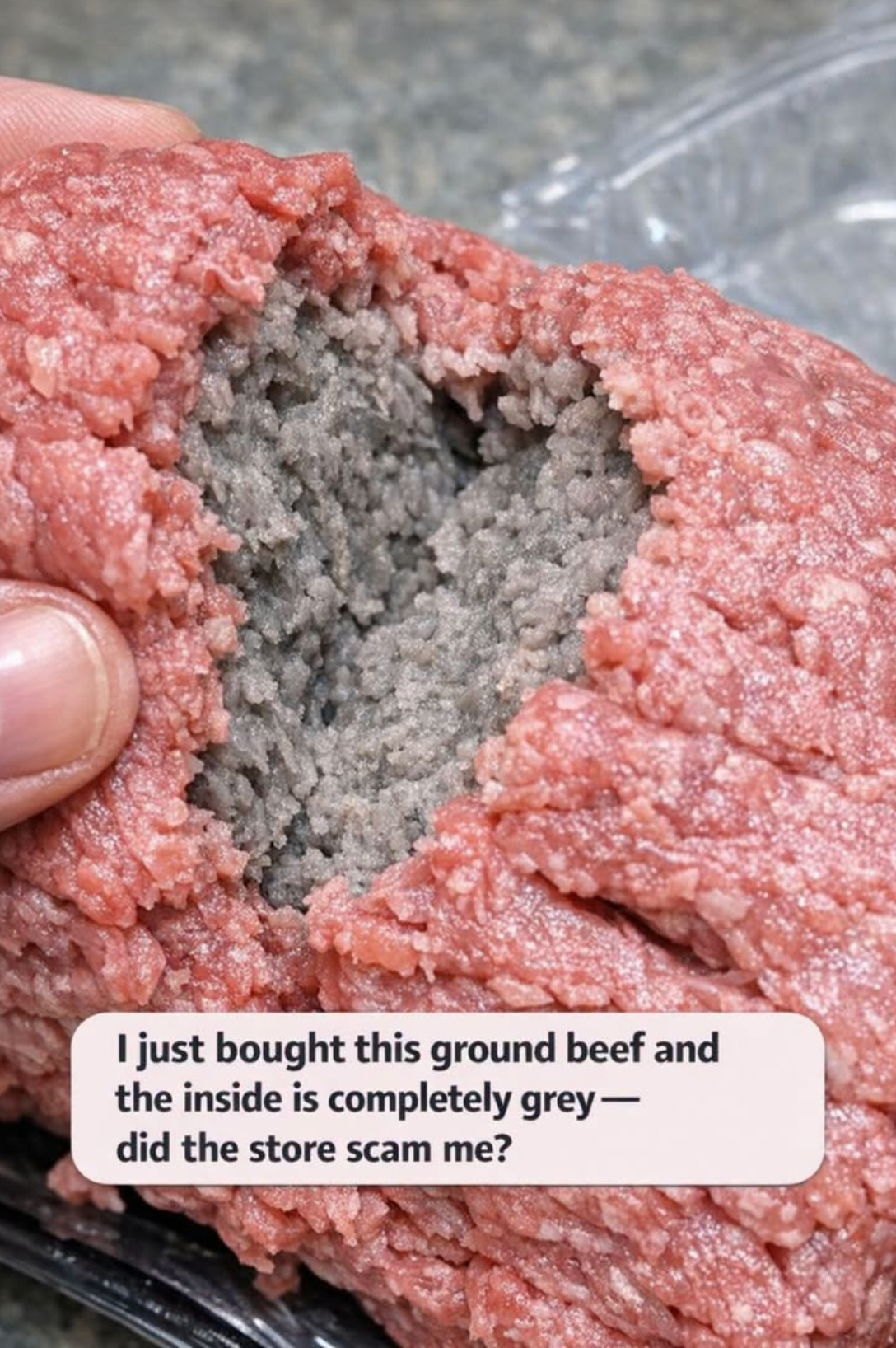
Opening a package of freshly purchased ground beef only to discover that the inside is gray can be surprising and even alarming. Many shoppers immediately wonder whether the meat is old, spoiled, or whether they have been misled by a store displaying bright red meat on the outside while hiding gray meat inside the package. Fortunately, in many cases, the answer is no. A gray interior does not automatically mean the meat is spoiled or that the store has done anything dishonest.
The color of fresh beef is influenced by a naturally occurring protein called myoglobin, which reacts differently depending on the amount of oxygen it is exposed to. This natural process explains why ground beef can display several different colors while still being perfectly safe to eat.
Why Is Ground Beef Red on the Outside?
Freshly cut beef is often a dark purplish-red color immediately after processing because it has had very little contact with oxygen. Once the meat is exposed to air, the myoglobin reacts with oxygen and forms a bright cherry-red pigment that most consumers associate with freshness.
In supermarkets, the outer surface of packaged ground beef receives the greatest exposure to oxygen. As a result, the outside often develops a bright red appearance that looks appealing to customers. This color change is completely natural and does not involve artificial coloring in normal retail packaging.
The interior of the package, however, receives very little oxygen because the meat is tightly packed together. Without sufficient oxygen exposure, the center may remain grayish, brownish-gray, or even purplish. This difference in color between the outside and inside is one of the most common characteristics of packaged ground beef.
Why Does the Center Turn Gray?
Ground beef consists of many small pieces of meat compressed together during packaging. Oxygen can easily reach the outer layer but has difficulty penetrating the densely packed center.
Because the inner portions receive far less oxygen, the myoglobin changes into a different form that produces a gray or brownish-gray appearance. This process is known as oxidation and is a normal chemical reaction rather than an indication of spoilage.
It is especially common in:
- Large family-sized packages.
- Vacuum-sealed ground beef.
- Meat packaged tightly in trays.
- Ground beef stored in the refrigerator for several days before purchase.
Many consumers mistakenly believe the store has intentionally hidden older meat beneath a fresh-looking surface. In reality, the difference in color is usually a natural consequence of packaging and oxygen exposure rather than evidence of deception.
Does Gray Meat Mean It Is Spoiled?
Not necessarily.
Color alone is one of the least reliable indicators of freshness. Fresh ground beef can naturally appear bright red, dark red, purplish, brown, or gray depending on how much oxygen has reached the meat.
Food safety experts generally recommend evaluating several factors together rather than relying only on appearance.
Ground beef is often still perfectly safe if:
- It is within its use-by or sell-by date.
- It has been continuously refrigerated.
- It smells fresh or has very little odor.
- Its texture remains firm and slightly moist.
- The gray color is mainly limited to the center of the package.
On the other hand, gray color accompanied by other warning signs deserves closer attention.
Signs That Ground Beef May Be Spoiled
Spoiled ground beef usually develops changes that involve much more than color alone.
You should avoid eating the meat if you notice:
- A strong sour, rotten, or unpleasant odor.
- A sticky, slimy, or tacky surface.
- Green, yellow, or unusual discoloration.
- Excessive liquid accompanied by an unpleasant smell.
- Mold growth.
- Packaging that is swollen, leaking, or damaged.
- Meat that has been stored beyond its recommended use-by date or improperly refrigerated.
If several of these warning signs are present, the safest decision is to discard the meat.
Why Smell Is Often More Important Than Color
One of the best indicators of freshness is the smell.
Fresh ground beef typically has little odor or only a mild meaty smell. If opening the package immediately releases a strong sour, rancid, sulfur-like, or ammonia-like odor, the meat has likely spoiled.
While color can change naturally because of oxygen exposure, unpleasant odors usually indicate microbial growth or chemical changes associated with spoilage.
For this reason, food safety professionals consider smell and storage history more useful indicators than color by itself.
What About Vacuum-Sealed Ground Beef?
Vacuum packaging removes most of the oxygen surrounding the meat to slow spoilage and extend shelf life.
Because oxygen is removed, vacuum-packed beef often appears dark purplish-red, brownish, or gray rather than bright red. This is completely normal.
Once the package is opened and the meat is exposed to air, oxygen begins reacting with the myoglobin again. Within about 15 to 30 minutes, much of the surface often returns to a brighter red color.
This color change demonstrates that the meat’s appearance is strongly influenced by oxygen rather than freshness alone.
Can Ground Beef Turn Gray in the Refrigerator?
Yes.
Even after purchase, ground beef stored in the refrigerator may gradually develop gray or brown areas, especially where pieces of meat are pressed tightly together or where oxygen cannot easily reach.
As long as the meat has been properly refrigerated, remains within its recommended storage time, and shows no signs of spoilage, these color changes are generally considered normal.
However, because ground beef has a relatively short shelf life, it should usually be cooked or frozen within one to two days after purchase unless the package states otherwise.
Safe Storage Tips
Proper storage helps maintain both quality and safety.
Ground beef should be refrigerated at or below 4°C (40°F) as soon as possible after purchase.
If you do not plan to cook it within a couple of days, freezing is recommended.
Store the meat in its original packaging until you are ready to use it, or transfer it to airtight freezer packaging if freezing for longer periods.
Avoid leaving raw ground beef at room temperature for extended periods, as bacteria can multiply rapidly in the temperature “danger zone.”
Common Myths About Gray Ground Beef
Several myths continue to circulate regarding meat color.
One common belief is that bright red meat is always fresher than gray meat. In reality, bright red color simply indicates oxygen exposure and does not guarantee superior freshness.
Another myth suggests that stores intentionally hide spoiled meat beneath a red outer layer. While improper handling can occur in rare situations, gray centers are usually explained by normal oxygen distribution inside tightly packed packages rather than deceptive practices.
Some people also assume gray meat should always be discarded immediately. In fact, many perfectly safe packages display gray interiors because oxygen cannot reach the center.
When Should You Return the Meat?
If the meat has an unusually foul odor immediately after opening, has a sticky or slimy texture, shows signs of mold, or appears spoiled despite being within its expiration date, you should contact the retailer. Most grocery stores have quality guarantees and will often replace or refund products that appear defective.
Keeping your receipt and the original packaging can make the return process easier.

Welcome to my kitchen!
I’m a passionate home cook and recipe creator who loves turning simple ingredients into delicious, comforting meals that everyone can enjoy. Through this website, I share carefully prepared recipes, practical cooking tips, and easy-to-understand food education to help you feel more confident in the kitchen.
My goal is to make cooking simple, enjoyable, and accessible. Whether you are looking for a quick family dinner, a delicious dessert, healthy meal ideas, or traditional recipes with a modern touch, you’ll find inspiration here.
More Than Just Recipes
I believe that cooking is also a way to learn. That’s why this website is not only about recipes. I also create educational articles about ingredients, cooking techniques, kitchen tips, food preparation, and the stories behind different dishes.
Each article is designed to give you useful knowledge that you can apply in your own kitchen. From understanding how ingredients work together to learning better cooking methods, my aim is to help you become a more confident and creative cook.
My Philosophy
Good food doesn’t always require complicated ingredients or professional equipment. With a little knowledge, patience, and creativity, simple ingredients can become something truly special.
I believe in sharing recipes that are practical, clearly explained, and enjoyable to make. I also love exploring new flavors while appreciating traditional cooking and the recipes passed down through generations.
Thank you for visiting my kitchen and being part of this food-loving community. I hope my recipes and articles inspire you to cook, learn, experiment, and most importantly, enjoy every bite!
Happy cooking!