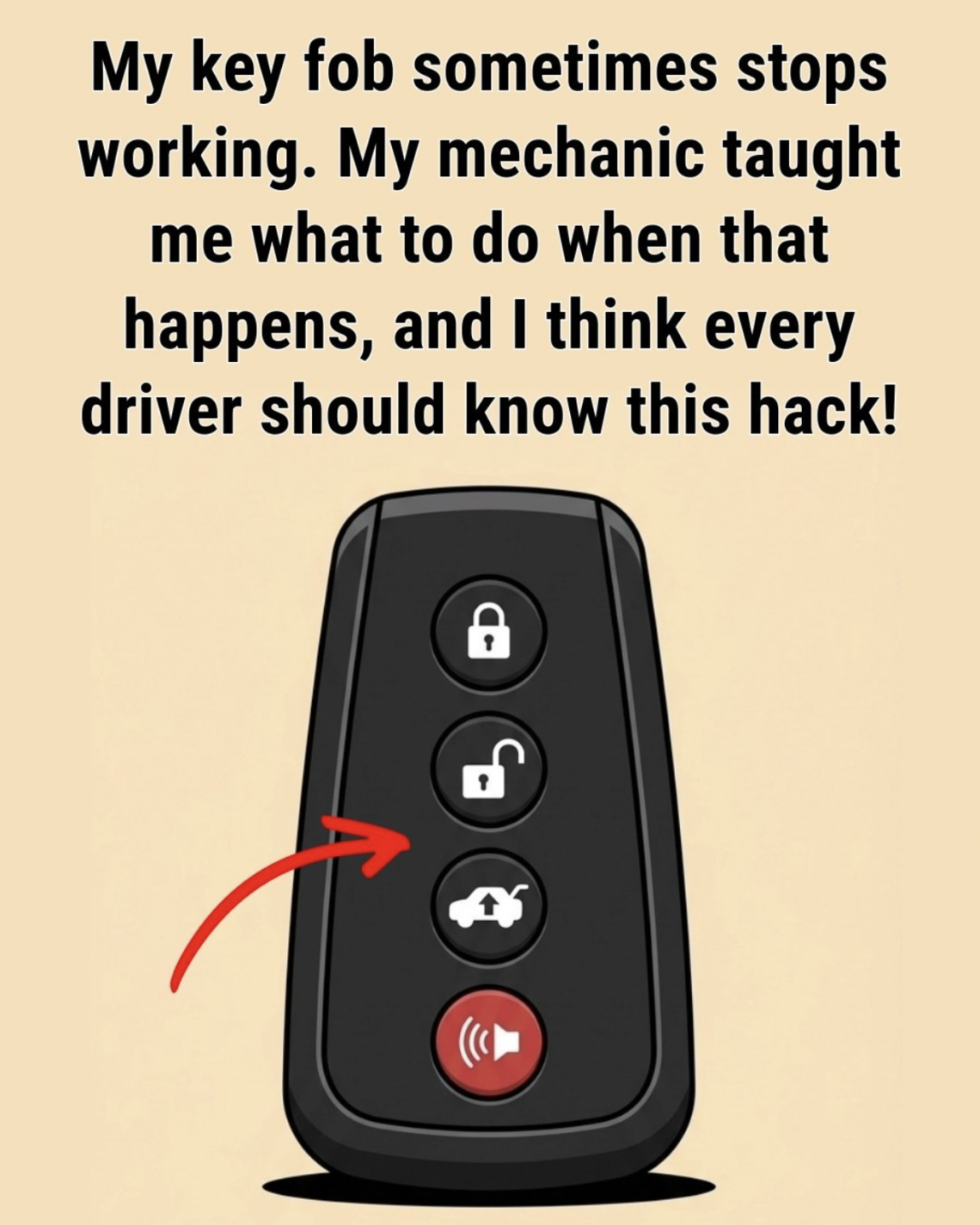
Simple, Science-Backed Fixes That Could Save You Time, Stress, and an Expensive Trip to the Dealership
Few small everyday problems are as strangely frustrating as pressing your car key fob and getting absolutely no response.
You click once. Nothing.
You click harder—as if determination alone will magically restore the signal. Still nothing.
Suddenly you’re standing in a parking lot wondering:
- Is the battery dead?
- Did the car battery die?
- Is the fob broken?
- Did the car lose programming?
- Why did it work yesterday?
The good news is that many key fob problems are surprisingly minor and fixable in just a few minutes. In fact, some issues have nothing to do with the fob itself and are caused by signal interference, weak batteries, dirty contacts, or simple electronic quirks.
Before assuming the worst, here are the most effective troubleshooting steps experts commonly recommend.
First: How a Key Fob Actually Works
A key fob is basically a tiny radio transmitter.
When you press a button:
- the fob sends a coded radio signal
- the car receives and verifies it
- the vehicle responds by unlocking, locking, or starting
Modern key fobs depend on:
- battery power
- clean electronic contacts
- proper signal transmission
- communication with the vehicle receiver
If any part of that chain weakens, the system may stop responding.
1. Replace the Battery First (Most Common Fix)
This is by far the number one cause of key fob failure.
Most key fobs use small coin-cell batteries like:
- CR2032
- CR2025
- CR2016
These batteries weaken gradually over time.
Signs of a weak key fob battery:
- reduced operating range
- intermittent unlocking
- needing multiple button presses
- delayed response
- total failure after inconsistent behavior
Why batteries fail suddenly
Even though the battery drains slowly, once voltage drops below a certain threshold, the transmitter may stop working almost instantly.
How to replace it:
- Open the fob carefully using the seam or release tab
- Remove the old battery
- Match the exact battery type
- Insert new battery with correct polarity (+/- orientation)
- Snap the case closed carefully
Important tip:
Cheap batteries sometimes fail quickly. Good-quality lithium batteries tend to last longer and provide more stable voltage.
2. Hold the Fob Closer to Your Head (Yes, Really)
This sounds like an internet myth, but there’s actual science behind it.
If your battery is weak:
- touching the fob to your chin or head can slightly extend signal range
Why?
The human body contains water and conductive materials that can act as a crude antenna amplifier for radio frequencies.
It won’t perform miracles, but in emergencies it can sometimes give enough extra range to unlock the car.
3. Try the Mechanical Key Hidden Inside the Fob
Many people don’t realize their electronic fob contains a physical backup key.
Most modern fobs include:
- a hidden slide-out key
- or an emergency release blade
This allows you to:
- manually unlock the driver’s door
- enter the vehicle even with a dead battery
Why this matters
If the fob battery dies completely, you may still be able to:
- unlock the car manually
- start the engine using backup procedures
4. Your Car Battery Might Actually Be the Problem
Sometimes the key fob works perfectly—but the car itself has no power.
Signs:
- no dashboard lights
- no interior lights
- no clicking sounds
- no response at all
A weak or dead car battery can prevent:
- door locks
- receivers
- push-button ignition systems
from responding properly.
5. Try the Backup Start Method for Push-Button Cars
Many modern vehicles have an emergency detection mode.
Even if the key fob battery is dead, the car may still detect a chip inside the fob.
Common method:
Hold the key fob directly against:
- the START button
or - a marked backup detection area
Then press the brake and start button.
Different manufacturers place the emergency sensor in different locations:
- center console
- steering column
- cup holder area
- dashboard
Check your owner’s manual for specifics.
6. Signal Interference May Be Blocking the Fob
Key fobs use radio signals, and those signals can sometimes be disrupted.
Common interference sources:
- cell towers
- airports
- security systems
- large electronics
- radio equipment
- crowded parking structures
Signs of interference:
- fob works elsewhere but not in one location
- intermittent response
- sudden failure near commercial buildings
Quick fix:
- move closer to vehicle
- try from another angle
- move to a different parking area
7. Dirty or Worn Button Contacts
Over time:
- oils from fingers
- dust
- moisture
- pocket lint
can build up inside the fob.
This may prevent buttons from making proper electrical contact.
Symptoms:
- some buttons work, others don’t
- buttons feel mushy
- intermittent operation
Cleaning method:
- Open the fob carefully
- Use compressed air or soft brush
- Clean contacts gently with isopropyl alcohol
- Allow to dry completely before reassembly
8. Extreme Temperatures Can Affect Key Fobs
Electronics and batteries dislike temperature extremes.
Cold weather effects:
- battery voltage temporarily drops
- response becomes weak or inconsistent
Hot weather effects:
- internal components can expand or degrade over time
Quick cold-weather trick:
Warm the fob in your hands for a minute before trying again.
Sometimes that alone restores enough battery performance temporarily.
9. The Fob May Need Reprogramming
Occasionally:
- battery removal
- electrical issues
- software glitches
can desynchronize the fob from the car.
This is less common than battery issues but does happen.
Signs:
- new battery doesn’t help
- all functions completely dead
- spare key works normally
Some vehicles allow DIY reprogramming, while others require:
- dealership tools
- locksmith equipment
- onboard programming procedures
10. Water Damage Is More Common Than People Think
Key fobs go through a lot:
- rain
- washing machines
- spills
- humidity
- sweat in pockets
Moisture can corrode internal circuits.
Warning signs:
- buttons sticking
- inconsistent behavior
- total failure after getting wet
If wet:
- Remove battery immediately
- Dry thoroughly
- Leave open for 24–48 hours
- Avoid using heat directly
Why Key Fobs Feel More Fragile Today
Modern fobs are much more advanced than older car keys.
They now contain:
- encrypted chips
- wireless transmitters
- proximity sensors
- rolling security codes
- tiny circuit boards
This gives:
- convenience
- better security
- remote features
…but also creates more possible failure points.
Simple Habits That Extend Key Fob Life
Keep it dry
Moisture is one of the biggest enemies.
Avoid dropping it
Repeated impact damages solder joints and buttons.
Replace batteries proactively
Don’t wait for total failure.
Store away from magnets/electronics
Strong electromagnetic interference can occasionally affect signals.
When You Should See a Professional
You may need a locksmith or dealership if:
- the fob is physically cracked
- the circuit board is damaged
- reprogramming is required
- the car receiver itself failed
- multiple fobs stop working simultaneously

Welcome to my kitchen!
I’m a passionate home cook and recipe creator who loves turning simple ingredients into delicious, comforting meals that everyone can enjoy. Through this website, I share carefully prepared recipes, practical cooking tips, and easy-to-understand food education to help you feel more confident in the kitchen.
My goal is to make cooking simple, enjoyable, and accessible. Whether you are looking for a quick family dinner, a delicious dessert, healthy meal ideas, or traditional recipes with a modern touch, you’ll find inspiration here.
More Than Just Recipes
I believe that cooking is also a way to learn. That’s why this website is not only about recipes. I also create educational articles about ingredients, cooking techniques, kitchen tips, food preparation, and the stories behind different dishes.
Each article is designed to give you useful knowledge that you can apply in your own kitchen. From understanding how ingredients work together to learning better cooking methods, my aim is to help you become a more confident and creative cook.
My Philosophy
Good food doesn’t always require complicated ingredients or professional equipment. With a little knowledge, patience, and creativity, simple ingredients can become something truly special.
I believe in sharing recipes that are practical, clearly explained, and enjoyable to make. I also love exploring new flavors while appreciating traditional cooking and the recipes passed down through generations.
Thank you for visiting my kitchen and being part of this food-loving community. I hope my recipes and articles inspire you to cook, learn, experiment, and most importantly, enjoy every bite!
Happy cooking!