There is a very specific kind of magic that happens when you stand quietly in your kitchen with a warm cup of tea in your hands and finally notice one of those little details you’ve somehow overlooked for years.
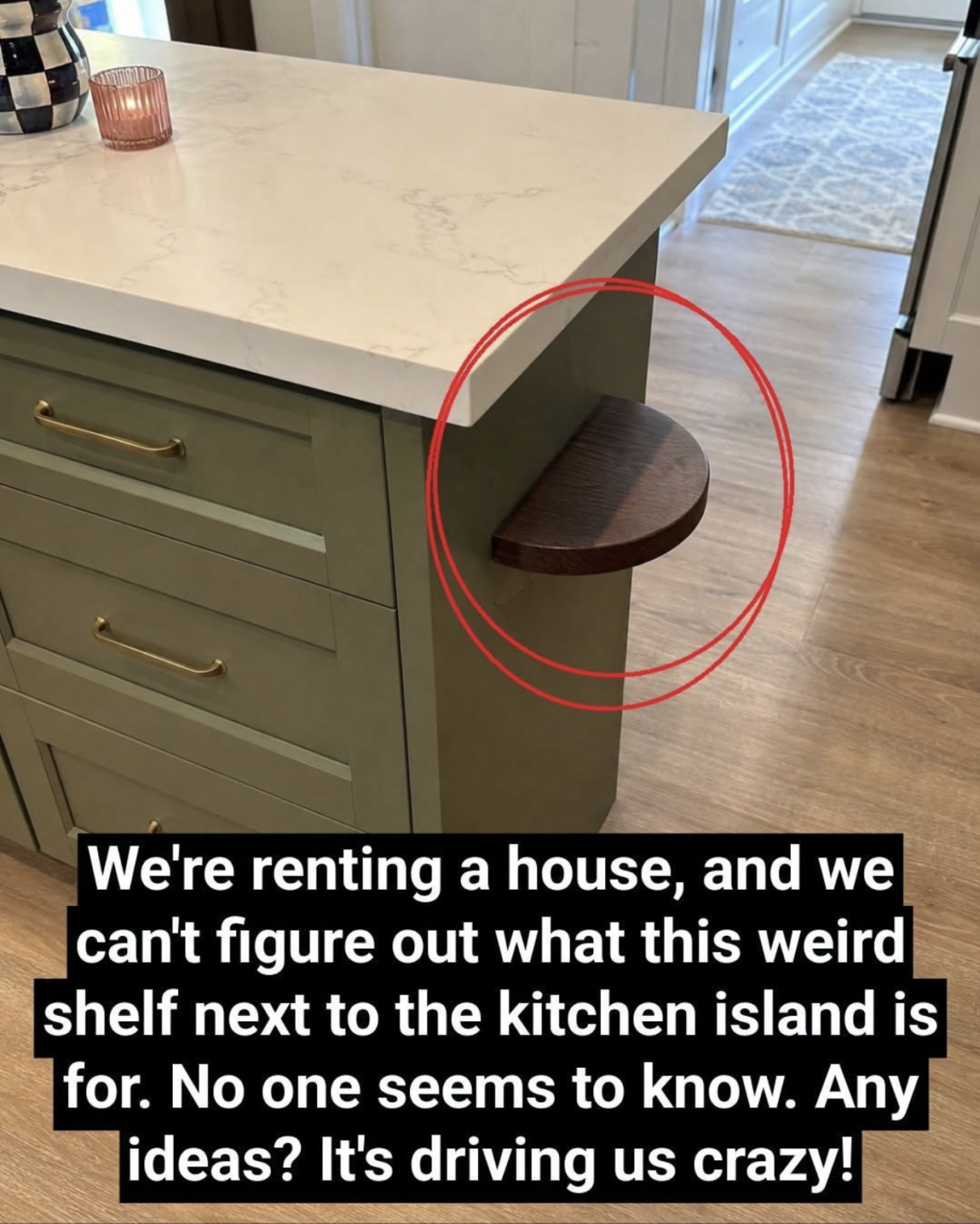
For me, that detail was the small ledge built into my kitchen island.
You know the one.
Maybe yours is a narrow raised lip running along the edge of the countertop. Perhaps it is a shallow shelf tucked into the side of the island. Or maybe it is a recessed strip of counter space that seems just a little too small to have an obvious purpose.
For years, I assumed mine was simply part of the design.
Sometimes I used it to hold mail. Occasionally it became a temporary home for a grocery list, a cookbook, or whatever happened to be in my hands when I needed to clear the main countertop.
But the more I looked at it, the more I wondered:
Was this little ledge actually designed to do something useful?
The answer is often yes—but there isn’t one universal explanation.
Kitchen islands come in countless designs, and a small ledge can serve several different purposes depending on its shape, location, and construction.
Some are practical workspaces.
Some are seating ledges.
Some are shelves for displaying or storing frequently used items.
And some are simply architectural details that provide a transition between different surfaces.
Once you understand what kind you have, that little overlooked space can become surprisingly useful.
First, What Kind of Ledge Do You Have?
Before deciding how to use your kitchen-island ledge, take a close look at its design.
There are several common possibilities.
The Raised Countertop Lip
A narrow raised edge along a countertop can help keep small objects from sliding off the surface.
It may also act as a visual or physical boundary between different areas of the island.
Depending on the design, it can be particularly useful around an eating area or where two countertop surfaces meet.
The Seating Ledge
Some kitchen islands have a countertop that extends beyond the cabinetry.
This creates a shallow overhang where people can sit on stools.
It may look like nothing more than extra countertop, but its purpose is often to create a casual eating or gathering space.
This is one reason kitchen islands have become such important social spaces in modern homes.
Instead of everyone sitting around a separate dining table, family and guests can gather around the island while food is being prepared.
The Shallow Storage Shelf
Another possibility is the small recessed shelf built into the side of the island.
This type of ledge is particularly versatile.
Because it is shallow, it isn’t ideal for storing large cookware. But that doesn’t mean it is useless.
It can be perfect for smaller objects that you reach for frequently.
For example, you could use it for:
- cookbooks,
- recipe cards,
- salt and pepper,
- napkins,
- small serving utensils,
- decorative bowls,
- frequently used spices,
- kitchen towels.
The trick is to avoid filling it with too many things.
A small shelf can become cluttered surprisingly quickly.
A Convenient Place for Cookbooks
If your island has a shallow shelf, one of the most natural uses is a cookbook display.
Instead of leaving cookbooks scattered across the countertop, arrange a few of your favorites on the ledge.
You can rotate them according to the season.
During autumn, display books featuring soups, breads, and comforting casseroles.
During summer, bring out recipes featuring fresh vegetables and fruit.
During the holidays, showcase your favorite baking books.
It turns a small architectural feature into part of the kitchen’s personality.
A Mini Serving Station
That little ledge can also become useful when you’re entertaining.
Rather than placing everything in the middle of the main preparation area, use the shelf or overhang as a small serving station.
Depending on its size, you might place:
- small bowls,
- napkins,
- serving spoons,
- appetizer plates,
- cups,
- condiments.
This keeps the main countertop available for cooking and preparation.
It also encourages guests to help themselves rather than constantly asking where everything is.
Creating a Simple Snack Bar
For casual gatherings, an island ledge can become a miniature snack station.
Imagine setting out small bowls containing:
- fresh fruit,
- crackers,
- nuts,
- vegetables,
- cheese,
- dried fruit.
Everything stays organized in one area, while guests can gather around the island and choose what they like.
For younger guests, it can even become a simple breakfast or after-school snack area.
A Coffee or Tea Corner
A shallow shelf can also become a charming beverage station.
You might arrange a few favorite mugs, tea bags, coffee supplies, or small jars along the ledge.
The important thing is to keep electrical appliances and hot liquids positioned safely, especially where children might reach them.
The shelf can provide the visual organization without becoming a crowded collection of appliances.
A Place for Fresh Herbs
If the ledge receives suitable natural light and isn’t exposed to excessive heat, small herb pots can add life to the kitchen.
Basil, parsley, thyme, and mint can make attractive additions.
However, not every kitchen ledge receives enough light for healthy plants, so the location matters.
If natural light is limited, decorative greenery can provide a similar visual effect without requiring the same growing conditions.
Why Small Details Matter in Kitchen Design
The interesting thing about kitchen design is that seemingly insignificant features often solve practical problems.
A ledge may help:
- separate work areas,
- provide additional storage,
- create a seating boundary,
- keep small objects contained,
- make frequently used items easier to reach,
- add visual interest to otherwise plain cabinetry.
It doesn’t necessarily have one secret historical purpose.
Sometimes good design simply comes from solving several small everyday problems at once.
Don’t Assume Every Ledge Is Amish or Historical
This is an important distinction.
A kitchen island ledge isn’t automatically an Amish or historical feature.
Modern kitchen design borrows ideas from many traditions, including farmhouse and country kitchens, but a particular ledge may have been added simply because a cabinetmaker or designer thought it would be useful or attractive.
Older homes also contain many features that were customized by previous owners.
So rather than assuming the ledge has one mysterious origin, look at the construction and surrounding cabinetry.
Its position often tells you more about its intended function than its appearance alone.
Turning the Ledge Into an Interactive Food Bar
If you’re having friends or family over, one of the most enjoyable ways to use an island ledge is to create a simple build-your-own food station.
For breakfast, you could create a yogurt bar with:
- yogurt,
- fresh berries,
- sliced bananas,
- granola,
- chopped nuts,
- honey.
For lunch, consider a sandwich station with:
- sliced bread,
- cheese,
- vegetables,
- lettuce,
- spreads.
For a casual dinner, a baked-potato bar can work beautifully with bowls of toppings.
The idea is simple: put the ingredients where everyone can reach them and let guests assemble their own food.
Keep the Arrangement Simple
One mistake people make with small shelves is trying to use every available inch.
Don’t.
A ledge looks and functions better when it has some breathing room.
Choose a few useful objects rather than filling the entire space.
For example, a cookbook, small bowl, and decorative plant may be enough.
The goal isn’t to create another storage problem.
The goal is to make the space useful.
What Not to Store There
Because kitchen islands are busy work areas, certain items are better kept elsewhere.
Avoid turning a small ledge into a place for:
- sharp knives,
- unstable stacks,
- heavy cookware,
- fragile objects near the edge,
- cleaning chemicals,
- anything that could easily fall,
- hot cookware.
If the ledge is accessible to young children, be particularly careful about anything hot, sharp, breakable, or small enough to create a choking hazard.
The Hidden Benefit: Better Organization
A thoughtfully used ledge can help reduce countertop clutter.
Instead of leaving recipe cards, napkins, condiments, and small kitchen objects scattered everywhere, you can give each category a defined place.
That makes the entire kitchen feel calmer.
And sometimes organization isn’t about having more storage.
It’s about making better use of the storage you already have.
A Small Feature Can Change How You Use the Kitchen
The kitchen island has become more than a place to prepare food.
It can be:
- a workspace,
- a breakfast counter,
- a homework station,
- a conversation area,
- a serving station,
- a gathering place.
A small ledge can support several of these activities without requiring additional furniture.
That’s perhaps the most interesting thing about it.
The feature may be tiny, but its usefulness depends on how you choose to use it.