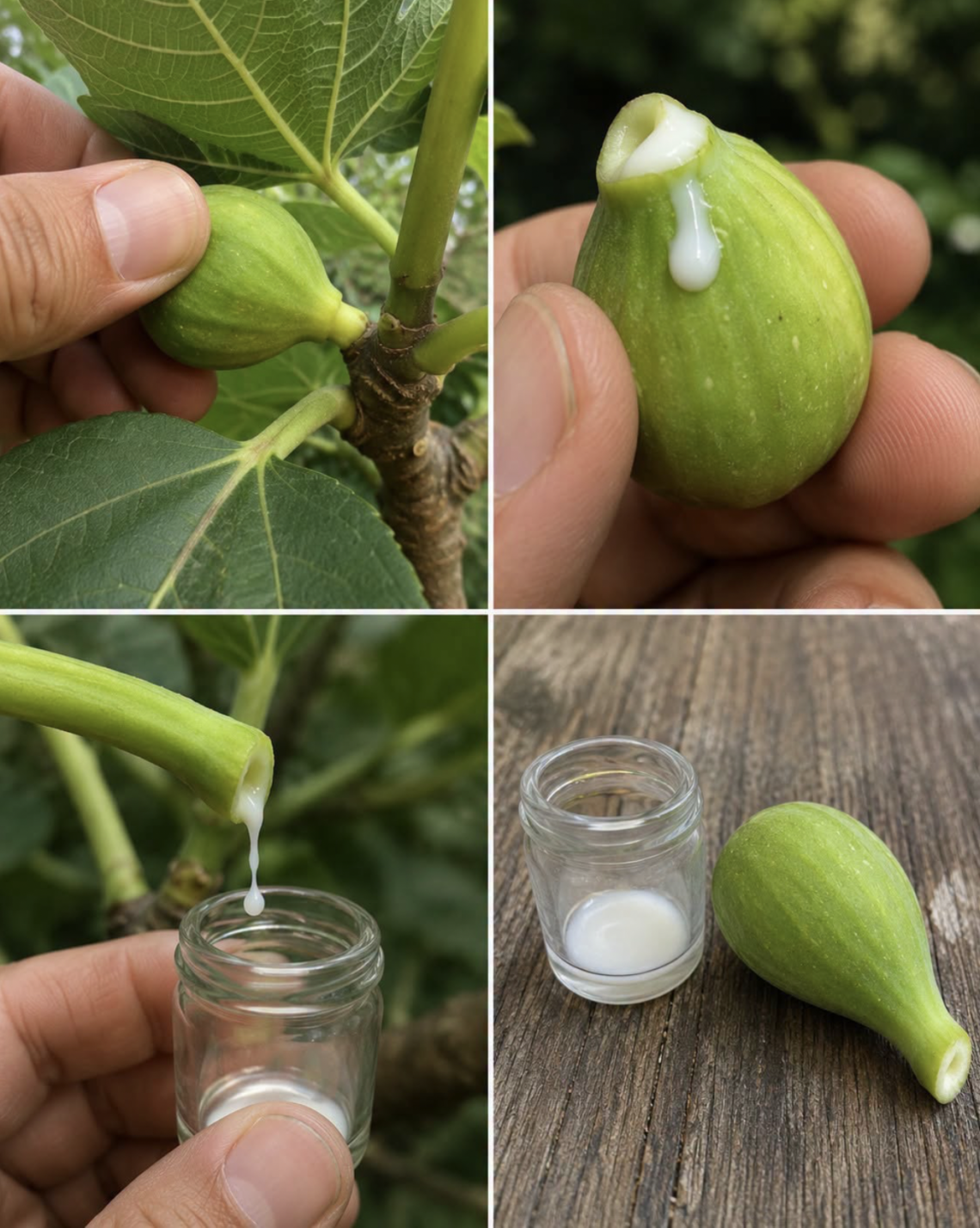
There is something fascinating about discovering the milky white sap that appears when a fig leaf, stem, or unripe fig is broken. It can look almost like milk or a drop of white glue, and if you have never seen it before, you might reasonably wonder whether it is useful, harmful, or simply part of the tree’s natural defenses.
That white substance is commonly called fig latex or fig sap. It is a natural plant exudate produced by fig trees, and it has been known and discussed for centuries in traditional food and folk practices.
But there is an important detail that deserves more attention than many old-fashioned articles give it: fig sap is not something you should casually put on your skin, consume, or experiment with. It contains compounds that can irritate the skin, and exposure followed by sunlight can sometimes cause a significant skin reaction.
So, rather than treating fig sap as a mysterious home remedy, it is better to understand what it actually is, why the tree produces it, how to handle it safely, and which traditional claims should be treated cautiously.
What exactly is the white sap from a fig tree?
When you snap a young fig stem, break a leaf, or remove an unripe fig, you may see a sticky, milky-white liquid appear.
This is latex, a natural substance produced by the fig tree.
It is not the same thing as the sap people sometimes collect from trees such as maple trees for making syrup.
Fig latex contains a mixture of plant compounds, including enzymes and other naturally occurring substances. One of the best-known enzymes associated with fig latex is ficin, a proteolytic enzyme capable of breaking down proteins.
That helps explain why fig latex has historically attracted so much attention.
Why does the fig tree produce it?
Plants have their own defense systems, and latex is one of the ways certain plants protect themselves.
When part of the plant is damaged, the latex can flow from the injured area. Its sticky texture and chemical composition may discourage insects and animals from feeding on the damaged tissue.
In other words, that little white drop isn’t necessarily a sign that something is wrong with your fig tree.
Quite the opposite.
The tree is responding naturally to being injured.
Where is fig latex found?
You can encounter it in several places on the plant.
The most obvious sources are:
- freshly broken stems,
- leaf stalks,
- damaged leaves,
- young or unripe figs,
- freshly cut branches.
The amount can vary considerably depending on the plant, the season, the part of the tree involved, and environmental conditions.
You may see a noticeable white drop one day and almost nothing another time.
Why have people been interested in fig sap for centuries?
Fig trees have an exceptionally long relationship with human civilization.
They have been cultivated for thousands of years, and figs have played roles in food traditions, agriculture, medicine, mythology, and everyday household life.
Because people historically used whatever plants were available around them, fig latex naturally became part of traditional practices.
Older generations sometimes passed down recipes, remedies, and practical uses involving the leaves, fruit, bark, and latex.
However, there is an important distinction between traditional use and scientifically established medical treatment.
A substance being used traditionally does not automatically mean that it is safe, effective, or appropriate for treating a medical condition.
The enzyme ficin
One of the most interesting components of fig latex is ficin.
Ficin is a proteolytic enzyme, meaning that it can break down proteins.
This property helps explain why fig latex has been studied for various potential applications.
It also explains why direct contact deserves caution.
If a substance contains enzymes capable of breaking down proteins, it is not necessarily something you want concentrated on sensitive skin.
Why fig sap can irritate the skin
This is one of the most important things to know.
Fig leaves, stems, and latex contain furocoumarins and other compounds associated with photosensitivity.
If the sap gets onto the skin and that area is subsequently exposed to sunlight, some people can develop a reaction known as phytophotodermatitis.
The reaction can cause:
- redness,
- burning,
- itching,
- swelling,
- tenderness,
- and sometimes blistering or dark discoloration.
The reaction may not always appear immediately.
That delayed appearance can make it particularly confusing because someone might get fig sap on their hands while gardening, spend time outdoors afterward, and only later notice that their skin has become irritated.
The sunlight connection is especially important
This is where fig sap differs from an ordinary sticky plant residue.
The combination of certain plant compounds and ultraviolet light can trigger a skin reaction.
That means someone working with fig trees should be especially careful when handling freshly damaged leaves or stems during bright, sunny weather.
If you get the sap on your skin, wash the area thoroughly with soap and water and avoid unnecessary sun exposure to that area.
If a significant reaction develops, medical advice is appropriate.
Should you drink fig sap?
This is where a lot of internet advice becomes questionable.
You may encounter traditional claims suggesting that fresh fig latex can be consumed for various purposes.
That does not mean you should drink it.
Fresh fig latex is not the same thing as eating a ripe fig.
The ripe fruit is a familiar food. The raw latex is a concentrated plant secretion containing biologically active compounds.
There isn’t a good reason for someone to experiment with consuming raw fig latex as a homemade health drink or remedy.
What about using it on warts or other skin problems?
This is another traditional use that sometimes appears in folk-remedy discussions.
Historically, fig latex has been applied to various skin growths and other problems.
Some research has explored compounds from fig latex for potential biological effects, but that should not be confused with evidence that applying raw sap yourself is a safe treatment for a skin condition.
A suspicious mole, wart, lesion, or changing skin growth should be properly identified before anyone attempts to treat it.
Using irritating plant sap on an unknown skin lesion could make the area worse or obscure changes that a medical professional needs to see.
Is fig sap poisonous?
It is better to think of fig latex as potentially irritating and biologically active, rather than simply labeling it “poisonous.”
The risk depends on the type and amount of exposure and the individual.
Skin exposure is particularly relevant because of the potential for irritation and photosensitivity.
Accidental contact is different from deliberately consuming or applying concentrated latex.
As with any unfamiliar plant substance, avoid putting it in your eyes, mouth, or on broken skin.
What should you do if fig sap gets on your hands?
Don’t panic.
The sensible first step is simple:
Wash the affected skin thoroughly with soap and plenty of water.
Afterward, try to keep that area protected from strong sunlight.
If you develop significant redness, pain, swelling, blistering, or another concerning reaction, seek appropriate medical advice.
And if sap gets into your eyes, rinse them thoroughly with clean water and seek medical attention if irritation persists or is significant.
Wearing gloves is a smart gardening habit
If you’re pruning fig trees or handling damaged branches, wearing gardening gloves is a simple precaution.
Long sleeves can also reduce direct skin exposure.
This is particularly useful if you know that your skin reacts easily to plants or if you’re going to be working outdoors for an extended period.
Good gardening habits don’t have to be complicated.
Sometimes a pair of gloves is all the protection you need.
What about storing fig sap?
This is another area where caution is warranted.
You may see instructions online for collecting fig latex in containers and storing it for later use.
For ordinary home gardening, there is generally little reason to collect and store raw fig latex.
Unlike harvested figs, which have well-established food-preservation methods, raw latex isn’t a normal household food ingredient that needs to be bottled for future use.
If your goal is to enjoy figs, focus on the fruit itself.
If your goal is gardening, the latex is simply part of the tree.
The real treasure is the fig fruit
It is easy to become fascinated by the unusual white sap, but the edible fruit is where the fig tree truly shines in the kitchen.
Fresh figs can be enjoyed in many ways.
They can be:
- eaten fresh,
- added to salads,
- paired with cheese,
- cooked into sauces,
- baked into desserts,
- dried for longer storage,
- or transformed into jams and preserves.
Unlike the latex, ripe figs are an established food and have a long culinary history.
A beautiful reminder of how plants protect themselves
Perhaps the most interesting thing about fig latex isn’t some miraculous household use.
It’s the fact that it gives us a glimpse into the biology of the tree.
A tiny injury produces a visible response.
The tree releases a sticky substance containing compounds that help defend its tissues.
What looks like a mysterious white liquid is actually part of a sophisticated natural defense system that has evolved over time.
Common myths about fig sap
Myth: “All fig sap is a harmless natural remedy.”
Not necessarily.
Natural substances can still irritate the body or cause allergic and photosensitive reactions.
Myth: “If it comes from a food plant, it must be safe to eat.”
Also false.
A plant can contain both edible parts and parts that should not be consumed.
Ripe figs are food; that doesn’t make raw latex a food product.
Myth: “If the sap doesn’t hurt immediately, it’s harmless.”
Not necessarily.
Some reactions can develop later, especially after sun exposure.
Myth: “More sap means a healthier tree.”
Not necessarily.
The amount of latex released depends on many factors and isn’t a simple measure of the tree’s health.
A safer way to appreciate fig trees
If you love growing figs, there is no need to be afraid of the white latex.
Just treat it with the same respect you would give other unfamiliar plant substances.
Wear gloves when pruning, avoid touching your face while handling damaged plant material, wash your hands afterward, and keep sap away from your eyes and mouth.
Most importantly, don’t turn an interesting botanical curiosity into an untested home medical treatment.

Welcome to my kitchen!
I’m a passionate home cook and recipe creator who loves turning simple ingredients into delicious, comforting meals that everyone can enjoy. Through this website, I share carefully prepared recipes, practical cooking tips, and easy-to-understand food education to help you feel more confident in the kitchen.
My goal is to make cooking simple, enjoyable, and accessible. Whether you are looking for a quick family dinner, a delicious dessert, healthy meal ideas, or traditional recipes with a modern touch, you’ll find inspiration here.
More Than Just Recipes
I believe that cooking is also a way to learn. That’s why this website is not only about recipes. I also create educational articles about ingredients, cooking techniques, kitchen tips, food preparation, and the stories behind different dishes.
Each article is designed to give you useful knowledge that you can apply in your own kitchen. From understanding how ingredients work together to learning better cooking methods, my aim is to help you become a more confident and creative cook.
My Philosophy
Good food doesn’t always require complicated ingredients or professional equipment. With a little knowledge, patience, and creativity, simple ingredients can become something truly special.
I believe in sharing recipes that are practical, clearly explained, and enjoyable to make. I also love exploring new flavors while appreciating traditional cooking and the recipes passed down through generations.
Thank you for visiting my kitchen and being part of this food-loving community. I hope my recipes and articles inspire you to cook, learn, experiment, and most importantly, enjoy every bite!
Happy cooking!