Understanding the Reality Behind a Strange and Unsettling Sight
Imagine walking through a parking lot late in the evening and noticing something unusual on your car:
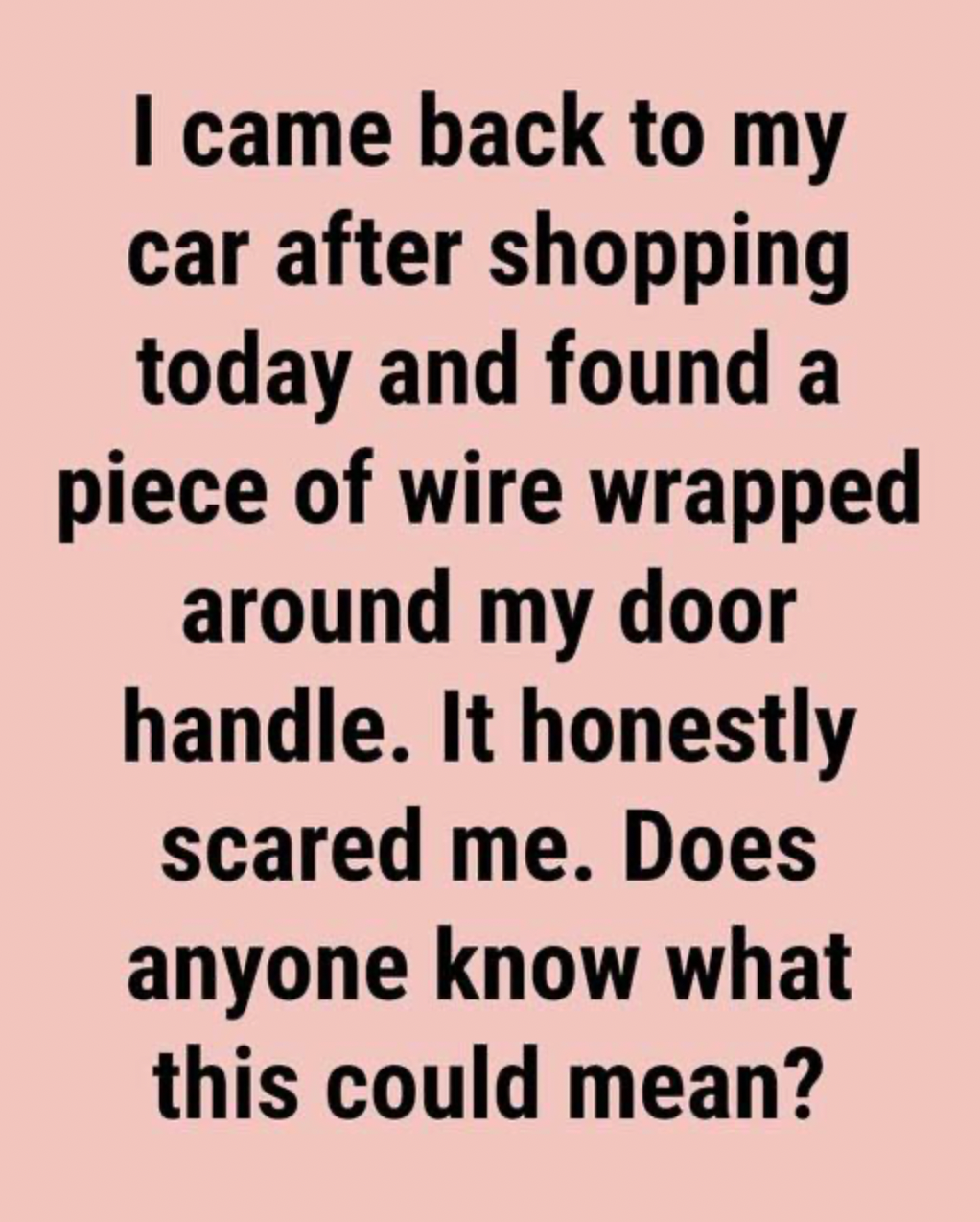
a thin wire, zip tie, string, or piece of metal attached to the door handle.
Your first reaction is probably confusion.
Your second reaction may be concern.
Social media posts and viral videos have turned these discoveries into alarming warnings, with many people claiming:
- it’s a criminal tactic
- it’s used by kidnappers
- it marks vehicles for theft
- it distracts drivers
- it signals human trafficking
But how much of this is actually true?
The answer is more complicated than the internet often suggests.
While strange objects attached to vehicles should never be ignored completely, many viral claims are exaggerated, misunderstood, or unsupported by evidence.
The safest approach is neither panic nor dismissal—it’s calm awareness and practical caution.
Why This Topic Became So Viral
Stories about:
- zip ties on handles
- wires around mirrors
- objects under windshield wipers
spread rapidly online because they trigger powerful emotions:
- fear
- uncertainty
- vulnerability
Cars are personal spaces. When something unfamiliar appears on them, people naturally feel unsettled.
Social media amplifies these fears because dramatic warnings spread faster than nuanced explanations.
What a Wire on a Car Handle Could Actually Mean
There is no single explanation.
Possible reasons include:
- harmless prank
- accidental attachment
- random debris
- attempted theft tactic
- attention distraction method
- vandalism
- social media hoax replication
The context matters enormously.
The Most Common Realistic Explanations
1. Random or Accidental Debris
Sometimes:
- packaging wire
- shopping cart material
- landscaping ties
- loose metal pieces
can become attached accidentally.
This is especially common in:
- crowded parking lots
- windy areas
- construction zones
Not every strange object indicates criminal intent.
2. Harmless Pranks
Teenagers or pranksters occasionally attach:
- zip ties
- ribbons
- stickers
- wires
to vehicles simply for amusement or social media trends.
Immature behavior can still feel alarming, but it’s often not dangerous.
3. Theft Distraction Tactics
Some security experts and police departments have acknowledged that thieves occasionally use distractions.
The theory works like this:
- driver notices unusual object
- becomes distracted removing it
- leaves purse, phone, or keys exposed
- thief takes advantage of distraction
This type of opportunistic theft is more plausible than many extreme viral claims.
Why Distraction Matters
Criminals often rely more on:
- confusion
- surprise
- distraction
than dramatic movie-style tactics.
A distracted person may:
- leave the engine running
- place belongings on the ground
- unlock doors carelessly
- lower awareness of surroundings
4. Vehicle Marking Myths
Some internet posts claim:
- wires mark targets for trafficking
- colored objects signal criminal codes
- thieves communicate through secret car symbols
In reality, law enforcement agencies have repeatedly stated that many of these claims lack verified evidence.
Most organized criminals do not rely on obvious public markings that attract attention.
Important Distinction
Just because a specific viral claim is exaggerated does not mean situational awareness is unimportant.
It simply means:
- avoid panic
- avoid misinformation
- focus on practical safety instead
What You Should Actually Do If You Find Something on Your Car
Stay Calm
Panic reduces judgment.
Most unusual objects on cars are not signs of immediate danger.
Check Your Surroundings First
Before touching anything:
- look around the parking area
- notice nearby people
- remain aware of surroundings
If something feels genuinely unsafe:
- return to a public area
- ask for security assistance
- avoid isolating yourself
Avoid Becoming Distracted
Don’t focus so intensely on the object that you:
- ignore your environment
- leave belongings exposed
- lose awareness of nearby movement
Situational awareness matters more than the object itself.
Enter the Vehicle Safely
If possible:
- get inside first
- lock doors
- start the vehicle
You can inspect the object afterward in a safer location if needed.
If You Feel Unsafe
Trust reasonable instincts.
If something genuinely seems suspicious:
- contact parking security
- move to a populated area
- call local authorities if necessary
Why Fear-Based Posts Spread So Quickly
Humans are naturally wired to pay attention to possible threats.
Psychologists call this:
negativity bias
Your brain prioritizes danger-related information because historically it helped survival.
That’s why posts saying:
“This hidden trick could save your life!”
spread rapidly online.
The Problem With Viral Safety Warnings
Many viral warnings:
- mix truth with exaggeration
- rely on anecdotal stories
- lack verified evidence
- create unnecessary panic
Over time, this can cause:
- fear fatigue
- paranoia
- misinformation spread
The Better Approach: Calm Preparedness
Real personal safety usually depends on simple habits:
- staying aware
- locking vehicles
- parking in visible areas
- avoiding distractions
- keeping valuables hidden
- trusting reasonable instincts
These habits matter far more than decoding internet “secret criminal symbols.”
Smart Car Safety Habits in 2026
Modern vehicle safety includes both physical and digital awareness.
Physical Safety Tips
Park in Well-Lit Areas
Visibility discourages opportunistic crime.
Lock Doors Immediately
Many thefts happen within seconds.
Keep Valuables Out of Sight
Visible bags attract attention.
Stay Aware During Loading/Unloading
People are often distracted while handling groceries or phones.
Digital Safety Tips
Modern cars increasingly rely on:
- wireless key fobs
- smartphone access
- digital systems
Protect against:
- relay attacks
- signal theft
- hacked key fobs
Consider:
- RFID-blocking pouches
- disabling unused wireless features
Why Situational Awareness Still Matters
Even if many online claims are exaggerated, awareness remains valuable.
Criminals generally prefer:
- distracted targets
- isolated situations
- easy opportunities
Simple awareness dramatically reduces vulnerability.
The Psychology of “Something Feels Wrong”
Humans are highly sensitive to unusual changes in familiar environments.
When you see:
- an unfamiliar object
- unexpected movement
- something “out of place”
your brain immediately investigates for possible danger.
This reaction is normal.
The key is responding rationally rather than fearfully.

Welcome to my kitchen!
I’m a passionate home cook and recipe creator who loves turning simple ingredients into delicious, comforting meals that everyone can enjoy. Through this website, I share carefully prepared recipes, practical cooking tips, and easy-to-understand food education to help you feel more confident in the kitchen.
My goal is to make cooking simple, enjoyable, and accessible. Whether you are looking for a quick family dinner, a delicious dessert, healthy meal ideas, or traditional recipes with a modern touch, you’ll find inspiration here.
More Than Just Recipes
I believe that cooking is also a way to learn. That’s why this website is not only about recipes. I also create educational articles about ingredients, cooking techniques, kitchen tips, food preparation, and the stories behind different dishes.
Each article is designed to give you useful knowledge that you can apply in your own kitchen. From understanding how ingredients work together to learning better cooking methods, my aim is to help you become a more confident and creative cook.
My Philosophy
Good food doesn’t always require complicated ingredients or professional equipment. With a little knowledge, patience, and creativity, simple ingredients can become something truly special.
I believe in sharing recipes that are practical, clearly explained, and enjoyable to make. I also love exploring new flavors while appreciating traditional cooking and the recipes passed down through generations.
Thank you for visiting my kitchen and being part of this food-loving community. I hope my recipes and articles inspire you to cook, learn, experiment, and most importantly, enjoy every bite!
Happy cooking!