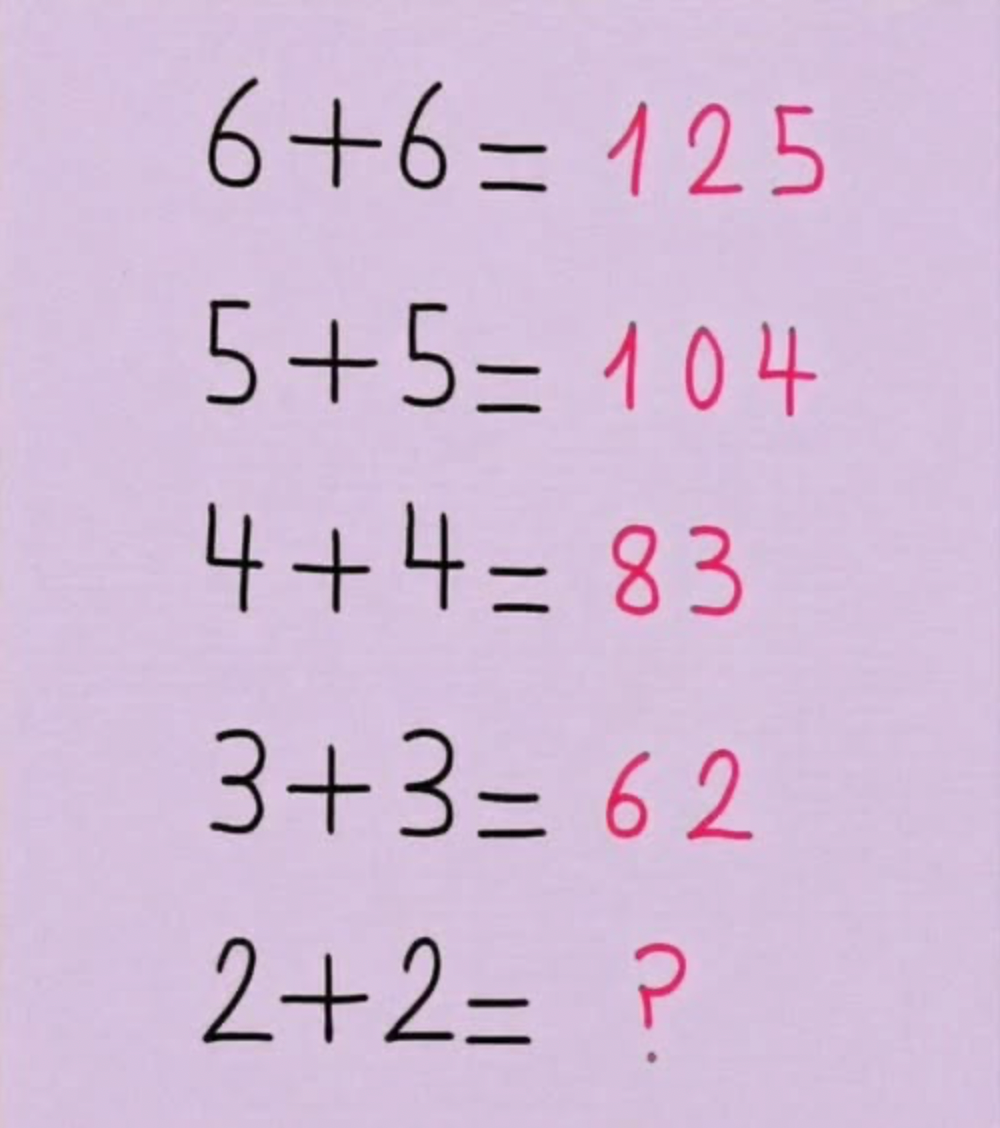
A simple-looking math expression has been circulating online and confusing thousands of people. It appears innocent at first glance, almost too easy to be called a “puzzle.” But the challenge comes with a bold claim:
“Only geniuses can solve it in 10 seconds.”
The equation is:
7 × 7 – 7 ÷ 7 + 7 = ?
At first, most people feel confident. After all, it only contains single-digit numbers and basic operations. But within seconds, confusion begins to appear. Different people get different answers, arguments break out in comment sections, and the puzzle becomes another viral debate.
But what is really going on here?
The truth is simple: this is not a test of genius-level intelligence. It is a test of discipline, attention to rules, and resistance to rushing.
Why This Puzzle Tricks So Many People
The human brain is not naturally built for strict mathematical order. Instead, it is designed for speed and pattern recognition.
So when you see:
7 × 7 – 7 ÷ 7 + 7
your brain immediately tries to “flow” through it in a natural reading style—left to right.
This is where the mistake happens.
Most people instinctively calculate like this:
Wrong instinctive method:
- 7 × 7 = 49
- 49 – 7 = 42
- 42 ÷ 7 = 6
- 6 + 7 = 13
This feels smooth, fast, and logical.
But unfortunately, it ignores the most important rule in mathematics: order of operations.
The Rule That Changes Everything: PEMDAS
To solve this correctly, we must follow a structured system known as:
PEMDAS
Each letter stands for:
- P = Parentheses
- E = Exponents
- M = Multiplication
- D = Division
- A = Addition
- S = Subtraction
This rule exists to eliminate confusion and ensure that every mathematical expression has only one correct answer.
But here’s the part most people misunderstand:
Multiplication and division are the same priority
Addition and subtraction are the same priority
And within each pair, you solve from left to right.
Step-by-Step Breakdown (Correct Solution)
Now let’s carefully solve the expression without rushing.
Original equation:
7 × 7 – 7 ÷ 7 + 7
Step 1: Solve multiplication and division first (left to right)
First operation:
7 × 7 = 49
Now the expression becomes:
49 – 7 ÷ 7 + 7
Next operation:
7 ÷ 7 = 1
Now we have:
49 – 1 + 7
Step 2: Solve subtraction and addition (left to right)
Now we move carefully across the remaining operations.
First:
49 – 1 = 48
Expression becomes:
48 + 7
Final step:
48 + 7 = 55
Final Answer: 55
Why People Make Mistakes Even When They “Know Math”
This puzzle is not about advanced calculations. It is about how the brain behaves under pressure.
Even people who know PEMDAS often still get it wrong because of psychological factors:
1. The “Speed Trap”
The challenge says:
“Solve in 10 seconds”
This creates urgency.
Under time pressure, the brain switches from careful reasoning to fast pattern thinking. That increases error rates dramatically.
2. Left-to-Right Habit
In everyday life, we read and process information from left to right.
So the brain naturally applies that same habit to math—even when it is not allowed.
3. Overconfidence Bias
Because the numbers are small, people assume:
“This is too easy to need rules.”
That assumption leads directly to mistakes.
4. Ignoring Equal Priority Rules
Many people falsely believe:
- multiplication always comes before division
- addition always comes before subtraction
But in reality, they are paired and treated equally.
This is one of the biggest sources of confusion.
What This Puzzle Is Really Testing
Despite the dramatic title “Only geniuses can solve this,” the puzzle is not about intelligence.
Instead, it measures:
- attention to detail
- patience
- ability to follow structured rules
- resistance to rushing
- discipline in step-by-step thinking
In fact, many highly intelligent people get it wrong simply because they don’t slow down.
Why These Puzzles Go Viral Online
This type of math puzzle spreads quickly for a few powerful psychological reasons:
1. Instant engagement
Anyone can understand it within seconds—no background needed.
2. Emotional reaction
People feel either:
- confident (“this is easy”)
- or challenged (“wait… what?”)
Both reactions increase engagement.
3. Social competition
People love comparing answers in comments:
- “I got 13!”
- “No, it’s 55!”
- “You’re all wrong!”
This creates debate and interaction.
4. Curiosity loop
Even after seeing the answer, people often re-check the steps to understand where they went wrong.
That “aha moment” is what keeps these puzzles alive.
A Deeper Lesson Hidden in the Math
While the puzzle is simple, it carries an important real-life message.
It shows that:
Speed often leads to mistakes, but structure leads to clarity.
In real life, this applies far beyond mathematics:
- making financial decisions
- solving workplace problems
- analyzing information online
- reacting under pressure
- interpreting instructions correctly
People who slow down and follow steps carefully often make fewer errors than those who rush—even if both are equally intelligent.
The Psychology Behind the “Genius Label”
The phrase “Only geniuses can solve this” is not accidental.
It is designed to:
- trigger ego
- increase curiosity
- encourage participation
- make people want to prove themselves
But in reality, this puzzle does not measure genius.
It measures whether you:
pause long enough to apply a rule correctly
Welcome to my kitchen!
I’m a passionate home cook and recipe creator who loves turning simple ingredients into delicious, comforting meals that everyone can enjoy. Through this website, I share carefully prepared recipes, practical cooking tips, and easy-to-understand food education to help you feel more confident in the kitchen.
My goal is to make cooking simple, enjoyable, and accessible. Whether you are looking for a quick family dinner, a delicious dessert, healthy meal ideas, or traditional recipes with a modern touch, you’ll find inspiration here.
More Than Just Recipes
I believe that cooking is also a way to learn. That’s why this website is not only about recipes. I also create educational articles about ingredients, cooking techniques, kitchen tips, food preparation, and the stories behind different dishes.
Each article is designed to give you useful knowledge that you can apply in your own kitchen. From understanding how ingredients work together to learning better cooking methods, my aim is to help you become a more confident and creative cook.
My Philosophy
Good food doesn’t always require complicated ingredients or professional equipment. With a little knowledge, patience, and creativity, simple ingredients can become something truly special.
I believe in sharing recipes that are practical, clearly explained, and enjoyable to make. I also love exploring new flavors while appreciating traditional cooking and the recipes passed down through generations.
Thank you for visiting my kitchen and being part of this food-loving community. I hope my recipes and articles inspire you to cook, learn, experiment, and most importantly, enjoy every bite!
Happy cooking!