Have you ever wandered through a thrift store, flea market, antique mall, estate sale, or garage sale and stumbled across a kitchen gadget that looked so unusual you couldn’t even guess what it was? If you’ve ever picked up a strange metal tool filled with evenly spaced blades or sharp tines and wondered, “What on earth does this thing do?” you’re certainly not alone.
For many shoppers, discovering mysterious kitchen tools is one of the most enjoyable parts of browsing secondhand stores. Hidden among old mixing bowls, cast-iron skillets, vintage measuring cups, cookie cutters, and forgotten baking pans are countless gadgets that once made everyday cooking easier. Some are instantly recognizable, while others seem so unusual that they almost look like pieces of machinery rather than cooking utensils.
One of the most commonly misunderstood tools is the onion and vegetable slicer—a simple yet remarkably clever kitchen accessory that has helped home cooks prepare vegetables quickly, safely, and with impressive consistency for decades.
At first glance, the device can appear confusing. Its rows of parallel blades or sturdy metal prongs may look intimidating, leading some people to mistake it for a specialized carving tool, a meat tenderizer, or even an old workshop instrument. Yet once its purpose is understood, the design suddenly makes perfect sense.
Although modern electric slicers, food processors, and mandolines have become popular, this humble handheld gadget continues to earn a place in many kitchens because of its simplicity, reliability, and ease of use.
Let’s take a closer look at what this fascinating little tool actually is, how it works, why generations of home cooks appreciated it, and why you might want to keep one in your own kitchen.
What Is an Onion and Vegetable Slicer?
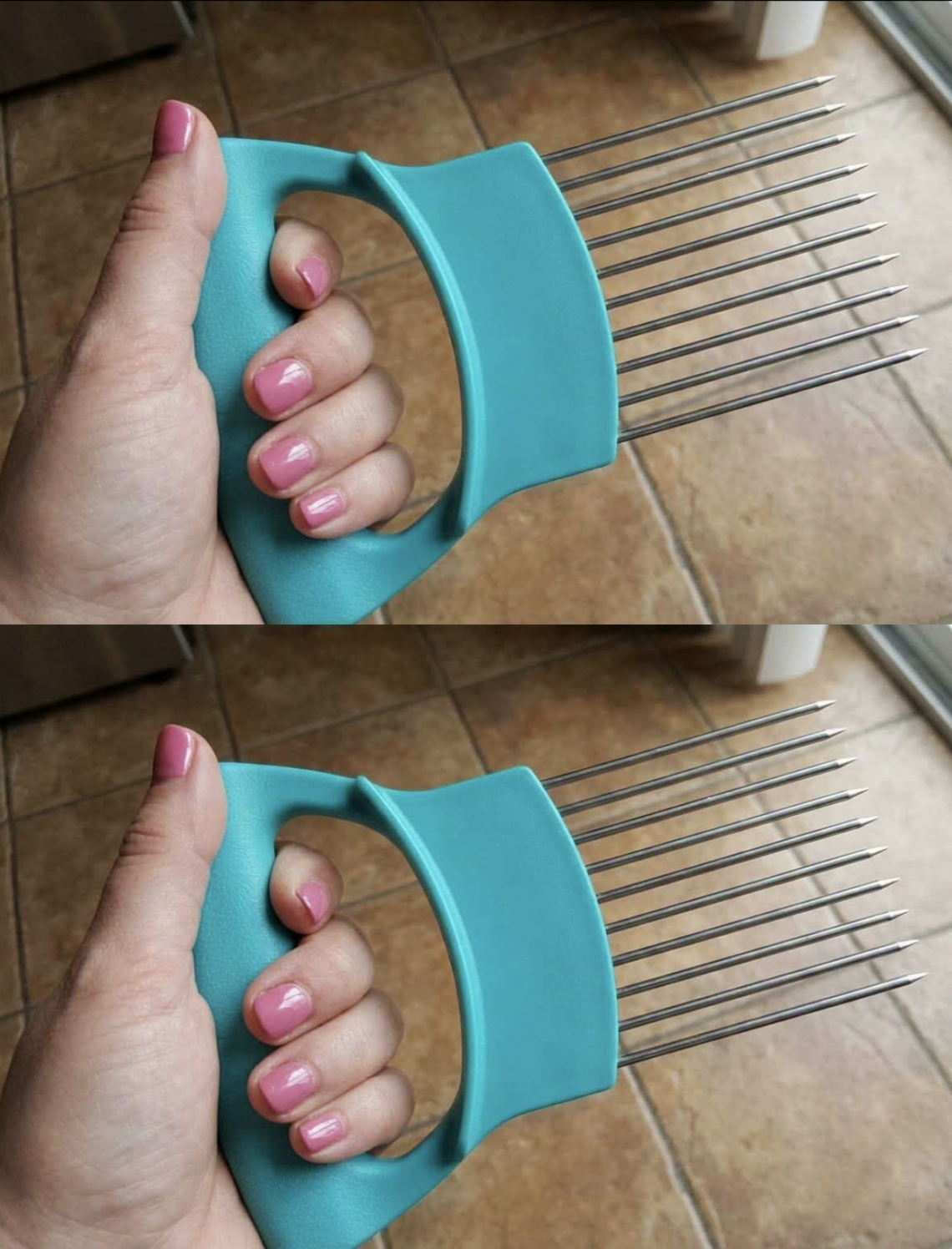
An onion and vegetable slicer is a handheld kitchen tool designed to help produce neat, evenly spaced slices while also making cutting safer and easier.
Most models feature:
- A sturdy handle.
- Multiple parallel stainless-steel prongs or blades.
- A durable metal or plastic frame.
- A compact design for easy storage.
Rather than replacing a kitchen knife, the tool works alongside one.
The prongs hold the vegetable securely in place while also acting as a guide for the knife, helping create slices of nearly identical thickness.
Why Was It Invented?
Long before electric food processors became common, home cooks spent significant time preparing vegetables by hand.
Uniform slices were especially important for:
- Even cooking.
- Attractive presentation.
- Pickling.
- Canning.
- Salads.
- Sandwiches.
- Casseroles.
The vegetable slicer offered a simple solution by making repetitive slicing faster, easier, and more consistent.
It quickly became a favorite in many family kitchens.
How Does It Work?
The concept is surprisingly simple.
First, the vegetable is placed on a cutting board.
The slicer is pressed firmly into the food, allowing the prongs to hold it securely.
Next, a kitchen knife is guided through the spaces between the metal prongs.
Because the knife naturally follows these openings, each slice is spaced evenly from the next.
This helps create consistent slices without requiring exceptional knife skills.
Vegetables It Can Slice
Although often called an onion slicer, the tool is useful for many ingredients.
Common examples include:
- Onions.
- Potatoes.
- Tomatoes (firmer varieties).
- Cucumbers.
- Zucchini.
- Mushrooms.
- Apples.
- Pears.
- Beets.
- Carrots (depending on thickness).
- Hard-boiled eggs.
Some cooks even use it when preparing certain fruits for desserts.
Why Home Cooks Loved It
The popularity of this simple gadget comes from several practical advantages.
1. Uniform Slices Every Time
Even slices cook at roughly the same rate.
Whether roasting potatoes or preparing cucumbers for a salad, consistency improves both appearance and cooking results.
2. Better Knife Safety
The prongs help stabilize slippery vegetables.
This reduces the likelihood of the food rolling while cutting.
Although safe knife handling is still essential, many people find the slicer provides additional control.
3. Faster Meal Preparation
Preparing several onions or potatoes becomes much quicker once the vegetable is securely held in place.
This can be especially helpful when cooking for large families or gatherings.
4. Less Waste
Guided slicing often produces cleaner, straighter cuts, reducing uneven pieces that might otherwise be discarded.
5. Helpful for Beginners
People still developing knife skills often appreciate the extra guidance provided by the prongs.
Creative Ways to Use It
Beyond ordinary slicing, the tool offers several creative possibilities.
For example:
Hasselback Potatoes
Insert the prongs into a potato before slicing.
The knife stops at the prongs, preventing you from cutting completely through the potato.
This creates the famous accordion-style Hasselback effect.
Stuffed Vegetables
Partial cuts allow seasonings or cheese to be tucked neatly between slices.
Decorative Garnishes
Uniform slices create attractive presentations for serving platters.
Homemade Pickles
Consistent cucumber slices improve both appearance and even pickling.
Why You Still See Them in Thrift Stores
Many families owned these gadgets for decades.
As kitchens were updated and electric appliances became more common, older manual tools were often donated.
That explains why onion slicers frequently appear in:
- Thrift stores.
- Estate sales.
- Flea markets.
- Antique shops.
- Garage sales.
Fortunately, their durable construction means many remain perfectly usable even after years of storage.
Vintage vs. Modern Versions
Older models were commonly made from:
- Stainless steel.
- Chrome-plated steel.
- Heavy-duty aluminum.
- Wooden handles.
Modern versions may include:
- Plastic handles.
- Rubber grips.
- Dishwasher-safe materials.
- Ergonomic designs.
Despite these updates, the basic concept has changed very little.
Good ideas often stand the test of time.
Cleaning the Slicer
Proper cleaning is important because vegetable juices can collect between the prongs.
After each use:
- Rinse immediately.
- Wash with warm water and dish soap.
- Use a small brush if food becomes trapped.
- Dry thoroughly before storing.
Drying helps reduce the chance of corrosion on older metal models.
Safe Storage
Although compact, the prongs remain sharp enough to deserve careful storage.
Store the slicer:
- In a kitchen drawer with other utensils.
- Inside a utensil organizer.
- In a protective sleeve if available.
- Away from children.
Keeping it dry also helps preserve its finish.
Is It Better Than a Mandoline?
Both tools have advantages.
An onion slicer:
- Is easier to control.
- Is less intimidating for many users.
- Requires no adjustments.
- Produces consistent hand-cut slices.
A mandoline:
- Offers faster slicing.
- Provides adjustable thickness.
- Can process larger quantities quickly.
Many cooks enjoy having both available for different tasks.
Frequently Asked Questions
Is it only for onions?
No.
It works well with many firm fruits and vegetables.
Will it sharpen my knife?
No.
It simply guides the knife through evenly spaced openings.
Is it safe?
When used correctly with normal knife safety practices, it can help stabilize vegetables during slicing.
Are vintage models still usable?
In many cases, yes.
If the metal is clean, sturdy, and free from significant rust or damage, many older slicers remain fully functional.
Tips for Best Results
- Use a sharp kitchen knife.
- Press the prongs firmly into the vegetable.
- Slice slowly rather than forcing the knife.
- Wash immediately after use.
- Dry completely before storage.
- Avoid twisting the prongs unnecessarily to help maintain alignment.

Welcome to my kitchen!
I’m a passionate home cook and recipe creator who loves turning simple ingredients into delicious, comforting meals that everyone can enjoy. Through this website, I share carefully prepared recipes, practical cooking tips, and easy-to-understand food education to help you feel more confident in the kitchen.
My goal is to make cooking simple, enjoyable, and accessible. Whether you are looking for a quick family dinner, a delicious dessert, healthy meal ideas, or traditional recipes with a modern touch, you’ll find inspiration here.
More Than Just Recipes
I believe that cooking is also a way to learn. That’s why this website is not only about recipes. I also create educational articles about ingredients, cooking techniques, kitchen tips, food preparation, and the stories behind different dishes.
Each article is designed to give you useful knowledge that you can apply in your own kitchen. From understanding how ingredients work together to learning better cooking methods, my aim is to help you become a more confident and creative cook.
My Philosophy
Good food doesn’t always require complicated ingredients or professional equipment. With a little knowledge, patience, and creativity, simple ingredients can become something truly special.
I believe in sharing recipes that are practical, clearly explained, and enjoyable to make. I also love exploring new flavors while appreciating traditional cooking and the recipes passed down through generations.
Thank you for visiting my kitchen and being part of this food-loving community. I hope my recipes and articles inspire you to cook, learn, experiment, and most importantly, enjoy every bite!
Happy cooking!