Some of the most treasured family recipes are not the most elaborate ones, but the simplest. They are the dishes that make the most of fresh, seasonal ingredients, transforming humble vegetables into comforting meals that everyone looks forward to year after year. Long before complicated recipes and gourmet ingredients became popular, home cooks relied on vegetables from the garden, pantry staples, and a little creativity to prepare satisfying meals for their families.
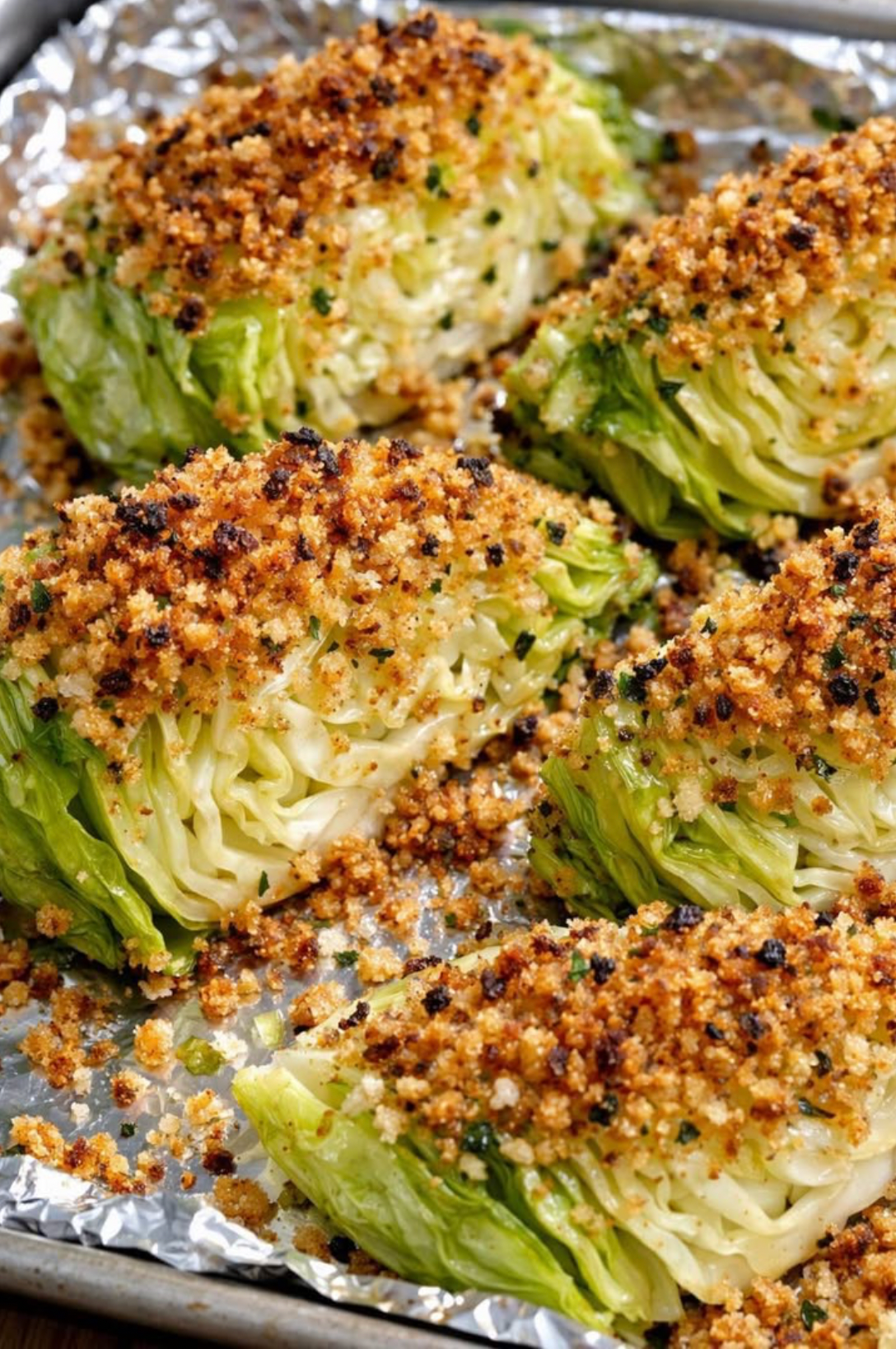
This Grandma’s 4-Ingredient Crispy Baked Cabbage is one of those timeless recipes. Using only fresh cabbage, butter, breadcrumbs, and Parmesan cheese, it creates an incredibly flavorful side dish with a beautifully crisp golden topping and a tender, buttery interior. As the cabbage slowly roasts in the oven, its natural sweetness becomes more pronounced, while the breadcrumb coating turns wonderfully crunchy and the cheese develops a rich, savory crust.
Despite requiring only four basic ingredients, this recipe produces a side dish that feels elegant enough for a holiday meal yet simple enough for an ordinary weeknight dinner. It pairs beautifully with roasted meats, grilled chicken, pork chops, sausages, or hearty vegetarian meals, making it one of the most versatile vegetable dishes you can prepare.
Whether harvested fresh from the garden during autumn or purchased at the market throughout the year, cabbage proves once again that simple ingredients can produce extraordinary flavor.
Why You’ll Love This Recipe
This baked cabbage recipe is:
- Made with only four simple ingredients.
- Budget-friendly.
- Easy to prepare.
- Crispy on the outside.
- Tender and buttery inside.
- Naturally comforting.
- Perfect for family dinners.
- Excellent for holidays and everyday meals alike.
Its combination of crisp texture and naturally sweet roasted cabbage makes it surprisingly satisfying.
Ingredients
Serves 6 people.
Main Ingredients
- 1 medium green cabbage
- 4 tablespoons (60 g) unsalted butter, melted
- 1 cup (100 g) plain or seasoned breadcrumbs
- ½ cup (50 g) freshly grated Parmesan cheese
These four ingredients create the traditional version of the recipe.
Optional Seasonings
Although the classic recipe contains only four ingredients, you may add extra flavor with:
- Salt
- Freshly ground black pepper
- Garlic powder
- Onion powder
- Smoked paprika
- Dried thyme
- Fresh parsley
- Red pepper flakes
- Lemon zest
These additions complement the roasted cabbage beautifully.
Equipment Needed
- Large cutting board
- Sharp chef’s knife
- Mixing bowl
- Pastry brush
- Baking sheet
- Parchment paper or aluminum foil
Choosing the Best Cabbage
Fresh cabbage produces the best texture.
Look for a cabbage that is:
- Firm.
- Heavy for its size.
- Bright green.
- Free from brown spots.
- Tightly packed.
Both green and Savoy cabbage work well, although green cabbage creates the crispest edges.
Why Roasted Cabbage Tastes Different
Many people are surprised by how much cabbage changes during roasting.
As it cooks:
- Moisture slowly evaporates.
- Natural sugars become concentrated.
- The edges caramelize.
- The flavor becomes sweeter.
- The texture softens while the surface becomes crisp.
This transformation creates a much richer flavor than boiled cabbage.
Step-by-Step Instructions
Step 1: Prepare the Oven
Preheat the oven to 400°F (200°C).
Line a baking sheet with parchment paper or lightly grease it.
Step 2: Prepare the Cabbage
Remove any damaged outer leaves.
Wash and dry the cabbage thoroughly.
Cut it into thick wedges, approximately 1 inch (2.5 cm) wide.
Leave a portion of the core attached to each wedge.
The core helps the wedges hold together while baking.
Step 3: Coat with Butter
Arrange the cabbage wedges on the prepared baking sheet.
Brush each wedge generously with melted butter.
Ensure all surfaces receive a light coating.
The butter encourages browning and helps the breadcrumb mixture adhere.
Step 4: Prepare the Coating
In a bowl combine:
- Breadcrumbs
- Parmesan cheese
Mix until evenly blended.
Step 5: Coat the Cabbage
Sprinkle the breadcrumb mixture generously over each cabbage wedge.
Press lightly so the coating adheres to the butter.
Cover the tops evenly for the best crisp texture.
Step 6: Bake
Bake for approximately 35–40 minutes, or until:
- The cabbage is tender.
- The breadcrumbs become golden brown.
- The Parmesan develops a crisp crust.
- The edges caramelize slightly.
For extra crispness, broil during the final 2 minutes, watching carefully.
Step 7: Rest Before Serving
Allow the cabbage to cool for approximately 5 minutes.
Serve while warm.
Tips for Perfect Results
For the best baked cabbage:
- Cut wedges evenly.
- Use freshly grated Parmesan.
- Do not overcrowd the baking sheet.
- Brush generously with butter.
- Bake until deeply golden.
The caramelized edges provide the richest flavor.
Delicious Variations
Garlic Parmesan Version
Add garlic powder or fresh minced garlic to the breadcrumb mixture.
Herb Version
Mix chopped fresh herbs into the coating.
Excellent choices include:
- Parsley
- Thyme
- Rosemary
- Chives
Cheddar Version
Replace part of the Parmesan with sharp cheddar.
The cheese becomes beautifully bubbly.
Spicy Version
Add:
- Crushed red pepper flakes
- Cayenne pepper
- Smoked paprika
These spices provide gentle heat.
Bacon Version
Sprinkle cooked crumbled bacon over the cabbage during the final minutes of baking.
Serving Suggestions
Serve alongside:
- Roast chicken
- Pork chops
- Roast beef
- Meatloaf
- Grilled sausages
- Baked fish
- Turkey
- Ham
It also pairs wonderfully with mashed potatoes or roasted root vegetables.
Storage
Allow leftovers to cool completely.
Store in an airtight container in the refrigerator for up to 4 days.
Reheating
For the crispiest results, reheat in:
- Oven
- Air fryer
Microwave reheating is possible but softens the breadcrumb topping.
Freezing
Although possible, freezing is not recommended because the breadcrumb coating may lose its crisp texture.
Freshly baked cabbage provides the best results.
Common Mistakes to Avoid
Cutting the Wedges Too Thin
Thin wedges may fall apart during baking.
Using Too Little Butter
Butter helps create a beautifully crisp coating.
Crowding the Pan
Leave space between wedges so hot air circulates properly.
Underbaking
Proper roasting develops sweetness and caramelization.
Using Pre-Grated Parmesan
Freshly grated Parmesan melts and browns more evenly.
Nutritional Highlights
Cabbage is naturally rich in:
- Vitamin C.
- Vitamin K.
- Dietary fiber.
- Antioxidants.
- Folate.
Parmesan contributes:
- Protein.
- Calcium.
- Rich umami flavor.
Frequently Asked Questions
Can I use red cabbage?
Yes.
The color changes during baking, but the flavor remains excellent.
Can I prepare it ahead?
You can cut and coat the cabbage in advance, then bake shortly before serving.
Which breadcrumbs work best?
Panko creates extra crispness, while traditional breadcrumbs provide a finer coating.
Can I make it gluten-free?
Yes.
Simply substitute gluten-free breadcrumbs.
Can I add extra vegetables?
Absolutely.
Carrots, onions, Brussels sprouts, or cauliflower roast beautifully alongside the cabbage.
Why Rustic Vegetable Recipes Never Go Out of Style
Simple roasted vegetable dishes remain popular because they celebrate the natural flavor of fresh produce rather than hiding it beneath heavy sauces or complicated techniques. Roasting enhances sweetness, creates rich caramelization, and develops textures that boiling or steaming cannot achieve. Combined with basic pantry ingredients such as butter, breadcrumbs, and cheese, humble vegetables become deeply satisfying dishes that appeal to every generation.
Welcome to my kitchen!
I’m a passionate home cook and recipe creator who loves turning simple ingredients into delicious, comforting meals that everyone can enjoy. Through this website, I share carefully prepared recipes, practical cooking tips, and easy-to-understand food education to help you feel more confident in the kitchen.
My goal is to make cooking simple, enjoyable, and accessible. Whether you are looking for a quick family dinner, a delicious dessert, healthy meal ideas, or traditional recipes with a modern touch, you’ll find inspiration here.
More Than Just Recipes
I believe that cooking is also a way to learn. That’s why this website is not only about recipes. I also create educational articles about ingredients, cooking techniques, kitchen tips, food preparation, and the stories behind different dishes.
Each article is designed to give you useful knowledge that you can apply in your own kitchen. From understanding how ingredients work together to learning better cooking methods, my aim is to help you become a more confident and creative cook.
My Philosophy
Good food doesn’t always require complicated ingredients or professional equipment. With a little knowledge, patience, and creativity, simple ingredients can become something truly special.
I believe in sharing recipes that are practical, clearly explained, and enjoyable to make. I also love exploring new flavors while appreciating traditional cooking and the recipes passed down through generations.
Thank you for visiting my kitchen and being part of this food-loving community. I hope my recipes and articles inspire you to cook, learn, experiment, and most importantly, enjoy every bite!
Happy cooking!