Finding a white, dusty, or streaky coating on chocolate can be confusing and even a little worrying. Many people immediately think the chocolate has gone bad, spoiled, or grown mold. However, in most cases, this change is completely harmless and does not make the chocolate unsafe to eat.
This white coating is usually the result of a natural process that affects chocolate when it is exposed to changes in temperature or humidity. It is very common, especially if chocolate has been stored for a while or moved between environments.
Understanding what this coating is, why it happens, and how to tell if chocolate is still safe can help you avoid unnecessary waste and use your chocolate confidently.
What Is the White Coating on Chocolate?
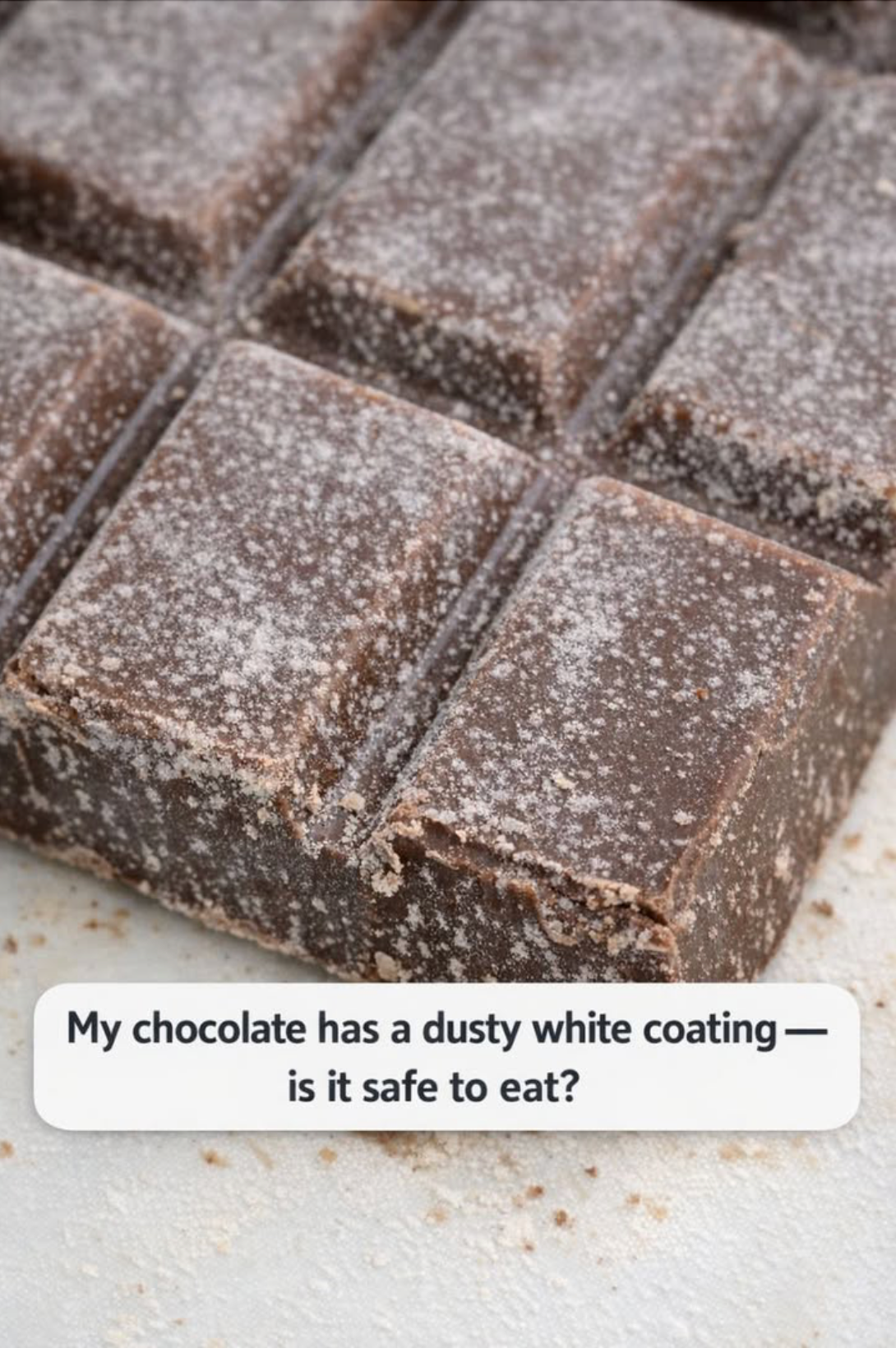
The white or grayish film that appears on chocolate is known as chocolate bloom.
Chocolate bloom is not mold. It is simply a physical change in the structure of the chocolate, caused by movement of fat or sugar inside it.
There are two main types of bloom:
1. Fat Bloom (The Most Common Type)
Fat bloom happens when the natural fats in chocolate (mainly cocoa butter) separate and rise to the surface.
How it forms:
- Chocolate gets slightly warm
- The cocoa butter melts
- When it cools again, the fat recrystallizes on the surface
What it looks like:
- Smooth, pale, or cloudy coating
- White streaks or patches
- Sometimes slightly shiny or greasy
Why it happens:
- Storing chocolate in a warm place
- Temperature fluctuations (for example, moving from a warm room to a cooler one)
- Chocolate partially melting and solidifying again
2. Sugar Bloom (Moisture-Related)
Sugar bloom occurs when chocolate is exposed to moisture.
How it forms:
- Water condenses on the chocolate surface
- It dissolves some of the sugar
- When the water evaporates, sugar crystals remain
What it looks like:
- Rough or grainy white coating
- Dry, powdery appearance
- Slightly gritty texture when touched
Why it happens:
- Storing chocolate in humid conditions
- Moving chocolate from fridge to warm air quickly
- Exposure to condensation
Is It Safe to Eat?
In most situations, yes, it is completely safe to eat chocolate with bloom.
Bloom does not mean:
- The chocolate is spoiled
- The chocolate is contaminated
- The chocolate is dangerous
It only affects:
- Appearance
- Texture
- Slightly the flavor
As long as the chocolate:
- Smells normal
- Has no mold
- Has not gone far past its shelf life
It is safe to consume.
Does It Change the Taste?
Yes, but not in a harmful way.
Chocolate with bloom may:
- Taste slightly less rich
- Feel less smooth and creamy
- Have a chalky or dry texture
This is because the internal structure has changed, especially the distribution of fats and sugars.
However, the chocolate is still usable and edible.
Bloom vs Mold: How to Tell the Difference
It is very important to distinguish between harmless bloom and actual spoilage.
Bloom (Safe)
- White or gray coating
- Smooth or powdery surface
- Even spread or streaks
- No fuzz
- Smells like chocolate
Mold (Unsafe)
- Fuzzy or hairy growth
- Green, black, or unusual colors
- Strong or unpleasant smell
- Uneven, spotty patches
If you see mold, you should not eat the chocolate.
Why Chocolate Is Sensitive
Chocolate is a delicate product because of its structure.
It contains:
- Cocoa solids
- Cocoa butter (fat)
- Sugar
These components react easily to:
- Heat
- Cold
- Moisture
Even small changes in storage conditions can cause bloom.
Can You Fix Bloomed Chocolate?
Yes, especially if you are using it for cooking.
Best uses:
- Melting for baking
- Brownies
- Cakes
- Cookies
- Chocolate sauces
- Ganache
When you melt chocolate, the fat and sugar redistribute, which removes the visual bloom.
However, if you want perfect-looking chocolate (for decoration or candy making), bloomed chocolate may not give the best result unless properly tempered again.
How to Store Chocolate Properly
To prevent bloom, proper storage is key.
Ideal conditions:
- Temperature: 15–20°C
- Dry environment
- Away from sunlight
- Stable conditions (no frequent changes)
Important tips:
- Avoid storing chocolate in warm areas (like near the stove)
- Avoid humidity (kitchen steam, open air in damp places)
- Keep it in airtight packaging
Should You Refrigerate Chocolate?
Refrigeration is not always ideal, but it can be done carefully.
If you refrigerate chocolate:
- Wrap it tightly to prevent moisture
- Use airtight containers
- When removing, let it reach room temperature before opening
This prevents condensation, which causes sugar bloom.
Does This Affect All Types of Chocolate?
Yes, but differently:
Dark chocolate
- More prone to fat bloom
- Bloom is more visible
Milk chocolate
- Can develop both fat and sugar bloom
- Slightly more stable than dark chocolate
White chocolate
- Shows bloom very clearly
- More sensitive to temperature changes
When Should You Throw Chocolate Away?
You should discard chocolate if:
- It smells sour, rancid, or unusual
- It has visible mold
- It tastes very off or unpleasant
- It is extremely old and degraded
Otherwise, bloom alone is not a reason to throw it away.
Why This Happens So Often
Many people experience chocolate bloom because:
- Chocolate is transported through different temperatures
- It is stored in kitchens where heat and humidity vary
- It is placed in and out of the fridge
- It is kept for long periods
Even high-quality chocolate can develop bloom under these conditions.
Practical Advice
If your chocolate has a white coating:
- Check the smell
- Look for mold
- Taste a small piece if unsure
- Use it for baking if texture is not ideal
Most of the time, it is perfectly fine.

Welcome to my kitchen!
I’m a passionate home cook and recipe creator who loves turning simple ingredients into delicious, comforting meals that everyone can enjoy. Through this website, I share carefully prepared recipes, practical cooking tips, and easy-to-understand food education to help you feel more confident in the kitchen.
My goal is to make cooking simple, enjoyable, and accessible. Whether you are looking for a quick family dinner, a delicious dessert, healthy meal ideas, or traditional recipes with a modern touch, you’ll find inspiration here.
More Than Just Recipes
I believe that cooking is also a way to learn. That’s why this website is not only about recipes. I also create educational articles about ingredients, cooking techniques, kitchen tips, food preparation, and the stories behind different dishes.
Each article is designed to give you useful knowledge that you can apply in your own kitchen. From understanding how ingredients work together to learning better cooking methods, my aim is to help you become a more confident and creative cook.
My Philosophy
Good food doesn’t always require complicated ingredients or professional equipment. With a little knowledge, patience, and creativity, simple ingredients can become something truly special.
I believe in sharing recipes that are practical, clearly explained, and enjoyable to make. I also love exploring new flavors while appreciating traditional cooking and the recipes passed down through generations.
Thank you for visiting my kitchen and being part of this food-loving community. I hope my recipes and articles inspire you to cook, learn, experiment, and most importantly, enjoy every bite!
Happy cooking!