The Surprising Purpose Behind Those Stripes, Bands, and Decorative Borders
Most people use bath towels every single day without giving them much thought. We dry our hands, wrap them around ourselves after showers, toss them into laundry baskets, fold them onto shelves, and replace them when they become worn out. Towels are such ordinary household items that we rarely stop to examine their design carefully.
But if you look closely at many bath towels, you will notice something curious:
- woven lines
- textured stripes
- decorative bands
- flat borders near the ends
These features appear on towels everywhere, from inexpensive department-store sets to luxury hotel linens. Many people assume the lines exist purely for decoration, while others barely notice them at all.
Yet these towel lines actually serve several interesting purposes involving:
- fabric structure
- durability
- absorbency
- manufacturing techniques
- drying efficiency
- design tradition
In textile manufacturing, very few details exist completely by accident. Even simple-looking features often combine:
- function
- aesthetics
- practicality
The familiar stripes and borders woven into bath towels are perfect examples of this blend.
What seems like a meaningless design detail actually tells a fascinating story about:
- weaving technology
- textile engineering
- household utility
- and the evolution of everyday fabrics.
The “Lines” Have a Name
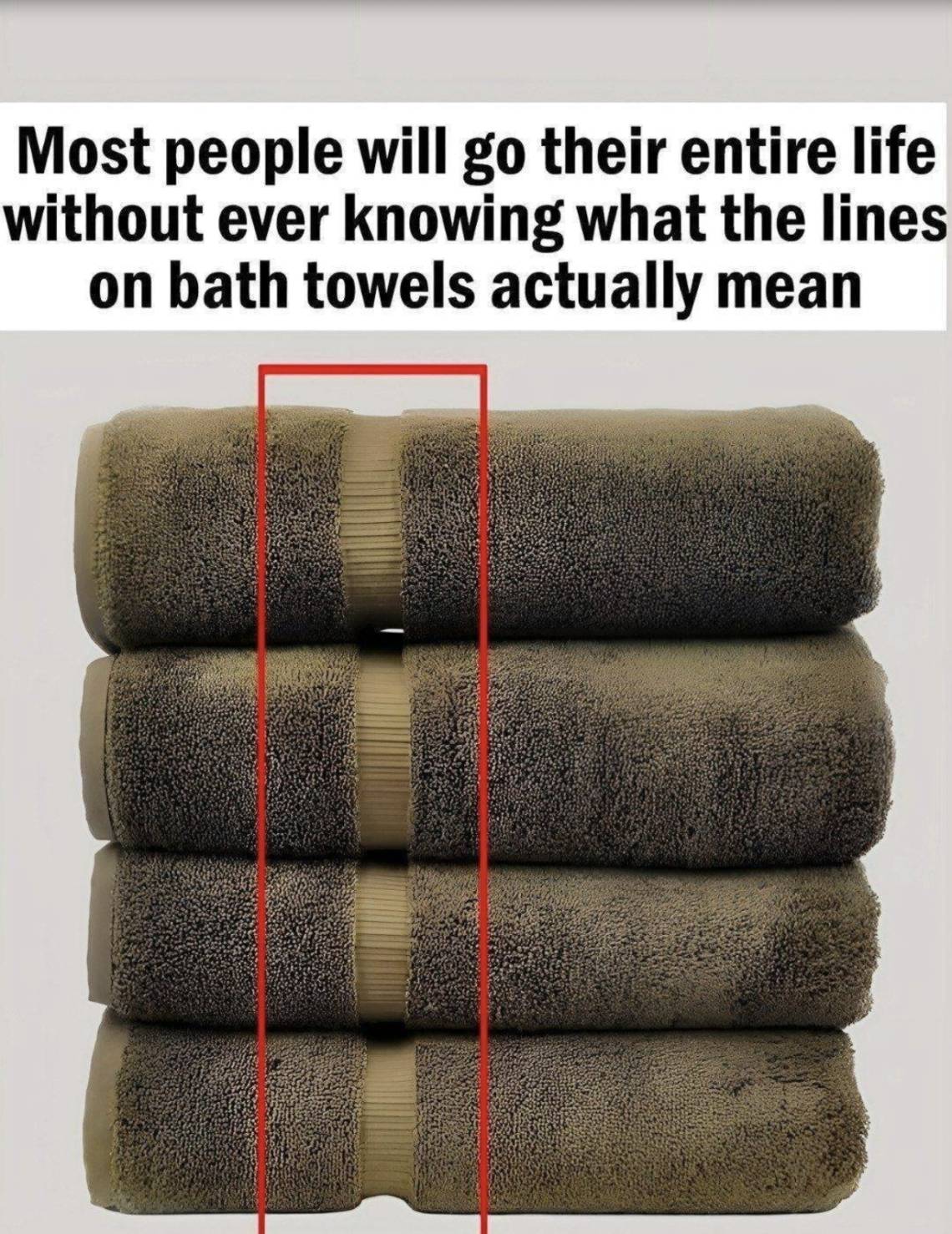
The decorative woven strip commonly found near the ends of towels is often called:
- a dobby border
or - dobby weave section.
This area usually looks:
- flatter
- more tightly woven
- less fluffy than the main towel surface.
What Is a Dobby Border?
A dobby border is a specially woven section created using a weaving technique called:
- dobby weaving.
This method allows manufacturers to create:
- geometric patterns
- textured bands
- decorative stripes
directly within the fabric.
Why Towels Need Different Fabric Zones
Towels may look simple, but they are carefully engineered products.
Different sections of the towel perform different roles:
- absorbency
- strength
- flexibility
- structure
- decoration
The fluffy looped areas absorb water efficiently, while flatter sections help stabilize the towel.
The Main Absorbent Area
The soft fluffy part of the towel is usually made from:
- terry cloth.
Terry cloth contains loops that dramatically increase:
- surface area
- water absorption capacity
These loops are what make towels feel:
- soft
- thick
- absorbent
Why the Border Looks Flatter
The border area contains fewer loops or none at all.
This flatter weave serves important structural purposes.
1. Preventing Fraying
One of the most important functions of towel borders is:
- reinforcing the towel edges.
Without stronger woven sections, towels could:
- unravel faster
- curl excessively
- wear unevenly after repeated washing.
The border helps maintain structural integrity.
2. Improving Durability
Bath towels experience enormous wear through:
- washing
- drying
- folding
- pulling
- hanging
- moisture exposure
The reinforced woven bands help towels survive repeated laundering.
3. Reducing Shrinkage Distortion
Textile fibers shrink differently depending on weave density.
The woven border helps stabilize the towel shape and reduces:
- warping
- stretching
- uneven shrinkage
over time.
Why Towels Curl at the Ends
Without reinforced sections, towels may:
- curl
- twist
- bunch up
after repeated washing cycles.
Borders help towels lie flatter and fold more neatly.
4. Helping Towels Dry Faster
The flatter woven sections contain less dense pile than the fluffy terry loops.
This can slightly improve:
- airflow
- drying efficiency
especially near the edges.
5. Improving Folding and Handling
Borders create more structured towel edges, making towels:
- easier to fold
- easier to stack
- neater in appearance
Hotels especially value towels that maintain crisp presentation.
The Decorative Purpose
Of course, the lines are also aesthetic.
Towel manufacturers use borders to:
- create visual contrast
- add elegance
- mimic luxury styling
- differentiate product lines
Even functional objects benefit from attractive design.
Why Luxury Towels Often Have Multiple Bands
High-end towels frequently feature:
- multiple dobby borders
- textured striping
- embroidered sections
These details create a more refined appearance associated with:
- spas
- hotels
- luxury linens
The History of Decorative Textile Borders
Decorative woven edges have existed for centuries in:
- blankets
- rugs
- garments
- towels
- linens
Historically, borders often signaled:
- craftsmanship
- quality
- regional weaving traditions
The Relationship Between Beauty and Utility
One fascinating aspect of textiles is how often decoration and function overlap.
The towel border is not:
- purely decorative
nor - purely structural.
It accomplishes both simultaneously.
Why Towels Use Terry Cloth
The looped structure of terry cloth dramatically increases absorbency because:
- more surface area contacts water.
The loops trap moisture efficiently while remaining relatively soft.
How Towels Actually Absorb Water
Absorption occurs through:
- capillary action.
Tiny spaces between fibers pull water inward naturally.
The denser and more numerous the loops, the more absorbent the towel tends to be.
Why Some Towels Feel More Absorbent Than Others
Several factors affect towel performance:
- fiber type
- loop density
- weave quality
- thickness
- cotton quality
Higher-quality cotton fibers generally produce:
- softer
- more durable
- more absorbent towels.
Egyptian Cotton and Luxury Towels
Luxury towels often advertise:
- Egyptian cotton
- Turkish cotton
because these cotton varieties are known for:
- long fibers
- softness
- durability
Longer fibers create smoother, stronger yarns.
Why New Towels Sometimes Repel Water
Fresh towels occasionally absorb poorly at first because:
- manufacturing finishes or softeners coat fibers temporarily.
After several washes, absorbency often improves.
Fabric Softeners and Towel Performance
Excessive fabric softener use can reduce towel absorbency because softeners coat fibers with residue.
This can make towels:
- feel soft
while - absorbing less effectively.
Why Hotel Towels Feel Different
Hotels often use towels designed specifically for:
- durability
- industrial laundering
- consistent softness
Their towels may prioritize:
- long-term performance
over - extreme plushness.
The Science of Towel Weight
Towel thickness is often measured using:
- GSM (grams per square meter).
Higher GSM towels tend to feel:
- heavier
- denser
- more luxurious
but may also:
- dry slower.
Why Thin Towels Dry Faster
Thinner towels contain:
- less dense fiber mass
allowing moisture to evaporate more quickly.
This is why some lightweight towels feel less plush but remain practical in humid climates.
Why Towels Smell Bad Sometimes
Towels repeatedly exposed to:
- moisture
- poor ventilation
- detergent buildup
may develop musty odors due to:
- bacterial growth
- mildew
- trapped residue
Proper drying matters greatly.
The Role of Airflow
Hanging towels properly between uses helps:
- reduce bacterial growth
- improve freshness
- prevent mildew odors
Crumpled damp towels dry poorly.
Why Towel Design Matters More Than People Think
A towel may seem simple, but it must balance:
- softness
- absorbency
- durability
- drying speed
- appearance
- wash resistance
The woven border contributes to this balance.
The Psychology of Soft Towels
People associate soft towels with:
- comfort
- cleanliness
- relaxation
- luxury
Few household items create such immediate physical sensory satisfaction.
Why Towels Became Household Status Symbols
Historically, high-quality linens symbolized:
- wealth
- hospitality
- household care
Fine towels and embroidered linens were once considered important markers of domestic refinement.
Decorative Bathroom Culture
Modern bathrooms often use towels as decorative elements through:
- coordinated colors
- folded displays
- textured patterns
- layered towel arrangements
The woven border contributes visually to this presentation.
Why Textile Details Go Unnoticed
Humans quickly become accustomed to everyday objects.
We stop questioning:
- towel stripes
- jean rivets
- shirt collars
- shoe eyelets
even though each detail often has practical origins.
Small Design Choices Shape Daily Life
The towel border is an example of subtle engineering hidden inside ordinary objects.
Tiny design decisions affect:
- comfort
- usability
- longevity
without most people ever consciously noticing.
The Hidden Complexity of Household Objects
One reason everyday objects fascinate designers and historians is because simple products often involve:
- centuries of refinement
- manufacturing innovation
- practical problem-solving
Towels evolved gradually to meet human needs more efficiently.

Welcome to my kitchen!
I’m a passionate home cook and recipe creator who loves turning simple ingredients into delicious, comforting meals that everyone can enjoy. Through this website, I share carefully prepared recipes, practical cooking tips, and easy-to-understand food education to help you feel more confident in the kitchen.
My goal is to make cooking simple, enjoyable, and accessible. Whether you are looking for a quick family dinner, a delicious dessert, healthy meal ideas, or traditional recipes with a modern touch, you’ll find inspiration here.
More Than Just Recipes
I believe that cooking is also a way to learn. That’s why this website is not only about recipes. I also create educational articles about ingredients, cooking techniques, kitchen tips, food preparation, and the stories behind different dishes.
Each article is designed to give you useful knowledge that you can apply in your own kitchen. From understanding how ingredients work together to learning better cooking methods, my aim is to help you become a more confident and creative cook.
My Philosophy
Good food doesn’t always require complicated ingredients or professional equipment. With a little knowledge, patience, and creativity, simple ingredients can become something truly special.
I believe in sharing recipes that are practical, clearly explained, and enjoyable to make. I also love exploring new flavors while appreciating traditional cooking and the recipes passed down through generations.
Thank you for visiting my kitchen and being part of this food-loving community. I hope my recipes and articles inspire you to cook, learn, experiment, and most importantly, enjoy every bite!
Happy cooking!