German Griebenschmalz Recipe – Traditional German Pork Lard Spread
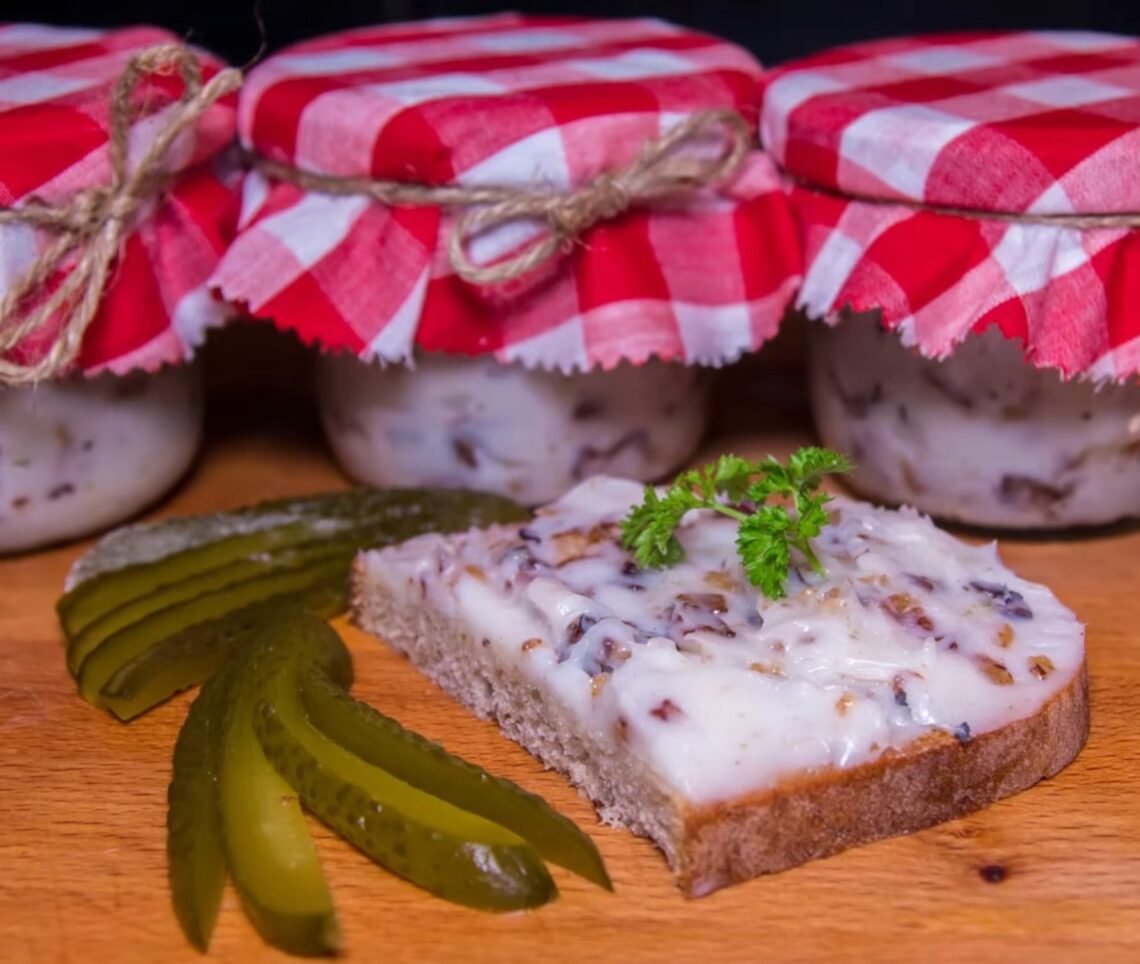
German Griebenschmalz is a classic traditional German spread made from slowly rendered pork fat, crispy pieces of pork, onions, apples, and aromatic marjoram. It is a simple, rustic recipe that has been enjoyed in German households for generations.
The finished Griebenschmalz has a rich, savory flavor with delicious crispy Grieben (small fried pieces of pork fat), while the apple and onion add a subtle sweetness. Traditionally, it is spread generously over fresh German bread and served as a hearty appetizer, snack, or part of a rustic German meal.
If you enjoy authentic German food and traditional homemade recipes, this German Griebenschmalz recipe is definitely worth trying.
What Is Griebenschmalz?
Griebenschmalz is a type of German rendered pork lard that contains small crispy pieces of pork fat called Grieben. Unlike plain lard, which is simply rendered and strained, Griebenschmalz keeps these flavorful crispy pieces in the finished spread.
Many traditional versions also contain onions, apples, salt, marjoram, and black pepper. The combination creates a wonderfully rich and aromatic spread.
Griebenschmalz is particularly popular with rustic German breads such as Bauernbrot, rye bread, and other hearty homemade breads.
Ingredients
For this traditional German Griebenschmalz recipe, you will need:
- 650 g Flomen (pork leaf fat)
- 350 g fresh pork belly fat or fatty pork belly
- 2 apples, preferably slightly sour
- 2 small onions
- 1 tablespoon salt
- 1 tablespoon dried marjoram
- Black pepper, according to taste
Choosing the Fat
The quality of the pork fat is important because it forms the base of the entire recipe. Flomen, also called pork leaf fat, is a soft internal fat found around the pig’s kidneys and loin.
Fresh pork belly fat can be added to give the Griebenschmalz a richer texture and provide the crispy pieces that make this spread so delicious.
How to Make German Griebenschmalz
1. Prepare the Pork Fat
Start by washing the Flomen if necessary and then pat it completely dry with paper towels.
Cut the Flomen and pork belly fat into small, evenly sized cubes.
Smaller pieces will render more easily and allow the fat to melt gradually while producing crispy pieces of Grieben.
2. Prepare the Apples and Onions
Peel the apples and remove the cores. Cut them into small pieces.
Peel the onions and chop them finely.
Using slightly sour apples is recommended because their mild acidity balances the richness of the pork fat and gives the finished Griebenschmalz a pleasant flavor.
3. Slowly Render the Pork Fat
Place the cubed pork fat and Flomen into a large, heavy-bottomed pot.
Heat the pot over medium heat and allow the fat to melt slowly.
It is important not to rush this step. Slow rendering helps release the fat gradually and prevents the pieces from burning.
Stir regularly so that the fat melts evenly.
4. Add the Onions and Apples
Once the pork fat has started to melt, add the chopped onions and apples.
Continue cooking slowly and stir occasionally.
As the mixture cooks, the water in the apples and onions will evaporate and the ingredients will begin to fry in the rendered pork fat.
5. Season the Griebenschmalz
Add:
- Salt
- Dried marjoram
- Black pepper
Stir everything well so the seasonings are evenly distributed.
Marjoram is especially important in this traditional German recipe because it gives the Griebenschmalz its characteristic herbal aroma.
6. Cook Until Golden and Crispy
Reduce the heat and continue cooking slowly.
The fat will gradually become clearer while the pieces of pork fat, onion, and apple become golden brown.
These crispy pieces are called Grieben.
Keep a close eye on the pot during this stage. You want the pieces to become golden and crispy without burning them.
7. Transfer to a Container
When the Griebenschmalz has finished cooking, carefully transfer the hot mixture into a clean heat-resistant ceramic container or suitable jars.
Make sure the crispy pieces are distributed throughout the rendered fat.
Allow the Griebenschmalz to cool at room temperature.
Do not move the container while it is cooling, as this can affect the texture.
As it cools, the liquid fat will gradually become solid and creamy.
The traditional recipe notes that the mixture can take up to two days to become completely firm.
How to Serve Griebenschmalz
The traditional way to enjoy German Griebenschmalz is very simple.
Spread it generously over a slice of fresh rustic German bread.
It is especially delicious with:
- Bauernbrot
- Rye bread
- Sourdough bread
- Homemade crusty bread
- Pickles
- Raw onions
- Fresh herbs
The contrast between crunchy bread and creamy, savory Griebenschmalz makes this a wonderfully satisfying snack.
Tips for Making the Best Griebenschmalz
Cook Slowly
The most important tip is to render the fat slowly. High heat can cause the fat and crispy pieces to burn before the fat has properly rendered.
Cut Everything Small
Cutting the pork fat, onions, and apples into small pieces helps everything cook evenly.
Don’t Burn the Grieben
The crispy pieces should be golden brown, not dark or burnt. Burnt fat can give the entire spread an unpleasant bitter flavor.
Use a Heavy Pot
A heavy-bottomed pot distributes heat more evenly and makes slow rendering easier.
Adjust the Seasoning
Salt and pepper can be adjusted according to your taste. Marjoram gives the recipe its traditional character, but you can slightly adjust the amount if desired.
How to Store Griebenschmalz
After the Griebenschmalz has cooled and solidified, keep it refrigerated in a clean, tightly covered container.
Always use a clean utensil when taking some from the container to help maintain its quality.
The original recipe indicates that rendered leaf lard can be stored refrigerated for approximately one month.
If you notice an unusual smell, mold, discoloration, or other signs of spoilage, discard it rather than consuming it.
Frequently Asked Questions
What does Griebenschmalz taste like?
Griebenschmalz has a rich, savory pork flavor with crispy pieces of rendered fat. The onions and apples add sweetness, while marjoram gives it a distinctive herbal aroma.
What are Grieben?
Grieben are the small crispy pieces left behind when pork fat is slowly rendered. They give Griebenschmalz its characteristic texture and name.
What bread is best with Griebenschmalz?
Traditional rustic breads work particularly well. Try German Bauernbrot, rye bread, sourdough, or another hearty crusty bread.
Can I use regular pork fat?
Yes, but Flomen (pork leaf fat) is traditionally used and produces the characteristic smooth rendered lard. Combining it with fatty pork belly provides additional crispy pieces.
Can I add more onions?
Yes. Onions are a common ingredient in Griebenschmalz and can be adjusted according to your taste. Just remember that additional ingredients can affect the final texture and storage life.
Traditional German Griebenschmalz Recipe
Prep Time: 20 minutes
Cooking Time: Approximately 1–2 hours, depending on the heat and size of the pieces
Cooling Time: Several hours, potentially up to 2 days to fully firm
Cuisine: German
Course: Spread / Appetizer / Snack
Ingredients
- 650 g Flomen (pork leaf fat)
- 350 g fresh pork belly fat
- 2 slightly sour apples
- 2 small onions
- 1 tablespoon salt
- 1 tablespoon dried marjoram
- Black pepper to taste
Instructions
- Clean and dry the pork fat thoroughly.
- Cut the Flomen and pork belly fat into small cubes.
- Peel, core, and chop the apples.
- Finely chop the onions.
- Place the pork fat in a large heavy-bottomed pot.
- Slowly melt the fat over medium heat.
- Add the onions and apples.
- Season with salt, marjoram, and black pepper.
- Continue cooking slowly, stirring regularly.
- Cook until the fat becomes clear and the pieces become golden and crispy.
- Carefully transfer the hot Griebenschmalz into a clean container.
- Allow it to cool undisturbed until completely firm.
- Store refrigerated and serve spread over fresh German bread.
Final Thoughts
This traditional German Griebenschmalz recipe is a wonderful example of simple German farmhouse cooking. With just pork fat, apples, onions, and a few seasonings, you can create a rich and flavorful spread that pairs beautifully with rustic bread.
Serve it as part of a traditional German breakfast, Abendbrot, appetizer platter, or simple evening meal. For the most authentic experience, enjoy it with freshly baked Bauernbrot, pickles, and a little chopped onion.
Welcome to my kitchen!
I’m a passionate home cook and recipe creator who loves turning simple ingredients into delicious, comforting meals that everyone can enjoy. Through this website, I share carefully prepared recipes, practical cooking tips, and easy-to-understand food education to help you feel more confident in the kitchen.
My goal is to make cooking simple, enjoyable, and accessible. Whether you are looking for a quick family dinner, a delicious dessert, healthy meal ideas, or traditional recipes with a modern touch, you’ll find inspiration here.
More Than Just Recipes
I believe that cooking is also a way to learn. That’s why this website is not only about recipes. I also create educational articles about ingredients, cooking techniques, kitchen tips, food preparation, and the stories behind different dishes.
Each article is designed to give you useful knowledge that you can apply in your own kitchen. From understanding how ingredients work together to learning better cooking methods, my aim is to help you become a more confident and creative cook.
My Philosophy
Good food doesn’t always require complicated ingredients or professional equipment. With a little knowledge, patience, and creativity, simple ingredients can become something truly special.
I believe in sharing recipes that are practical, clearly explained, and enjoyable to make. I also love exploring new flavors while appreciating traditional cooking and the recipes passed down through generations.
Thank you for visiting my kitchen and being part of this food-loving community. I hope my recipes and articles inspire you to cook, learn, experiment, and most importantly, enjoy every bite!
Happy cooking!