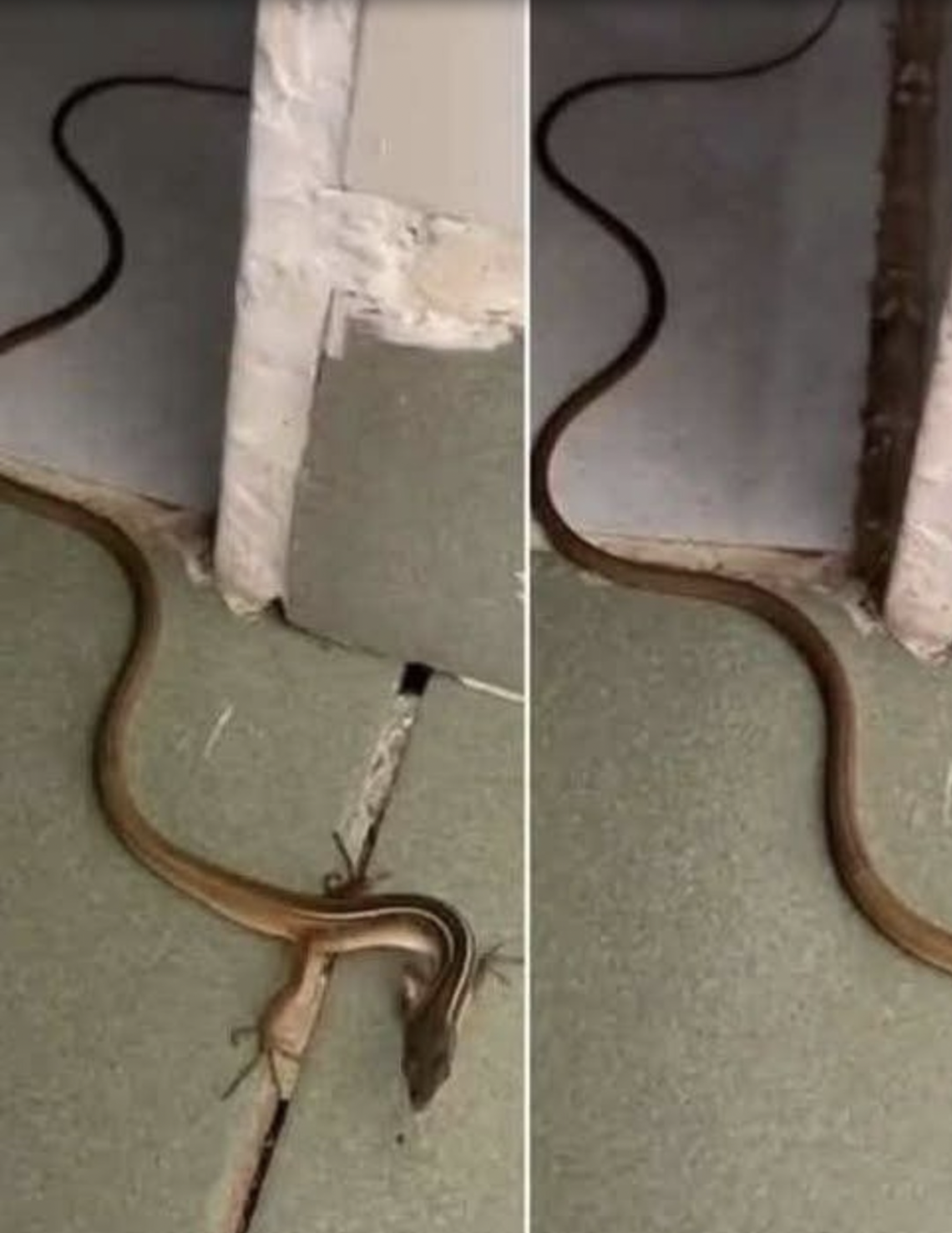
Understanding Why Snakes Enter Homes, How to Respond Safely, and What Most People Get Wrong
Few household surprises trigger panic as quickly as unexpectedly spotting a snake indoors.
It does not matter whether the snake is:
- tiny or large
- harmless or dangerous
- moving slowly or completely still
For many people, the mere sight of a snake immediately activates fear and adrenaline.
A quick glimpse near:
- a laundry room
- garage
- bathroom
- basement
- kitchen doorway
- or under furniture
can turn an ordinary day into a stressful and unforgettable experience.
The reaction is understandable.
Humans are biologically wired to notice snake-like shapes quickly. Scientists believe our brains evolved to recognize snakes rapidly because early humans benefited from identifying potential dangers fast. Even harmless snakes can therefore trigger intense instinctive reactions.
But despite the fear they inspire, most snakes found inside homes are:
- accidental visitors
- non-aggressive
- more frightened than the humans who found them
And in many cases, the situation can be handled calmly and safely without injury to either people or the animal.
Understanding:
- why snakes enter houses
- how to respond properly
- what mistakes to avoid
- and when to call professionals
can make an alarming moment far less chaotic.
First: Do Not Panic
The most important thing to understand is this:
a snake inside your house does not automatically mean immediate danger.
Most snakes do not:
- hunt humans
- chase people
- attack randomly
In fact, snakes generally prefer:
- hiding
- escaping
- avoiding confrontation.
Their primary goal is usually:
- safety
- shelter
- warmth
- food
- or accidental wandering.
Why Snakes Sometimes Enter Homes
Snakes rarely enter houses “on purpose” in the way people imagine.
Usually they are attracted by environmental conditions such as:
- warmth
- moisture
- cool shelter during heat
- rodents
- insects
- cluttered hiding spaces
Homes unintentionally provide many of these.
1. Searching for Food
One of the biggest reasons snakes enter buildings is:
- prey availability.
If a home has:
- mice
- rats
- insects
- lizards
it may unintentionally attract snakes looking for food.
Where rodents go, snakes may eventually follow.
2. Temperature and Shelter
Snakes are cold-blooded reptiles, meaning they rely on external temperatures to regulate body heat.
They may seek indoor shelter during:
- extreme heat
- cold weather
- storms
- drought conditions.
Garages, basements, crawl spaces, and laundry areas often provide stable environments.
3. Tiny Entry Points
Snakes can enter through surprisingly small openings including:
- gaps under doors
- foundation cracks
- garage openings
- torn screens
- plumbing gaps
- ventilation spaces.
Some species flatten their bodies enough to squeeze through narrow spaces people rarely notice.
Why People Often Never See Them Enter
Snakes are naturally:
- quiet
- secretive
- excellent at hiding.
A snake may enter unnoticed and remain hidden for hours or days before being discovered accidentally.
The Most Common Indoor Snake Encounters
Many indoor snake sightings occur:
- in garages
- near water heaters
- inside basements
- under washing machines
- near pet food
- inside cluttered storage spaces.
These areas provide darkness and cover.
Why Bathrooms Sometimes Attract Snakes
Bathrooms may attract certain animals because of:
- moisture
- cool flooring
- plumbing gaps
- insects or small prey nearby.
Occasionally snakes enter through damaged plumbing access points or foundation gaps near bathrooms.
Why Snakes Freeze When Seen
Many people think a motionless snake is:
- preparing to attack.
In reality, snakes often freeze because they rely heavily on:
- camouflage
- stillness
- avoidance behavior.
Remaining motionless is often defensive, not aggressive.
What You Should NOT Do
Fear causes many dangerous mistakes.
Avoid:
- trying to grab the snake
- cornering it aggressively
- hitting it blindly
- attempting internet “snake hacks”
- provoking it for photos or videos.
Many bites occur when people try to:
- handle
- kill
- or harass snakes.
Step 1: Keep Your Distance
The safest first response is:
- stop moving closer
- observe calmly
- give the snake space.
Most snakes prefer escape over confrontation.
Step 2: Identify From a Distance If Possible
Without approaching closely, try noticing:
- size
- color
- markings
- head shape
- location.
However:
- never risk getting closer merely to identify it.
If uncertain, treat the snake cautiously.
Why Internet Snake Identification Can Be Risky
Many harmless and venomous snakes resemble one another.
Relying solely on:
- color myths
- head shape myths
- social media advice
can lead to mistakes.
Professional identification is safest when uncertainty exists.
Step 3: Isolate the Area
If possible:
- close interior doors
- keep children and pets away
- block escape routes into other rooms.
This makes professional removal easier if needed.
Step 4: Give It an Exit Route
Sometimes snakes leave naturally if:
- exterior doors are opened
- the room becomes quiet
- people step away.
A frightened snake usually wants escape, not conflict.
Step 5: Call Professionals if Needed
If:
- the snake appears venomous
- you cannot identify it
- it hides inside walls or furniture
- you feel unsafe
contact:
- animal control
- wildlife removal professionals
- local snake relocation experts.
Professionals have proper equipment and training.
Why Killing Snakes Is Often Discouraged
Many snakes play important ecological roles by controlling:
- rodents
- pests
- insect populations.
Additionally:
- killing attempts often increase bite risk.
In some regions certain species are legally protected.
Most Snakes Are Harmless
Depending on location, many household snake encounters involve:
- harmless rat snakes
- garter snakes
- king snakes
- small nonvenomous species.
These snakes generally avoid humans entirely.
Why Rat Snakes Enter Homes Frequently
Rat snakes are excellent climbers and rodent hunters.
If rodents exist nearby, rat snakes may investigate garages, attics, or sheds searching for prey.
Though intimidating, they are typically nonvenomous.
Venomous vs Nonvenomous: Why Caution Matters
Even if most snakes are harmless, never assume safety casually.
If uncertain:
- maintain distance
- avoid handling
- contact experts.
Calm caution is better than panic or overconfidence.
Why People Fear Snakes So Intensely
Snake fear is extremely common worldwide.
Reasons include:
- evolutionary survival instincts
- sudden movement
- cultural stories
- unpredictability
- lack of familiarity.
Even harmless snakes can trigger strong reactions.
The Difference Between Fear and Actual Threat
A snake’s appearance often creates more fear than actual danger.
Most indoor snakes:
- do not attack humans
- do not “hunt” people
- simply want escape.
Understanding behavior helps reduce unnecessary panic.
Why Pets Often Discover Snakes First
Cats and dogs frequently notice snakes before humans because they detect:
- movement
- scent
- subtle sounds.
However, pets approaching snakes may create risk, especially with venomous species.
Preventing Future Snake Encounters
1. Seal Entry Points
Inspect for:
- cracks
- door gaps
- damaged screens
- foundation openings.
Even small gaps matter.
2. Reduce Rodents
Rodent control reduces snake attraction significantly.
Remove:
- accessible food
- clutter
- nesting opportunities.
3. Keep Yards Maintained
Tall grass, debris piles, and clutter provide snake shelter outdoors.
Trim:
- overgrowth
- wood piles
- dense vegetation near foundations.
4. Store Firewood Carefully
Wood piles create ideal hiding areas for:
- rodents
- insects
- snakes.
Keep them elevated and away from the home when possible.
5. Reduce Outdoor Food Sources
Birdseed, pet food, and garbage may attract rodents, which indirectly attract snakes.
Why Garages Are Common Snake Locations
Garages provide:
- darkness
- clutter
- warmth
- rodent activity
- quiet shelter.
Boxes and stored items create excellent hiding places.
Why Snakes Are More Active in Warm Months
Snake activity increases during:
- spring
- summer
- early fall
because warmth supports movement, feeding, and reproduction.
What About Snakes Coming Through Toilets?
Though rare, snakes occasionally appear in plumbing systems, particularly in:
- tropical regions
- flood-prone areas
- poorly sealed plumbing systems.
Most people will never experience this, despite viral stories.
Why Snake Myths Spread So Easily
Snakes inspire strong emotions, making dramatic stories spread rapidly online.
Common myths include:
- snakes chasing humans intentionally
- snakes measuring people to eat them
- all snakes being deadly.
Most are exaggerated or false.
Why Snakes Matter Ecologically
Snakes help maintain ecosystem balance by controlling:
- rodents
- crop pests
- disease-carrying animals.
Without predators like snakes, rodent populations could increase dramatically.
The Surprising Benefits of Having Snakes Nearby Outdoors
Healthy snake populations may indirectly reduce:
- rodent infestations
- agricultural damage
- certain pest populations.
Outdoors, they often provide more benefits than harm.
Why Calmness Matters Most
The majority of snake-related injuries happen because:
- people panic
- attempt capture
- try killing the animal
- move too close.
Remaining calm dramatically improves safety.
Teaching Children About Snakes Safely
Children should learn:
- never touch unknown snakes
- alert adults immediately
- observe from distance.
Education reduces both panic and risky curiosity.
The Psychology of Unexpected Encounters
Part of the fear comes from surprise itself.
Unexpected animals in familiar safe spaces trigger strong reactions because they violate our sense of control and predictability.

Welcome to my kitchen!
I’m a passionate home cook and recipe creator who loves turning simple ingredients into delicious, comforting meals that everyone can enjoy. Through this website, I share carefully prepared recipes, practical cooking tips, and easy-to-understand food education to help you feel more confident in the kitchen.
My goal is to make cooking simple, enjoyable, and accessible. Whether you are looking for a quick family dinner, a delicious dessert, healthy meal ideas, or traditional recipes with a modern touch, you’ll find inspiration here.
More Than Just Recipes
I believe that cooking is also a way to learn. That’s why this website is not only about recipes. I also create educational articles about ingredients, cooking techniques, kitchen tips, food preparation, and the stories behind different dishes.
Each article is designed to give you useful knowledge that you can apply in your own kitchen. From understanding how ingredients work together to learning better cooking methods, my aim is to help you become a more confident and creative cook.
My Philosophy
Good food doesn’t always require complicated ingredients or professional equipment. With a little knowledge, patience, and creativity, simple ingredients can become something truly special.
I believe in sharing recipes that are practical, clearly explained, and enjoyable to make. I also love exploring new flavors while appreciating traditional cooking and the recipes passed down through generations.
Thank you for visiting my kitchen and being part of this food-loving community. I hope my recipes and articles inspire you to cook, learn, experiment, and most importantly, enjoy every bite!
Happy cooking!