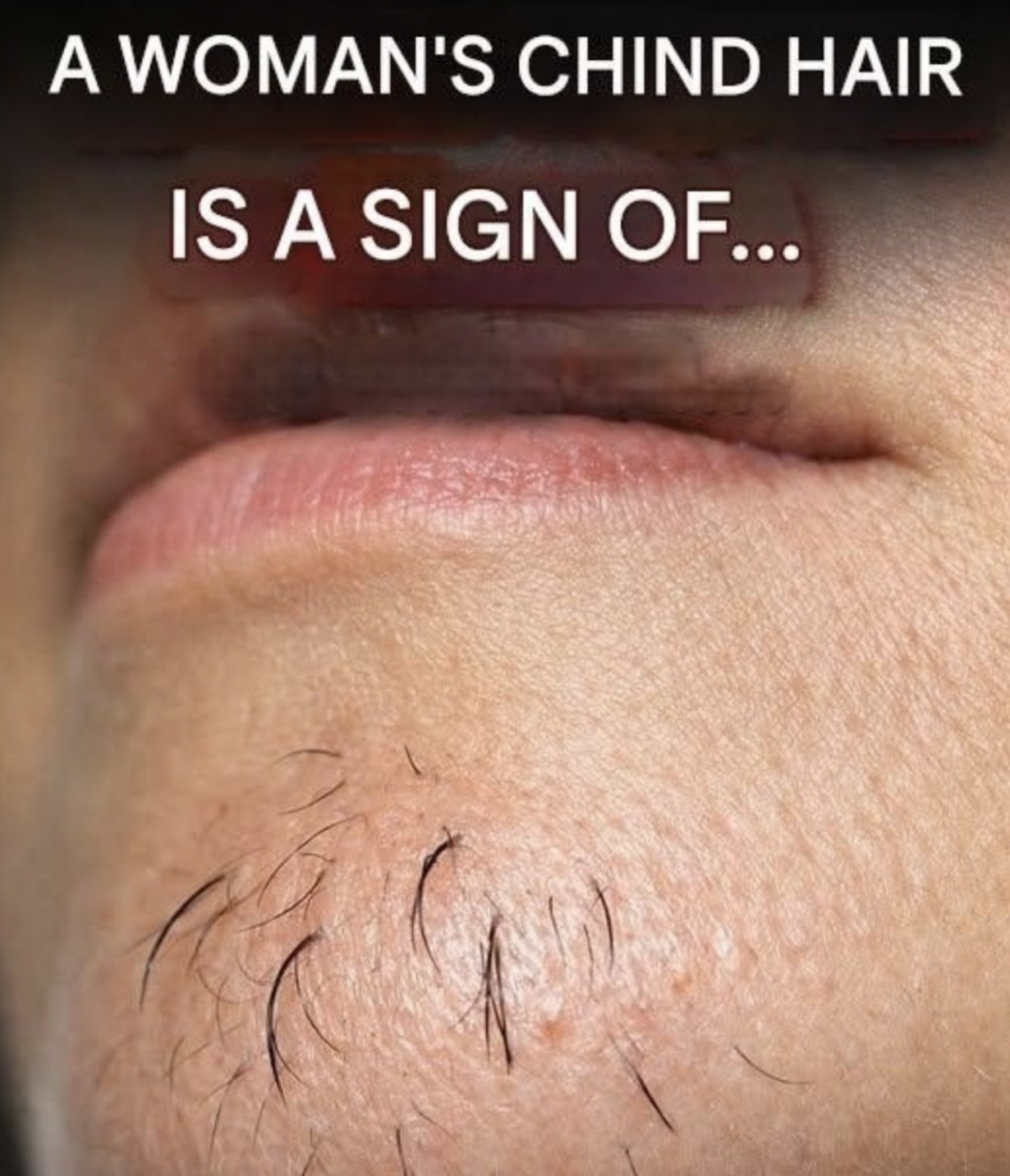
Why Facial Hair Happens, What Influences It, and When It May Signal Something More
Many women experience a moment of surprise the first time they notice a coarse hair growing from the chin. Sometimes it appears suddenly while looking in a mirror under bright lighting. Sometimes it is discovered accidentally while applying makeup or washing the face. And often, the reaction is immediate disbelief:
“Where did that come from?”
For some women, it is:
- a single stubborn hair
- a few scattered strands
- occasional fine fuzz
- or more noticeable facial hair growth over time.
Despite how common this experience actually is, chin whiskers remain one of those topics people rarely discuss openly. As a result, many women assume they are unusual or alone when they notice facial hair changes.
But the reality is very different.
Facial hair growth in women is:
- extremely common
- influenced by many biological factors
- often completely normal
- and frequently connected to hormones, genetics, aging, or natural body variation.
In many cases, chin hairs are simply part of how the human body functions. However, in some situations, sudden or excessive facial hair growth may indicate an underlying medical issue worth discussing with a healthcare professional.
Understanding why chin whiskers happen can help replace embarrassment and confusion with clearer, more informed perspective.
First: Facial Hair Exists on Nearly Everyone
One important fact surprises many people:
almost all humans have facial hair.
The difference lies in:
- thickness
- color
- density
- visibility
- growth patterns.
Women naturally have facial hair too, but much of it is:
- finer
- lighter
- softer
making it less noticeable.
The Difference Between Vellus Hair and Terminal Hair
Human hair generally falls into two major categories.
1. Vellus Hair
This is:
- soft
- thin
- light-colored
- often called “peach fuzz.”
Vellus hair covers much of the body.
2. Terminal Hair
This hair is:
- thicker
- darker
- coarser
- more visible.
Chin whiskers are usually terminal hairs.
Why Some Chin Hairs Suddenly Become Thick
Hormones can cause certain hair follicles to transform from producing:
- fine vellus hair
into - coarse terminal hair.
This change may happen gradually or seemingly overnight.
Hormones Play a Huge Role
One of the biggest influences on facial hair growth is:
- hormones.
Specifically:
- androgens.
Androgens are hormones often associated with males, but women naturally produce them too.
Women Naturally Produce Testosterone Too
Many people do not realize women also produce:
- testosterone
and other androgen hormones.
These hormones help regulate:
- muscle
- bone health
- libido
- hair growth
- energy levels.
The difference is usually one of:
- amount
rather than - complete absence.
Hair Follicles Respond Differently
Not every woman reacts to hormones the same way.
Hair follicles vary in:
- sensitivity
- density
- response to hormones.
This is why two people with similar hormone levels may experience very different hair growth patterns.
Genetics Matter Enormously
Family history strongly influences facial hair patterns.
If:
- mothers
- grandmothers
- sisters
- aunts
had chin hairs or noticeable facial hair, others in the family may as well.
Genetics affect:
- follicle sensitivity
- hair thickness
- hair color
- growth rate.
Aging and Chin Hair
One of the most common times women notice chin whiskers is:
- during midlife and aging.
Hormonal changes over time alter hair behavior throughout the body.
Menopause and Facial Hair
During menopause:
- estrogen levels decline.
This hormonal shift may allow androgen effects to become more noticeable.
As a result:
- facial hair may increase
while - scalp hair may thin.
This combination surprises many women.
Why Chin Hairs Seem to Appear “Overnight”
Hair grows in cycles.
Sometimes a follicle has been active for weeks before the hair becomes visible enough to notice suddenly.
Bright lighting and magnifying mirrors also make hairs easier to spot.
Why Certain Hairs Feel So Coarse
Terminal hairs have:
- larger follicles
- thicker shafts
- different texture.
This makes chin hairs feel dramatically different from ordinary facial fuzz.
The Myth That Plucking Makes Hair Worse
A very common myth claims:
“If you pluck one hair, ten more grow back.”
This is not scientifically true.
Plucking removes the hair shaft but does not create new follicles.
However:
- regrowth may feel stubbly
- the same follicle may repeatedly produce thick hair
making it seem worse over time.
Why Chin Hair Can Feel Emotionally Distressing
Facial hair in women carries strong cultural and social associations.
Because beauty standards often emphasize:
- smooth skin
- hairlessness
- youthfulness
many women feel:
- embarrassed
- anxious
- self-conscious
about completely normal body changes.
Cultural Beauty Standards Influence Perception
Different cultures view body hair differently.
Modern beauty industries heavily market:
- hair removal
- smooth skin
- anti-aging treatments
which can make ordinary facial hair seem abnormal even when it is common.
When Chin Hair Is Completely Normal
For many women:
- a few coarse chin hairs are simply normal biology.
Especially:
- with age
- family history
- hormonal fluctuations.
When Facial Hair May Need Medical Attention
Sometimes excessive or sudden facial hair growth may indicate:
- hormonal imbalance
- endocrine conditions
- medication effects.
Medical evaluation may help if changes are significant.
Possible Medical Causes of Excess Facial Hair
1. Polycystic Ovary Syndrome (PCOS)
One common condition linked to increased facial hair is:
- Polycystic Ovary Syndrome
PCOS may involve:
- elevated androgen levels
- irregular periods
- acne
- weight changes
- fertility issues.
Not all facial hair means PCOS, but it is one possible factor.
2. Hormonal Changes
Changes involving:
- menopause
- puberty
- pregnancy
- endocrine disorders
can affect hair growth patterns.
3. Certain Medications
Some medications may influence hair growth, including:
- steroids
- hormone therapies
- certain prescription drugs.
4. Rare Hormonal Disorders
Rarely, more serious endocrine conditions can cause:
- sudden severe hair growth
- voice changes
- rapid physical changes.
This deserves prompt medical attention.
When to See a Doctor
Consider medical advice if facial hair appears with:
- sudden rapid growth
- irregular periods
- severe acne
- scalp hair loss
- deepened voice
- major hormonal symptoms.
Hair Removal Options
Women use many different methods depending on:
- comfort
- cost
- skin sensitivity
- personal preference.
1. Tweezing
Good for:
- isolated hairs
- occasional chin whiskers.
Simple but temporary.
2. Waxing
Removes multiple hairs at once but may irritate sensitive skin.
3. Threading
Common for facial grooming and shaping.
4. Shaving
Despite myths, shaving does not make hair grow back thicker.
It simply cuts hair bluntly, making regrowth feel coarser temporarily.
5. Laser Hair Removal
Targets pigment in hair follicles for longer-term reduction.
Works best on certain hair and skin combinations.
6. Electrolysis
Uses electrical current to destroy follicles individually.
Can provide permanent removal over time.
Why Lighting Changes Everything
Many women notice chin hairs only under:
- bright bathroom lights
- sunlight
- magnifying mirrors.
Lighting dramatically affects visibility.
Stress and Hormones
Stress itself may influence hormonal balance indirectly, which can affect:
- skin
- hair
- oil production.
The body’s systems are deeply interconnected.
The Emotional Side of Aging
Chin whiskers often become emotionally symbolic because they are associated with:
- aging
- hormonal change
- shifting appearance.
For some women, the distress comes less from the hair itself and more from what it seems to represent.
Why Open Conversations Matter
Many women feel relieved when discovering:
“This happens to other people too.”
Silence around normal body experiences often increases shame unnecessarily.
Social Media and Unrealistic Expectations
Filtered images and edited beauty content create unrealistic perceptions of:
- skin texture
- pores
- wrinkles
- body hair.
Real human bodies naturally include variation.
The Biology of Human Hair Is Complex
Hair growth depends on:
- hormones
- receptors
- genetics
- age
- ethnicity
- medications
- metabolism.
No single explanation applies to everyone.
Why Some Women Never Develop Chin Hair
Different follicle sensitivity means some women experience:
- very little visible facial hair
while others notice more prominent growth despite similar hormone levels.
The Difference Between Cosmetic and Medical Concerns
A few chin hairs are often:
- cosmetic concerns.
Extensive or rapidly changing facial hair patterns may become:
- medical concerns worth evaluating.
Understanding this distinction helps reduce unnecessary fear while still recognizing when professional care matters.

Welcome to my kitchen!
I’m a passionate home cook and recipe creator who loves turning simple ingredients into delicious, comforting meals that everyone can enjoy. Through this website, I share carefully prepared recipes, practical cooking tips, and easy-to-understand food education to help you feel more confident in the kitchen.
My goal is to make cooking simple, enjoyable, and accessible. Whether you are looking for a quick family dinner, a delicious dessert, healthy meal ideas, or traditional recipes with a modern touch, you’ll find inspiration here.
More Than Just Recipes
I believe that cooking is also a way to learn. That’s why this website is not only about recipes. I also create educational articles about ingredients, cooking techniques, kitchen tips, food preparation, and the stories behind different dishes.
Each article is designed to give you useful knowledge that you can apply in your own kitchen. From understanding how ingredients work together to learning better cooking methods, my aim is to help you become a more confident and creative cook.
My Philosophy
Good food doesn’t always require complicated ingredients or professional equipment. With a little knowledge, patience, and creativity, simple ingredients can become something truly special.
I believe in sharing recipes that are practical, clearly explained, and enjoyable to make. I also love exploring new flavors while appreciating traditional cooking and the recipes passed down through generations.
Thank you for visiting my kitchen and being part of this food-loving community. I hope my recipes and articles inspire you to cook, learn, experiment, and most importantly, enjoy every bite!
Happy cooking!