There are desserts that impress with decoration, and then there are desserts that win you over quietly, one soft, delicate bite at a time. Creamy baked milk custard cake belongs to the second kind. It does not rely on heavy frosting or elaborate layers. Instead, it offers something more subtle and timeless: a silky texture, a gentle sweetness, and a melt-in-the-mouth softness that feels both comforting and refined.
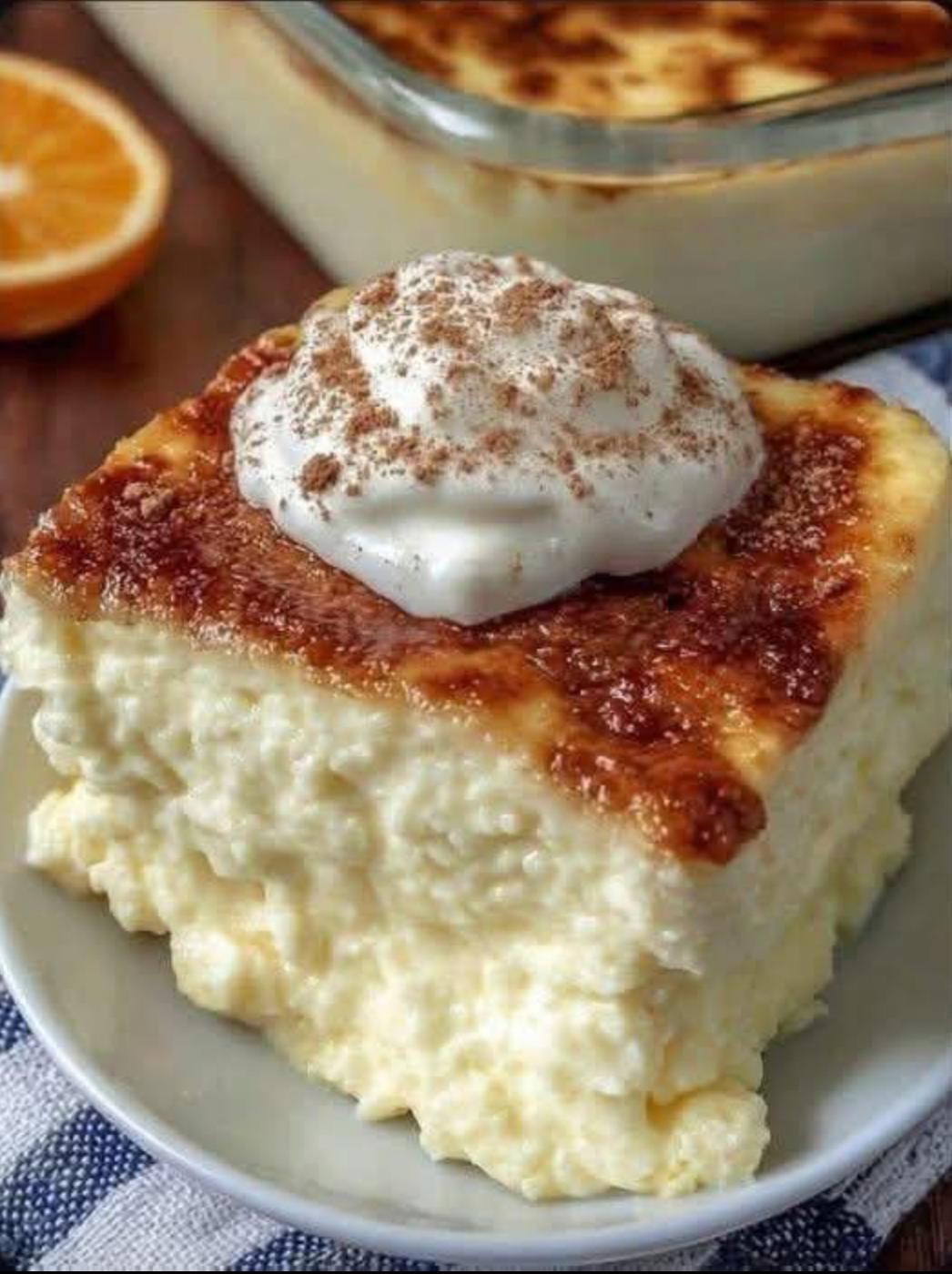
This cake sits somewhere between a classic custard and a light sponge. As it bakes, it naturally separates into soft layers—a slightly firmer base and a creamy, custard-like center—creating a dessert that feels almost magical considering how simple the ingredients are.
It is the kind of dessert you make when you want something elegant without complexity, something that feels homemade yet special.
Why This Custard Cake Is So Special
What makes this cake stand out is not just its flavor, but its texture and transformation during baking:
- A smooth, pourable batter turns into a soft layered cake
- The center becomes creamy and custard-like
- The top remains light and slightly golden
- The flavor stays delicate, never too sweet or heavy
It is a dessert that feels light but satisfying, simple yet impressive.
Ingredients (Serves 6–8)
Base ingredients:
- 4 large eggs (separated into yolks and whites)
- ¾ cup sugar
- ½ cup unsalted butter (melted and slightly cooled)
- 1 teaspoon vanilla extract
- ¾ cup all-purpose flour
- 2 cups warm milk
Optional additions:
- Zest of 1 lemon for brightness
- A pinch of salt to balance sweetness
- Powdered sugar for dusting after baking
Understanding the Ingredients
Each ingredient plays an important role in creating the final texture:
- Egg yolks provide richness and custard structure
- Egg whites add lightness when whipped
- Milk creates the creamy custard layer
- Butter adds smoothness and depth
- Flour stabilizes the cake just enough to hold shape
- Sugar sweetens gently without overpowering
The balance is delicate—too much flour makes it dense, too little prevents it from setting.
Step 1: Prepare the Oven and Pan
Preheat your oven to 160°C (320°F).
Grease a square or rectangular baking dish and line it with parchment paper for easy removal.
This cake benefits from gentle, even heat, so avoid higher temperatures.
Step 2: Separate the Eggs
Carefully separate egg yolks from egg whites into two bowls.
This step is essential because each part will be treated differently to create the cake’s signature texture.
Step 3: Mix the Egg Yolks
In a bowl, whisk the egg yolks with sugar until the mixture becomes pale and slightly thick.
Add melted butter and vanilla extract, mixing until smooth.
This creates the rich base of the batter.
Step 4: Add Flour and Milk
Sift in the flour and mix gently until combined.
Slowly pour in the warm milk while stirring continuously.
At this stage, the batter will be thin and smooth—almost like a custard mixture. This is exactly what you want.
Step 5: Whip the Egg Whites
In a separate bowl, beat the egg whites until soft peaks form.
They should be light and airy but not overly stiff.
These whipped whites will give the cake its light, delicate structure.
Step 6: Fold Gently
Gradually fold the whipped egg whites into the batter.
Do this gently, in batches, to avoid deflating the mixture.
The batter may look slightly lumpy or uneven—this is normal and part of what creates the layered effect during baking.
Step 7: Bake Slowly
Pour the batter into the prepared baking dish.
Bake for 45–60 minutes, or until:
- The top is lightly golden
- The center is set but still soft
- The cake has a slight jiggle when gently shaken
Avoid overbaking, as it can dry out the custard layer.
Step 8: Cool Before Serving
Let the cake cool completely before slicing.
As it cools:
- The layers settle
- The texture becomes firmer yet creamy
- The flavors develop more depth
Dust with powdered sugar before serving for a simple, elegant finish.
Texture and Flavor Experience
This cake offers a unique combination:
- A soft, slightly firm base layer
- A creamy, custard-like center
- A light, delicate top
- A mild vanilla flavor with subtle richness
Each bite feels smooth, airy, and comforting without being heavy.
Serving Ideas
Creamy baked milk custard cake is best served:
- Slightly chilled or at room temperature
- With fresh berries for contrast
- Alongside tea or coffee
- With a light drizzle of honey or caramel
Its simplicity makes it versatile and easy to pair.
Tips for Best Results
- Use room-temperature eggs for better mixing
- Do not overwhip egg whites
- Fold gently to maintain airiness
- Bake at a low temperature for even cooking
- Allow full cooling before slicing
Variations to Try
Lemon Custard Cake
Add lemon zest and a bit of juice for a fresh flavor.
Chocolate Version
Add cocoa powder for a richer twist.
Coconut Custard Cake
Replace part of the milk with coconut milk.
Caramel Flavor
Drizzle caramel into the batter before baking.
Storage and Make-Ahead
- Store in the refrigerator for up to 3 days
- Best served chilled or slightly warmed
- Texture improves after resting overnight
- Not ideal for freezing due to custard texture

Welcome to my kitchen!
I’m a passionate home cook and recipe creator who loves turning simple ingredients into delicious, comforting meals that everyone can enjoy. Through this website, I share carefully prepared recipes, practical cooking tips, and easy-to-understand food education to help you feel more confident in the kitchen.
My goal is to make cooking simple, enjoyable, and accessible. Whether you are looking for a quick family dinner, a delicious dessert, healthy meal ideas, or traditional recipes with a modern touch, you’ll find inspiration here.
More Than Just Recipes
I believe that cooking is also a way to learn. That’s why this website is not only about recipes. I also create educational articles about ingredients, cooking techniques, kitchen tips, food preparation, and the stories behind different dishes.
Each article is designed to give you useful knowledge that you can apply in your own kitchen. From understanding how ingredients work together to learning better cooking methods, my aim is to help you become a more confident and creative cook.
My Philosophy
Good food doesn’t always require complicated ingredients or professional equipment. With a little knowledge, patience, and creativity, simple ingredients can become something truly special.
I believe in sharing recipes that are practical, clearly explained, and enjoyable to make. I also love exploring new flavors while appreciating traditional cooking and the recipes passed down through generations.
Thank you for visiting my kitchen and being part of this food-loving community. I hope my recipes and articles inspire you to cook, learn, experiment, and most importantly, enjoy every bite!
Happy cooking!