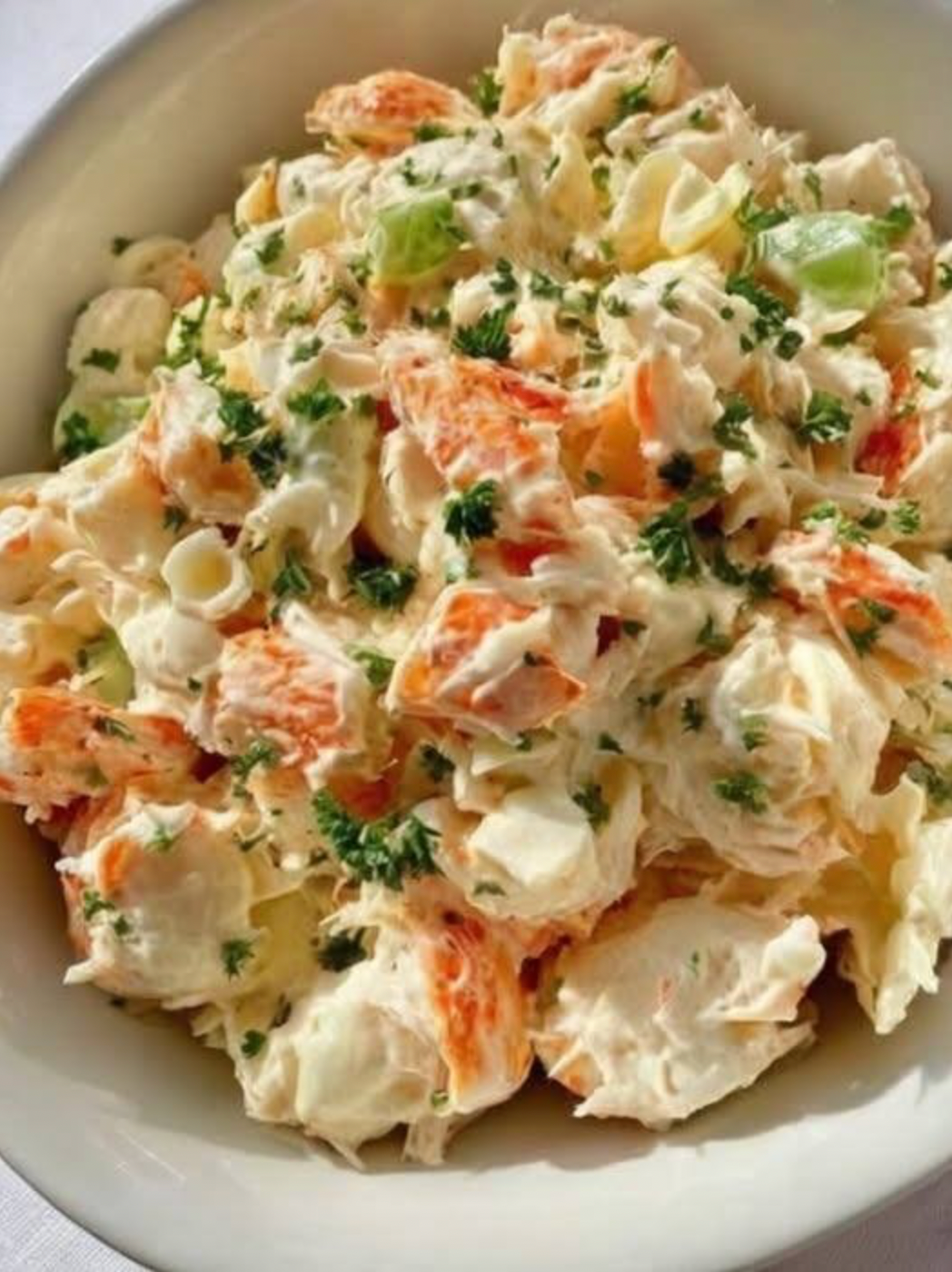
Crab Salad is one of those dishes that feels both effortless and luxurious at the same time. It requires no complicated cooking techniques, no heavy preparation, and no long ingredient list, yet it delivers a fresh, delicate flavor that feels refined and satisfying. Built around tender crabmeat, crisp vegetables, fresh herbs, and a bright citrus dressing, this salad is the perfect example of how simple ingredients can create something memorable.
Unlike heavy mayonnaise-based seafood salads, this version focuses on freshness and balance. The natural sweetness of the crab is allowed to shine, while crunchy celery, sharp red onion, and herbs add texture and contrast. A light dressing ties everything together without overwhelming the seafood.
This dish is especially popular during:
- Warm weather
- Summer lunches
- Brunches
- Garden gatherings
- Coastal-style dinners
- Light evening meals
It works beautifully as:
- A standalone salad
- A sandwich filling
- A lettuce wrap
- A topping for crackers or crostini
- An elegant appetizer
The best part is that it requires very little effort. Because the crab is already cooked, the recipe is mostly about combining ingredients carefully and preserving the delicate texture of the seafood.
What Makes Crab Salad Special
The appeal of crab salad comes from the unique qualities of crabmeat itself.
Crab has:
- A naturally sweet flavor
- A tender texture
- A clean, ocean-like freshness
- A delicate richness without heaviness
Unlike stronger seafood such as tuna or sardines, crab is subtle and refined. That is why the supporting ingredients in a good crab salad should complement the crab rather than overpower it.
A successful crab salad is:
- Fresh
- Bright
- Crisp
- Lightly creamy or citrusy
- Delicate but flavorful
The Importance of Simplicity
One reason crab salad remains so popular is that it embraces simplicity.
The best versions avoid:
- Too many spices
- Heavy sauces
- Excessive mixing
- Strong competing flavors
Instead, the recipe relies on:
- Fresh ingredients
- Proper balance
- Gentle handling
Because crab is delicate, overcomplicating the salad can hide the seafood entirely.
Ingredients (Serves 4)
Main Ingredients
- 450 g (1 pound) lump crabmeat
- 2 celery stalks, finely chopped
- 1/4 red onion, finely diced
- 2 tablespoons fresh parsley or dill
- Juice of 1 lemon
- 3 tablespoons mayonnaise or light olive oil dressing
Optional Enhancements
- Lemon zest
- Black pepper
- Dijon mustard
- Avocado
- Cucumber
- Chives
Understanding Crabmeat
The type of crabmeat you choose greatly affects the final dish.
Lump Crabmeat
This is the preferred option for elegant crab salad.
Characteristics:
- Large tender pieces
- Sweet flavor
- Delicate texture
It creates a luxurious texture and attractive appearance.
Claw Meat
Claw meat has:
- Stronger flavor
- Darker color
- Firmer texture
It works well if you want a more robust seafood taste.
Imitation Crab
Some versions use imitation crab, which is made from processed fish.
While affordable, it differs significantly:
- Sweeter
- Less delicate
- More processed texture
Real crab produces a fresher, cleaner salad.
Preparing the Ingredients
Because this is a no-cook recipe, ingredient preparation matters even more.
Celery
Celery provides:
- Crunch
- Freshness
- Mild bitterness to balance sweetness
Finely chopping it ensures the texture remains balanced and does not overpower the crab.
Red Onion
Red onion adds:
- Sharpness
- Mild spice
- Color contrast
Use a small amount because too much can dominate the salad.
For a milder flavor:
- Soak diced onion briefly in cold water before adding.
Fresh Herbs
Fresh herbs brighten the dish.
Popular choices:
- Parsley for freshness
- Dill for coastal flavor
- Chives for mild onion notes
Herbs add freshness without heaviness.
Step-by-Step Instructions
Step 1: Prepare the Crab
Carefully check the crabmeat for shell fragments.
Handle gently to preserve the large pieces.
Avoid shredding or overmixing.
Step 2: Prepare the Vegetables
Finely chop:
- Celery
- Red onion
- Herbs
Uniform pieces create better texture distribution.
Step 3: Make the Dressing
In a bowl, combine:
- Lemon juice
- Mayonnaise or olive oil dressing
Optional:
- Small amount of Dijon mustard
- Black pepper
The dressing should taste:
- Light
- Bright
- Slightly creamy
Step 4: Combine Gently
Add:
- Crabmeat
- Celery
- Onion
- Herbs
Fold carefully with a spoon or spatula.
The goal is to coat everything lightly without breaking apart the crab.
Step 5: Chill
Refrigerate for 15–30 minutes before serving.
This allows:
- Flavors to blend
- Salad to become colder and fresher
Texture and Flavor Profile
A good crab salad should feel:
- Light
- Tender
- Slightly crisp
- Creamy without heaviness
Flavor notes include:
- Sweet seafood
- Bright citrus
- Herbal freshness
- Mild savory richness
Serving Ideas
Crab salad is highly versatile.
1. Lettuce Cups
Serve inside crisp lettuce leaves for a light meal.
2. Sandwiches
Use in:
- Brioche buns
- Croissants
- Toasted bread
3. Crackers or Crostini
Excellent for appetizers.
4. Stuffed Avocados
Fill avocado halves with crab salad for an elegant presentation.
5. Over Greens
Serve atop mixed greens with cucumber and tomatoes.
Why Citrus Matters
Lemon juice is essential because it:
- Brightens seafood flavor
- Balances richness
- Adds freshness
- Enhances sweetness naturally present in crab
Without acidity, crab salad can taste flat.
Why Gentle Mixing Is Important
Crabmeat is fragile.
Overmixing can:
- Break lumps apart
- Turn salad mushy
- Lose luxurious texture
The best crab salads preserve visible chunks of meat.
Variations
1. Mediterranean Crab Salad
Add:
- Olives
- Cucumber
- Olive oil
- Feta cheese
2. Spicy Crab Salad
Add:
- Chili flakes
- Sriracha
- Jalapeños
3. Creamy Southern Style
Increase mayonnaise and add:
- Boiled eggs
- Pickles
- Mustard
4. Asian-Inspired Version
Add:
- Sesame oil
- Green onions
- Rice vinegar
- Cucumber
Storage and Shelf Life
Because crab is highly perishable:
- Keep refrigerated at all times
- Consume within 1–2 days
Do not leave at room temperature for extended periods.
Common Mistakes to Avoid
Using Too Much Dressing
Too much dressing masks the crab flavor.
Overmixing
This destroys texture.
Using Low-Quality Crab
The dish depends heavily on crab quality.
Overseasoning
Strong flavors overpower delicate seafood.
Nutritional Benefits
Crab provides:
- Protein
- Minerals
- Relatively low fat content
The salad can remain light and nutritious if the dressing is moderate.
Why People Love Crab Salad
This dish stays popular because it offers:
- Elegant flavor with minimal effort
- Refreshing texture
- High versatility
- Fast preparation
- Sophisticated presentation
It feels special without requiring complicated cooking.
The Appeal of No-Cook Meals
Especially during summer, no-cook meals become appealing because they:
- Avoid heating the kitchen
- Save time
- Feel lighter and fresher
Crab salad fits perfectly into this style of eating.
Welcome to my kitchen!
I’m a passionate home cook and recipe creator who loves turning simple ingredients into delicious, comforting meals that everyone can enjoy. Through this website, I share carefully prepared recipes, practical cooking tips, and easy-to-understand food education to help you feel more confident in the kitchen.
My goal is to make cooking simple, enjoyable, and accessible. Whether you are looking for a quick family dinner, a delicious dessert, healthy meal ideas, or traditional recipes with a modern touch, you’ll find inspiration here.
More Than Just Recipes
I believe that cooking is also a way to learn. That’s why this website is not only about recipes. I also create educational articles about ingredients, cooking techniques, kitchen tips, food preparation, and the stories behind different dishes.
Each article is designed to give you useful knowledge that you can apply in your own kitchen. From understanding how ingredients work together to learning better cooking methods, my aim is to help you become a more confident and creative cook.
My Philosophy
Good food doesn’t always require complicated ingredients or professional equipment. With a little knowledge, patience, and creativity, simple ingredients can become something truly special.
I believe in sharing recipes that are practical, clearly explained, and enjoyable to make. I also love exploring new flavors while appreciating traditional cooking and the recipes passed down through generations.
Thank you for visiting my kitchen and being part of this food-loving community. I hope my recipes and articles inspire you to cook, learn, experiment, and most importantly, enjoy every bite!
Happy cooking!