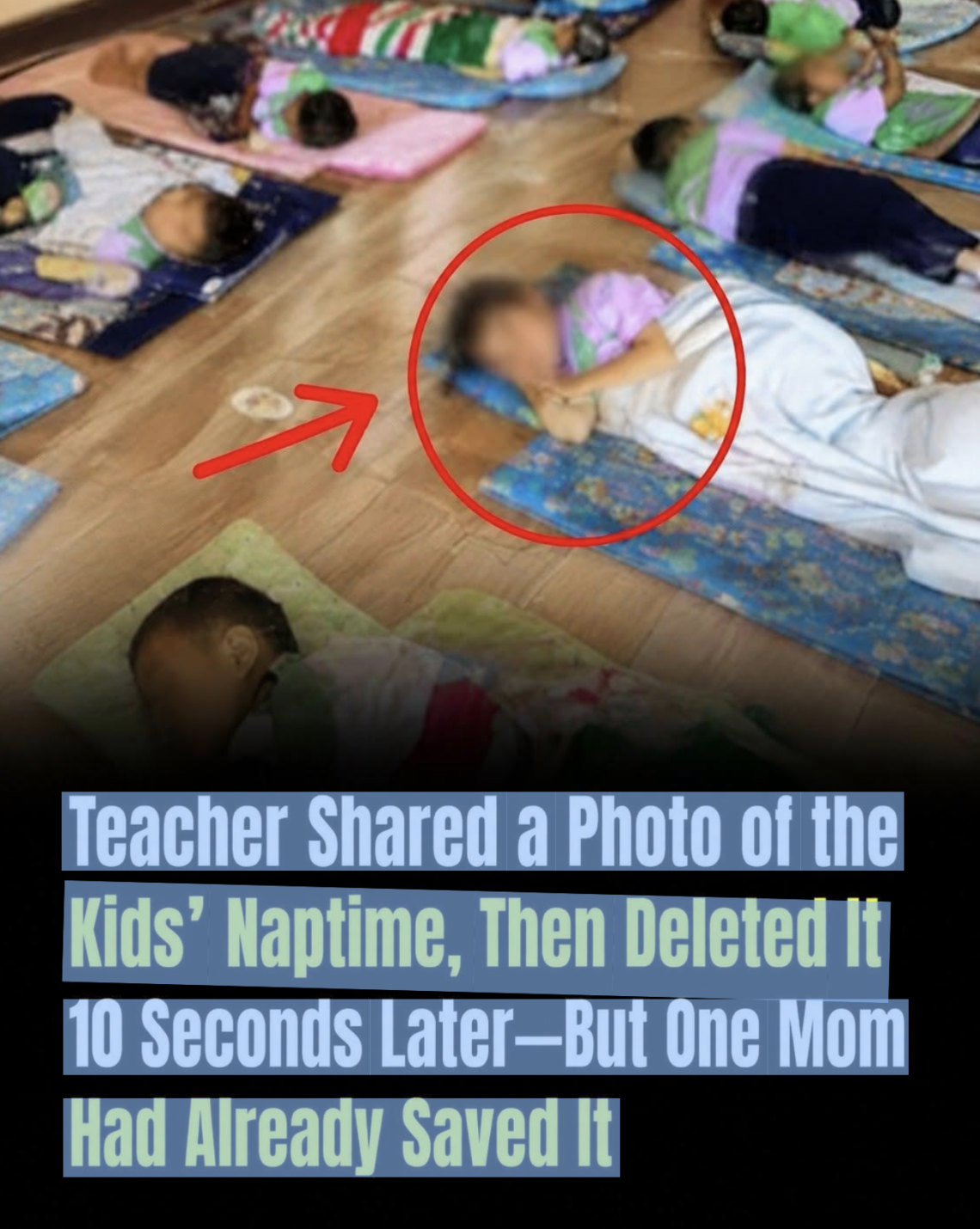
At first, it might sound like a tiny digital mistake: a classroom photograph appears online, the teacher notices something is wrong, and the image disappears almost immediately.
But when children are involved, even a brief photograph can raise important questions about privacy, consent, digital storage, and responsible sharing.
A teacher might take photographs during the school or childcare day to document activities, communicate with families, or maintain learning records. Many educational and childcare organizations have policies explaining who may photograph children, how images should be stored, who can access them, and when parental permission is required.
And there’s an important detail people sometimes overlook:
Deleting a photograph from the original platform does not necessarily mean that nobody has already seen or saved it.
The Moment the Photograph Appeared
Imagine a quiet classroom after a busy morning.
The children have finished their activities. The room has become calmer, lights have been lowered, and the children are resting on their mats.
The teacher takes a photograph of the room.
Perhaps it was intended as a routine classroom update.
Perhaps it was meant to document the children’s rest period.
Perhaps the teacher accidentally selected the wrong photograph.
Whatever the reason, the image is briefly uploaded to a parent communication system.
A notification appears.
One parent opens it.
And before the teacher realizes there is a problem, the parent has already saved the image.
A few seconds later, the teacher removes the post.
That sequence is entirely possible with modern digital communication systems because photographs can be viewed, copied, or downloaded extremely quickly.
Why Would a Teacher Delete a Harmless Photo?
There could be many ordinary explanations.
The photograph might have included a child whose parents had not authorized that particular type of image sharing.
The wrong classroom might have been selected.
The teacher may have noticed something in the background that shouldn’t have been visible.
The image may have been intended for an internal record rather than for parents.
It could even have been uploaded accidentally.
So a deleted photograph shouldn’t automatically be interpreted as evidence that something suspicious happened.
In fact, removing an image after noticing a problem can be the responsible thing to do.
Consent Can Depend on How the Photograph Is Used
One of the most important points is that permission isn’t necessarily one giant, all-purpose permission slip.
Different uses can be treated differently.
For example, a family might agree to photographs being used for classroom documentation but decline permission for social media or public websites.
Some childcare policies explicitly separate internal classroom sharing from public publication. Other organizations divide permissions into categories such as learning documentation, family communications, newsletters, and public platforms.
Official guidance in the United Kingdom similarly recommends that schools consider the purpose for which an image will be taken or used and whether existing permission actually covers that particular purpose.
That’s why the question isn’t simply:
“Did the parent give permission for photographs?”
A better question is:
“What exactly did the permission cover?”
A Classroom Photo Isn’t Automatically a Public Photo
This distinction is extremely important.
A photograph shared privately with authorized parents is very different from a photograph posted publicly on a website or social-media account.
The audience changes.
The potential reach changes.
The privacy consequences change.
Some childcare programs therefore use separate permissions for classroom sharing and public publication. One preschool’s photo-sharing form, for example, specifically distinguishes photographs shared among classroom parents from images intended for social media.
That kind of separation can help families understand exactly what they are agreeing to.
What About the Parent Who Saved the Photograph?
This is where the story becomes more complicated.
Suppose the parent was legitimately able to view the photograph through the school’s communication system.
The parent saves it before the teacher removes it.
Does that mean the parent can now send it to friends?
Not necessarily.
Access to a photograph doesn’t automatically mean unlimited permission to redistribute it.
If several children appear in the photograph, the situation becomes especially sensitive.
The safest approach is to keep the image private and avoid forwarding or publishing it, particularly if other children are visible.
Why Sharing It Further Can Create a Bigger Problem
Imagine the parent sends the saved photograph to a friend.
That friend sends it to another person.
Someone uploads it to a social-media group.
Another person takes a screenshot.
Within hours, the photograph could be outside the original school community.
At that point, the teacher’s quick deletion has no ability to undo the copies that have already been created.
This is one reason child-safety organizations emphasize thinking carefully about how widely children’s images may be shared and how long they may remain accessible.
Nap-Time Photographs Deserve Extra Care
There’s nothing inherently inappropriate about documenting a child’s normal school or childcare routine.
Rest and nap periods can be legitimate parts of childcare records.
However, photographs of sleeping children can feel more private because the children aren’t actively participating in an activity.
They’re resting.
They’re unaware that the photograph is being taken.
That makes careful handling particularly important.
A good policy should consider not only whether a photograph can technically be taken, but also whether it is necessary, appropriate, secure, and being shared with the correct audience.
What Should the Parent Do?
If a parent saved a photograph that was subsequently deleted, the sensible first step is not to speculate.
Instead, the parent can contact the teacher or school administrator and simply ask:
“I noticed the photograph was posted and then removed. Could you explain why?”
That’s enough to begin the conversation.
There may be a simple explanation.
If the school says the photograph was uploaded accidentally, the parent can ask whether the saved copy should also be deleted.
If another child appears in the photograph, the parent should be especially careful not to share it elsewhere.
What Should the School Do?
A good response to an accidental upload should be calm and organized.
The school or childcare provider should determine:
- What photograph was posted?
- Who could access it?
- How long was it available?
- Was anyone notified?
- Was the image downloaded or otherwise copied?
- Why was it posted?
- Was the intended use covered by the organization’s privacy policy?
- Does anything need to be reported internally?
The exact legal obligations depend on the country, organization, and circumstances, so a school should follow its own privacy and safeguarding procedures and applicable law.
Secure Storage Matters Too
Photography policies aren’t only about what happens when an image is posted.
They also need to address what happens before and after publication.
Child-safety guidance recommends that organizations use approved equipment, store images securely, restrict access, and establish clear retention and deletion procedures.
That means a responsible system should answer questions such as:
- Where are photographs stored?
- Who can access them?
- Are personal phones allowed?
- How long are images retained?
- When are old photographs deleted?
- What happens if a parent withdraws permission?
- How are accidental uploads handled?
These details may sound administrative, but they are exactly what prevent small mistakes from becoming large privacy incidents.
Personal Phones Can Create Additional Risks
Another important issue is the device used to take the photograph.
Some child-protection guidance recommends that organizations avoid personal devices for photographing children and instead use organization-controlled equipment.
That approach makes it easier to control where photographs are stored and who can access them.
It also reduces the possibility that a photograph remains in a teacher’s personal camera roll, automatic cloud backup, messaging application, or other unrelated service.
What Parents Should Look for in a Photo Policy
Parents can protect themselves by understanding the rules before an unexpected situation occurs.
A good policy should explain:
What photographs are taken?
Why are they taken?
Who can see them?
Where are they stored?
Can parents download them?
Can parents share them?
Are public websites or social media included?
How long are photographs retained?
How can permission be withdrawn?
Guidance for schools and childcare organizations emphasizes transparency about these questions.
A Saved Photograph Isn’t Automatically Evidence of Something Wrong
This is perhaps the most important point.
The fact that a parent saved the photograph doesn’t tell us why the teacher deleted it.
Likewise, the fact that the teacher deleted it doesn’t prove that the photograph was inappropriate.
There are many innocent explanations.
Maybe the teacher uploaded the wrong image.
Maybe a child’s permissions were different from the rest of the class.
Maybe the photograph was meant for a different audience.
Maybe the teacher simply changed their mind about sharing it.
Without reliable information about the specific incident, it would be unfair to invent a dramatic explanation.
The Digital Lesson Behind the Story
The bigger lesson is about how quickly information moves today.
Twenty years ago, taking a photograph generally meant having physical film developed or transferring a digital photograph manually.
Today, a teacher can take a photograph, upload it, and make it available to dozens of families almost instantly.
Parents can receive notifications immediately.
And a photograph can be copied in seconds.
That convenience is wonderful when everything goes according to plan.
But it also means that privacy mistakes can happen very quickly.
A Simple Rule for Everyone
When children appear in photographs, it’s worth adopting a simple rule:
If you’re not sure whether an image should be shared, don’t share it until you’ve checked.
For teachers, that means reviewing photographs before uploading them.
For schools, it means maintaining clear privacy procedures.
For parents, it means respecting restrictions on photographs containing other children.
And for everyone, it means remembering that a child’s image isn’t simply another piece of social-media content.
It’s personal information.

Welcome to my kitchen!
I’m a passionate home cook and recipe creator who loves turning simple ingredients into delicious, comforting meals that everyone can enjoy. Through this website, I share carefully prepared recipes, practical cooking tips, and easy-to-understand food education to help you feel more confident in the kitchen.
My goal is to make cooking simple, enjoyable, and accessible. Whether you are looking for a quick family dinner, a delicious dessert, healthy meal ideas, or traditional recipes with a modern touch, you’ll find inspiration here.
More Than Just Recipes
I believe that cooking is also a way to learn. That’s why this website is not only about recipes. I also create educational articles about ingredients, cooking techniques, kitchen tips, food preparation, and the stories behind different dishes.
Each article is designed to give you useful knowledge that you can apply in your own kitchen. From understanding how ingredients work together to learning better cooking methods, my aim is to help you become a more confident and creative cook.
My Philosophy
Good food doesn’t always require complicated ingredients or professional equipment. With a little knowledge, patience, and creativity, simple ingredients can become something truly special.
I believe in sharing recipes that are practical, clearly explained, and enjoyable to make. I also love exploring new flavors while appreciating traditional cooking and the recipes passed down through generations.
Thank you for visiting my kitchen and being part of this food-loving community. I hope my recipes and articles inspire you to cook, learn, experiment, and most importantly, enjoy every bite!
Happy cooking!