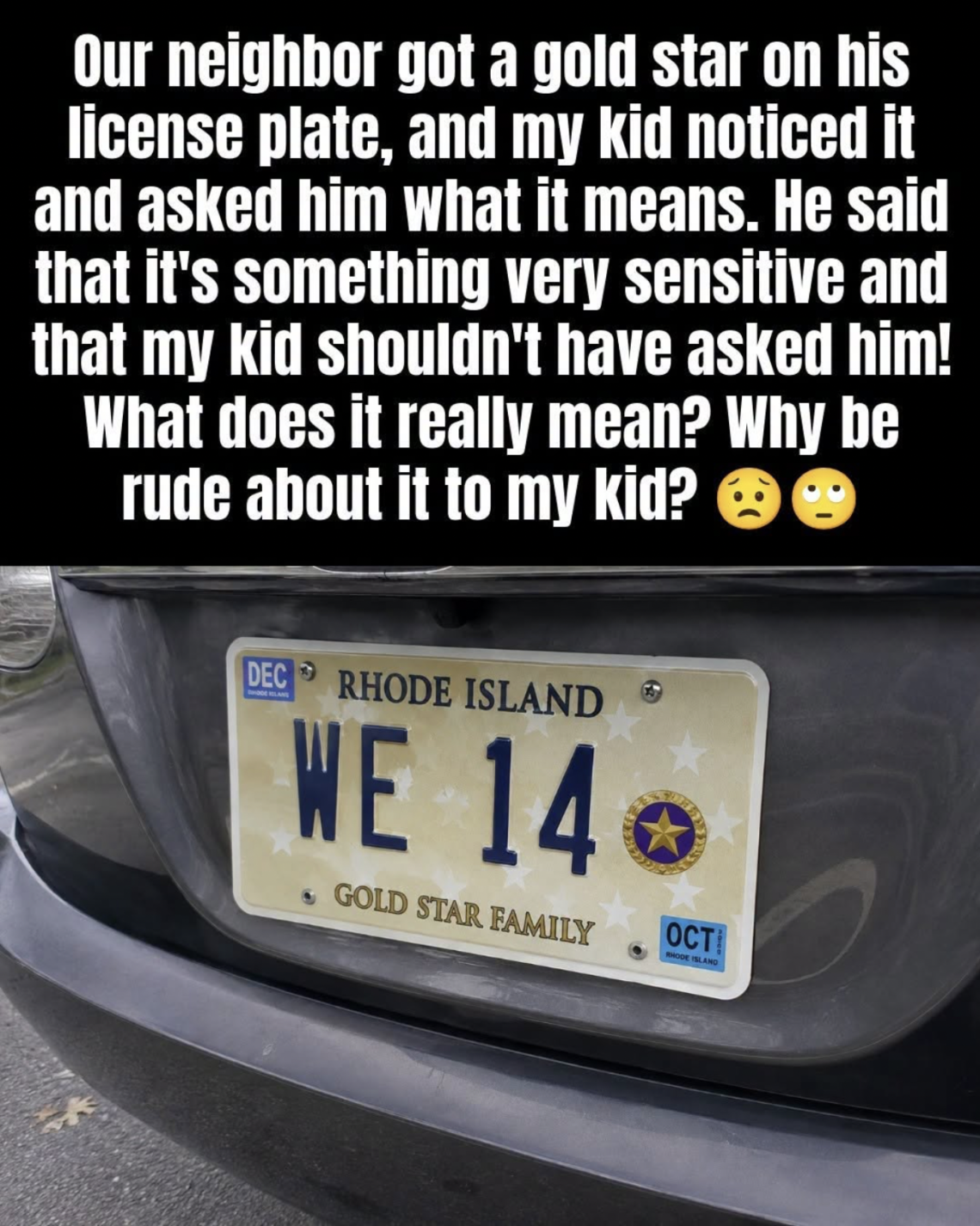
Few symbols carry as much emotional weight as a single star.
A star can represent hope, achievement, guidance, or remembrance. But in the American military tradition, a Gold Starcarries a much deeper meaning. It represents a family whose loved one died while serving in the United States Armed Forces, and it serves as a lasting reminder that military service affects far more people than the individual wearing the uniform.
Behind every Gold Star is a person who had a name, a personality, dreams, favorite foods, childhood memories, friendships, family traditions, and plans for the future.
And behind that person is a family whose life was permanently changed by their loss.
The Gold Star therefore isn’t simply a decoration.
It isn’t simply a piece of jewelry.
It isn’t merely a symbol placed on a flag.
It represents love, loss, remembrance, sacrifice, family, and a continuing connection between the fallen and the people who remain behind.
Understanding the Gold Star tradition requires more than learning what the symbol looks like. It requires understanding the history behind it and, most importantly, remembering the human beings represented by it.
What Does the Gold Star Mean?
The term Gold Star Family refers to the family of a military service member who died while serving.
The tradition originated during World War I, when families displayed service flags containing blue stars to represent immediate family members serving in the military.
If a service member died, the blue star was replaced or represented by a gold star.
The symbol allowed people in the surrounding community to understand that a military family had experienced an extraordinary loss.
Over time, the expression Gold Star Family became a way of recognizing these families and acknowledging the sacrifice associated with the death of their loved one.
Today, the term encompasses surviving family members such as parents, spouses, children, siblings and other qualifying next of kin.
The Story Behind the Star
To appreciate the meaning of the Gold Star, it helps to travel back more than a century.
During World War I, American families wanted a way to publicly show that someone from their household was serving in the military.
A service flag became one way to communicate that information.
A blue star represented a family member serving.
The meaning was straightforward:
Someone from this household is serving the country.
But if that service member died, the meaning of the star changed.
The blue star was replaced with gold.
Suddenly, the same window decoration communicated an entirely different story.
It said that the family had lost someone.
The gold star therefore became a public symbol of private grief.
Why Gold?
The choice of gold carries powerful symbolism.
Gold has traditionally been associated with value, honor, permanence and something precious.
In this context, the gold star communicates that the person who died was not simply another name on a list of casualties.
That person mattered.
They were someone’s child.
Someone’s spouse.
Someone’s parent.
Someone’s brother or sister.
Someone’s best friend.
Someone’s neighbor.
Someone’s teammate.
Someone’s entire world.
The symbol acknowledges both the loss and the value of the life that was lost.
A Symbol Created From Love and Grief
One of the most moving aspects of the Gold Star tradition is that it began with families themselves.
Families wanted a way to communicate their connection to those serving.
The service flag wasn’t originally just a government symbol.
It was something families displayed in their homes.
That makes the tradition particularly personal.
A star hanging in a window could silently communicate something enormous to everyone who passed by.
It could say:
Someone I love is serving.
And if that star became gold:
Someone I love did not come home.
The Gold Star Is Not Just About Death
It is easy to focus entirely on the moment of loss.
But Gold Star families often describe an ongoing relationship with the memory of the person they lost.
The death may have happened years or even decades ago.
Yet the person’s absence can remain part of everyday life.
Birthdays may bring memories.
Anniversaries may bring memories.
Family gatherings may bring memories.
Holidays may bring memories.
A favorite song may bring memories.
A photograph discovered in a drawer may suddenly bring the person emotionally close again.
This continuing bond is an important part of how families remember loved ones. Military OneSource specifically describes maintaining connections through photographs, online tributes, flags, memorabilia and remembrance as meaningful for survivors.
A Person Is More Than the Circumstances of Their Death
This is perhaps one of the most important things to remember.
When people hear about a fallen service member, they may immediately think about the military operation, conflict or circumstances surrounding the death.
But families often remember something much more personal.
They remember:
The way that person laughed.
The way they spoke.
The music they liked.
The meals they enjoyed.
The jokes they told.
The hobbies they had.
The places they wanted to visit.
The childhood memories they created.
The photographs they left behind.
The person may have worn a military uniform, but they were never only a military uniform.
They were a complete human being.
Gold Star Families Carry Stories Forward
A powerful way to honor someone who died in service is to remember their story.
Names matter.
Stories matter.
Photographs matter.
Personal memories matter.
A person can continue to have an influence through the people who knew them.
A child may grow up hearing stories about a parent they never had the opportunity to know.
A younger sibling may tell stories about an older brother or sister.
A spouse may preserve photographs and letters.
A parent may continue celebrating a child’s birthday.
These acts of remembrance keep the person’s identity alive beyond the circumstances of their death.
The Department of Defense has emphasized the importance of remembering not only sacrifice but also the stories and lives of those who died.
The Gold Star Family Is Also Part of the Military Story
One of the most important ideas behind the tradition is that military service does not affect only the person who enlists.
Families serve alongside their loved ones in many ways.
They experience:
- long separations
- missed birthdays
- missed holidays
- uncertainty
- relocations
- deployments
- difficult phone calls
- worry
- waiting
When the worst happens, the family experiences a loss that cannot simply be separated from military service.
The U.S. Army has repeatedly emphasized that military families share in both the successes and burdens associated with service.
The Gold Star Mother’s Tradition
The history of the Gold Star tradition eventually developed into specific recognition for mothers who lost children in military service.
In 1936, President Franklin D. Roosevelt designated the last Sunday of September as National Gold Star Mother’s Day. The observance later evolved into Gold Star Mother’s and Family’s Day, reflecting recognition of the broader family.
The day is not intended to turn grief into celebration.
It is a day of remembrance.
It provides an opportunity for the nation to recognize families whose lives were permanently changed by the death of a service member.
Gold Star Spouses
The tradition also recognizes surviving spouses.
A husband or wife who loses a military spouse may suddenly have to navigate life without the person with whom they expected to grow old.
There may be children to raise.
There may be financial concerns.
There may be anniversaries and milestones that were supposed to be shared.
There may be countless ordinary moments that become reminders of the person who is no longer there.
Gold Star Spouses Day is observed on April 5, providing a specific opportunity to recognize surviving spouses.
Gold Star Children
Children of fallen service members carry their own unique experiences.
Some may have vivid memories of their parent.
Others may have been very young when the parent died.
Some may grow up with photographs, stories and memories from relatives.
Others may know their parent primarily through stories told by people who knew them.
A child may wonder what their parent would have been like when they grew older.
What advice would they have given?
What would they have laughed about?
What would they have thought about their child’s accomplishments?
These questions can remain meaningful for an entire lifetime.
Gold Star Siblings
Siblings can also experience a profound and lasting loss.
A brother or sister may remember childhood adventures, arguments, jokes and family traditions.
The military service member may have been an older sibling who provided guidance.
Or perhaps they were the younger sibling who was always causing trouble.
The Gold Star designation recognizes that the loss reaches beyond one relationship.
It can affect an entire family network.
The Gold Star Lapel Button
Another important part of the tradition is the Gold Star Lapel Button.
After World War II, the Department of Defense established the button as an official symbol for qualifying next of kin of service members who died in war and armed hostilities.
The button is small.
But its meaning is enormous.
Someone wearing it may be carrying a story that strangers know nothing about.
That is why the symbol deserves respect.
The Next of Kin Button
There is also a related Next of Kin Deceased Personnel Lapel Button.
It was introduced in 1973 to recognize eligible family members of service members who died while serving but not as a result of combat.
The distinction is important because military service can result in loss under many circumstances, not only on a battlefield.
The broader lesson is that grief does not become less significant simply because the circumstances were different.
A family loses a loved one.
That loss remains.
Gold Star Does Not Mean the Family Has “Moved On”
People sometimes misunderstand grief.
They assume that because someone can smile, work, travel, raise children or participate in everyday life, they must have moved beyond their loss.
Grief doesn’t necessarily work that way.
A person can continue living while still carrying profound grief.
They can laugh while missing someone.
They can build a new life while remembering an old one.
They can experience happiness without forgetting the person they lost.
These emotions can coexist.
Grief Has No Fixed Schedule
There is no universal timetable for grief.
One person may speak openly about their loved one.
Another may prefer privacy.
One person may find comfort in memorial events.
Another may find them emotionally overwhelming.
One family may preserve everything.
Another may gradually change how they display photographs and belongings.
There is no single correct way to remember.
Respect means allowing people to grieve in their own way.
What Should You Say to a Gold Star Family?
This can feel difficult.
People sometimes become afraid that they will say the wrong thing.
But silence isn’t always necessary.
A simple, sincere statement can be enough.
For example:
“I remember your loved one.”
Or:
“Thank you for sharing their story.”
Or:
“I’m sorry for your loss.”
The most important thing is sincerity.
You don’t need an elaborate speech.
Avoid Turning Their Loss Into a Political Argument
A Gold Star family may have complex feelings about military service, war, politics and government decisions.
Those subjects can be deeply personal.
If someone shares the story of a fallen family member, the conversation doesn’t need to become an argument about whether a particular war was justified.
The immediate human reality is that someone died and a family continues to live with that loss.
Respect should come before debate.
Don’t Assume You Know How They Feel
Even when you have experienced grief yourself, you cannot know exactly what another person feels.
Every relationship is different.
Every death is different.
Every family is different.
It is better to listen than to assume.
Sometimes the most respectful thing you can do is simply allow someone to talk about their loved one.
Ask About the Person, Not Only the Death
This can be incredibly meaningful.
Instead of asking only:
“What happened?”
you might ask:
“What were they like?”
That question opens a completely different conversation.
It allows the family member to talk about the person as a human being.
Maybe they were funny.
Maybe they loved fishing.
Maybe they were terrible at cooking.
Maybe they played guitar.
Maybe they were obsessed with old cars.
Maybe they loved spending time with their children.
Those details are part of their legacy.
Remembering Someone by Name
A person’s name is one of the simplest and most powerful things to preserve.
When we speak someone’s name, we acknowledge their individuality.
They aren’t simply:
“a fallen soldier.”
They are a specific person.
A son.
A daughter.
A mother.
A father.
A spouse.
A brother.
A sister.
A friend.
A neighbor.
A colleague.
A human being whose life had meaning.
The Gold Star and Memorial Day
Memorial Day is another important occasion for remembering service members who died in military service.
Gold Star families are closely connected to the meaning of Memorial Day because their loved ones are among those being remembered.
But Memorial Day should not be reduced to a sales weekend or a generic day off.
It is a solemn national observance.
Taking a moment to remember the people who died in service can help restore the human meaning behind the day.
The Difference Between Memorial Day and Veterans Day
This distinction is important.
Memorial Day honors military personnel who died while serving.
Veterans Day honors those who served in the U.S. Armed Forces.
Both are important, but their purposes are different.
This is why a Gold Star family may experience Memorial Day in a particularly personal way.
The Gold Star Flag
The Gold Star tradition is also associated with the service flag.
During World War I, blue stars represented family members serving.
When a service member died, the star was changed to gold.
The design and rules surrounding service flags have since been formally established, and current Department of Defense policy specifies how the gold star is represented.
The flag therefore carries a story that can be understood without words.
Why the Symbol Remains Relevant Today
It might seem like a tradition from another era.
But families continue to lose loved ones while serving.
That means the Gold Star remains relevant.
The wars may change.
Military technology may change.
The uniforms may change.
The locations of military operations may change.
But the experience of a family receiving news that their loved one has died remains profoundly human.
More Than a Historical Symbol
It would be easy to treat the Gold Star as an interesting historical fact.
But doing so would miss its deeper meaning.
The Gold Star isn’t simply about what happened during World War I.
It is about an ongoing relationship between a nation and the families who lost loved ones while those loved ones were serving.
It represents remembrance that continues after the headlines disappear.
The Years Do Not Erase the Meaning
Imagine a family losing someone in 1944.
Decades pass.
The person who died would now be elderly if they had survived.
Their younger siblings may have become grandparents.
Their parents may have passed away.
Their friends may have passed away.
Yet the person can still be remembered.
Photographs can remain.
Letters can remain.
Names can remain on memorials.
Stories can remain within families.
That is one reason remembrance matters.
Every Gold Star Has a Different Story
There is no single Gold Star story.
Some families lost loved ones during major wars.
Others lost loved ones during smaller military operations.
Some losses happened in combat.
Others occurred during service under different circumstances.
Some families had decades of memories.
Others had only a short time with their loved one.
Some children were adults.
Others were born after their parent died.
The circumstances vary enormously.
The common thread is the loss of a loved one who died while serving.
The Importance of Compassion
Compassion is perhaps the best way to approach the Gold Star tradition.
You don’t need to know exactly what to say.
You don’t need to have experienced the same loss.
You don’t need to understand every emotion.
You simply need to recognize that another human being is carrying something heavy.
Listen.
Respect.
Remember.
Give them space when they need it.
Offer kindness when they welcome it.
Don’t Treat the Gold Star as an Award
This distinction is important.
The Gold Star isn’t a medal that a person wins.
It is a designation associated with the death of a service member and the resulting family loss.
Calling it an “award” can unintentionally make the subject sound celebratory.
It is more accurate to describe it as a symbol of sacrifice, loss and remembrance.
Why the Tradition Can Be Difficult to Talk About
Military sacrifice can sometimes be discussed in abstract language.
People talk about:
“casualties.”
“losses.”
“service.”
“operations.”
“numbers.”
But families don’t experience numbers.
They experience an empty chair.
An unanswered phone call.
A birthday without someone.
A photograph on a wall.
A child’s question.
A spouse’s memories.
A parent’s grief.
The Gold Star brings the conversation back to the human level.
The Empty Chair
One of the simplest ways to understand the meaning of a Gold Star family is to imagine an ordinary family dinner.
Everyone sits down.
But one chair is empty.
Maybe that chair has been empty for one year.
Maybe ten years.
Maybe fifty.
The family continues eating.
Children grow.
People marry.
Grandchildren arrive.
Life continues.
But the missing person remains part of the family’s story.
That is the quiet reality behind the symbol.
The Meaning of Legacy
A legacy doesn’t have to be something enormous.
A person can leave a legacy through the way they treated others.
Through children they raised.
Through friends they supported.
Through communities they served.
Through lessons they taught.
Through memories they created.
Through photographs.
Through letters.
Through stories.
A Gold Star family may continue to preserve that legacy long after the person is gone.
How Communities Can Help
Communities can play an important role.
They can:
- remember fallen service members
- attend appropriate memorial events
- listen to Gold Star families
- support survivor organizations
- preserve local military history
- teach younger generations about sacrifice
- treat memorial observances with respect
- avoid forgetting families after the immediate news has passed
Support doesn’t have to be complicated.
Sometimes simply remembering is meaningful.
Don’t Forget the Family After the Funeral
The period immediately after a military death can involve enormous attention.
There may be ceremonies.
News coverage.
Visitors.
Messages.
Flowers.
Condolences.
But eventually, the attention fades.
The family remains.
Months later, they may still be grieving.
Years later, they may still be grieving.
That is why long-term community support matters.
The Army describes survivor support as an ongoing responsibility rather than something that ends immediately after a funeral.
Remembering Through Everyday Life
Not every act of remembrance needs to be formal.
A family might cook a loved one’s favorite meal.
Listen to their favorite music.
Visit a meaningful place.
Look through photographs.
Tell a funny story.
Celebrate their birthday.
Plant a tree.
Share their story with a child.
These ordinary actions can keep memory alive.
The Gold Star Is About More Than Sacrifice
The word “sacrifice” is often central to discussions of Gold Star families.
But sacrifice can sometimes sound abstract.
Love makes it personal.
The person who died was loved before they were a service member.
They were loved when they were children.
They were loved when they graduated.
They were loved when they joined the military.
They were loved while they served.
And they remain loved after their death.
The Gold Star acknowledges that continuing bond.
A Symbol of a Relationship That Continues
Death ends a physical relationship.
It does not necessarily end memory.
A person can continue to influence family members long after death.
Their words may be remembered.
Their habits may be remembered.
Their values may be passed to children.
Their stories may be repeated.
Their photographs may be displayed.
Their name may continue to be spoken.
In that sense, remembrance becomes a bridge between past and present.
The Gold Star and Modern Military Families
Today’s military families are different in many ways from those of World War I.
Families are more geographically spread out.
Communication technology allows people to remain connected across great distances.
Families may include blended families, adopted children and other complex relationships.
Yet the basic emotional reality remains recognizable.
When someone serves, their family is connected to that service.
And when that service member dies, the family experiences the consequences.
A Tradition That Has Evolved
The Gold Star tradition itself has changed over time.
It began with informal family displays during World War I.
It developed into organized movements.
Gold Star Mothers became an established organization.
National observances were created.
The Department of Defense established official lapel buttons.
Additional recognition was developed for families whose loved ones died under different circumstances.
The symbolism has remained remarkably consistent:
A life was lost, and that life should be remembered.
Why the Gold Star Should Be Approached Gently
The subject can easily become political, patriotic or ceremonial.
Those elements are part of its history.
But at the center of the Gold Star is grief.
That deserves gentleness.
A thoughtful discussion should leave room for complicated emotions.
A family can be proud of their loved one’s service and angry about the circumstances of their death.
They can feel gratitude and sadness.
They can feel pride and frustration.
They can miss someone deeply while still appreciating the life they shared.
Human emotions don’t always fit neatly into categories.
There Is No Need to Romanticize Loss
Honoring sacrifice doesn’t require pretending that death is beautiful.
Death is painful.
Families suffer.
Children grow up without parents.
Parents lose children.
Spouses lose partners.
Siblings lose brothers and sisters.
The purpose of remembrance isn’t to make that suffering disappear.
It is to acknowledge it.
Honor Should Include the Human Cost
When we talk about military service, it is easy to focus on uniforms, ceremonies, medals and flags.
But behind all those symbols are people.
The Gold Star reminds us that military service has a human cost.
Every fallen service member leaves behind people who must continue living with the consequences.
Remembering that human cost can make conversations about military history more compassionate.
The Quiet Power of a Small Star
Perhaps that’s what makes the Gold Star so powerful.
It is small.
It can fit on a lapel.
It can appear on a flag.
It can be displayed in a window.
Yet behind that tiny symbol can be an entire lifetime.
A childhood.
A marriage.
A family.
A career.
Friendships.
Dreams.
And a future that was never allowed to happen.
The symbol doesn’t tell us every detail.
But it tells us enough to pause.
Enough to remember.
Enough to understand that someone is carrying a loss.
How to Respond When You See the Symbol
If you encounter a Gold Star family member or see a Gold Star symbol, the most important response is respect.
You don’t have to immediately ask for personal details.
You don’t have to demand to know who they lost.
You don’t have to tell them how they should feel.
If conversation occurs naturally, listening can be more meaningful than speaking.
And if someone wants to tell you about their loved one, give them the space to do so.
Remember the Person Behind the Symbol
Perhaps the simplest message is this:
Don’t only remember the star. Remember the person.
The star is important because of the person it represents.
The flag is important because of the family behind it.
The pin is important because of the life that was lost.
The observance matters because someone’s absence continues to be felt.
Symbols are meaningful because they point toward human stories.

Welcome to my kitchen!
I’m a passionate home cook and recipe creator who loves turning simple ingredients into delicious, comforting meals that everyone can enjoy. Through this website, I share carefully prepared recipes, practical cooking tips, and easy-to-understand food education to help you feel more confident in the kitchen.
My goal is to make cooking simple, enjoyable, and accessible. Whether you are looking for a quick family dinner, a delicious dessert, healthy meal ideas, or traditional recipes with a modern touch, you’ll find inspiration here.
More Than Just Recipes
I believe that cooking is also a way to learn. That’s why this website is not only about recipes. I also create educational articles about ingredients, cooking techniques, kitchen tips, food preparation, and the stories behind different dishes.
Each article is designed to give you useful knowledge that you can apply in your own kitchen. From understanding how ingredients work together to learning better cooking methods, my aim is to help you become a more confident and creative cook.
My Philosophy
Good food doesn’t always require complicated ingredients or professional equipment. With a little knowledge, patience, and creativity, simple ingredients can become something truly special.
I believe in sharing recipes that are practical, clearly explained, and enjoyable to make. I also love exploring new flavors while appreciating traditional cooking and the recipes passed down through generations.
Thank you for visiting my kitchen and being part of this food-loving community. I hope my recipes and articles inspire you to cook, learn, experiment, and most importantly, enjoy every bite!
Happy cooking!