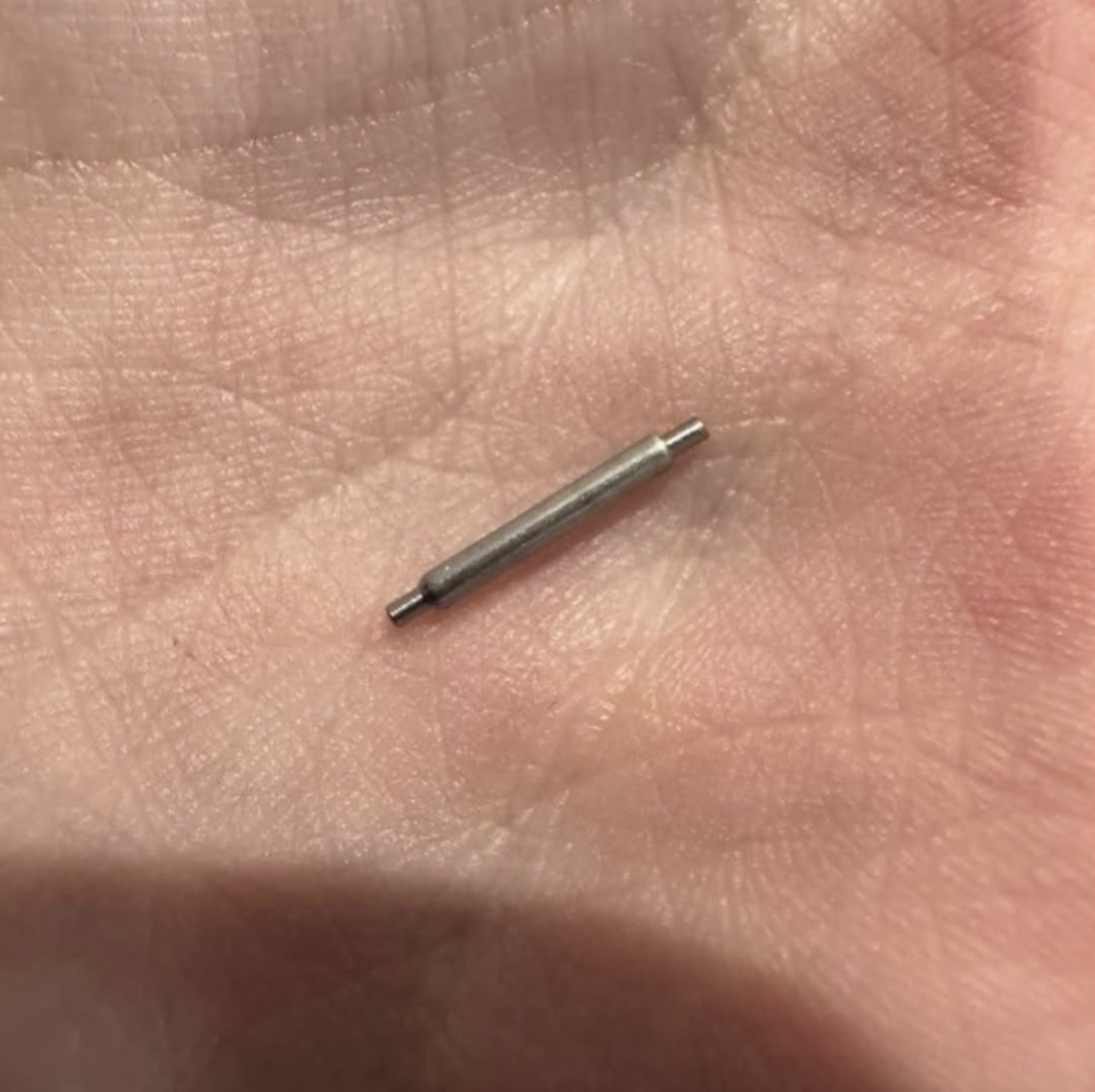
At first glance, it’s easy to dismiss this small piece of metal as something meaningless.
It’s tiny.
It’s simple.
It doesn’t look like it could possibly have any importance in the bigger picture.
Maybe it looks like:
- a small pin
- a broken spring
- a piece of wire
- or just random scrap metal
But in reality, this little component plays a critical role in one of the most common objects people use every day: a wristwatch.
What you are looking at is a watch spring bar—also known as a watch band pin or spring pin.
And despite its size, it performs a job that is absolutely essential for keeping your watch on your wrist.
What Exactly Is a Watch Spring Bar?
A watch spring bar is a tiny telescopic metal rod with spring-loaded ends.
It is designed to fit between two small protruding arms on a watch case called:
the lugs
These lugs are the small metal extensions on either side of the watch where the strap attaches.
The spring bar sits hidden inside the strap connection point, locking everything together securely.
How It Works (Simple But Clever Engineering)
Even though it looks like a basic piece of metal, the design is surprisingly smart.
Inside the small tube:
- there is a tiny spring
- two retractable pins sit at each end
- pressure keeps them pushed outward
Here’s what happens:
1. Installation
When attaching a strap:
- the ends of the spring bar are compressed inward
- the bar is placed between the watch lugs
- once released, the pins snap outward into tiny holes
This locks the strap in place.
2. Removal
To remove it:
- the ends are pressed inward again
- the bar compresses
- and the strap is released
All with a simple tool or even careful fingernail pressure (in some cases).
Why This Tiny Part Is So Important
Even though it is small, the spring bar is doing something critical:
It is holding your entire watch securely on your wrist.
Think about that for a moment.
A watch may be:
- expensive
- heavy
- worn daily
- exposed to movement, sweat, and impact
And all of that is supported by two tiny metal rods no thicker than a pin.
Without spring bars:
- the strap would detach
- the watch could fall off
- it would be unusable in its current form
So this tiny part is actually a load-bearing connector in miniature engineering.
Why It Feels So Insignificant (But Isn’t)
The strange thing about spring bars is that they are almost invisible when installed.
They sit:
- hidden inside the strap
- between metal lugs
- out of sight during normal use
Because of this, people often forget they exist at all.
You only notice them when:
- changing a strap
- repairing a watch
- or accidentally losing one
And when that happens, the importance suddenly becomes very clear.
Everyday Engineering Hidden in Plain Sight
The watch spring bar is a perfect example of something engineers design extremely well:
small parts doing critical work quietly in the background
It is similar to:
- screws holding furniture together
- zippers on clothing
- hinges on doors
- clips in glasses frames
You don’t notice them until they fail—but without them, the system collapses.
Why Spring Bars Make Watch Straps Replaceable
One of the biggest advantages of this tiny part is flexibility.
Because of spring bars:
- straps can be changed easily
- different styles can be swapped
- metal bracelets can be replaced with leather or silicone
This is why watches feel customizable today.
Without spring bars, watch straps would need:
- permanent rivets
- glue
- or fixed assembly
That would make watches far less practical.
Variations of Watch Spring Bars
Not all spring bars are the same. They come in different types:
1. Standard spring bars
- basic version
- used in most watches
2. Heavy-duty spring bars
- thicker
- used for sports or dive watches
- designed for stronger resistance
3. Quick-release spring bars
- include a small lever or tab
- allow tool-free strap changes
- popular in modern watch designs
Why They Sometimes Go Missing
If you find one loose in a drawer or on the ground, it usually means:
- a strap was recently changed
- a watch was repaired
- or a bar slipped out due to wear
Over time, spring bars can weaken due to:
- metal fatigue
- rust
- repeated compression
- dust and dirt buildup
That’s why watchmakers often recommend replacing them periodically.
What Happens If One Breaks?
If a spring bar fails:
- one side of the strap can detach
- the watch may swing loosely
- in worst cases, the watch can fall and break
This is why even luxury watches rely on a part that costs very little but has huge importance.

Welcome to my kitchen!
I’m a passionate home cook and recipe creator who loves turning simple ingredients into delicious, comforting meals that everyone can enjoy. Through this website, I share carefully prepared recipes, practical cooking tips, and easy-to-understand food education to help you feel more confident in the kitchen.
My goal is to make cooking simple, enjoyable, and accessible. Whether you are looking for a quick family dinner, a delicious dessert, healthy meal ideas, or traditional recipes with a modern touch, you’ll find inspiration here.
More Than Just Recipes
I believe that cooking is also a way to learn. That’s why this website is not only about recipes. I also create educational articles about ingredients, cooking techniques, kitchen tips, food preparation, and the stories behind different dishes.
Each article is designed to give you useful knowledge that you can apply in your own kitchen. From understanding how ingredients work together to learning better cooking methods, my aim is to help you become a more confident and creative cook.
My Philosophy
Good food doesn’t always require complicated ingredients or professional equipment. With a little knowledge, patience, and creativity, simple ingredients can become something truly special.
I believe in sharing recipes that are practical, clearly explained, and enjoyable to make. I also love exploring new flavors while appreciating traditional cooking and the recipes passed down through generations.
Thank you for visiting my kitchen and being part of this food-loving community. I hope my recipes and articles inspire you to cook, learn, experiment, and most importantly, enjoy every bite!
Happy cooking!