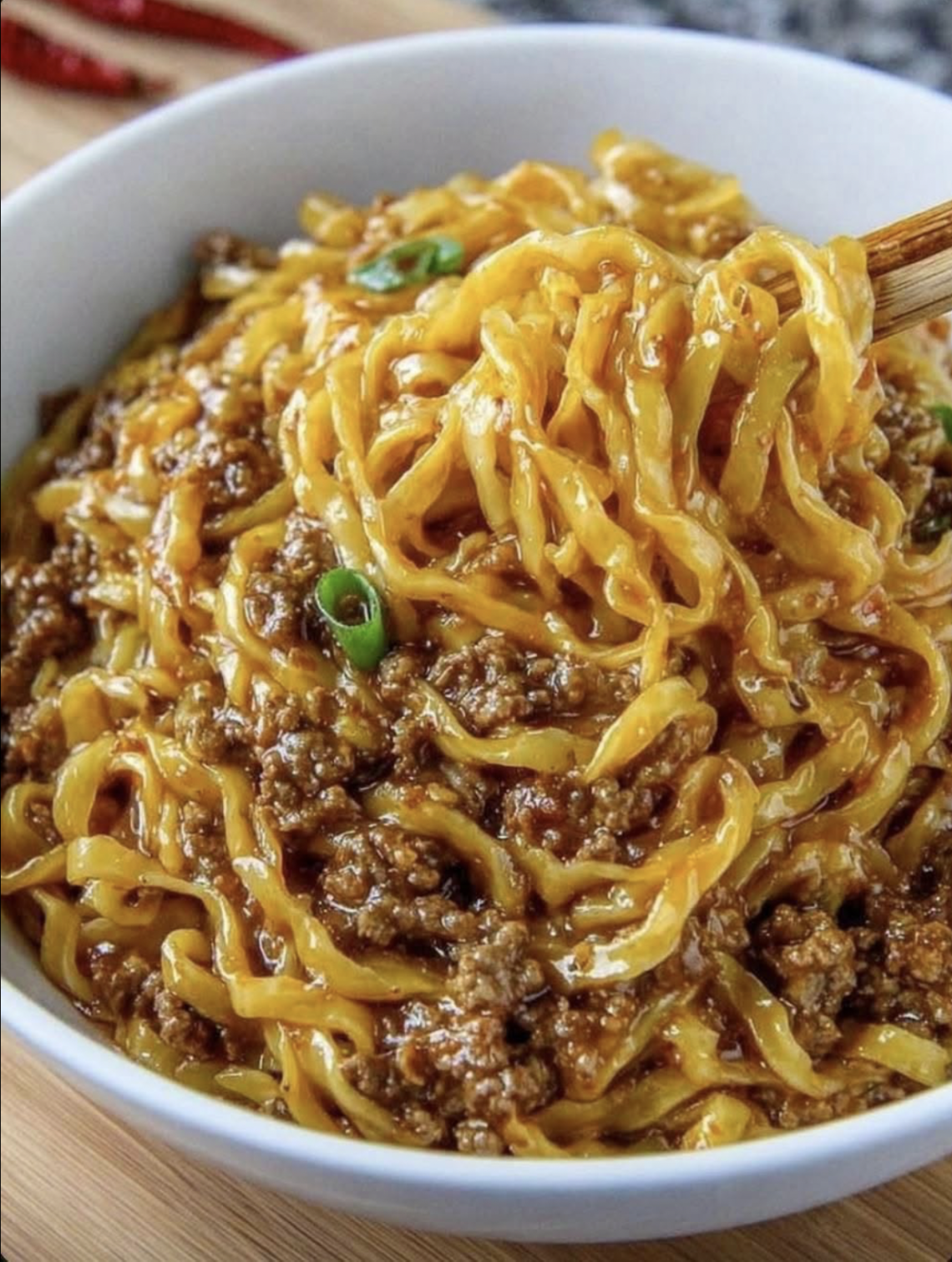
Mongolian Ground Beef Noodles are one of those meals that feel like restaurant food but come together surprisingly fast at home. It’s a dish built on contrast: sweet, salty, garlicky, and deeply savory flavors wrapped around soft noodles and tender ground beef.
Even though the name sounds exotic, the cooking style is simple, fast, and very weeknight-friendly. It’s basically a fusion-style stir-fry noodle dish inspired by Mongolian beef flavors—but adapted for home kitchens using ground beef instead of sliced steak.
The result is something rich, glossy, and comforting, with a sauce that clings to every strand of noodle.
What Makes This Dish So Addictive?
The magic is in the sauce.
It usually combines:
- soy sauce (saltiness and depth)
- brown sugar (sweet caramel balance)
- garlic (aromatic punch)
- ginger (warm spice note)
- sesame oil (nutty finish)
When these hit hot beef in a pan, they create a glossy coating that tastes almost like a restaurant glaze.
Then the noodles soak up everything, making every bite packed with flavor.
Why Ground Beef Works So Well
Traditional Mongolian beef uses sliced steak, but ground beef has its own advantages:
1. Faster cooking
No slicing, no marinating—just brown and go.
2. Better sauce absorption
Small crumbles of beef hold onto sauce better than thick slices.
3. Budget-friendly
Ground beef makes it affordable without losing flavor.
4. Perfect texture with noodles
It mixes evenly so every forkful has meat + noodles + sauce.
Ingredients Breakdown (Core Version)
A basic version typically includes:
Protein:
- ground beef (lean or medium)
Aromatics:
- garlic (lots of it)
- ginger (fresh or powdered)
Sauce:
- soy sauce
- brown sugar
- optional oyster sauce
- sesame oil
Noodles:
- egg noodles, ramen, or lo mein noodles
Optional additions:
- green onions
- chili flakes
- bell peppers
- carrots
- cornstarch (to thicken sauce)
Step-by-Step Cooking Process
Step 1: Boil the noodles
Cook noodles until just tender.
👉 Important: don’t overcook them
They will finish absorbing sauce later.
Drain and set aside.
Step 2: Brown the beef
In a hot pan:
- add ground beef
- break it apart as it cooks
- let it brown properly
You want slightly crispy edges for extra flavor.
Step 3: Add garlic and ginger
Once beef is cooked:
- add garlic
- add ginger
Stir quickly so it doesn’t burn.
This step builds the aroma base of the dish.
Step 4: Make the sauce
In the same pan, add:
- soy sauce
- brown sugar
- a splash of water
- optional oyster sauce
Let it simmer until slightly thickened.
The sugar melts and blends into a glossy glaze.
Step 5: Combine noodles
Add cooked noodles into the pan:
- toss everything together
- coat noodles evenly
- let sauce absorb for 1–2 minutes
This is where the dish transforms from “simple” to “restaurant-style.”
Step 6: Final touch
Finish with:
- sesame oil drizzle
- chopped green onions
- optional chili flakes
Serve immediately while hot and glossy.
Flavor Profile Explained
This dish hits multiple flavor notes at once:
Sweet
From brown sugar, balancing saltiness
Savory
From soy sauce and beef fat
Aromatic
From garlic and ginger
Nutty
From sesame oil
Slight caramelization
From cooked sugar and browned meat
The combination makes it extremely satisfying and slightly addictive.
Texture Experience
What makes it stand out is texture:
- soft noodles
- juicy beef crumbles
- sticky glossy sauce
- slight crunch from green onions (if added)
Every bite feels balanced and rich.
Common Variations
One of the best things about Mongolian ground beef noodles is how flexible it is.
Spicy version
- add chili paste or sriracha
- red pepper flakes
Vegetable version
- bell peppers
- broccoli
- snap peas
- shredded carrots
Extra saucy version
- increase soy sauce + sugar
- add cornstarch slurry for thickness
Creamy twist (fusion style)
- add a small splash of cream or coconut milk (less traditional, but popular in modern versions)
Tips for Best Results
1. Don’t overcrowd the pan
This ensures beef browns instead of steaming.
2. Balance sweetness carefully
Too much sugar makes it heavy—adjust gradually.
3. Use high heat for stir-fry feel
This gives slight caramelization and depth.
4. Toss noodles while warm
They absorb sauce better than cold noodles.
Why People Love This Dish
Mongolian Ground Beef Noodles are popular because they check every box:
- quick to make
- cheap ingredients
- big flavor payoff
- family-friendly
- great leftovers
- easy to customize
It feels like takeout, but it’s made in your own kitchen in under 30 minutes.

Welcome to my kitchen!
I’m a passionate home cook and recipe creator who loves turning simple ingredients into delicious, comforting meals that everyone can enjoy. Through this website, I share carefully prepared recipes, practical cooking tips, and easy-to-understand food education to help you feel more confident in the kitchen.
My goal is to make cooking simple, enjoyable, and accessible. Whether you are looking for a quick family dinner, a delicious dessert, healthy meal ideas, or traditional recipes with a modern touch, you’ll find inspiration here.
More Than Just Recipes
I believe that cooking is also a way to learn. That’s why this website is not only about recipes. I also create educational articles about ingredients, cooking techniques, kitchen tips, food preparation, and the stories behind different dishes.
Each article is designed to give you useful knowledge that you can apply in your own kitchen. From understanding how ingredients work together to learning better cooking methods, my aim is to help you become a more confident and creative cook.
My Philosophy
Good food doesn’t always require complicated ingredients or professional equipment. With a little knowledge, patience, and creativity, simple ingredients can become something truly special.
I believe in sharing recipes that are practical, clearly explained, and enjoyable to make. I also love exploring new flavors while appreciating traditional cooking and the recipes passed down through generations.
Thank you for visiting my kitchen and being part of this food-loving community. I hope my recipes and articles inspire you to cook, learn, experiment, and most importantly, enjoy every bite!
Happy cooking!