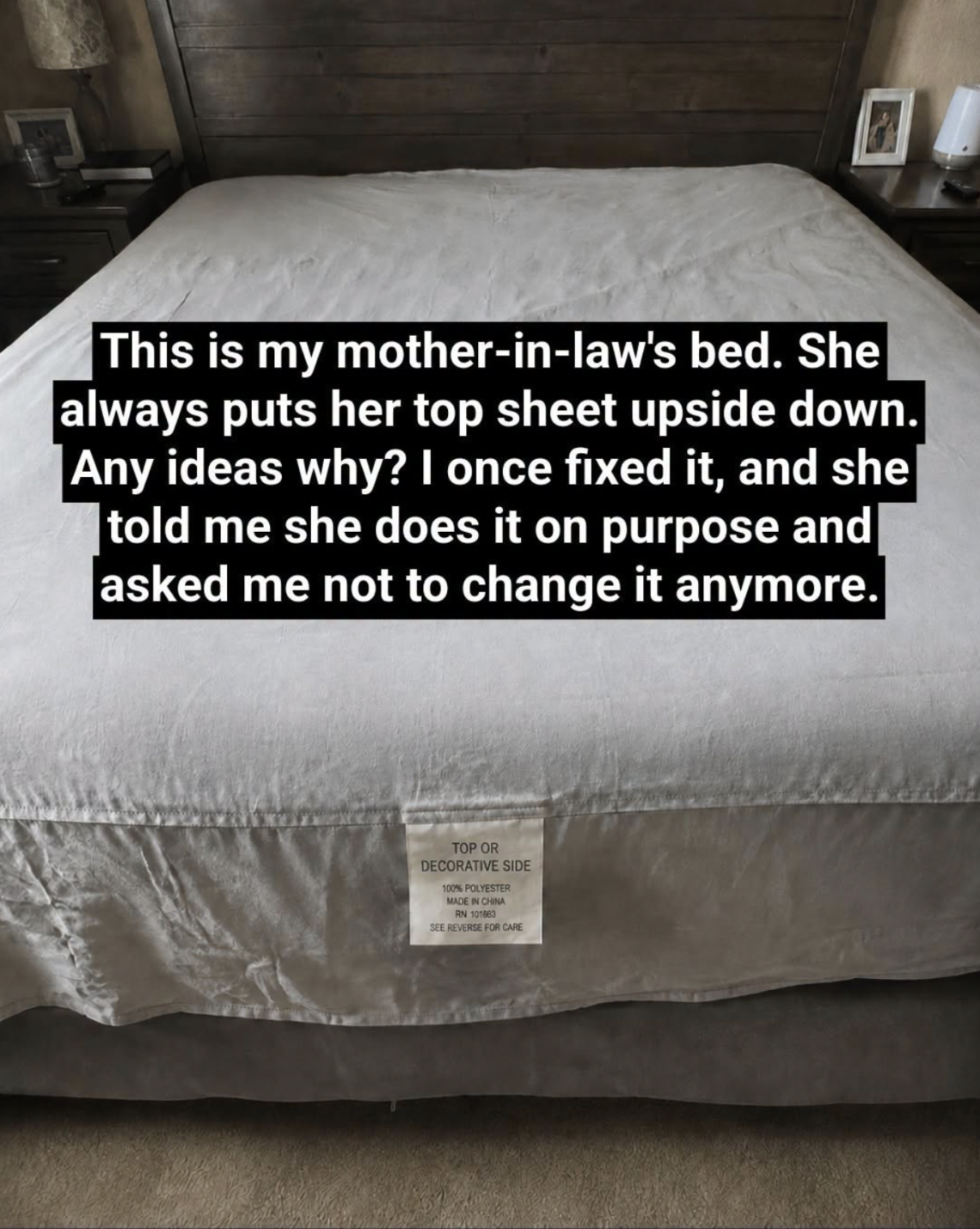
Making a bed may seem like one of the simplest household tasks, yet many of the traditions surrounding bed linens have fascinating histories and practical reasons behind them. One practice that often surprises people is placing the top sheet “upside down.” At first glance, this may appear to be a mistake or simply a matter of personal preference. However, for generations, professional housekeepers, hotels, and experienced homemakers have intentionally made beds this way for a very practical reason.
If you’ve ever noticed that the decorative side or patterned edge of a top sheet appears to face downward while you’re making the bed, you’re not imagining things. In many cases, the sheet has been positioned intentionally so that, once the bed is completely made and the top edge of the sheet is folded back over the blanket or duvet, the finished appearance is neat, attractive, and symmetrical.
Although modern bedding styles have evolved and many people now use duvet covers instead of traditional top sheets, this long-standing technique continues to be used in homes, hotels, guest rooms, and hospitality settings around the world. Understanding why people still follow this practice offers an interesting glimpse into the history of bed making, textile design, and everyday household traditions.
What Is a Top Sheet?
A top sheet, sometimes called a flat sheet, is the sheet placed between the fitted sheet and the blanket, quilt, comforter, or duvet.
Unlike the fitted sheet, which has elastic corners that wrap securely around the mattress, the top sheet is a simple rectangular piece of fabric.
Its primary purposes include:
- Providing a clean barrier between the sleeper and heavier bedding.
- Improving comfort.
- Reducing the need to wash blankets and comforters as frequently.
- Helping regulate body temperature.
- Creating a neat and finished appearance.
For decades, the top sheet has been considered an essential part of traditional bedding in many countries.
Why Is the Top Sheet Sometimes Placed “Upside Down”?
The answer lies in how the bed is finished.
Most top sheets have two sides:
- A finished or decorative side.
- A reverse side.
When the sheet is first placed on the bed, many people position the decorative side facing downward toward the mattress.
Although this initially looks incorrect, the next step explains why.
After placing the blanket or comforter over the sheet, the upper portion of the sheet is folded back over the blanket.
Once folded, the decorative side becomes visible on top, creating a polished and attractive appearance.
If the sheet had been placed with the decorative side facing upward from the beginning, folding it back would expose the reverse side instead.
A Tradition Rooted in Hospitality
Hotels have long emphasized clean, elegant bed presentation.
Professional housekeepers are trained to make beds consistently, and placing the top sheet this way has become a standard practice in many hospitality settings.
The folded-back sheet creates:
- A crisp appearance.
- Uniform presentation.
- A welcoming look.
- A smooth transition between the sheet and blanket.
These small details contribute to the luxurious feeling associated with well-made hotel beds.
The Role of Decorative Hems
Many top sheets feature:
- Embroidered borders.
- Satin trims.
- Lace details.
- Printed patterns.
- Decorative stitching.
Manufacturers usually design these embellishments to be displayed after the sheet is folded over the blanket.
This explains why placing the sheet “upside down” during the initial setup actually results in the intended finished look.
A Cleaner Sleeping Surface
Using a top sheet provides practical hygiene benefits.
Because the sheet sits directly between the sleeper and the heavier bedding, it helps absorb:
- Body oils.
- Perspiration.
- Skin cells.
- Lotions and creams.
As a result, blankets, quilts, and comforters remain cleaner for longer and generally require less frequent washing.
Easier Laundry
Top sheets are much easier to wash than bulky comforters or quilts.
Most can be:
- Machine washed.
- Machine dried.
- Folded easily.
- Replaced inexpensively.
This makes regular bedding maintenance simpler and more convenient.
Temperature Regulation
Many people appreciate top sheets because they provide flexibility throughout the night.
Depending on the season, a sleeper can:
- Use only the sheet during warm weather.
- Combine the sheet with a blanket during cooler months.
- Add heavier bedding during winter.
This layered approach allows better temperature control than relying on a comforter alone.
Protecting Expensive Bedding
Comforters, quilts, and duvets are often among the most expensive bedding items in a home.
Using a top sheet helps protect them from:
- Sweat.
- Body oils.
- Makeup.
- Dust.
- Everyday wear.
This may extend the life of decorative bedding.
Why Some People Skip the Top Sheet
Despite its advantages, not everyone uses a top sheet today.
Many people prefer sleeping directly under a duvet with a removable duvet cover.
Reasons include:
- Simpler bed making.
- Fewer layers.
- Modern bedding styles.
- Easier daily routines.
Both approaches are perfectly acceptable and largely depend on personal preference.
Proper Way to Make a Bed with a Top Sheet
Traditional bed making usually follows these steps:
- Place the fitted sheet securely over the mattress.
- Position the top sheet with its decorative side facing downward.
- Center the sheet evenly.
- Add the blanket or comforter.
- Fold the upper portion of the sheet back over the blanket.
- Tuck the sides if desired.
- Arrange pillows neatly.
- Smooth all wrinkles.
The result is a clean, professional appearance.
Common Bedding Terms
Understanding basic bedding terminology can be helpful.
Fitted Sheet
A sheet with elastic corners designed to fit tightly around the mattress.
Top Sheet
A flat sheet placed between the sleeper and upper bedding.
Comforter
A thick, insulated blanket usually filled with synthetic fibers or down.
Duvet
A soft insert placed inside a removable fabric cover.
Quilt
A layered blanket stitched together with decorative patterns.
Bedspread
A decorative covering that extends nearly to the floor.
Tips for a Beautifully Made Bed
To achieve a polished appearance:
- Smooth wrinkles as you work.
- Center each layer evenly.
- Fold the sheet uniformly.
- Fluff pillows daily.
- Shake out blankets regularly.
- Wash bedding according to care instructions.
Small details create a noticeably more inviting bedroom.
Frequently Asked Questions
Is placing the sheet upside down actually correct?
Yes. In traditional bed making, placing the decorative side downward allows it to face upward after the sheet is folded back over the blanket.
Does every sheet have a decorative side?
No. Some modern sheets are identical on both sides, making orientation less important.
Do hotels still use top sheets?
Many hotels continue to use top sheets because they improve hygiene, protect blankets, and create a classic, neatly layered appearance.
Can I skip the top sheet?
Absolutely. Many people prefer using only a duvet and duvet cover. Bedding choices ultimately depend on personal comfort and lifestyle.
Does using a top sheet reduce laundry?
In many cases, yes. Because the top sheet serves as a barrier between the sleeper and heavier bedding, comforters and blankets often remain cleaner for longer.
The Evolution of Modern Bedding
Bedding styles continue to evolve as lifestyles and design preferences change. In many contemporary homes, minimalist aesthetics and the popularity of duvet covers have reduced the use of traditional top sheets. However, hotels, guest houses, and many households still appreciate the elegance and practicality of the classic layered bed. The tradition of placing the top sheet with the finished side facing downward remains a simple yet effective technique that reflects decades of housekeeping experience and attention to detail.

Welcome to my kitchen!
I’m a passionate home cook and recipe creator who loves turning simple ingredients into delicious, comforting meals that everyone can enjoy. Through this website, I share carefully prepared recipes, practical cooking tips, and easy-to-understand food education to help you feel more confident in the kitchen.
My goal is to make cooking simple, enjoyable, and accessible. Whether you are looking for a quick family dinner, a delicious dessert, healthy meal ideas, or traditional recipes with a modern touch, you’ll find inspiration here.
More Than Just Recipes
I believe that cooking is also a way to learn. That’s why this website is not only about recipes. I also create educational articles about ingredients, cooking techniques, kitchen tips, food preparation, and the stories behind different dishes.
Each article is designed to give you useful knowledge that you can apply in your own kitchen. From understanding how ingredients work together to learning better cooking methods, my aim is to help you become a more confident and creative cook.
My Philosophy
Good food doesn’t always require complicated ingredients or professional equipment. With a little knowledge, patience, and creativity, simple ingredients can become something truly special.
I believe in sharing recipes that are practical, clearly explained, and enjoyable to make. I also love exploring new flavors while appreciating traditional cooking and the recipes passed down through generations.
Thank you for visiting my kitchen and being part of this food-loving community. I hope my recipes and articles inspire you to cook, learn, experiment, and most importantly, enjoy every bite!
Happy cooking!