Preparing for a vacation is often filled with excitement. Whether you’re leaving for a relaxing weekend, a family reunion, an overseas adventure, or simply taking a well-earned break from everyday life, there is always a long checklist to complete before locking the front door. You double-check your luggage, unplug unnecessary electronics, adjust the thermostat, secure the windows, and make sure everything is ready for your absence.
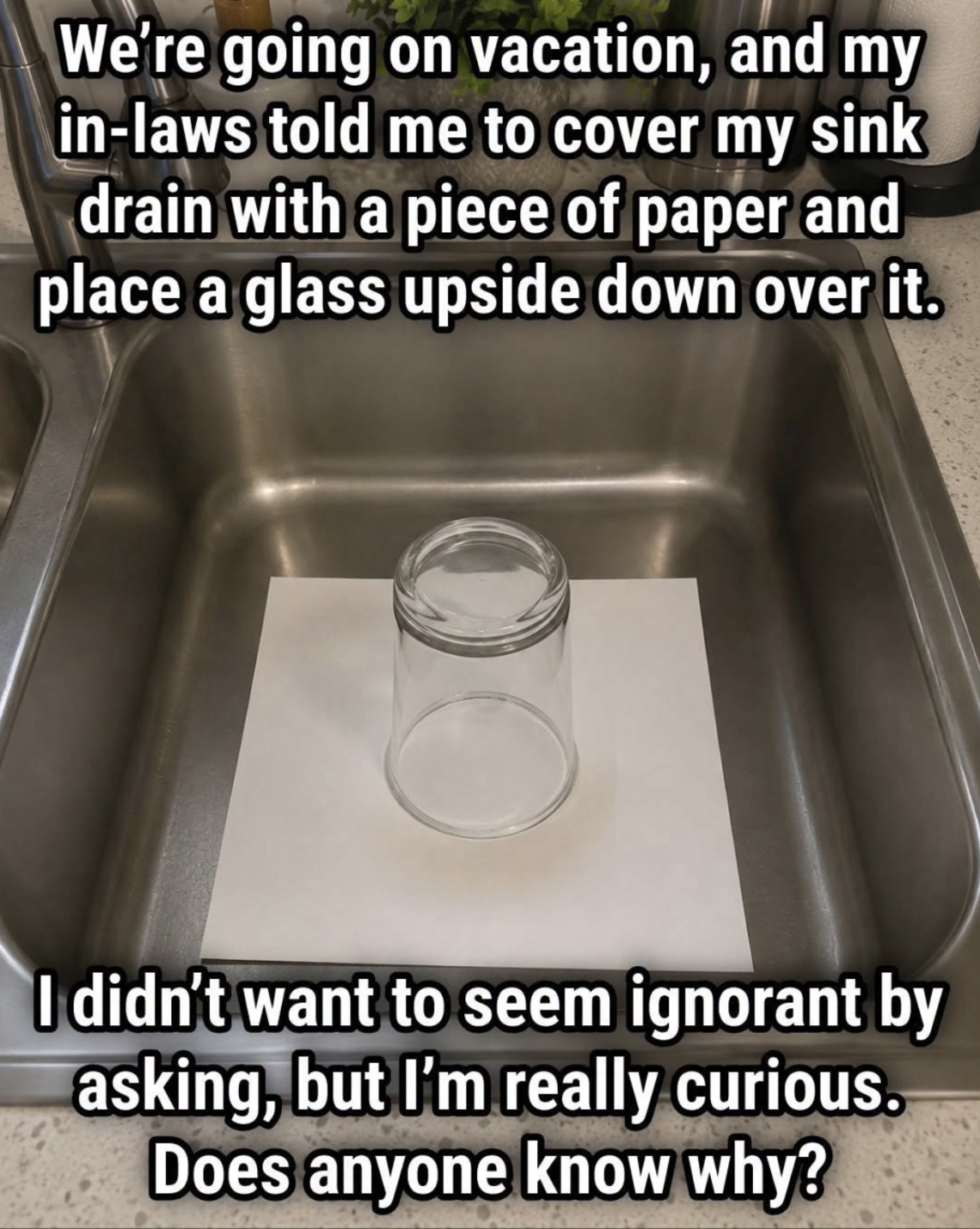
In recent years, countless videos and social media posts have suggested adding one more unusual task to that list: covering sink drains with an upside-down glass, placing plastic wrap over the drain, sealing it with tape, or even stuffing a shower cap into the drain opening. According to these posts, doing so will supposedly prevent insects from entering the home, stop unpleasant odors, block sewer gases, and protect your plumbing while you’re away.
The idea has attracted millions of views because it appears simple, inexpensive, and easy to do. But does it actually work? More importantly, is it necessary?
The answer is more nuanced than many viral videos suggest. While covering a drain may occasionally help in very specific situations, it is not a universal solution, and in most homes the best protection comes from maintaining the plumbing system properly before leaving.
Understanding how household drains actually work helps separate practical advice from internet myths.
Why People Cover Sink Drains Before Traveling
The popularity of this practice comes from several concerns homeowners have when leaving the house for days or weeks.
People hope that covering drains will:
- Prevent insects from entering.
- Stop unpleasant sewer odors.
- Block sewer gases.
- Reduce moisture evaporation.
- Prevent small pests from crawling through pipes.
- Keep bathrooms smelling fresh.
- Protect plumbing while the home is empty.
Some of these concerns are reasonable.
Others are based on misunderstandings of how plumbing systems function.
How Household Drains Actually Work
Every sink, bathtub, shower, floor drain, and many appliances are connected to a plumbing drainage system.
One of the most important components of this system is the P-trap.
The P-trap is the curved section of pipe located beneath most sinks.
Its purpose is extremely important.
It holds a small amount of water after every use.
This water acts as a natural seal between your home and the sewer system.
Without that water barrier:
- Sewer gases could enter the home.
- Unpleasant odors could spread.
- Some insects might gain easier access through the plumbing.
Fortunately, the water inside the trap normally performs this protective function automatically.
What Happens When You’re Away?
If you leave your home for a few days, very little changes.
The water inside the P-traps usually remains in place.
However, if the house remains vacant for several weeks or months, especially in warm or dry climates, the water inside little-used drains may slowly evaporate.
When enough water evaporates, the protective seal weakens.
This may allow:
- Sewer odors.
- Small drain flies.
- Cockroaches in rare situations.
- Sewer gases.
This is one reason why vacant properties sometimes develop unpleasant smells.
Does Covering the Drain Prevent Evaporation?
Partially.
A tightly sealed drain covering may slightly reduce the rate at which water evaporates.
However, the effect is usually limited.
More importantly, evaporation happens inside the P-trap beneath the sink—not at the drain opening itself.
Covering the drain cannot completely stop evaporation inside the plumbing.
For most homeowners leaving for a week or two, evaporation is generally not a concern.
Can Insects Really Enter Through Drains?
Sometimes—but not as commonly as viral videos suggest.
Certain insects, including:
- Drain flies.
- Small cockroaches.
- Sewer flies.
may occasionally emerge through drains under specific conditions.
Usually this occurs when:
- Organic buildup exists inside the pipes.
- The P-trap has dried out.
- Plumbing defects are present.
- The drain system is poorly maintained.
Simply placing a glass over the drain does not address the underlying problem.
Cleaning the plumbing is much more effective.
Can Sewer Gases Enter the House?
Normally, no.
A properly functioning plumbing system prevents sewer gases from entering because every drain trap contains water.
Only when:
- A trap dries out.
- Plumbing is damaged.
- A vent system malfunctions.
- Seals fail.
can sewer gases become noticeable.
Again, covering the drain does not repair plumbing problems.
What About Plastic Wrap or an Upside-Down Glass?
These methods create a temporary physical barrier.
They may:
- Slightly reduce airflow.
- Block dust from entering.
- Offer limited protection against small insects.
However, they are not considered a substitute for proper plumbing maintenance.
If sewer gases are entering despite the drain being covered, the plumbing likely requires inspection.
Better Ways to Prepare Your Home Before Vacation
Instead of relying only on internet hacks, consider following a complete vacation plumbing checklist.
1. Run Water in Every Drain
Before leaving, run water in:
- Bathroom sinks.
- Kitchen sink.
- Shower.
- Bathtub.
- Laundry sink.
- Floor drains.
Fresh water completely refills every P-trap.
This is one of the easiest and most effective preventive measures.
2. Clean the Drains
Organic residue inside drains can attract insects.
Before traveling:
- Remove hair.
- Flush away soap residue.
- Clean sink strainers.
- Wash drain covers.
- Remove food debris.
Clean drains are much less attractive to pests.
3. Dispose of Food Waste
Never leave food in:
- Sink strainers.
- Garbage disposals.
- Kitchen counters.
Food odors attract insects far more readily than drains themselves.
4. Empty the Trash
Garbage is often a much bigger source of odors and pests than plumbing.
Take out:
- Kitchen trash.
- Bathroom trash.
- Recycling.
Clean the trash can if necessary.
5. Check for Plumbing Leaks
Inspect:
- Faucets.
- Supply lines.
- Under-sink cabinets.
- Toilets.
Repairing small leaks before traveling can prevent expensive water damage.
6. Consider Turning Off the Main Water Supply
If you’ll be away for an extended period, many homeowners choose to turn off the main water valve.
Doing so can greatly reduce the risk of major leaks while the house is unoccupied.
If your heating system or appliances require water, follow the manufacturer’s recommendations before shutting off the supply.
7. Adjust the Water Heater
If appropriate, switch the water heater to vacation mode or lower its temperature.
This saves energy while reducing unnecessary operation.
8. Maintain Indoor Humidity
Proper ventilation helps reduce:
- Mold.
- Mildew.
- Musty odors.
If possible, maintain reasonable indoor humidity while away.
Should You Cover the Drain Anyway?
There is generally no harm in loosely covering a drain for a short vacation if it gives you peace of mind.
However, it should be viewed as an optional precaution rather than an essential protective measure.
The real protection comes from:
- Functioning plumbing.
- Water-filled traps.
- Clean drains.
- Regular maintenance.
Common Vacation Plumbing Myths
Myth 1: Every Drain Must Be Covered
False.
Most properly maintained homes do not require covered drains for ordinary vacations.
Myth 2: An Upside-Down Glass Stops Sewer Gas
Only indirectly.
If the plumbing system is functioning correctly, sewer gases are already blocked by the water in the P-trap.
Myth 3: Covering Drains Prevents All Insects
False.
The source of insect problems usually lies deeper within plumbing or elsewhere around the home.
Myth 4: Every Home Needs This Hack
Different homes have different plumbing systems.
A new home with healthy plumbing rarely faces the same risks as an older property with dried traps or damaged pipes.
Additional Vacation Checklist
Before leaving, remember to:
- Lock all windows and doors.
- Unplug unnecessary electronics.
- Adjust the thermostat.
- Stop mail or arrange collection.
- Water indoor plants if necessary.
- Check smoke detector batteries.
- Secure valuables.
- Inform a trusted neighbor if appropriate.
These measures often contribute more to home protection than simple internet hacks.
Frequently Asked Questions
Is covering sink drains harmful?
Generally, no. As long as the covering does not interfere with plumbing or create a safety hazard, it is usually harmless.
How long does water remain in a P-trap?
Depending on temperature, humidity, and usage, water may remain for several weeks or even months before significant evaporation occurs.
Should I worry about sewer gases during a one-week vacation?
In most properly maintained homes, no.
The water seal normally remains intact.
Do drain flies come through plumbing?
They may breed in organic material inside drains, but cleaning the drain is usually more effective than covering it.
What is the single most important plumbing step before leaving?
Running water through every sink, shower, tub, and floor drain to ensure all P-traps are full is one of the simplest and most effective precautions.

Welcome to my kitchen!
I’m a passionate home cook and recipe creator who loves turning simple ingredients into delicious, comforting meals that everyone can enjoy. Through this website, I share carefully prepared recipes, practical cooking tips, and easy-to-understand food education to help you feel more confident in the kitchen.
My goal is to make cooking simple, enjoyable, and accessible. Whether you are looking for a quick family dinner, a delicious dessert, healthy meal ideas, or traditional recipes with a modern touch, you’ll find inspiration here.
More Than Just Recipes
I believe that cooking is also a way to learn. That’s why this website is not only about recipes. I also create educational articles about ingredients, cooking techniques, kitchen tips, food preparation, and the stories behind different dishes.
Each article is designed to give you useful knowledge that you can apply in your own kitchen. From understanding how ingredients work together to learning better cooking methods, my aim is to help you become a more confident and creative cook.
My Philosophy
Good food doesn’t always require complicated ingredients or professional equipment. With a little knowledge, patience, and creativity, simple ingredients can become something truly special.
I believe in sharing recipes that are practical, clearly explained, and enjoyable to make. I also love exploring new flavors while appreciating traditional cooking and the recipes passed down through generations.
Thank you for visiting my kitchen and being part of this food-loving community. I hope my recipes and articles inspire you to cook, learn, experiment, and most importantly, enjoy every bite!
Happy cooking!