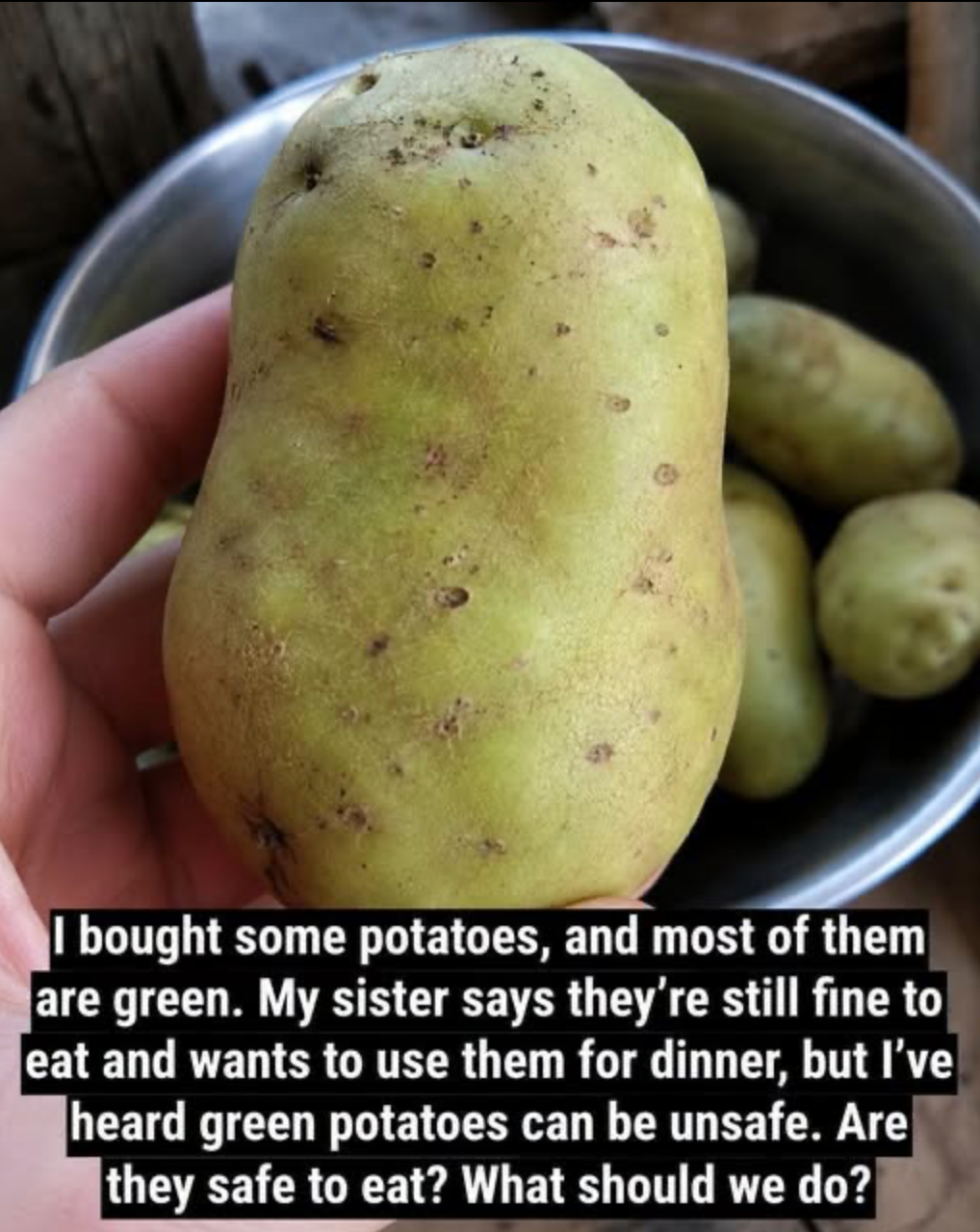
Potatoes are one of the world’s most popular and versatile foods. Whether baked, mashed, roasted, fried, boiled, or added to soups and stews, they are a staple ingredient in countless kitchens. They are affordable, nutritious, easy to prepare, and have a long shelf life when stored properly. However, almost everyone has experienced opening a pantry or reaching into a potato bag only to discover that some of the potatoes have developed patches of green skin.
For many people, this raises an important question: Are green potatoes safe to eat, or should they be thrown away?
Some believe the green color is simply a harmless cosmetic change, while others think it means the potato has spoiled completely. The truth lies somewhere in between. The green color itself is not toxic, but it often serves as a warning sign that the potato has undergone changes which may increase the level of naturally occurring compounds that can be harmful if consumed in large amounts.
Understanding why potatoes turn green, what causes this process, how to recognize potentially unsafe potatoes, and the best ways to store them can help you reduce food waste while protecting your health.
Why Do Potatoes Turn Green?
The green color appears when potatoes are exposed to light for an extended period.
Although we think of potatoes as underground vegetables, they are actually modified stems known as tubers. While growing beneath the soil, they are protected from sunlight. Once exposed to light—whether natural sunlight or strong artificial lighting—they begin producing chlorophyll, the same green pigment found in leaves and other green plants.
Chlorophyll itself is completely harmless. In fact, it is essential for photosynthesis, the process by which plants convert light into energy. The presence of chlorophyll is what gives leaves, spinach, broccoli, and many other vegetables their green color.
However, in potatoes, the development of chlorophyll often occurs alongside an increase in naturally occurring protective compounds called glycoalkaloids, particularly solanine and chaconine.
These compounds are produced by the potato as a natural defense against insects, fungi, bacteria, and animals that might otherwise feed on it.
What Causes Potatoes to Turn Green?
Several factors can trigger greening.
1. Exposure to Sunlight
Direct sunlight is the most common cause.
Even a few days of exposure can begin the greening process.
2. Bright Indoor Lighting
Potatoes displayed under supermarket lights or stored on brightly lit kitchen counters may also become green.
Artificial lighting can stimulate chlorophyll production, especially when exposure lasts for several days.
3. Improper Storage
Keeping potatoes in:
- Transparent plastic bags
- Open baskets near windows
- Bright pantries
- Uncovered kitchen shelves
can increase light exposure.
4. Damage to the Potato
Bruises, cuts, or scrapes may make certain areas more susceptible to changes during storage.
5. Natural Aging
Older potatoes may become more sensitive to environmental conditions, including light and temperature.
What Is Chlorophyll?
Chlorophyll is simply a natural green pigment.
It is found in:
- Spinach
- Kale
- Lettuce
- Broccoli
- Green beans
- Herbs
Chlorophyll itself poses no health risk.
If green potatoes contained only chlorophyll, there would be little cause for concern.
The problem is that chlorophyll often appears alongside increased glycoalkaloid production.
What Are Glycoalkaloids?
Glycoalkaloids are natural chemical compounds produced by potatoes to protect themselves from predators.
The two main glycoalkaloids are:
- Solanine
- Chaconine
These substances occur naturally in all potatoes, even healthy ones.
Normally, they are present at low levels that do not cause harm.
However, exposure to light, physical damage, or sprouting can increase their concentration.
Why Do Potatoes Produce Solanine?
Solanine functions as a natural pesticide.
It helps protect potatoes against:
- Insects
- Fungi
- Bacteria
- Mold
- Animals
This defense system allows potatoes to survive in nature.
Is Solanine Dangerous?
In small amounts, the levels normally found in fresh potatoes are not considered harmful.
However, consuming large quantities of potatoes containing high concentrations of glycoalkaloids may lead to poisoning.
Symptoms can include:
- Nausea
- Vomiting
- Stomach pain
- Diarrhea
- Headache
- Dizziness
Severe poisoning is uncommon and usually requires consuming a significant amount of highly affected potatoes.
Does Every Green Potato Contain Dangerous Levels?
Not necessarily.
The amount of chlorophyll visible does not always match the amount of glycoalkaloids present.
Some lightly green potatoes contain only slightly elevated levels.
Others with extensive greening, sprouting, or a bitter taste may contain much higher concentrations.
Because there is no easy way to measure glycoalkaloid levels at home, visible greening is treated as a warning sign.
Can You Eat Green Potatoes?
It depends on the extent of the greening.
If Only a Small Area Is Green
If the potato is otherwise:
- Firm
- Fresh
- Free of sprouts
- Not bitter
you can often cut away the green portion generously, including some of the surrounding flesh, before cooking.
If Large Areas Are Green
If most of the potato has turned green, it is generally best to discard it.
If the Potato Is Green and Sprouting
Sprouting often accompanies increased glycoalkaloid production.
Large sprouts should be removed, but if the potato is heavily sprouted and green, it is safer to throw it away.
If It Tastes Bitter
A bitter taste may indicate elevated glycoalkaloid levels.
Do not continue eating a potato with a noticeably bitter flavor.
Does Cooking Remove Solanine?
No.
Unlike many bacteria, glycoalkaloids are heat-stable.
Boiling, baking, roasting, microwaving, or frying does not reliably destroy them.
Cooking may reduce levels slightly under certain conditions, but it should not be relied upon to make heavily green potatoes safe.
Which Parts of the Potato Contain the Most Glycoalkaloids?
Higher concentrations are usually found in:
- The skin
- Green areas
- Sprouts (“eyes”)
- Areas just beneath the skin
Peeling removes some of these compounds, but not all.
Why Do Potatoes Sprout?
Sprouts appear as the potato begins preparing to grow into a new plant.
Warm temperatures, moisture, and light encourage sprouting.
Sprouting often occurs alongside increased glycoalkaloid production.
Are Sprouted Potatoes Safe?
Small sprouts can usually be removed if the potato remains:
- Firm
- Not green
- Not shriveled
However, heavily sprouted, soft, or extensively green potatoes should generally be discarded.
How to Prevent Potatoes from Turning Green
Proper storage is the best prevention.
Store Them in Darkness
Keep potatoes away from light.
Good storage options include:
- Paper bags
- Cardboard boxes
- Opaque containers
- Dark pantry shelves
Maintain a Cool Temperature
The ideal storage temperature is generally between 45°F and 50°F (7°C to 10°C).
Avoid freezing temperatures, which can damage the potatoes.
Avoid Refrigeration
Refrigerating potatoes can convert some of their starch into sugars, affecting both flavor and texture.
When these sugar-rich potatoes are fried or roasted at high temperatures, they may brown more quickly and produce higher amounts of certain undesirable compounds.
Keep Them Dry
Excess moisture encourages mold and spoilage.
Store potatoes in a dry, well-ventilated location.
Do Not Store with Onions
Although often kept together, onions release moisture and gases that may speed up potato spoilage and sprouting.
Store them separately.
Signs That a Potato Should Be Discarded
Throw away potatoes that are:
- Soft
- Wrinkled
- Moldy
- Rotting
- Leaking liquid
- Strongly green throughout
- Heavily sprouted
- Bitter tasting
- Giving off unpleasant odors
Frequently Asked Questions
Is the green color itself poisonous?
No.
The green pigment is chlorophyll, which is harmless.
The concern is that green areas may also contain increased levels of glycoalkaloids.
Can peeling make a green potato safe?
Peeling away small green areas may reduce glycoalkaloid levels when greening is minimal.
However, heavily green potatoes should not be eaten.
Are organic potatoes more likely to turn green?
Both organic and conventionally grown potatoes can become green if exposed to light.
Can animals eat green potatoes?
Many animals are also sensitive to glycoalkaloids.
Green potatoes should not be fed to pets or livestock unless specifically advised by a qualified professional.
Nutritional Benefits of Healthy Potatoes
When properly stored and prepared, potatoes provide many valuable nutrients, including:
- Vitamin C
- Vitamin B6
- Potassium
- Fiber (especially with the skin)
- Complex carbohydrates
- Antioxidants
They can be part of a balanced diet when prepared using healthy cooking methods.

Welcome to my kitchen!
I’m a passionate home cook and recipe creator who loves turning simple ingredients into delicious, comforting meals that everyone can enjoy. Through this website, I share carefully prepared recipes, practical cooking tips, and easy-to-understand food education to help you feel more confident in the kitchen.
My goal is to make cooking simple, enjoyable, and accessible. Whether you are looking for a quick family dinner, a delicious dessert, healthy meal ideas, or traditional recipes with a modern touch, you’ll find inspiration here.
More Than Just Recipes
I believe that cooking is also a way to learn. That’s why this website is not only about recipes. I also create educational articles about ingredients, cooking techniques, kitchen tips, food preparation, and the stories behind different dishes.
Each article is designed to give you useful knowledge that you can apply in your own kitchen. From understanding how ingredients work together to learning better cooking methods, my aim is to help you become a more confident and creative cook.
My Philosophy
Good food doesn’t always require complicated ingredients or professional equipment. With a little knowledge, patience, and creativity, simple ingredients can become something truly special.
I believe in sharing recipes that are practical, clearly explained, and enjoyable to make. I also love exploring new flavors while appreciating traditional cooking and the recipes passed down through generations.
Thank you for visiting my kitchen and being part of this food-loving community. I hope my recipes and articles inspire you to cook, learn, experiment, and most importantly, enjoy every bite!
Happy cooking!