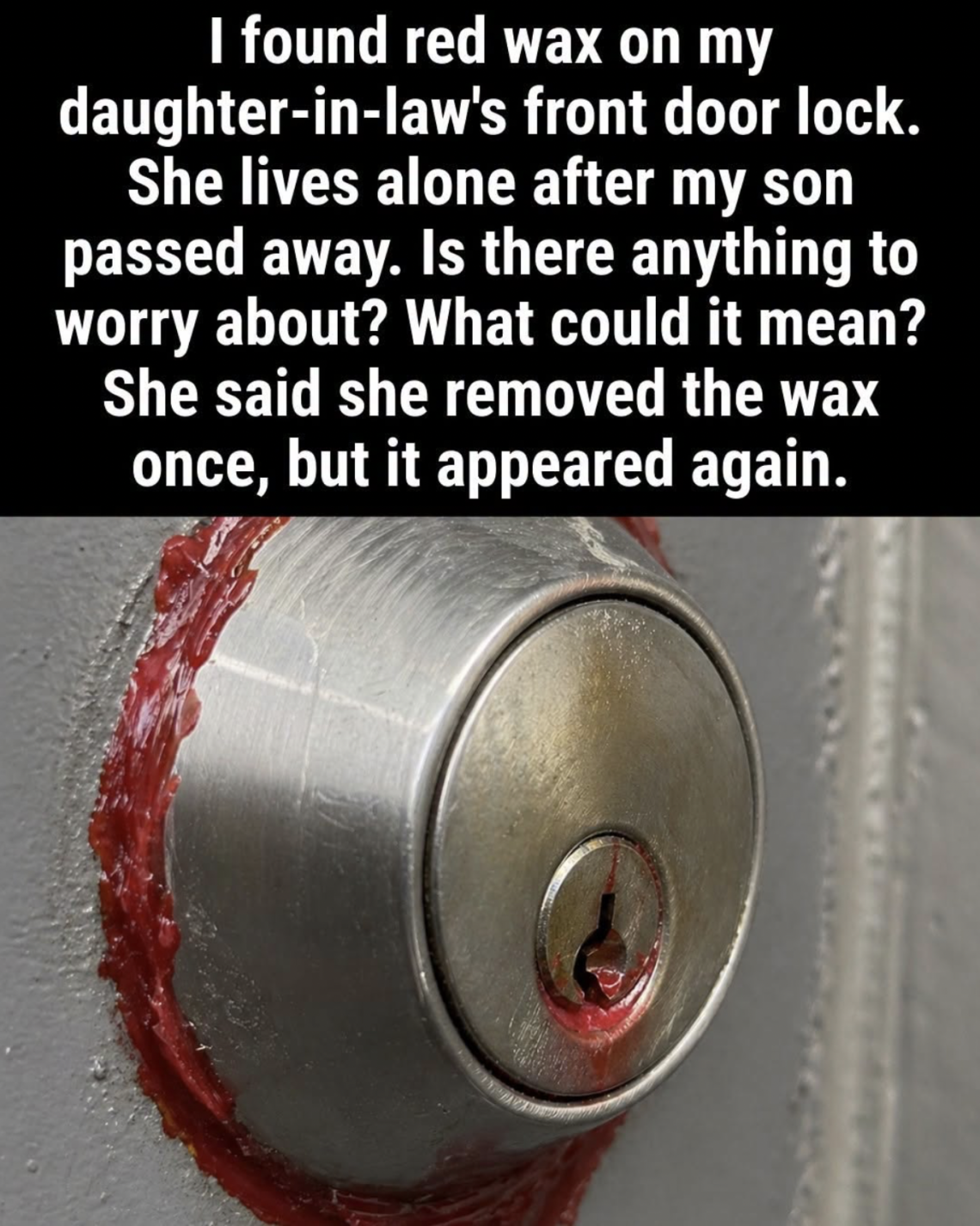
Imagine arriving home after a long day, reaching for your key, and noticing something strange on your front door lock—a small blob or smear of bright red wax. At first glance, it may seem insignificant, but after seeing countless stories online about mysterious symbols supposedly used by burglars, it’s natural to wonder whether your home has been targeted.
Social media is full of claims that criminals use colored wax, chalk marks, stickers, strings, or other small objects to secretly communicate with one another. According to these stories, such markings supposedly indicate whether a home is occupied, whether a security system is present, or whether a property might be an easy target for burglary. These posts often spread rapidly, causing understandable concern among homeowners.
However, the reality is much more nuanced. There is no universally accepted meaning for finding red wax on a house lock, and there is no verified evidence that a standardized criminal code involving red wax is widely used. In many cases, the wax has a completely harmless explanation. Even so, discovering any unfamiliar substance or sign of possible tampering on your home’s entry points should never be ignored. Instead of assuming the worst, it’s important to investigate calmly, understand the possible causes, and take sensible steps to ensure your home’s security.
This guide explores every likely explanation, separates myths from facts, and provides practical advice on what to do if you ever find red wax on your lock.
Why Red Wax Immediately Attracts Attention
Red is one of the most noticeable colors in everyday life. Against the metal surface of a door lock, even a tiny amount of red wax stands out, making it difficult to ignore.
Unlike dust or dirt, wax appears unusual because it has a smooth or slightly glossy texture and often looks as though it has been deliberately applied. This naturally leads people to wonder whether someone intentionally placed it there.
The good news is that the presence of red wax alone does not automatically mean that someone intended to harm you or your property.
What Exactly Is Red Wax?
Wax is a soft material that becomes pliable when heated and hardens as it cools. Many different kinds of wax exist, including:
- Candle wax
- Sealing wax
- Furniture wax
- Decorative craft wax
- Industrial wax
- Protective coating wax
- Lubricating wax compounds
Depending on its purpose, wax may contain pigments that give it a bright red color.
Because wax is used in many industries and household activities, finding it on a lock can have several completely unrelated explanations.
Possible Explanation 1: A Tamper-Evident Seal
One of the oldest uses of wax is as a tamper-evident seal.
Historically, wax was placed on:
- Letters
- Official documents
- Storage cabinets
- Lockboxes
- Shipping containers
- Secure equipment
- Utility access panels
The purpose was simple: if someone opened the item, the wax seal would crack or break, making unauthorized access immediately obvious.
Although uncommon on residential front doors, someone may have applied a small amount of wax to determine whether a lock had been disturbed.
For example, a property owner, landlord, contractor, or maintenance worker might use a small wax seal to verify whether a lock had been opened between inspections.
Possible Explanation 2: Decorative Sealing Wax
Many people enjoy crafting with traditional sealing wax.
It is commonly used for:
- Wedding invitations
- Holiday cards
- Gift wrapping
- Handmade envelopes
- Decorative packaging
- Scrapbooking projects
If someone handled sealing wax and then unlocked a door without washing their hands, small amounts could easily transfer onto the key or lock.
Similarly, tiny flakes of hardened wax may fall from envelopes or packages and become lodged near the keyhole.
Possible Explanation 3: Candle Wax
If candles have recently been used near the entrance—for example during holidays, outdoor gatherings, or power outages—melted wax may accidentally drip onto the lock.
Because red candles are popular during:
- Christmas
- Valentine’s Day
- Religious ceremonies
- Decorative events
red wax is not uncommon.
Wind, heat, or careless handling can cause small drops to land on nearby hardware.
Possible Explanation 4: Paint or Construction Material
Home improvement work often leaves behind unexpected residue.
Painting a front door, trim, or nearby wall may result in tiny paint splatters that resemble hardened wax.
Likewise, certain construction products such as:
- Caulking compounds
- Protective coatings
- Waterproof sealants
may dry into a wax-like appearance.
Brick dust mixed with moisture or rust can also create reddish stains that look surprisingly similar to wax.
Possible Explanation 5: Lock Lubricant Mixed with Dirt
Locks require occasional lubrication to operate smoothly.
Some lubricants attract:
- Dust
- Rust particles
- Dirt
- Pollen
- Paint residue
Over time, these substances can combine into a sticky mass that resembles colored wax.
Although uncommon, this explanation is entirely possible.
Possible Explanation 6: Children’s Crafts or Play
Children playing outside sometimes use:
- Crayons
- Modeling clay
- Craft wax
- Colored putty
Accidental contact with the lock may leave colorful residue behind.
While this may seem unlikely, it happens more often than many homeowners realize.
Could Red Wax Be a Sign of Criminal Activity?
This is the question that worries most people.
The internet contains countless stories claiming burglars secretly mark homes using:
- Red wax
- Chalk symbols
- Colored tape
- Plastic ties
- Strings
- Stickers
- Bottle caps
- Flyers
According to these claims, each object supposedly communicates information such as:
- Whether the house is occupied.
- Whether elderly people live there.
- Whether valuables may be inside.
- Whether dogs are present.
- Whether the property has already been surveyed.
However, law enforcement agencies in many countries have repeatedly explained that there is no evidence of a universal or standardized system using red wax or similar markings.
While individual criminals may occasionally use unique methods to communicate, these practices are isolated and not part of a globally recognized code.
Why These Stories Continue to Spread
Stories about mysterious markings appeal to people because they combine:
- Mystery
- Fear
- Curiosity
- Home security concerns
A simple photograph of a lock with red wax can quickly generate thousands of comments, many of which speculate without evidence.
As these posts are shared repeatedly, they often become exaggerated, creating the impression that every unusual mark signals criminal intent.
Signs That Deserve More Attention
Although the wax itself may be harmless, you should carefully inspect the area for additional signs of tampering.
Look for:
- Fresh scratches around the keyhole.
- Bent or loose lock components.
- Chipped paint near the lock.
- Tool marks.
- Loose screws.
- Damage to the door frame.
- Signs of forced entry.
- Broken weather stripping.
The presence of these indicators may warrant further investigation.
What Should You Do If You Find Red Wax?
Stay Calm
Avoid assuming the worst before examining the situation carefully.
Take a Photograph
Before removing the wax, take clear photographs.
These images may be useful if you later notice additional suspicious activity.
Inspect the Entire Door
Check:
- The lock.
- The handle.
- Hinges.
- Door frame.
- Windows nearby.
- Side entrances.
- Garage doors.
Test the Lock
Insert your key and verify that the lock:
- Turns normally.
- Locks securely.
- Unlocks smoothly.
If you notice resistance or unusual movement, the lock should be inspected or replaced.
Remove the Wax
Use:
- A soft cloth.
- Warm water if appropriate.
- Mild soap.
Avoid using sharp tools that could scratch the lock.
If necessary, use a lock-safe cleaner recommended by the manufacturer.
Review Security Cameras
If your home has surveillance cameras or a smart doorbell, check recent recordings for unusual activity around your entrance.
Inform Household Members
Let everyone living in the home know what you found so they can remain observant.
When Should You Contact the Police?
You should consider contacting local law enforcement if you observe:
- Evidence of attempted forced entry.
- Repeated unexplained markings.
- Suspicious individuals lingering around your property.
- Damage to locks or windows.
- Signs that someone attempted to enter the home.
Finding wax by itself generally does not require emergency assistance, but any combination of suspicious factors should be taken seriously.
How to Improve Your Home’s Security
Regardless of the cause, discovering something unusual on your lock is an excellent reminder to review your home’s security.
Helpful measures include:
- Install high-quality deadbolt locks.
- Keep doors locked at all times.
- Replace worn or damaged locks.
- Install motion-activated exterior lighting.
- Use a video doorbell or security camera.
- Trim bushes and shrubs near entrances.
- Ensure house numbers are clearly visible for emergency responders.
- Build good relationships with trusted neighbors who can help watch your property when you are away.
Common Myths About Red Wax on Locks
Myth 1: Red Wax Always Means Burglars Have Marked Your House
There is no verified evidence supporting this claim.
Myth 2: Every Unusual Mark Indicates Criminal Activity
Many unusual substances have completely innocent explanations.
Myth 3: Criminals Worldwide Use the Same Secret Symbols
There is no universal marking system recognized by law enforcement.
Myth 4: Removing the Wax Solves the Problem
If the wax resulted from attempted tampering, simply removing it does not address the underlying security concern. Always inspect the lock thoroughly.
Frequently Asked Questions
Is red wax dangerous?
No. The wax itself is generally harmless. The important question is why it appeared.
Could weather create something that looks like wax?
Yes. Paint, sealants, rust, tree sap, and certain lubricants can all resemble wax under certain conditions.
Should I replace my lock?
If you notice damage, signs of tampering, or difficulty operating the lock, replacing it is a sensible precaution.
Can burglars mark homes in other ways?
Some criminals may use unique methods in isolated cases, but there is no reliable evidence of a widespread, standardized marking system involving red wax.

Welcome to my kitchen!
I’m a passionate home cook and recipe creator who loves turning simple ingredients into delicious, comforting meals that everyone can enjoy. Through this website, I share carefully prepared recipes, practical cooking tips, and easy-to-understand food education to help you feel more confident in the kitchen.
My goal is to make cooking simple, enjoyable, and accessible. Whether you are looking for a quick family dinner, a delicious dessert, healthy meal ideas, or traditional recipes with a modern touch, you’ll find inspiration here.
More Than Just Recipes
I believe that cooking is also a way to learn. That’s why this website is not only about recipes. I also create educational articles about ingredients, cooking techniques, kitchen tips, food preparation, and the stories behind different dishes.
Each article is designed to give you useful knowledge that you can apply in your own kitchen. From understanding how ingredients work together to learning better cooking methods, my aim is to help you become a more confident and creative cook.
My Philosophy
Good food doesn’t always require complicated ingredients or professional equipment. With a little knowledge, patience, and creativity, simple ingredients can become something truly special.
I believe in sharing recipes that are practical, clearly explained, and enjoyable to make. I also love exploring new flavors while appreciating traditional cooking and the recipes passed down through generations.
Thank you for visiting my kitchen and being part of this food-loving community. I hope my recipes and articles inspire you to cook, learn, experiment, and most importantly, enjoy every bite!
Happy cooking!