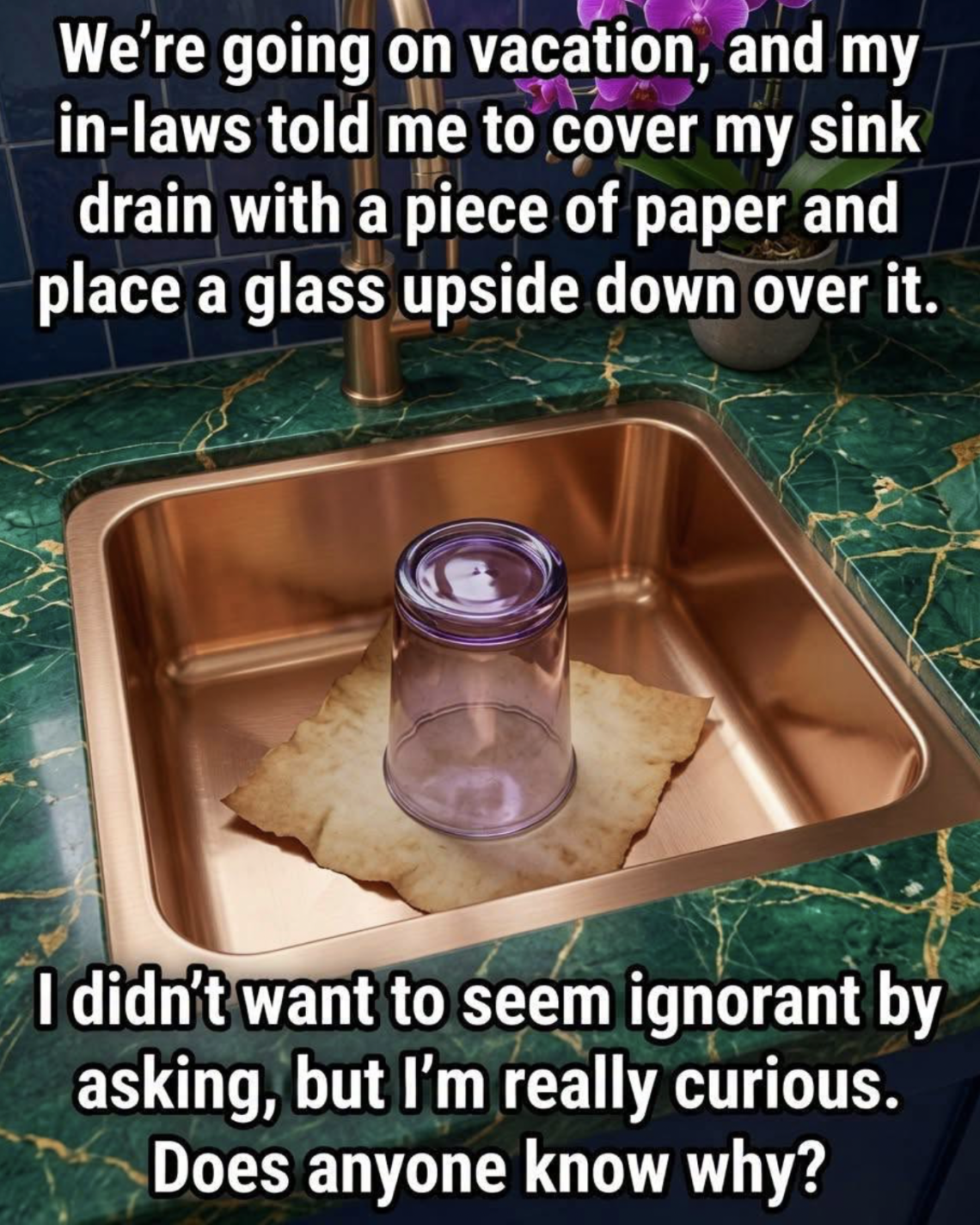
Preparing for a vacation is one of life’s most exciting rituals. Whether you’re planning a relaxing weekend getaway, a family holiday, or an extended trip abroad, there’s always a long checklist to complete before leaving home. You lock the doors, unplug unnecessary electronics, adjust the thermostat, pack your luggage, and make sure the windows are securely closed. Yet in recent years, another unusual tip has gained enormous popularity on social media: covering sink drains with an upside-down glass, a plastic bag, or even a shower cap before leaving the house.
According to countless online videos and posts, this simple trick supposedly prevents bad odors, keeps insects out, blocks sewer gases, and even protects your home from plumbing problems while you’re away. Some videos portray it as a little-known secret used by experienced travelers and homeowners alike.
But does this so-called “upside-down glass sink hack” actually work? Is it a necessary step before every vacation, or is it another internet myth that has been exaggerated through social media?
The truth is that while covering a sink drain may provide a small temporary barrier in certain situations, it is not a substitute for proper home preparation. The real protection against odors, pests, and plumbing issues comes from understanding how your plumbing system works and taking a few simple preventive measures before you leave.
This guide explains the science behind sink drains, why the hack became popular, when it might help, and what experts recommend to truly protect your home while you’re away.
What Is the “Upside-Down Glass” Sink Hack?
The idea is remarkably simple.
Before leaving for vacation, a homeowner places:
- An upside-down drinking glass
- A bowl
- A plastic container
- A shower cap
- A plastic bag secured with a rubber band
over the sink or bathtub drain.
Supporters claim this prevents:
- Bad smells
- Sewer gases
- Cockroaches
- Drain flies
- Moisture
- Dust
- Plumbing problems
The method has become especially popular in short online videos because it is quick, inexpensive, and easy to demonstrate.
Why Did This Hack Become So Popular?
Several factors contributed to its popularity.
People naturally enjoy:
- Simple solutions.
- Low-cost household tips.
- Preventive maintenance.
- Vacation preparation checklists.
The hack also appeals because it seems logical.
If the drain is covered, it appears reasonable to assume that nothing can come up through it.
However, household plumbing is more sophisticated than many people realize.
Understanding How Sink Drains Actually Work
To understand whether the hack is useful, it’s important to know what happens beneath your sink.
Every properly installed sink includes a curved section of pipe known as the P-trap.
The P-trap is one of the most important parts of modern plumbing.
What Is a P-Trap?
A P-trap is the curved pipe located directly beneath the sink.
Its main job is to hold a small amount of water after each use.
This standing water forms a natural seal between your home and the sewer system.
Why Is the Water Seal Important?
The water trapped inside the P-trap blocks:
- Sewer gases.
- Unpleasant odors.
- Harmful vapors.
- Insects that might otherwise travel through drain pipes.
As long as the trap contains water, your home is protected.
What Happens While You’re Away?
If you’re only leaving for a few days, the water inside the trap usually remains in place.
However, if your home remains unused for:
- Several weeks
- A month
- Several months
the water may gradually evaporate.
Once the trap dries out:
- Sewer odors may enter.
- Drain flies may appear.
- In rare cases, small insects may find easier access.
This is where the upside-down glass hack originated.
Does the Glass Actually Stop Evaporation?
Partially—but only to a limited extent.
Covering the drain may slightly reduce airflow over the opening, slowing evaporation somewhat.
However, the glass does not seal the plumbing system.
Air can still enter through tiny gaps around the edges.
The water inside the trap continues to evaporate, just more slowly.
Can It Prevent Bad Odors?
Only temporarily.
If the P-trap still contains water, odors are already blocked.
If the trap dries out completely, simply placing a glass over the drain cannot fully stop sewer gases from escaping.
The real solution is ensuring the trap contains water.
Does It Keep Insects Out?
It may provide a minor physical barrier.
Certain insects, such as:
- Drain flies
- Small cockroaches
- Ants
may find it more difficult to emerge through a covered drain.
However, insects can still enter homes through:
- Doors.
- Windows.
- Utility openings.
- Wall gaps.
- Foundation cracks.
Therefore, covering only the sink drain offers limited protection.
Is It Harmful?
Not at all.
Using an upside-down glass causes no damage.
If it provides peace of mind, there’s generally no reason not to do it.
The important point is understanding that it should not replace proper plumbing preparation.
Better Ways to Prevent Drain Problems Before Vacation
Professionals recommend several practical steps.
1. Run Water in Every Drain
Before leaving, turn on the water in:
- Kitchen sinks.
- Bathroom sinks.
- Showers.
- Bathtubs.
- Laundry sinks.
- Floor drains (if accessible).
Allow water to run long enough to refill every P-trap.
This is the most effective way to maintain the protective water seal.
2. Flush Every Toilet
Toilets also contain water seals.
Flushing ensures fresh water remains in the bowl and trap.
3. Check for Slow Drains
If a drain already empties slowly, clean it before traveling.
Clogs can worsen while the home sits unused.
4. Clean Food Waste from the Kitchen Sink
Remove:
- Food scraps.
- Grease.
- Coffee grounds.
- Organic debris.
This reduces odors and discourages insects.
5. Empty Garbage Bins
Never leave:
- Food waste.
- Fruit peels.
- Used coffee filters.
- Organic trash.
These quickly create unpleasant smells.
6. Run the Garbage Disposal
If your sink has a garbage disposal, clean it thoroughly before departure.
Food trapped inside may decompose while you’re away.
7. Check for Plumbing Leaks
Inspect under sinks for:
- Dripping pipes.
- Loose fittings.
- Damp cabinets.
Even small leaks can cause significant damage during an extended absence.
8. Turn Off the Main Water Supply (If Appropriate)
For longer trips, many homeowners choose to shut off the main water valve.
This reduces the risk of major water damage if a pipe or appliance fails.
Be aware that this may not be suitable for every home, particularly if automatic sprinkler systems, heating systems, or other appliances require a continuous water supply. Follow the recommendations for your home’s plumbing and equipment.
9. Adjust the Water Heater
For extended vacations, many water heaters include a Vacation Mode.
This conserves energy while maintaining safe operation.
Consult your manufacturer’s instructions.
10. Ask Someone to Check Your Home
A trusted friend or neighbor can:
- Run water occasionally.
- Flush toilets.
- Inspect for leaks.
- Collect mail.
- Report problems early.
This is especially helpful during long absences.
Other Popular Vacation Myths
Many internet tips become popular despite offering little real benefit.
Examples include:
- Covering every drain with plastic.
- Leaving lights on continuously.
- Freezing coins in cups to detect power outages.
- Stuffing paper into drains.
Some have limited usefulness, while others are largely symbolic.
Frequently Asked Questions
Should I cover every drain?
It isn’t necessary in most homes.
Maintaining water in the P-traps is generally more effective.
Will sewer gas enter after only a few days?
Usually not.
P-traps normally retain water long enough for short vacations.
What if I’ll be away for several months?
For extended absences:
- Fill all traps with water.
- Consider asking someone to run water periodically.
- Consult a plumber if your home will remain vacant for a very long time.
Is the hack completely useless?
No.
It may slightly reduce airflow and provide a small barrier against insects.
However, it should be viewed as an optional extra rather than a primary protective measure.
A Complete Pre-Vacation Home Checklist
Before leaving:
- Lock all doors and windows.
- Run water in every sink, shower, and bathtub.
- Flush every toilet.
- Empty household trash.
- Clean kitchen surfaces.
- Check for plumbing leaks.
- Turn off unnecessary appliances.
- Adjust the thermostat.
- Water indoor plants if needed.
- Arrange for mail collection.
- Test smoke detectors.
- Ensure exterior lights function properly.
- Activate your home security system if you have one.
These practical steps provide much greater protection than relying on any single internet hack.
Welcome to my kitchen!
I’m a passionate home cook and recipe creator who loves turning simple ingredients into delicious, comforting meals that everyone can enjoy. Through this website, I share carefully prepared recipes, practical cooking tips, and easy-to-understand food education to help you feel more confident in the kitchen.
My goal is to make cooking simple, enjoyable, and accessible. Whether you are looking for a quick family dinner, a delicious dessert, healthy meal ideas, or traditional recipes with a modern touch, you’ll find inspiration here.
More Than Just Recipes
I believe that cooking is also a way to learn. That’s why this website is not only about recipes. I also create educational articles about ingredients, cooking techniques, kitchen tips, food preparation, and the stories behind different dishes.
Each article is designed to give you useful knowledge that you can apply in your own kitchen. From understanding how ingredients work together to learning better cooking methods, my aim is to help you become a more confident and creative cook.
My Philosophy
Good food doesn’t always require complicated ingredients or professional equipment. With a little knowledge, patience, and creativity, simple ingredients can become something truly special.
I believe in sharing recipes that are practical, clearly explained, and enjoyable to make. I also love exploring new flavors while appreciating traditional cooking and the recipes passed down through generations.
Thank you for visiting my kitchen and being part of this food-loving community. I hope my recipes and articles inspire you to cook, learn, experiment, and most importantly, enjoy every bite!
Happy cooking!