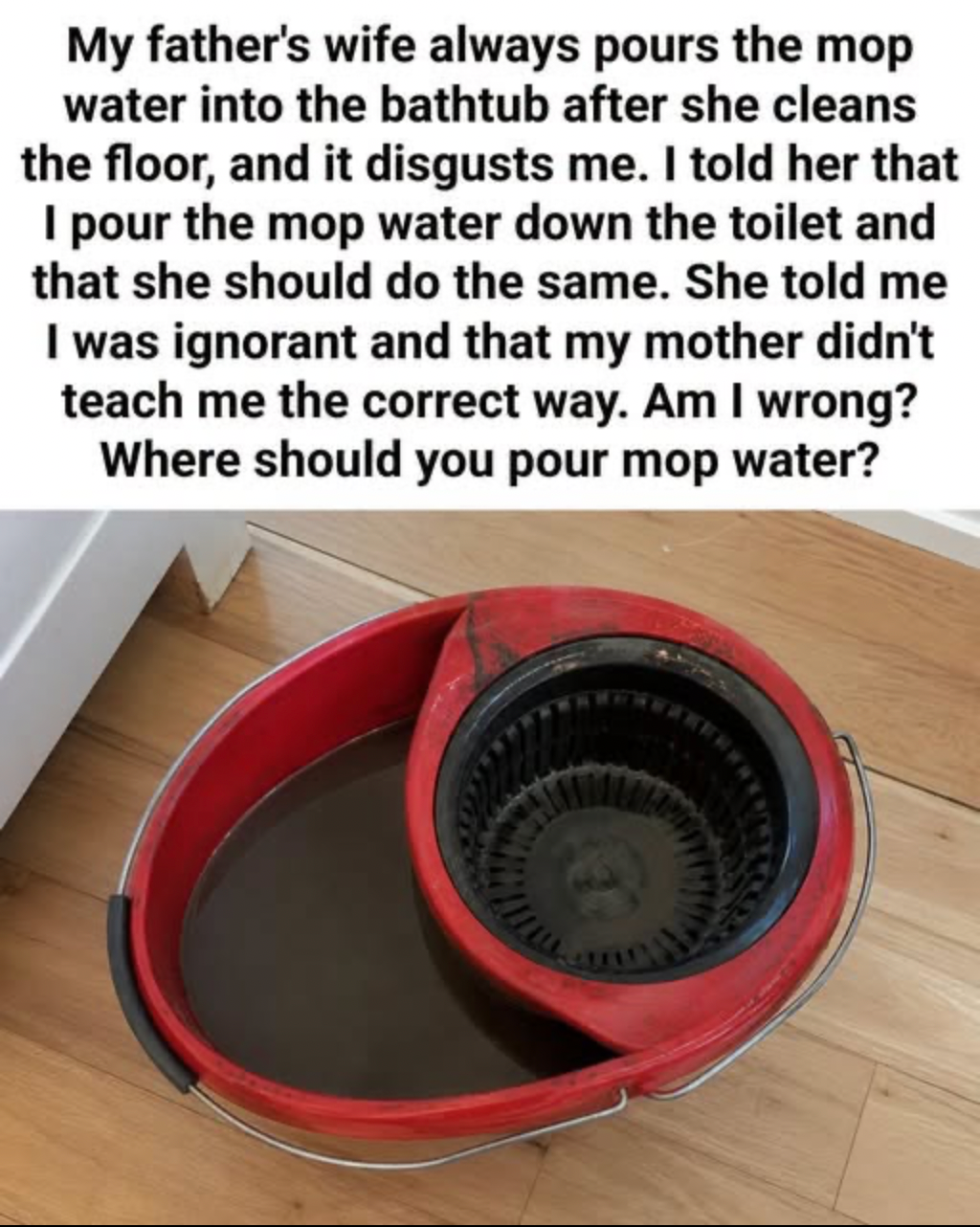
After spending time mopping your floors, one final question often remains: Where should the dirty mop water go?While it may seem like a small detail, disposing of used cleaning water properly is an important part of maintaining a clean home, protecting your plumbing system, and preventing the spread of bacteria and unpleasant odors.
Many people automatically pour dirty mop water into the bathtub because it is convenient and easy to reach. Others prefer using the toilet, believing it is designed to handle waste and contaminated water. Some even use utility sinks, outdoor drains, or laundry tubs when available. Each option has its own advantages and disadvantages, and the best choice often depends on your home’s plumbing, the type of cleaning solution used, and the amount of debris collected during mopping.
Understanding the differences between these disposal methods can help you make better decisions that improve household hygiene while reducing the risk of clogged drains, lingering odors, and unnecessary plumbing problems.
What Is Actually in Dirty Mop Water?
Although the water in your mop bucket may simply look gray or cloudy, it often contains a surprising mixture of contaminants collected from your floors.
Depending on where you have been cleaning, dirty mop water may contain:
- Dust and dirt.
- Sand and grit.
- Pet hair.
- Human hair.
- Food crumbs.
- Grease and cooking residue.
- Mud.
- Pollen.
- Household bacteria.
- Viruses and other microorganisms.
- Cleaning chemicals.
- Soap residue.
- Small pieces of paper.
- Lint.
- Dead insects.
- Mold spores.
Because of this combination of debris and microorganisms, dirty mop water should always be disposed of carefully.
Is It Safe to Pour Dirty Mop Water into the Toilet?
In most homes, yes.
The toilet is generally considered one of the safest and most hygienic places to dispose of dirty mop water.
This is because toilets are specifically designed to carry waste through larger drain pipes into the sewer or septic system.
Unlike sinks or bathtubs, toilets routinely handle solid waste and large amounts of contaminated water.
Advantages of Using the Toilet
Disposing of mop water in the toilet offers several benefits.
1. Better Designed for Waste
Toilets are connected to larger drain lines that can handle suspended debris more effectively than many sink or bathtub drains.
2. Improved Hygiene
Since toilets already contain human waste, adding dirty mop water does not significantly change their intended function.
3. Lower Risk of Drain Odors
Bathtub drains may retain small amounts of dirt or grease, potentially leading to unpleasant smells.
The toilet flush usually carries everything away quickly.
4. Easier Cleanup
If a small amount of dirt remains after pouring, flushing usually removes it.
How to Pour Mop Water into the Toilet Safely
To avoid splashing:
- Lift the toilet seat.
- Pour slowly.
- Aim toward the water inside the bowl.
- Flush immediately afterward.
Avoid pouring extremely large buckets all at once, as doing so may temporarily raise the water level.
Can You Pour Dirty Mop Water into the Bathtub?
Yes, but with some precautions.
Many people choose the bathtub because it is easier to reach than the toilet.
However, bathtubs are designed primarily for bathing—not for disposing of dirty cleaning water.
Advantages of Using the Bathtub
The bathtub offers several conveniences.
Easy Access
Large buckets are often easier to empty into a bathtub than into a toilet.
Larger Opening
The wide basin reduces the chance of accidental spills.
Simple Rinsing
You can rinse both the bucket and the mop immediately afterward.
Disadvantages of Using the Bathtub
Despite its convenience, there are several drawbacks.
Hair Clogs
Bathtub drains often already contain:
- Hair.
- Soap residue.
- Shampoo buildup.
Adding dirt and debris from mop water may increase the likelihood of clogs.
Dirt Accumulation
Sand and grit can settle in the drain trap.
Over time, this may reduce drainage efficiency.
Additional Cleaning Required
After emptying dirty mop water into the tub, you should rinse and clean the bathtub thoroughly before using it for bathing.
Should You Use the Bathroom Sink?
Generally, no.
Bathroom sinks have relatively narrow drain openings.
They are more prone to clogging from:
- Hair.
- Dirt.
- Lint.
- Cleaning residue.
The sink should be reserved for handwashing and personal hygiene whenever possible.
What About the Kitchen Sink?
This is usually not recommended.
Kitchen sinks are used for preparing food and washing dishes.
Dirty mop water may contain bacteria collected from:
- Shoes.
- Pets.
- Outdoor dirt.
- Bathroom floors.
Introducing these contaminants into the food preparation area is generally considered poor hygiene.
Additionally, grease collected from kitchen floors may contribute to drain buildup over time.
The Best Option: A Utility Sink
If your home has a utility sink or laundry sink, it is often the ideal place for disposing of dirty mop water.
Utility sinks are specifically designed for cleaning tasks.
They commonly handle:
- Paint residue.
- Mud.
- Gardening soil.
- Cleaning chemicals.
- Dirty water.
Their larger drains make them better suited for this purpose.
What If You Have a Septic System?
If your home uses a septic system, disposing of normal household mop water is generally acceptable.
However, avoid using excessive amounts of:
- Bleach.
- Strong disinfectants.
- Harsh chemical cleaners.
Large quantities of these products may disrupt the beneficial bacteria that help your septic system function properly.
Always follow the manufacturer’s recommendations for cleaning products.
Should You Filter the Water First?
If the mop water contains noticeable debris such as:
- Leaves.
- Food scraps.
- Hair.
- Large dirt particles.
It may be helpful to remove these solids before disposal.
You can use:
- A fine mesh strainer.
- Disposable paper towels.
- A small debris filter.
Dispose of the collected debris in the household trash rather than washing it into the plumbing.
Why Dirty Mop Water Smells Bad
After cleaning, the bucket often develops an unpleasant odor.
This happens because the water contains:
- Organic matter.
- Bacteria.
- Cleaning chemicals.
- Moisture.
Warm temperatures allow bacteria to multiply quickly.
For this reason, dirty mop water should be emptied promptly after cleaning.
Never leave it sitting overnight.
How to Clean the Mop Bucket
After emptying the water:
- Rinse the bucket thoroughly.
- Wash it with warm water and dish soap.
- Disinfect if necessary.
- Allow it to dry completely before storing.
Keeping the bucket dry helps prevent mold and mildew.
Don’t Forget the Mop
The mop itself also requires cleaning.
After each use:
- Rinse thoroughly.
- Remove excess water.
- Allow it to air dry.
- Wash removable mop heads according to the manufacturer’s instructions.
A damp mop stored without drying can quickly develop unpleasant odors and bacteria.
Common Mistakes to Avoid
Leaving Dirty Water in the Bucket
Standing water encourages bacterial growth and unpleasant smells.
Pouring Water Too Quickly
Rapid pouring may cause splashing or overflow.
Washing Large Debris Down the Drain
Food scraps, hair, and other solids can contribute to plumbing clogs.
Forgetting to Clean the Bucket
The bucket itself can become contaminated over time.
Mixing Cleaning Chemicals
Never combine products such as bleach and ammonia, as they can produce dangerous toxic gases.
Always use cleaning products exactly as directed on their labels.
Frequently Asked Questions
Is the toilet the safest option?
In many homes, yes.
It is specifically designed to handle contaminated water and waste.
Can dirty mop water damage plumbing?
Normal household mop water usually will not damage plumbing.
However, large amounts of grease, sand, hair, or solid debris can contribute to blockages over time.
Should I flush after pouring the water into the toilet?
Yes.
Flushing immediately helps carry away contaminants and rinse the bowl.
Is it okay to use the bathtub?
Yes, provided you rinse and clean the bathtub afterward and avoid washing large amounts of debris into the drain.
Which option is best overall?
If available, a utility sink is generally the best choice.
Otherwise, the toilet is often the most hygienic and plumbing-friendly option for disposing of dirty mop water.

Welcome to my kitchen!
I’m a passionate home cook and recipe creator who loves turning simple ingredients into delicious, comforting meals that everyone can enjoy. Through this website, I share carefully prepared recipes, practical cooking tips, and easy-to-understand food education to help you feel more confident in the kitchen.
My goal is to make cooking simple, enjoyable, and accessible. Whether you are looking for a quick family dinner, a delicious dessert, healthy meal ideas, or traditional recipes with a modern touch, you’ll find inspiration here.
More Than Just Recipes
I believe that cooking is also a way to learn. That’s why this website is not only about recipes. I also create educational articles about ingredients, cooking techniques, kitchen tips, food preparation, and the stories behind different dishes.
Each article is designed to give you useful knowledge that you can apply in your own kitchen. From understanding how ingredients work together to learning better cooking methods, my aim is to help you become a more confident and creative cook.
My Philosophy
Good food doesn’t always require complicated ingredients or professional equipment. With a little knowledge, patience, and creativity, simple ingredients can become something truly special.
I believe in sharing recipes that are practical, clearly explained, and enjoyable to make. I also love exploring new flavors while appreciating traditional cooking and the recipes passed down through generations.
Thank you for visiting my kitchen and being part of this food-loving community. I hope my recipes and articles inspire you to cook, learn, experiment, and most importantly, enjoy every bite!
Happy cooking!