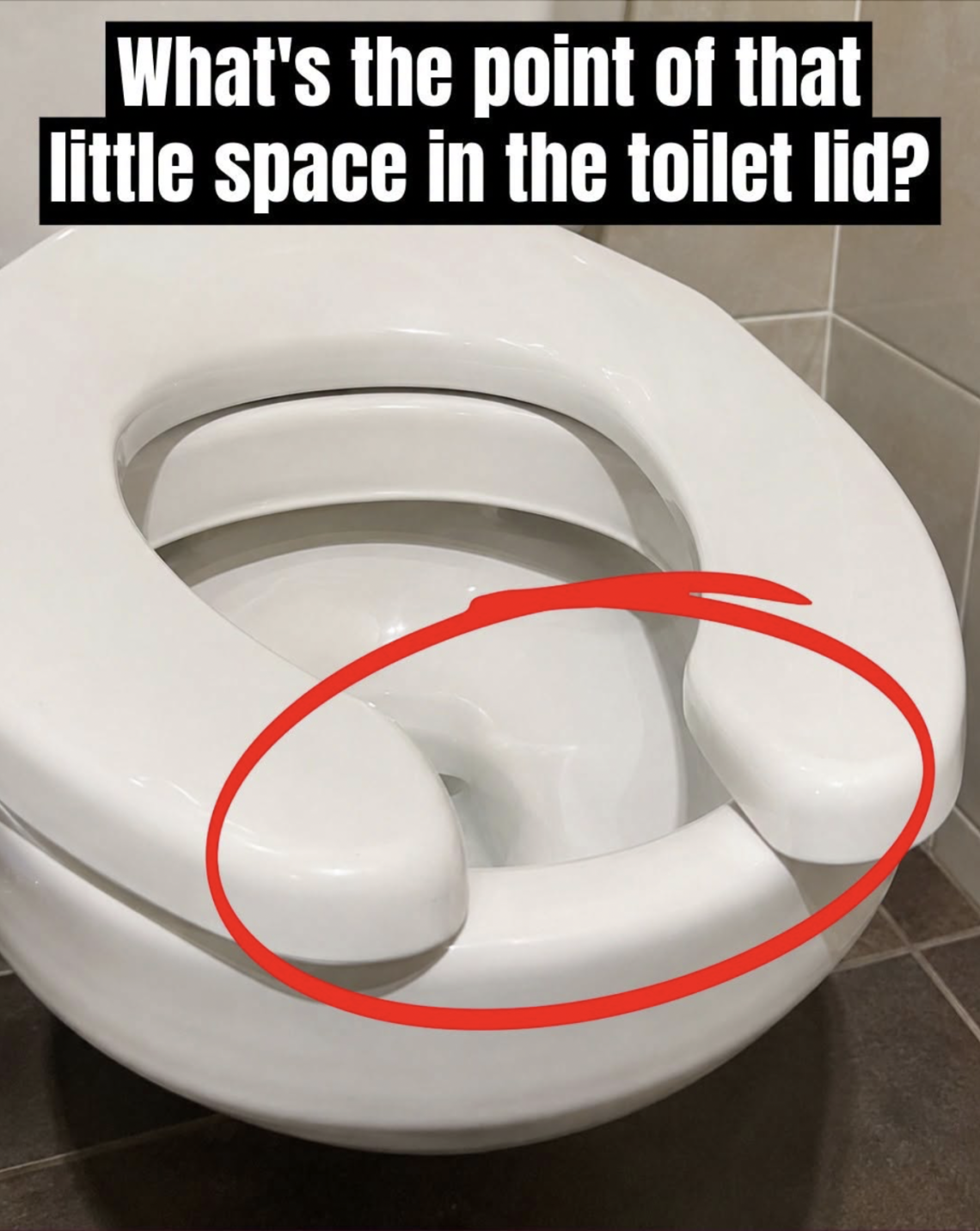
Public restrooms are designed very differently from the bathrooms we have in our homes. Every feature—from the automatic faucets and touch-free soap dispensers to the floor materials and toilet design—is carefully chosen with hygiene, durability, maintenance, and user safety in mind. One feature that many people notice but rarely question is the distinctive U-shaped toilet seat commonly found in public restrooms.
Unlike the fully enclosed O-shaped toilet seats used in most homes, public restroom toilets often feature an open-front or U-shaped design with a noticeable gap at the front. At first glance, this unusual shape may appear incomplete or even uncomfortable, leading many people to wonder whether part of the seat is missing or if it is simply a stylistic choice.
In reality, the open-front toilet seat is a deliberate design that has been used for decades. It serves several practical purposes related to hygiene, sanitation, maintenance, user comfort, accessibility, and cost-effectiveness. Its design has been recommended or required in many commercial buildings because it helps improve cleanliness while making restroom maintenance easier.
Understanding why this design became so widespread offers an interesting look at how even everyday objects are carefully engineered to solve practical problems.
What Is a U-Shaped Toilet Seat?
A U-shaped toilet seat, often called an open-front toilet seat, resembles a standard toilet seat except for the opening at the front.
Instead of forming a complete circle or oval, the front section is intentionally left open, creating a U-like shape.
This design is commonly found in:
- Restaurants
- Shopping centers
- Airports
- Schools
- Hospitals
- Hotels
- Office buildings
- Government buildings
- Sports stadiums
- Train stations
Although many people associate them exclusively with public restrooms, some commercial facilities also install them in employee-only areas.
Why Was the Open-Front Design Created?
The open-front toilet seat was developed primarily to improve hygiene in shared public facilities.
Unlike home bathrooms, public restrooms may be used by hundreds or even thousands of people every day.
This high volume of users creates unique sanitation challenges that require thoughtful design solutions.
The open-front seat helps reduce unnecessary contact between the toilet seat and the user’s body while making cleaning easier and faster.
1. Improved Personal Hygiene
One of the biggest reasons for the U-shaped design is hygiene.
The front opening reduces the likelihood that sensitive areas of the body will come into contact with the front edge of the toilet seat.
This is particularly helpful because the front portion of the seat is often one of the areas most likely to become contaminated during heavy public use.
By eliminating that section entirely, the design helps reduce direct contact.
2. Easier Cleaning
Cleaning staff benefit greatly from the open-front design.
The gap allows custodians to:
- Reach more surfaces.
- Wipe the bowl more efficiently.
- Disinfect the seat more thoroughly.
- Clean underneath the seat more easily.
Because there are fewer enclosed areas, dirt and bacteria have fewer places to accumulate.
This improves overall sanitation.
3. Reduced Urine Contamination
One practical advantage is that the opening helps reduce urine from collecting on the front portion of the seat.
In busy public restrooms, accidental splashing can occur.
The missing front section minimizes the surface where liquid might accumulate.
As a result:
- The seat stays cleaner.
- Fewer users encounter wet surfaces.
- Cleaning becomes more efficient.
4. Better Comfort for Many Users
The open-front design provides additional space at the front of the seat.
For many users, this reduces pressure against the legs and body while seated.
It may also provide greater comfort for people of different body shapes and sizes.
5. Improved Accessibility
Although not originally designed solely for accessibility, the open-front seat can provide additional clearance that may assist some users with mobility challenges or certain medical conditions.
Its simple shape also works well alongside accessible restroom designs.
6. Faster Maintenance
Commercial restrooms require frequent cleaning throughout the day.
The open-front design helps maintenance personnel work more efficiently.
Over time, even small improvements in cleaning speed can significantly reduce labor requirements across large facilities.
Is the U-Shaped Seat Required by Law?
Many people believe all public restrooms are legally required to have U-shaped toilet seats.
In reality, building regulations vary by country, state, and local jurisdiction.
However, many plumbing codes and health standards recommend or specify open-front toilet seats for commercial installations because of their hygienic advantages.
As a result, they have become the standard choice for many public buildings.
Why Don’t Most Homes Use Them?
Home bathrooms have very different requirements.
Families typically:
- Know who uses the bathroom.
- Clean the toilet regularly.
- Have far fewer daily users.
For these reasons, comfort and appearance often take priority over commercial sanitation concerns.
Most homeowners therefore choose traditional closed-front seats.
Materials Used in Public Toilet Seats
Commercial toilet seats are designed to withstand years of heavy use.
Common materials include:
Molded Plastic
Lightweight, durable, and easy to clean.
Polypropylene
Highly resistant to stains, moisture, and cleaning chemicals.
Solid Plastic Composite
Offers excellent durability for high-traffic environments.
Heavy-Duty Wood Composite
Some commercial facilities still use coated wooden seats for added strength.
Other Hygienic Features of Public Toilets
The U-shaped seat is only one part of a larger hygiene strategy.
Modern public restrooms often include:
- Touch-free flush systems.
- Automatic faucets.
- Motion-activated soap dispensers.
- Automatic paper towel dispensers.
- Hands-free hand dryers.
- Antimicrobial surfaces.
- Easy-to-clean floor materials.
- Wall-mounted toilets.
Together, these features help reduce the spread of germs while simplifying maintenance.
Common Myths About U-Shaped Toilet Seats
Myth 1: The Seat Is Broken
Many first-time users assume the front portion has broken off.
In reality, it was intentionally manufactured that way.
Myth 2: It’s Only to Save Material
Although slightly less material is used during manufacturing, cost savings are not the primary reason for the design.
Hygiene and maintenance are far more important factors.
Myth 3: They’re Less Comfortable
Comfort varies from person to person.
Many users notice little or no difference during normal use.
Myth 4: They Prevent Disease Entirely
No toilet seat can completely eliminate the risk of contamination.
Proper handwashing remains the most important hygiene practice after using any restroom.
How Public Restrooms Are Designed for Hygiene
Architects and engineers consider many factors when designing public restrooms.
These include:
- Ease of cleaning.
- Water resistance.
- Durability.
- Ventilation.
- Accessibility.
- Infection control.
- User safety.
- Maintenance costs.
Even small design changes can significantly improve cleanliness over many years of daily use.
Tips for Using Public Restrooms Safely
Good hygiene practices include:
- Wash your hands thoroughly with soap and water.
- Avoid touching unnecessary surfaces.
- Use paper towels if preferred when opening the exit door.
- Keep personal belongings off the floor.
- Report damaged fixtures when possible.
These habits help reduce the spread of germs regardless of the toilet seat design.
Frequently Asked Questions
Why is the front of the seat missing?
The opening improves hygiene, cleaning, and user comfort.
Can I install one at home?
Yes.
Open-front toilet seats are available for residential use if preferred.
Are they stronger than regular seats?
Many commercial models are built with heavier-duty materials because they are designed for constant public use.
Do all countries use them?
No.
Some countries use them widely, while others more commonly install traditional closed-front seats in public facilities.

Welcome to my kitchen!
I’m a passionate home cook and recipe creator who loves turning simple ingredients into delicious, comforting meals that everyone can enjoy. Through this website, I share carefully prepared recipes, practical cooking tips, and easy-to-understand food education to help you feel more confident in the kitchen.
My goal is to make cooking simple, enjoyable, and accessible. Whether you are looking for a quick family dinner, a delicious dessert, healthy meal ideas, or traditional recipes with a modern touch, you’ll find inspiration here.
More Than Just Recipes
I believe that cooking is also a way to learn. That’s why this website is not only about recipes. I also create educational articles about ingredients, cooking techniques, kitchen tips, food preparation, and the stories behind different dishes.
Each article is designed to give you useful knowledge that you can apply in your own kitchen. From understanding how ingredients work together to learning better cooking methods, my aim is to help you become a more confident and creative cook.
My Philosophy
Good food doesn’t always require complicated ingredients or professional equipment. With a little knowledge, patience, and creativity, simple ingredients can become something truly special.
I believe in sharing recipes that are practical, clearly explained, and enjoyable to make. I also love exploring new flavors while appreciating traditional cooking and the recipes passed down through generations.
Thank you for visiting my kitchen and being part of this food-loving community. I hope my recipes and articles inspire you to cook, learn, experiment, and most importantly, enjoy every bite!
Happy cooking!