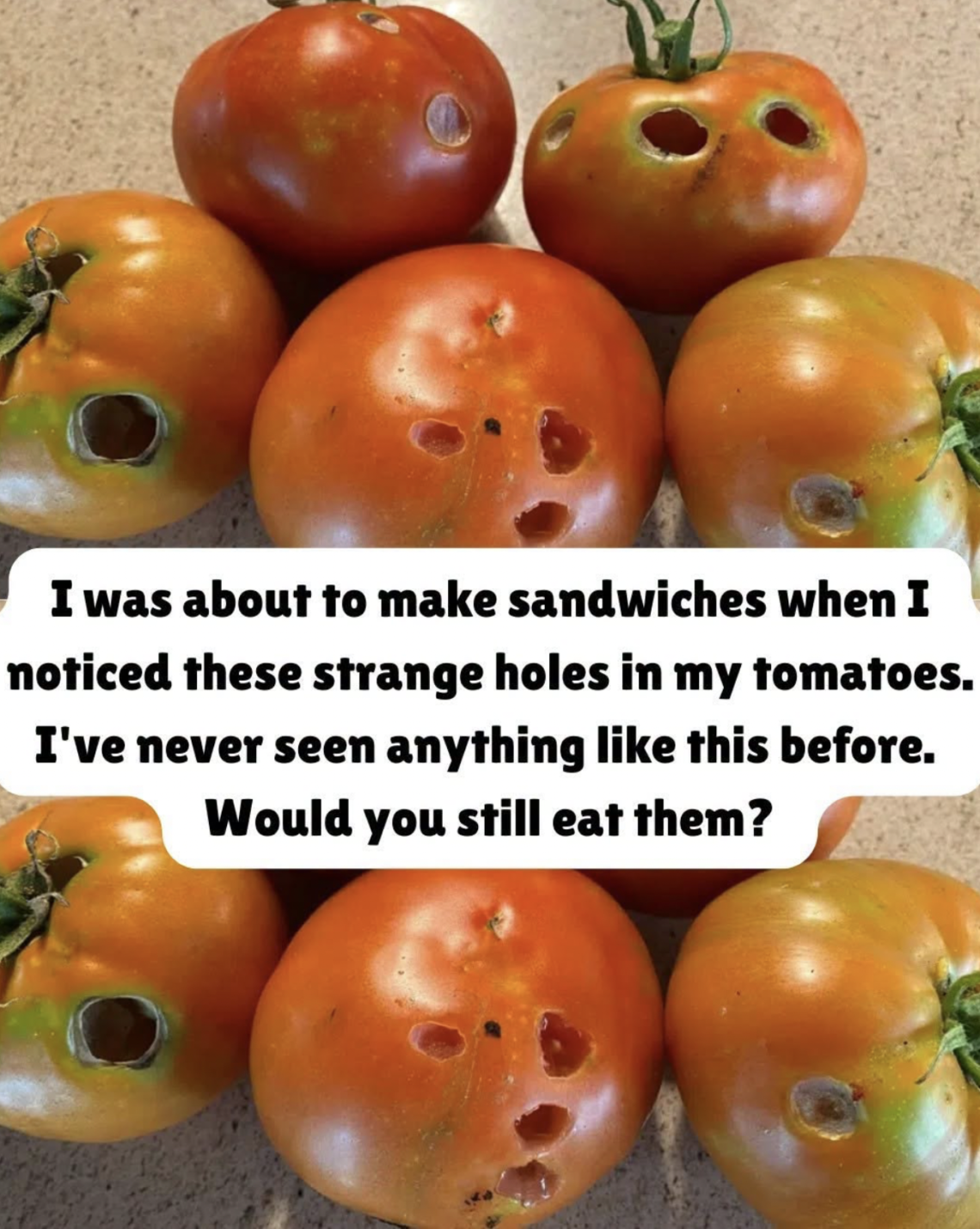
Growing tomatoes is one of the most rewarding experiences for home gardeners. Whether they are cultivated in a backyard garden, raised beds, containers on a patio, or even a sunny balcony, tomato plants reward patience and care with colorful, flavorful fruit that can be enjoyed fresh or used in countless recipes. However, discovering holes in ripening tomatoes can be frustrating and confusing, especially after weeks or months of careful watering, pruning, fertilizing, and protecting the plants.
At first glance, a small hole in a tomato may appear harmless, but it often serves as an important clue that something has affected the fruit. The cause may be insects, birds, slugs, caterpillars, environmental conditions, or even physical damage. Identifying the source of the problem is the first step toward protecting the rest of the crop and preventing future damage.
Fortunately, holes in tomatoes do not always mean that the entire harvest is lost. By understanding the most common causes, recognizing the warning signs, and applying appropriate gardening practices, many problems can be minimized while maintaining healthy tomato plants throughout the growing season.
Why Do Tomatoes Develop Holes?
Tomatoes normally develop smooth, intact skin as they mature.
When holes appear, they are usually caused by one of the following:
- Insect feeding.
- Caterpillar damage.
- Bird pecking.
- Slug or snail feeding.
- Rodent activity.
- Cracking that later enlarges.
- Mechanical injury.
- Secondary decay following damage.
Determining the exact cause requires examining both the fruit and the surrounding plant.
1. Tomato Hornworms
One of the most common causes of large holes in tomatoes is the tomato hornworm.
These large green caterpillars feed on:
- Leaves.
- Stems.
- Flowers.
- Green tomatoes.
- Ripening fruit.
Because they are green, they blend remarkably well with tomato foliage and can be difficult to spot.
Signs of hornworm activity include:
- Large irregular holes in tomatoes.
- Missing leaves.
- Bare stems.
- Dark droppings on leaves.
- Chewed plant growth.
Regular inspection of plants helps detect hornworms before significant damage occurs.
2. Fruitworms and Caterpillars
Several species of caterpillars feed directly inside tomatoes.
After chewing through the skin, they tunnel into the fruit where they continue feeding.
Symptoms include:
- Small entry holes.
- Internal feeding tunnels.
- Soft areas around openings.
- Frass (insect droppings) near the hole.
Damaged fruit usually deteriorates quickly once insects enter.
3. Birds
Birds are attracted to ripe, juicy tomatoes, especially during hot weather when natural water sources are limited.
Unlike insects, birds often leave:
- Round peck marks.
- Shallow holes.
- Missing sections of fruit.
- Multiple pecks on several tomatoes.
Sometimes birds peck only once before moving on, leaving fruit vulnerable to decay.
4. Slugs and Snails
Slugs and snails commonly feed during the evening or after rainfall.
Their feeding produces:
- Irregular shallow holes.
- Rough edges.
- Surface scraping.
- Slime trails nearby.
Lower fruit that touches the soil is particularly vulnerable.
5. Rodents
Mice, rats, squirrels, and other small animals occasionally feed on tomatoes.
Their damage often appears as:
- Large bite marks.
- Deep cavities.
- Missing chunks of fruit.
- Tooth marks.
Unlike insects, rodents usually remove larger portions at once.
6. Cracking and Secondary Damage
Not every hole begins as pest damage.
Rapid changes in soil moisture can cause tomatoes to crack.
These cracks may later:
- Split wider.
- Become infected.
- Attract insects.
- Develop rot.
Maintaining consistent watering helps reduce cracking.
How to Identify the Cause
Carefully inspect:
The fruit:
- Hole size.
- Hole shape.
- Presence of insects.
- Rot.
- Tooth marks.
- Peck marks.
The plant:
- Missing leaves.
- Caterpillars.
- Droppings.
- Slime trails.
- Damaged stems.
The surrounding area:
- Bird activity.
- Animal tracks.
- Weed growth.
- Moisture conditions.
Observation often provides valuable clues.
Can Damaged Tomatoes Be Saved?
Sometimes.
If damage is small and the interior remains healthy:
- Remove the damaged portion generously.
- Inspect carefully for insects.
- Discard fruit showing mold or extensive decay.
If insects have tunneled deeply into the tomato or signs of spoilage are present, it is generally best to discard the fruit.
Preventing Future Damage
Several preventive measures can help protect tomato plants.
Inspect Plants Frequently
Check plants every few days during the growing season.
Early detection often prevents widespread damage.
Remove Caterpillars by Hand
Large caterpillars can often be removed manually while wearing gardening gloves.
Regular inspection is especially important during warm months.
Support Healthy Plants
Healthy plants are generally more resilient.
Provide:
- Consistent watering.
- Adequate sunlight.
- Proper spacing.
- Balanced fertilization.
- Good air circulation.
Use Protective Netting
Garden netting may help reduce damage from birds while allowing sunlight and airflow.
Ensure that wildlife cannot become trapped in the netting.
Harvest Promptly
Fully ripe tomatoes attract many animals.
Picking tomatoes as soon as they reach maturity often reduces losses.
Many varieties continue ripening indoors after harvest.
Keep the Garden Clean
Remove:
- Fallen fruit.
- Dead leaves.
- Plant debris.
- Weeds.
A clean garden is generally less attractive to many pests.
Mulch Carefully
Mulch helps:
- Maintain soil moisture.
- Reduce soil splash.
- Limit weed growth.
- Moderate soil temperature.
However, monitor mulch for slugs if they are common in your area.
Encouraging Natural Predators
Many beneficial wildlife species help control garden pests naturally.
These include:
- Lady beetles.
- Lacewings.
- Predatory wasps.
- Birds that eat insects.
- Ground beetles.
Maintaining a diverse garden can encourage these helpful organisms.
Common Tomato Problems Besides Holes
Tomatoes may also experience:
- Blossom-end rot.
- Sunscald.
- Early blight.
- Late blight.
- Leaf spot diseases.
- Cracking.
- Splitting.
- Nutrient deficiencies.
Accurate diagnosis is important because each problem has different causes and management strategies.
Frequently Asked Questions
Are tomatoes with small holes safe to eat?
If the damage is minor and the fruit remains firm and free from mold or insect contamination, trimming away the affected area may be possible. However, fruit showing signs of decay, mold, or internal insect damage should generally be discarded.
What pest causes the largest holes?
Tomato hornworms and some rodents often create the largest visible damage.
Why do birds peck tomatoes without eating them completely?
Birds may be seeking moisture rather than food, especially during hot weather.
Can cracked tomatoes attract insects?
Yes.
Open cracks provide easy access for insects and microorganisms.
Does regular watering reduce tomato damage?
Consistent watering helps prevent cracking, which may reduce opportunities for pests and disease.
Building a Healthy Tomato Garden
Successful tomato gardening involves more than simply reacting to problems after they appear. Regular observation, good sanitation, balanced watering, healthy soil, and prompt harvesting all contribute to stronger plants and higher-quality fruit. Many common tomato problems become much easier to manage when detected early, making routine inspections one of the most valuable habits any gardener can develop.

Welcome to my kitchen!
I’m a passionate home cook and recipe creator who loves turning simple ingredients into delicious, comforting meals that everyone can enjoy. Through this website, I share carefully prepared recipes, practical cooking tips, and easy-to-understand food education to help you feel more confident in the kitchen.
My goal is to make cooking simple, enjoyable, and accessible. Whether you are looking for a quick family dinner, a delicious dessert, healthy meal ideas, or traditional recipes with a modern touch, you’ll find inspiration here.
More Than Just Recipes
I believe that cooking is also a way to learn. That’s why this website is not only about recipes. I also create educational articles about ingredients, cooking techniques, kitchen tips, food preparation, and the stories behind different dishes.
Each article is designed to give you useful knowledge that you can apply in your own kitchen. From understanding how ingredients work together to learning better cooking methods, my aim is to help you become a more confident and creative cook.
My Philosophy
Good food doesn’t always require complicated ingredients or professional equipment. With a little knowledge, patience, and creativity, simple ingredients can become something truly special.
I believe in sharing recipes that are practical, clearly explained, and enjoyable to make. I also love exploring new flavors while appreciating traditional cooking and the recipes passed down through generations.
Thank you for visiting my kitchen and being part of this food-loving community. I hope my recipes and articles inspire you to cook, learn, experiment, and most importantly, enjoy every bite!
Happy cooking!