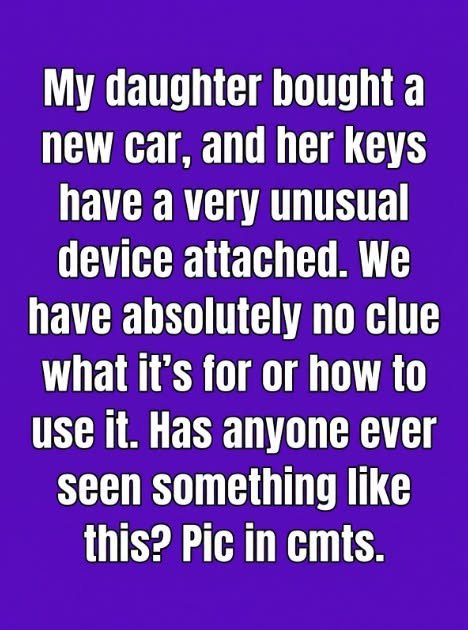
What Is the Strange Device Attached to My New Car Keys?
You finally get the keys to your new car, walk outside, and notice something unusual.
Attached to the keyring is a small plastic tag, a thick fob, or perhaps a tiny electronic-looking device.
Your first thought might be:
“Wait… is that a tracking device?”
If so, you’re definitely not alone.
Many new-car owners are surprised to discover an unfamiliar tag attached to their keys after taking delivery of a vehicle. Fortunately, there is often a very ordinary explanation. In many cases, the device is connected to the dealership’s key-control, inventory, or vehicle-management system.
Once you understand how dealerships manage hundreds of vehicles and sets of keys, the mysterious little gadget starts to make considerably more sense.
Why Do Dealerships Put Devices on Car Keys?
Car dealerships have a surprisingly complicated key-management challenge.
A dealership may have dozens or even hundreds of vehicles on its property. Each vehicle can have multiple keys, and those keys may move between sales representatives, service technicians, detailers, managers, and customers throughout the day.
Keeping track of everything manually can quickly become difficult.
That’s why many dealerships use dedicated key-management systems.
Depending on the system, a tag attached to a keyring may be used to:
- identify a vehicle or key set
- organize keys within the dealership
- help employees locate misplaced keys
- control access to vehicle keys
- record when keys are accessed
- connect a key set with information in an inventory system
Not every dealership uses the same technology, however. The appearance of the tag alone isn’t enough to determine exactly what it does.
What Does the Device Actually Do?
The purpose of the device depends on the particular tag and the system used by the dealership.
It May Simply Identify the Vehicle
Some tags are primarily identification tools.
The dealership may associate a particular tag or identification number with a specific vehicle in its inventory system. This makes it easier for employees to determine which keys belong to which vehicle.
For a dealership handling a large inventory, something as simple as an identification tag can save considerable time.
It May Help Employees Locate Keys
Some electronic key-management systems are designed to help employees determine where a set of keys is located.
Imagine that a salesperson needs the keys to a particular SUV but can’t remember whether they were left at the sales desk, service department, detailing area, or another designated location.
A key-control system can make locating those keys much easier.
The exact technology varies, but the basic purpose is organization and access management.
It May Help Control Access
More sophisticated dealership systems can also help manage who has access to vehicle keys.
This can be useful when many employees regularly handle the same inventory.
Depending on the system, the dealership may be able to keep records associated with key access, helping staff maintain an organized process for moving vehicles around the property.
Is the Device a GPS Tracker?
This is usually the question that concerns people the most.
Not necessarily.
The presence of an electronic-looking tag on your keyring does not automatically mean that your vehicle is being continuously tracked.
Different technologies can be used for identification, inventory management, and short-range communication. For example, some systems may use RFID or Bluetooth-based technology, while other tags may simply contain printed identification information.
A passive RFID tag, for example, is fundamentally different from a conventional GPS tracking device that has the capability to determine its location and transmit location information over a network.
So, simply seeing a small electronic tag on your keys isn’t enough to conclude that someone can continuously monitor the location of your car.
The only reliable way to determine the device’s capabilities is to identify the actual device or ask the dealership.
Why Was the Tag Still Attached When I Bought the Car?
This is probably the simplest part of the mystery.
When a vehicle is sold, the dealership may remove inventory-related tags from the keys. However, procedures can vary between dealerships and between different key-management systems.
Sometimes a tag may simply remain attached to the keyring when the vehicle is handed over to the customer.
It could be:
- no longer needed by the dealership
- intentionally left in place
- overlooked during vehicle delivery
- associated with a system that the dealership continues to use for some purpose
There is no universal rule requiring every dealership to handle these tags in exactly the same way.
That’s why it’s best not to assume what the device is based solely on the fact that it was still attached to your keys.
What If the Device Looks Very High-Tech?
Some key tags can look surprisingly sophisticated.
You might find something that resembles:
- a small plastic fob
- a thick rectangular tag
- a barcode label
- a QR-code tag
- a small electronic module
- a numbered identification device
- a tag secured with a zip tie
- a device attached directly to the keyring
However, appearance can be misleading.
Two devices that look almost identical may use completely different technologies and have completely different purposes.
A plastic tag with a barcode could simply identify the vehicle, while another device with a similar appearance could be part of an electronic key-management system.
In other words, don’t judge the device’s capabilities by its appearance.
How Can You Find Out Exactly What It Is?
Fortunately, you don’t have to guess.
The simplest and most reliable option is to contact the dealership that sold you the vehicle.
Take a clear photograph of the device and contact the sales or service department. You can simply ask:
“What is this tag attached to my keyring, and does it need to stay there?”
The dealership should be able to identify the device and explain why it was attached to the keys.
Look for identifying information such as:
- manufacturer name
- model number
- serial number
- barcode
- QR code
- printed identification number
- logo
- FCC or other regulatory markings, where applicable
A photograph can also make identification easier if you’re speaking with someone who isn’t physically looking at the keys.
Should You Remove the Device?
It’s tempting to simply cut it off when you get home.
However, it’s generally better to ask the dealership first.
The device may be completely harmless and no longer needed, but the dealership may also expect the tag to remain attached or be returned.
Removing an unfamiliar device without knowing its purpose could also make it harder for dealership staff to identify the key set if you need to return for service or paperwork.
Once you’ve confirmed what the device is and whether it is still needed, you’ll know whether it can safely be removed.
What About Privacy?
It’s completely reasonable to have privacy questions when you discover an unfamiliar electronic device.
The important thing is to distinguish between key-management technology and vehicle tracking technology.
A dealership key-management system might help employees identify keys, manage access, or determine where keys are within a dealership or other controlled area.
That does not automatically mean the device can determine where your vehicle is after you drive away.
The capabilities depend on the specific technology involved.
If privacy is your concern, ask the dealership directly:
“Does this device transmit any location information?”
You can also ask:
“Does it remain active after the vehicle is sold?”
And:
“What information, if any, does the device collect or communicate?”
Those questions will give you a much clearer answer than trying to determine the device’s capabilities from its size or appearance.
Don’t Assume Every Mystery Tag Is the Same
One important thing to remember is that there isn’t one universal “car-key tracker” used by every dealership.
Different dealerships can use different vendors, technologies, and procedures.
One dealership may use simple barcode labels. Another may use RFID tags. Another may have an electronic key cabinet or more sophisticated inventory-management equipment.
Some tags may contain no electronics at all.
Therefore, if you see a strange device on your new car keys, the safest conclusion is simply:
You don’t know what it is yet.
And that’s perfectly fine.
The dealership can usually tell you exactly what system it belongs to.
Frequently Asked Questions
Is the device on my new car keys a tracking device?
Not necessarily. It may be a dealership key-management or inventory tag. Some systems can use technologies such as RFID or Bluetooth, but the exact capabilities depend on the specific device.
Why would a dealership need a key-management system?
Dealerships may have large numbers of vehicles and keys being handled by sales, service, detailing, management, and other employees. Key-management systems can help organize keys, identify vehicles, manage access, and sometimes locate keys within the dealership.
Can an RFID tag track my car everywhere?
A passive RFID tag does not operate like a conventional GPS tracker with its own continuous location-reporting capability. However, because devices differ, you should confirm the exact technology with the dealership rather than assuming what an unfamiliar tag can or cannot do.
Should I remove the tag?
It’s better to ask the dealership first. They can tell you whether the tag is still needed, whether it should remain attached, or whether it can be removed.
How can I identify the device?
Look for a manufacturer name, model number, barcode, QR code, serial number, logo, or other identifying information. Taking a clear photograph can also help the dealership identify it.
Does every dealership use the same type of key tag?
No. Dealerships can use different key-management systems and different procedures for handling tags after a vehicle is sold.
Could the device simply be a label?
Yes. Not every unusual-looking key tag is an electronic device. Some are simply identification tags containing a barcode, QR code, number, or other inventory information.
The Bottom Line
That mysterious little gadget attached to your new car keys may look suspicious at first, especially if you weren’t expecting to see it.
But in many situations, there’s a much more practical explanation.
The tag may be part of the dealership’s key-control, inventory-management, or vehicle-identification system. Dealerships handle large numbers of vehicles and keys every day, so systems that help employees organize and control access to those keys can be extremely useful.
Most importantly, don’t assume that an electronic-looking tag is automatically a GPS tracker.
Different devices use different technologies and have different capabilities.
If you’re curious—or concerned about privacy—the best thing you can do is take a photo of the device and ask the dealership:
“What is this thing, and what does it do?”
That’s a simple question, but it can quickly solve the mystery.
And if you’ve ever picked up your new car keys and wondered about a strange tag attached to them, you’re certainly not the only one.
Sometimes the most mysterious-looking gadget has the most ordinary explanation.

Welcome to my kitchen!
I’m a passionate home cook and recipe creator who loves turning simple ingredients into delicious, comforting meals that everyone can enjoy. Through this website, I share carefully prepared recipes, practical cooking tips, and easy-to-understand food education to help you feel more confident in the kitchen.
My goal is to make cooking simple, enjoyable, and accessible. Whether you are looking for a quick family dinner, a delicious dessert, healthy meal ideas, or traditional recipes with a modern touch, you’ll find inspiration here.
More Than Just Recipes
I believe that cooking is also a way to learn. That’s why this website is not only about recipes. I also create educational articles about ingredients, cooking techniques, kitchen tips, food preparation, and the stories behind different dishes.
Each article is designed to give you useful knowledge that you can apply in your own kitchen. From understanding how ingredients work together to learning better cooking methods, my aim is to help you become a more confident and creative cook.
My Philosophy
Good food doesn’t always require complicated ingredients or professional equipment. With a little knowledge, patience, and creativity, simple ingredients can become something truly special.
I believe in sharing recipes that are practical, clearly explained, and enjoyable to make. I also love exploring new flavors while appreciating traditional cooking and the recipes passed down through generations.
Thank you for visiting my kitchen and being part of this food-loving community. I hope my recipes and articles inspire you to cook, learn, experiment, and most importantly, enjoy every bite!
Happy cooking!