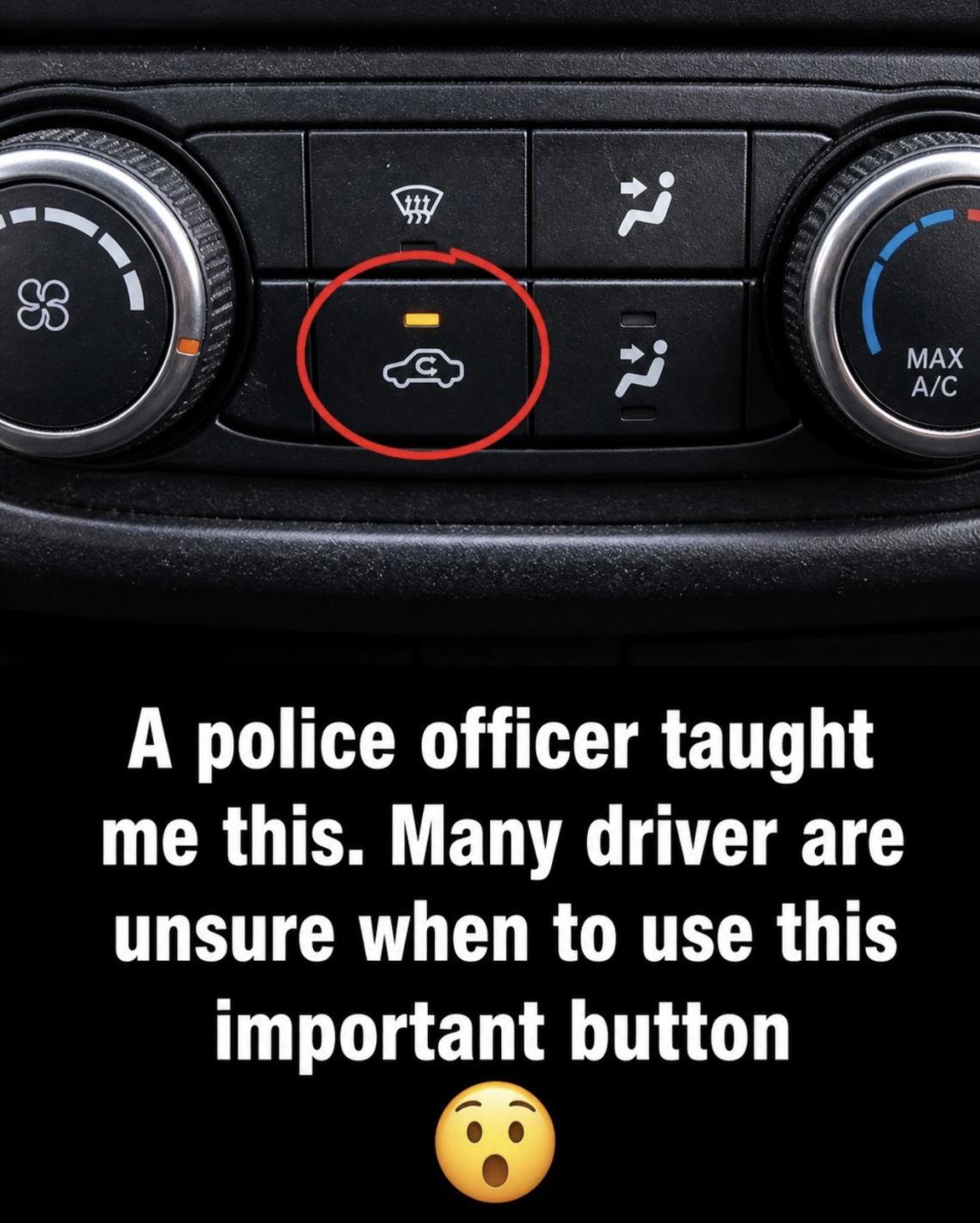
Most drivers use their car’s climate controls every day without thinking much about how they actually work. You adjust the temperature, switch on the air conditioning, maybe increase the fan speed, and continue driving without paying attention to the smaller buttons scattered across the dashboard. Yet one of those tiny buttons plays a surprisingly important role in comfort, air quality, fuel efficiency, and even windshield visibility.
It is the air recirculation button — the symbol that usually shows:
- A small car
- A curved circular arrow moving inside it
Many people recognize the icon but are not entirely sure what it actually does. Some drivers leave it on permanently. Others never touch it at all. A few mistakenly believe it only affects air conditioning strength. In reality, the air recirculation function changes how air moves through your vehicle’s ventilation system, and using it correctly can make a noticeable difference in driving comfort.
Understanding this button requires a basic look at how automotive climate systems work and why manufacturers include multiple airflow modes in modern vehicles.
What Is the Air Recirculation Button?
The air recirculation button controls where your car’s ventilation system pulls air from.
When the button is:
- OFF → the car pulls fresh air from outside
- ON → the car mostly reuses air already inside the cabin
In simple terms, the system either:
- Continuously brings in outside air
or - Circulates existing interior air repeatedly
This may sound like a small difference, but it changes several important things inside the vehicle.
How Car Ventilation Systems Normally Work
Modern vehicles contain a ventilation system that manages:
- Airflow
- Temperature
- Humidity
- Cabin comfort
The system includes:
- Fans
- Air ducts
- Filters
- Heating elements
- Air conditioning components
Under normal fresh-air mode, outside air enters through vents near the windshield area, passes through filters and climate controls, then flows into the cabin.
What Happens When Recirculation Is Activated?
When you press the recirculation button, the system closes or partially closes the outside air intake.
Instead of constantly pulling new air from outdoors, the system cycles the interior cabin air repeatedly through the vents.
This creates several effects:
- Faster cooling
- Reduced outside odors
- Reduced exposure to pollution
- Improved AC efficiency in hot weather
Why Cars Include This Feature
The feature exists because outside conditions are not always ideal.
There are situations where outside air may be:
- Extremely hot
- Extremely cold
- Dusty
- Smoky
- Polluted
- Full of unpleasant odors
Recirculation mode helps isolate the cabin from those external conditions temporarily.
Why Recirculation Helps Air Conditioning Work Faster
One of the biggest benefits appears during hot weather.
Imagine your car interior on a summer day:
- Seats are hot
- Air inside may exceed outdoor temperature
- Dashboard surfaces radiate heat
When the AC first starts, the cabin air is extremely warm.
The Cooling Principle
Air conditioning systems cool air by removing heat from it.
If the system constantly pulls hot outdoor air inside, it must repeatedly cool brand-new warm air.
But with recirculation:
- The already cooled cabin air cycles repeatedly
- The AC works on progressively cooler air each cycle
This allows the cabin temperature to drop faster.
Why It Improves Efficiency
Because the air conditioner works less aggressively once cabin air cools, recirculation may:
- Reduce strain on the AC system
- Improve comfort faster
- Potentially reduce fuel usage slightly
Especially in very hot climates, this can make a noticeable difference.
Why It Helps in Traffic
Recirculation mode is especially useful in:
- Heavy traffic
- Tunnels
- Urban congestion
These environments often contain:
- Exhaust fumes
- Smoke
- Dust
- Strong odors
Switching to recirculation helps reduce how much polluted outside air enters the cabin.
Protection From Bad Smells
Anyone who has driven behind:
- A smoking truck
- Agricultural vehicles
- Garbage trucks
- Industrial zones
has likely experienced unpleasant odors entering the cabin.
Recirculation can temporarily block much of that outside smell.
Why Recirculation Is Not Always Ideal
Despite its benefits, leaving recirculation on continuously is not always recommended.
Over time, constantly reusing cabin air can increase:
- Humidity
- Stale air buildup
- Window fogging
This becomes especially important in cooler weather.
The Humidity Problem
Humans naturally release moisture into cabin air through:
- Breathing
- Wet clothing
- Shoes
- Snow or rain brought inside
Without enough fresh air exchange, humidity rises.
High cabin humidity can lead to:
- Foggy windows
- Reduced visibility
Why Windows Fog Up
Fogging occurs when warm moist air contacts cooler glass surfaces.
The moisture condenses into tiny droplets.
Recirculation mode can accelerate this under certain conditions because humid cabin air keeps circulating repeatedly.
When You Should Turn Recirculation OFF
Fresh-air mode is usually better when:
- Defrosting windows
- Driving in cool weather
- Reducing cabin humidity
- Needing fresh airflow during long drives
Fresh outside air helps remove moisture buildup.
Why Defrost Systems Often Disable Recirculation Automatically
Many modern cars automatically switch off recirculation during windshield defrost mode.
Manufacturers do this because:
- Fresh dry air clears windows faster
- Humidity reduction improves visibility
Safety takes priority over cooling efficiency.
Recirculation in Winter
Many people assume recirculation is only for summer AC use.
However, it can also help during cold weather in some situations.
Because cabin air is already warmer than freezing outside air, recirculating it can sometimes help the heater warm the cabin more quickly initially.
Still, prolonged use may increase fogging risk.
Automatic Climate Control Systems
Modern vehicles increasingly manage recirculation automatically.
Sensors may monitor:
- Cabin temperature
- Humidity
- Air quality
- Sunlight intensity
The car may activate or deactivate recirculation without driver input.
Air Quality Sensors
Some higher-end vehicles contain air quality monitoring systems.
These sensors can detect:
- Pollution levels
- Exhaust gases
- Contaminants
The system may automatically switch to recirculation temporarily when outside air quality worsens.
Fuel Efficiency and Engine Load
Air conditioning places additional load on the engine.
Because recirculation allows the AC system to cool already-conditioned air, it may:
- Reduce compressor workload slightly
- Improve cooling efficiency
However, fuel savings are usually modest rather than dramatic.
Common Driver Mistakes
Many drivers misunderstand how to use recirculation effectively.
Mistake 1: Leaving It On Permanently
This may cause:
- Stale cabin air
- Increased humidity
- Foggy windows
Mistake 2: Never Using It
Avoiding recirculation entirely can reduce:
- Cooling efficiency
- Cabin comfort in traffic
Mistake 3: Using It During Window Fogging
Fresh-air mode is usually better for clearing fogged glass.
Best Situations for Using Recirculation
Recirculation works best:
- On very hot days
- In stop-and-go traffic
- Near pollution or smoke
- In tunnels
- During strong outdoor odors
Best Situations for Fresh-Air Mode
Fresh air works best:
- During long drives
- In cool weather
- For windshield defrosting
- To reduce humidity buildup
Why Cabin Air Filters Matter
Whether using fresh air or recirculation, most modern cars use cabin air filters.
These filters help trap:
- Dust
- Pollen
- Debris
- Some pollutants
A dirty cabin filter can reduce airflow and ventilation performance.
Health and Comfort Considerations
Fresh airflow matters for comfort during long drives.
Completely sealed cabin air over extended periods may feel:
- Stuffy
- Less fresh
- More humid
Occasional outside air exchange improves cabin comfort.
Why Drivers Rarely Learn About This Feature
Many people never receive detailed explanations about climate system functions.
Car owners often:
- Learn by habit
- Use buttons intuitively
- Ignore unfamiliar controls
As a result, the recirculation button remains widely misunderstood despite being extremely common.
The Symbol Itself
The recirculation icon usually shows:
- A car outline
- A looping arrow inside it
The circular arrow visually represents:
Air cycling within the cabin.
Once understood, the symbol becomes easy to recognize.
Why the Feature Feels So Subtle
Unlike dramatic mechanical features, recirculation changes airflow gradually.
The effects are often:
- Indirect
- Slow to notice
- Situational
This subtlety contributes to confusion about what the button actually does.
Psychological Comfort and Cabin Environment
Climate comfort strongly affects driving experience.
Temperature, airflow, humidity, and odors all influence:
- Fatigue
- Mood
- Concentration
Proper use of recirculation can improve overall comfort significantly.

Welcome to my kitchen!
I’m a passionate home cook and recipe creator who loves turning simple ingredients into delicious, comforting meals that everyone can enjoy. Through this website, I share carefully prepared recipes, practical cooking tips, and easy-to-understand food education to help you feel more confident in the kitchen.
My goal is to make cooking simple, enjoyable, and accessible. Whether you are looking for a quick family dinner, a delicious dessert, healthy meal ideas, or traditional recipes with a modern touch, you’ll find inspiration here.
More Than Just Recipes
I believe that cooking is also a way to learn. That’s why this website is not only about recipes. I also create educational articles about ingredients, cooking techniques, kitchen tips, food preparation, and the stories behind different dishes.
Each article is designed to give you useful knowledge that you can apply in your own kitchen. From understanding how ingredients work together to learning better cooking methods, my aim is to help you become a more confident and creative cook.
My Philosophy
Good food doesn’t always require complicated ingredients or professional equipment. With a little knowledge, patience, and creativity, simple ingredients can become something truly special.
I believe in sharing recipes that are practical, clearly explained, and enjoyable to make. I also love exploring new flavors while appreciating traditional cooking and the recipes passed down through generations.
Thank you for visiting my kitchen and being part of this food-loving community. I hope my recipes and articles inspire you to cook, learn, experiment, and most importantly, enjoy every bite!
Happy cooking!