At first, it might seem like a small issue.
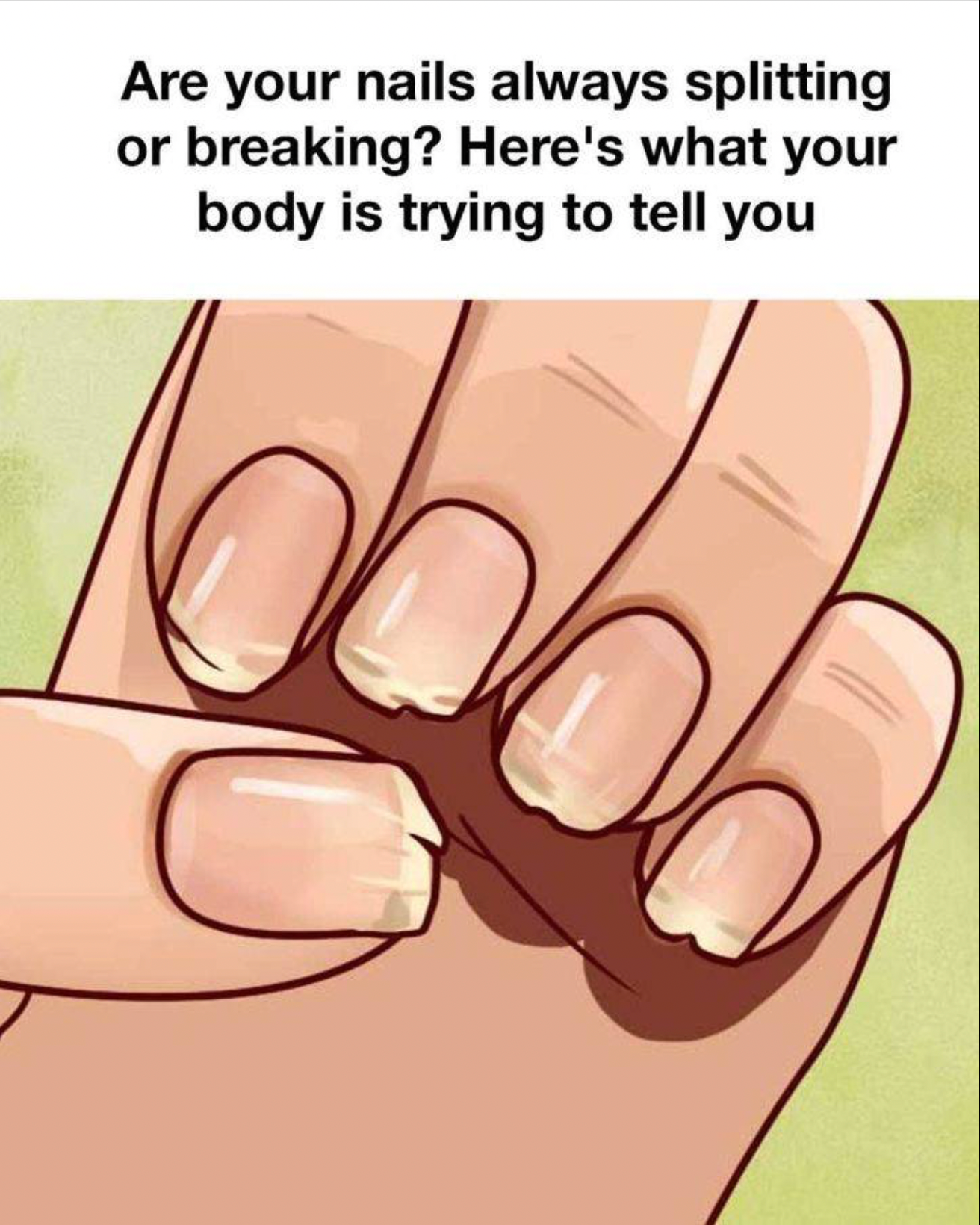
A nail that chips easily. One that splits down the middle. Another that refuses to grow no matter how careful you are.
Most people ignore it.
But what if your nails are trying to send you a message?
Weak or brittle nails are more than just a cosmetic concern. In many cases, they are subtle signals from your body—early warnings that something deeper may be happening inside.
Doctors and health experts often look at nails as a window into overall health. Changes in texture, strength, color, and growth patterns can reflect nutritional deficiencies, hormonal imbalances, or even underlying medical conditions.
Let’s explore this topic in full detail.
1. What Are Brittle Nails?
Brittle nails are nails that:
- Break easily
- Split into layers
- Peel at the edges
- Feel dry or rough
- Lack flexibility
In medical terms, this condition is sometimes referred to as Onychoschizia.
It can affect both fingernails and toenails, although fingernails are usually more exposed and therefore more commonly affected.
2. The Structure of Healthy Nails
To understand why nails become weak, it helps to understand how they are built.
Nails are made primarily of keratin, a strong protein also found in hair and skin.
Healthy nails are:
- Smooth
- Slightly flexible
- Even in color
- Strong but not rigid
When something disrupts the production or structure of keratin, nails can become fragile.
3. One of the Most Common Causes: Nutritional Deficiencies
Your nails rely heavily on nutrients. When your body lacks essential vitamins and minerals, your nails are often one of the first places where signs appear.
Iron Deficiency
Low iron levels can lead to:
- Thin nails
- Spoon-shaped nails
- Increased breakage
This condition is often linked to Iron Deficiency Anemia.
Biotin Deficiency
Biotin (Vitamin B7) plays a major role in keratin production.
Low levels can cause:
- Weak, brittle nails
- Slow nail growth
Zinc Deficiency
Zinc helps with cell growth and repair.
A deficiency may result in:
- White spots on nails
- Fragility
- Slow healing
Protein Deficiency
Since nails are made of protein, a lack of dietary protein can weaken their structure.
4. Dehydration and Environmental Damage
Sometimes the issue isn’t internal—it’s external.
Frequent exposure to:
- Water
- Cleaning chemicals
- Soaps and detergents
can strip nails of natural oils.
This leads to dryness, which makes nails more likely to crack and split.
People who:
- Wash hands frequently
- Work in cleaning or food services
- Use harsh products
are especially at risk.
5. Hormonal Imbalances and Thyroid Issues
Your hormones affect nearly every system in your body—including your nails.
Conditions like Hypothyroidism can cause:
- Brittle nails
- Slow growth
- Dry texture
Hormonal changes (including stress-related changes) can also weaken nail structure over time.
6. Aging and Natural Changes
As you age, your body produces less moisture and natural oils.
This can lead to:
- Drier nails
- Increased brittleness
While this is a natural process, proper care can still improve nail strength.
7. Medical Conditions That May Affect Nails
In some cases, brittle nails may be linked to underlying health conditions.
Skin Conditions
- Eczema
- Psoriasis
These can affect the nail bed and cause changes in nail texture.
Circulatory Issues
Poor blood circulation can reduce the delivery of nutrients to the nails.
Chronic Illness
Long-term illnesses can weaken the body overall, including nails.
8. Lifestyle Factors That Damage Nails
Many everyday habits can contribute to brittle nails:
- Frequent use of nail polish remover (especially with acetone)
- Biting or picking nails
- Poor diet
- Lack of hydration
Over time, these habits weaken the nail structure.
9. Warning Signs You Shouldn’t Ignore
While mild brittleness is common, some signs may require attention:
- Nails that change color suddenly
- Deep ridges or lines
- Severe splitting or pain
- Nails separating from the nail bed
If you notice these, it’s best to consult a healthcare professional.
10. How to Strengthen Weak Nails
Improve Your Diet
Focus on foods rich in:
- Protein
- Iron
- Biotin
- Zinc
Examples include:
- Eggs
- Nuts
- Leafy greens
- Fish
Stay Hydrated
Drinking enough water helps maintain nail moisture from within.
Protect Your Nails
- Wear gloves when cleaning
- Avoid excessive water exposure
- Use gentle products
Moisturize Regularly
Applying oils or creams can help restore moisture.
Limit Harsh Chemicals
Reduce use of strong nail products and removers.
11. Can Supplements Help?
In some cases, doctors may recommend supplements, especially for deficiencies.
However, it’s important not to self-medicate excessively. Too much of certain vitamins can also cause problems.
12. The Connection Between Nails and Overall Health
Your nails reflect your internal health more than you might think.
They can reveal:
- Nutritional status
- Hormonal balance
- Hydration levels
- General well-being
That’s why doctors sometimes examine nails during routine checkups.
Welcome to my kitchen!
I’m a passionate home cook and recipe creator who loves turning simple ingredients into delicious, comforting meals that everyone can enjoy. Through this website, I share carefully prepared recipes, practical cooking tips, and easy-to-understand food education to help you feel more confident in the kitchen.
My goal is to make cooking simple, enjoyable, and accessible. Whether you are looking for a quick family dinner, a delicious dessert, healthy meal ideas, or traditional recipes with a modern touch, you’ll find inspiration here.
More Than Just Recipes
I believe that cooking is also a way to learn. That’s why this website is not only about recipes. I also create educational articles about ingredients, cooking techniques, kitchen tips, food preparation, and the stories behind different dishes.
Each article is designed to give you useful knowledge that you can apply in your own kitchen. From understanding how ingredients work together to learning better cooking methods, my aim is to help you become a more confident and creative cook.
My Philosophy
Good food doesn’t always require complicated ingredients or professional equipment. With a little knowledge, patience, and creativity, simple ingredients can become something truly special.
I believe in sharing recipes that are practical, clearly explained, and enjoyable to make. I also love exploring new flavors while appreciating traditional cooking and the recipes passed down through generations.
Thank you for visiting my kitchen and being part of this food-loving community. I hope my recipes and articles inspire you to cook, learn, experiment, and most importantly, enjoy every bite!
Happy cooking!