It always starts the same way.
You decide to clean the attic—maybe out of necessity, maybe out of curiosity. You push open the old wooden hatch, and a wave of stale air greets you. Dust dances in the light. Boxes sit untouched for years, maybe decades.
You begin sorting through forgotten belongings—old clothes, broken furniture, family keepsakes—and then suddenly, you find something that doesn’t fit.
A heavy object. Cold. Metallic.
You pull it closer.
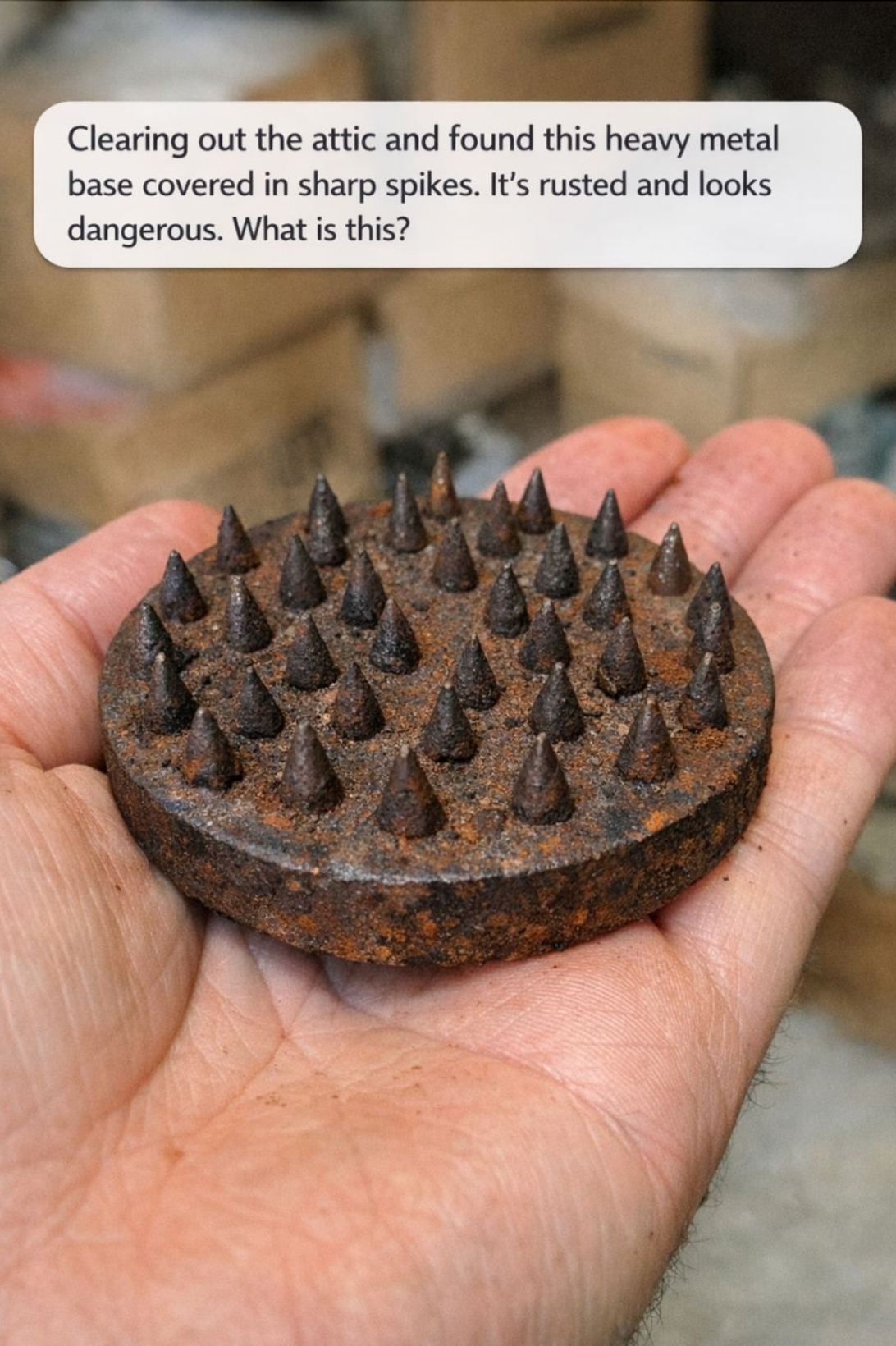
It’s covered in sharp spikes. Rust has eaten into its surface. It looks dangerous… almost threatening. Something about it feels out of place, like it belongs to another time—or another purpose entirely.
Your mind immediately starts asking questions:
- Is it a tool?
- A weapon?
- A machine part?
- Something valuable… or something to throw away?
Before you decide, it’s worth understanding that objects like this often have stories far more interesting than they first appear.
The Most Likely Answer: An Antique Boot Scraper
In many cases, a heavy metal base with spikes or ridges is actually a boot scraper—a simple but essential tool from the past.
Today, we take clean streets and paved walkways for granted. But in earlier times, especially in rural areas, life was very different.
People walked through:
- Mud
- Wet soil
- Animal waste
- Dusty roads
By the time they reached home, their boots were often completely covered.
Bringing that inside would ruin floors, carpets, and living spaces.
So people installed boot scrapers near entrances.
Before entering, they would drag their boots across the metal edges to remove dirt.
Why the Spikes Look So Aggressive
One of the most striking features of your discovery is the sharp, spiked design.
At first glance, it can look almost like a medieval object or something designed to harm. But in reality, the design is purely functional.
The spikes or ridges serve several purposes:
1. Maximum Friction
Mud can stick very strongly to boot soles. Flat surfaces wouldn’t remove it effectively. The sharp edges break apart hardened dirt.
2. Deep Cleaning
The uneven, pointed design allows the scraper to reach into grooves and patterns in the sole of the shoe.
3. Efficiency
With just a few strong movements, a person could remove most of the dirt before entering the house.
What seems dangerous today was simply smart engineering for daily life.
The Weight: Built to Last Generations
When you lift the object, one thing becomes obvious—it’s heavy.
That’s because these items were usually made from cast iron or thick forged metal.
This weight had important advantages:
- It kept the scraper firmly in place during use
- It prevented tipping or sliding
- It ensured durability even under heavy pressure
These tools were not designed to last a few years—they were made to last decades, sometimes even being passed down through generations.
That’s why you’re finding it now.
Why It Ended Up in Your Attic
Originally, a boot scraper would never be placed in an attic. It belonged outside—near doors, steps, or entryways.
So how did it end up hidden away?
There are several realistic explanations:
Old Renovations
At some point, someone may have modernized the house and removed outdoor fixtures, storing them instead of throwing them away.
Changing Lifestyles
As roads improved and people stopped wearing heavy outdoor boots daily, tools like this became less necessary.
“Keep It Just in Case” Mentality
Older generations often kept useful objects, even if they were no longer in use.
Forgotten Storage
Once placed in the attic, it may have simply been forgotten over time.
Could It Be Something Else?
While a boot scraper is the most common explanation, it’s important to consider other possibilities.
Objects with spikes or ridges can sometimes be:
Agricultural Equipment Parts
Old farming tools sometimes had spiked sections used for breaking soil or cleaning equipment.
Industrial Machine Components
Some machinery included rough metal surfaces for scraping or gripping.
Decorative Iron Pieces
Certain vintage designs included spikes for aesthetic or symbolic purposes.
Animal-Related Tools
In rare cases, similar objects were used in stables or farms for cleaning hooves or equipment.
However, the key clues are:
- Low height
- Flat base
- Wear patterns consistent with scraping
These strongly point back to a boot scraper.
The Rust: A Sign of Time, Not Danger Alone
The rust you see is not surprising.
Iron objects exposed to moisture and air over time naturally oxidize.
Rust tells you:
- The object is old
- It has likely been stored in less-than-ideal conditions
- It hasn’t been used in a long time
However, rust also means:
- The surface may be weakened
- Sharp edges may be more fragile
- It can cause injury if handled carelessly
So caution is important.
Safety First: Handling the Object
Even though it’s not a weapon, it can still be dangerous.
If you plan to move or clean it:
- Wear thick gloves
- Avoid touching sharp edges directly
- Keep it away from children
- Clean it carefully in a controlled space
Rusty metal can cause cuts, and cuts from rusted objects can lead to infections if not treated properly.
Restoration: Bringing It Back to Life
One of the most exciting aspects of finding an object like this is the possibility of restoration.
With some effort, you can transform it into something beautiful and useful again.
Basic Restoration Steps
- Remove loose rust (with a brush or sandpaper)
- Clean the surface thoroughly
- Apply a rust converter or protective coating
- Optionally repaint or seal it
Modern Uses for an Old Object
Even if you don’t need a boot scraper, this object can still be valuable.
Decorative Piece
It can become a unique vintage element in:
- Gardens
- Entryways
- Rustic home designs
Functional Tool
It can still serve its original purpose if restored.
Conversation Starter
Guests will almost always ask:
“What is that?”
And now—you’ll have the story.

Welcome to my kitchen!
I’m a passionate home cook and recipe creator who loves turning simple ingredients into delicious, comforting meals that everyone can enjoy. Through this website, I share carefully prepared recipes, practical cooking tips, and easy-to-understand food education to help you feel more confident in the kitchen.
My goal is to make cooking simple, enjoyable, and accessible. Whether you are looking for a quick family dinner, a delicious dessert, healthy meal ideas, or traditional recipes with a modern touch, you’ll find inspiration here.
More Than Just Recipes
I believe that cooking is also a way to learn. That’s why this website is not only about recipes. I also create educational articles about ingredients, cooking techniques, kitchen tips, food preparation, and the stories behind different dishes.
Each article is designed to give you useful knowledge that you can apply in your own kitchen. From understanding how ingredients work together to learning better cooking methods, my aim is to help you become a more confident and creative cook.
My Philosophy
Good food doesn’t always require complicated ingredients or professional equipment. With a little knowledge, patience, and creativity, simple ingredients can become something truly special.
I believe in sharing recipes that are practical, clearly explained, and enjoyable to make. I also love exploring new flavors while appreciating traditional cooking and the recipes passed down through generations.
Thank you for visiting my kitchen and being part of this food-loving community. I hope my recipes and articles inspire you to cook, learn, experiment, and most importantly, enjoy every bite!
Happy cooking!