Do you remember those quiet Sunday mornings when breakfast seemed to move at an entirely different pace?
The kitchen or dining room would gradually fill with the comforting aromas of freshly brewed tea or coffee, warm bread, butter, marmalade, and perhaps something sweet baking nearby. There was no need to rush. Breakfast wasn’t simply something to eat before beginning the day—it was an occasion.
A neatly arranged table made even the simplest meal feel important.
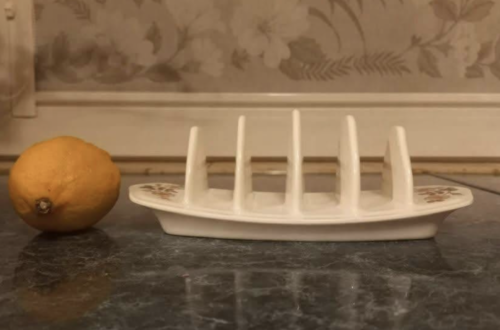
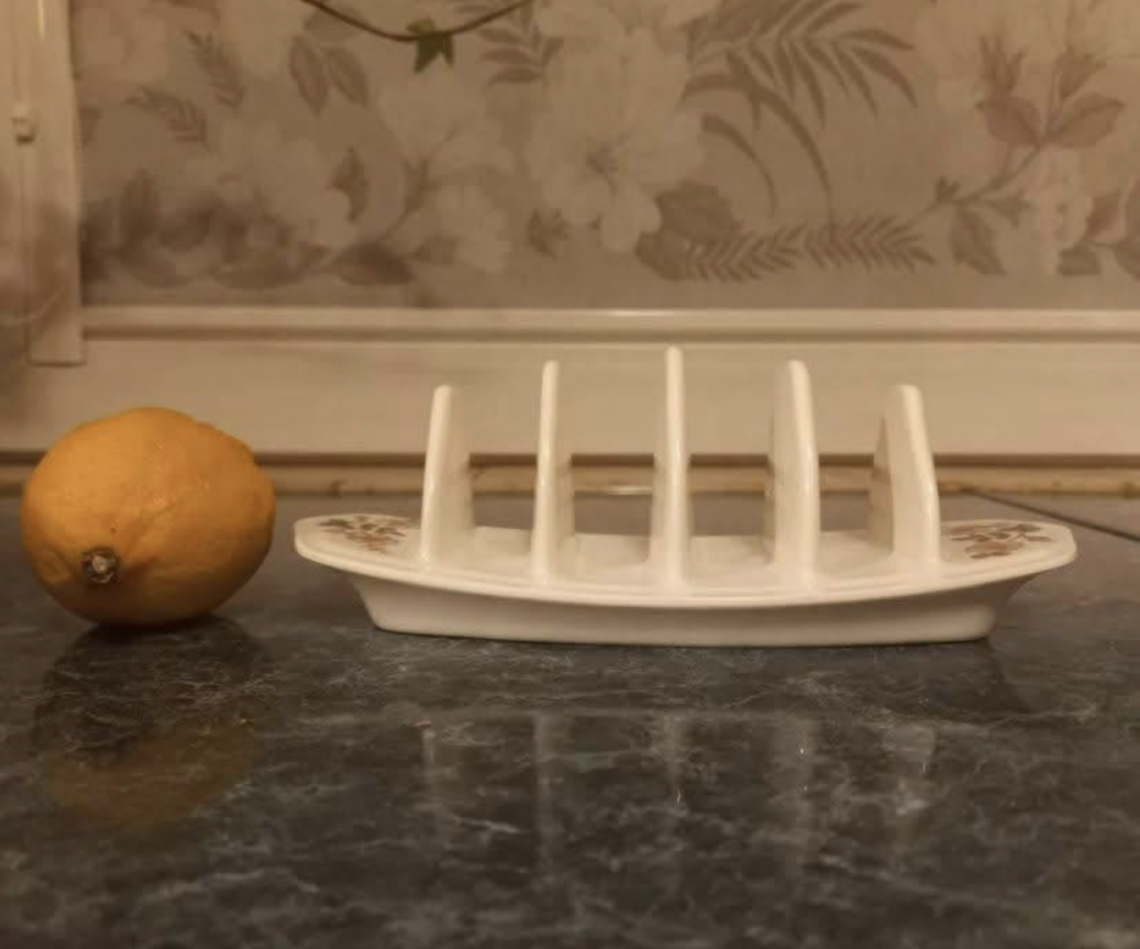
Toast arrived warm from the kitchen, sometimes cut into triangles, fingers, or neat rectangular pieces. Beside the butter dish and jam jar sat an intriguing little piece of tableware: a toast rack.
At first glance, a toast rack might seem like an unnecessary object. After all, couldn’t toast simply be placed on a plate?
But that small piece of tableware represented something much larger than practicality.
It reflected an era when presentation, ceremony, and everyday elegance were considered important parts of domestic life.
A warm slice of toast was carefully placed between the narrow openings of the rack, allowing the pieces to stand upright rather than lying flat on a plate. Steam could escape around the slices, helping preserve their crispness while keeping the table looking beautifully organized.
It was a small invention with a surprisingly rich history.
What Exactly Is a Toast Rack?
A traditional toast rack is a small serving accessory designed to hold slices of toast upright.
Most examples consist of several narrow compartments separated by metal bars or decorative supports.
The rack typically has a handle or raised ends that make it easy to carry from the kitchen to the dining table.
Although toast racks can be made from different materials, antique examples are particularly associated with:
- Silver
- Silver plate
- Sheffield plate
- Stainless steel
- Ceramic
- Porcelain
- Glass
Some were extremely simple.
Others were elaborate works of decorative design.
The most ornate examples could include curved handles, decorative feet, engraved surfaces, floral motifs, pierced metalwork, or intricate geometric patterns.
In an elegant Victorian or Edwardian dining room, the toast rack wasn’t merely a container for bread.
It was part of the table setting.
Why Was Toast Placed Upright?
There was a practical reason behind the design.
Freshly toasted bread contains moisture and heat.
If several hot slices are placed directly on top of one another or laid flat against a plate, steam can become trapped around them.
That can soften the crisp surface.
A toast rack allows air to circulate around each slice.
The toast is separated from the other pieces, and excess steam can escape.
The result is intended to preserve the texture of freshly prepared toast for a little longer.
In other words, what might look like an overly decorative piece of tableware actually solved a very ordinary household problem.
And that’s part of what makes these objects so fascinating.
The Victorian Love of the Breakfast Table
During the Victorian period, the dining table could be a carefully organized stage for everyday life.
Meals were influenced by social customs, household routines, class, fashion, and etiquette.
Breakfast itself could be considerably more elaborate than the quick morning meals many people are accustomed to today.
Depending on the household, a breakfast table might include:
- Toast
- Bread and rolls
- Butter
- Marmalade
- Preserves
- Eggs
- Porridge
- Fruit
- Tea
- Coffee
- Kippers or other fish
- Cooked meats
- Cereals
- Pastries
The precise menu varied enormously depending on the household and period.
But one thing remained important: presentation.
Individual serving pieces were often designed for particular foods.
There could be specialized dishes for butter, jam, eggs, cream, sugar, and other breakfast necessities.
A toast rack fit naturally into this world of specialized tableware.
Breakfast Accessories Were Designed With Purpose
One of the most interesting aspects of antique tableware is the sheer number of specialized objects that once appeared in ordinary homes.
Today, we tend to expect one plate or bowl to serve multiple purposes.
Earlier households could have an entirely different approach.
A breakfast table might contain objects specifically designed for individual tasks.
There were egg cups for boiled eggs.
Butter dishes protected and presented butter.
Sugar bowls provided a decorative place for sugar.
Marmalade jars held preserves.
Milk jugs accompanied tea and coffee.
Toast racks held slices of toast.
Some of these objects were highly practical.
Others were designed primarily to make the dining experience feel more polished.
Often, they did both.
The Beauty of Silver and Silver Plate
Some of the most visually striking antique toast racks were made from silver or silver-plated metal.
Silver offered several advantages.
It was attractive, durable, and could be shaped into elaborate decorative forms.
Craftsmen could create delicate pierced patterns, curved supports, ornate handles, and decorative feet.
Over time, silver can develop a characteristic darkened surface known as tarnish.
For collectors, that patina can be part of the charm.
A carefully polished antique silver toast rack can look remarkably elegant, but even an aged example can reveal the craftsmanship of the period in which it was produced.
Sheffield Plate and the Rise of Decorative Metalware
Another fascinating part of the story is Sheffield plate.
Developed in the eighteenth century, Sheffield plate involved bonding silver to a base metal, allowing manufacturers to create objects with the appearance of silver without requiring the same amount of solid silver.
This helped make attractive silver-looking tableware accessible to a broader market.
Toast racks produced in silver plate could therefore bring an element of formal dining to households that couldn’t necessarily afford extensive collections of solid silver.
The result was a fascinating combination of practicality, craftsmanship, and social aspiration.
Ceramic and Porcelain Toast Racks
Not every toast rack was made of metal.
Ceramic and porcelain examples can be particularly charming.
Some were decorated with floral patterns, delicate colors, gilded details, or molded designs.
These pieces fit naturally into households where porcelain breakfast services were fashionable.
A porcelain toast rack might look completely different from a polished silver example, but both served the same basic purpose.
That variety is one reason antique breakfast accessories remain so interesting to collectors.
A Small Object With a Big Personality
There is something charming about the fact that a toast rack was designed specifically for one very ordinary food.
Toast isn’t an exotic delicacy.
It’s one of the simplest foods imaginable.
Yet people once considered it worthy of its own serving accessory.
That tells us something about the culture of the time.
Everyday activities could be given a sense of ceremony.
A morning meal could become a small ritual.
And ordinary objects could be beautiful as well as useful.
The Forgotten Art of Setting the Breakfast Table
Imagine a traditional breakfast table.
A cloth is neatly arranged.
The teapot sits beside cups and saucers.
Butter rests in its dish.
Marmalade waits in a glass or ceramic container.
An egg sits inside a small cup.
And in the center, a toast rack holds several warm slices upright.
Nothing about the arrangement necessarily requires extravagance.
The charm comes from coordination.
Each object has a place.
Each object has a purpose.
Together, they create a sense of order.
That is something modern households can sometimes lose when meals become rushed and informal.
Why These Objects Feel So Nostalgic
Part of the appeal of antique breakfast accessories has nothing to do with their monetary value.
It’s about memory.
Even someone who never owned a Victorian dining set can recognize the emotional atmosphere these objects evoke.
They remind us of:
- Family breakfasts
- Quiet weekends
- Old-fashioned kitchens
- Handwritten recipes
- Tea served from a proper pot
- Warm bread and homemade preserves
- Conversations around the table
- The feeling that there was time to sit down and enjoy a meal
Antique objects often become powerful because they provide a physical connection to everyday routines from another era.
Toast Racks Today
Although toast racks are no longer standard equipment in most kitchens, they haven’t disappeared.
Antique examples can still be found in:
- Antique shops
- Estate sales
- Flea markets
- Auctions
- Secondhand stores
- Collections of vintage tableware
Modern manufacturers also occasionally produce toast racks for people who enjoy traditional table settings.
For some households, using one today is less about necessity and more about creating an experience.
A Sunday breakfast served with a toast rack can feel wonderfully deliberate.
How Collectors Examine Antique Toast Racks
If you come across an old toast rack, don’t immediately assume that every example is valuable simply because it looks antique.
Collectors often examine several details.
Maker’s Marks
Marks stamped into the metal can provide important information about the manufacturer, material, and sometimes the date or place of production.
Construction
Look closely at how the pieces are joined.
Older handmade or carefully manufactured objects can show details that distinguish them from modern reproductions.
Material
Silver, silver plate, stainless steel, ceramic, and porcelain have very different characteristics.
Correctly identifying the material is important when assessing an object.
Condition
Look for:
- Cracks
- Repairs
- Missing pieces
- Bent supports
- Excessive wear
- Damaged decorative details
- Tarnishing
- Replacements
Condition can significantly affect collector interest.
Don’t Clean an Antique Too Aggressively
One mistake people sometimes make with old metalware is immediately reaching for harsh cleaning products.
That isn’t always a good idea.
Aggressive polishing can remove surface details or alter the appearance of an antique.
If an object appears genuinely old or potentially valuable, it’s better to identify the material and markings first.
For valuable antiques, professional advice from a reputable antiques specialist or conservator can be worthwhile before undertaking major cleaning.
The Difference Between Old and Valuable
This distinction is important.
An object can be genuinely old without being especially valuable.
Likewise, a relatively modest-looking piece can sometimes attract collector interest because of its maker, rarity, provenance, unusual design, or historical significance.
Value depends on many factors.
A toast rack shouldn’t be judged solely by how ornate it looks.
Why Specialized Kitchen Objects Fascinate Us
There is a larger story hiding behind objects like toast racks.
Modern kitchens are designed around efficiency.
One appliance performs multiple functions.
One storage container replaces several specialized pieces.
Digital technology has reduced the need for many physical household objects.
Antique kitchens often tell a different story.
They reveal a world where there was an object for almost every stage of domestic life.
Looking at these objects gives us clues about how people cooked, served food, entertained guests, and organized their homes.
In that sense, a toast rack is more than tableware.
It is a tiny historical document.
Bringing a Little Victorian Charm Into Modern Life
You don’t need an enormous antique collection to recreate the atmosphere of an old-fashioned breakfast.
A few carefully chosen pieces can completely change the feeling of a table.
Try serving:
- Fresh toast
- Butter
- Homemade or good-quality marmalade
- Fresh fruit
- Soft-boiled eggs
- Tea or coffee
Add a vintage serving dish or a simple floral tablecloth.
Then slow down.
Sit down.
Enjoy the meal.
That’s perhaps the most valuable part of the tradition.
More Than Just a Piece of Tableware
The toast rack may appear insignificant compared with larger antiques such as furniture, clocks, paintings, or cabinets.
But its small size is precisely what makes it fascinating.
It represents a time when people found ways to make ordinary routines feel meaningful.
Someone designed it.
Someone manufactured it.
Someone purchased it.
Someone placed warm toast inside it.
And someone eventually packed it away, perhaps without imagining that decades later another person would pick it up and wonder what it was for.
That is the magic of everyday antiques.
They preserve not only objects, but fragments of ordinary life.
A Quiet Return to Simple Rituals
Perhaps the renewed interest in antique breakfast accessories isn’t really about Victorian fashion at all.
Maybe it’s about something much simpler.
People are increasingly drawn to the idea of slowing down.
A carefully prepared breakfast doesn’t have to be elaborate.
You don’t need expensive china or a formal dining room.
Even a simple meal can become special when you take the time to prepare it thoughtfully and enjoy it without rushing.
A toast rack, sitting quietly on the table, becomes a reminder of that philosophy.