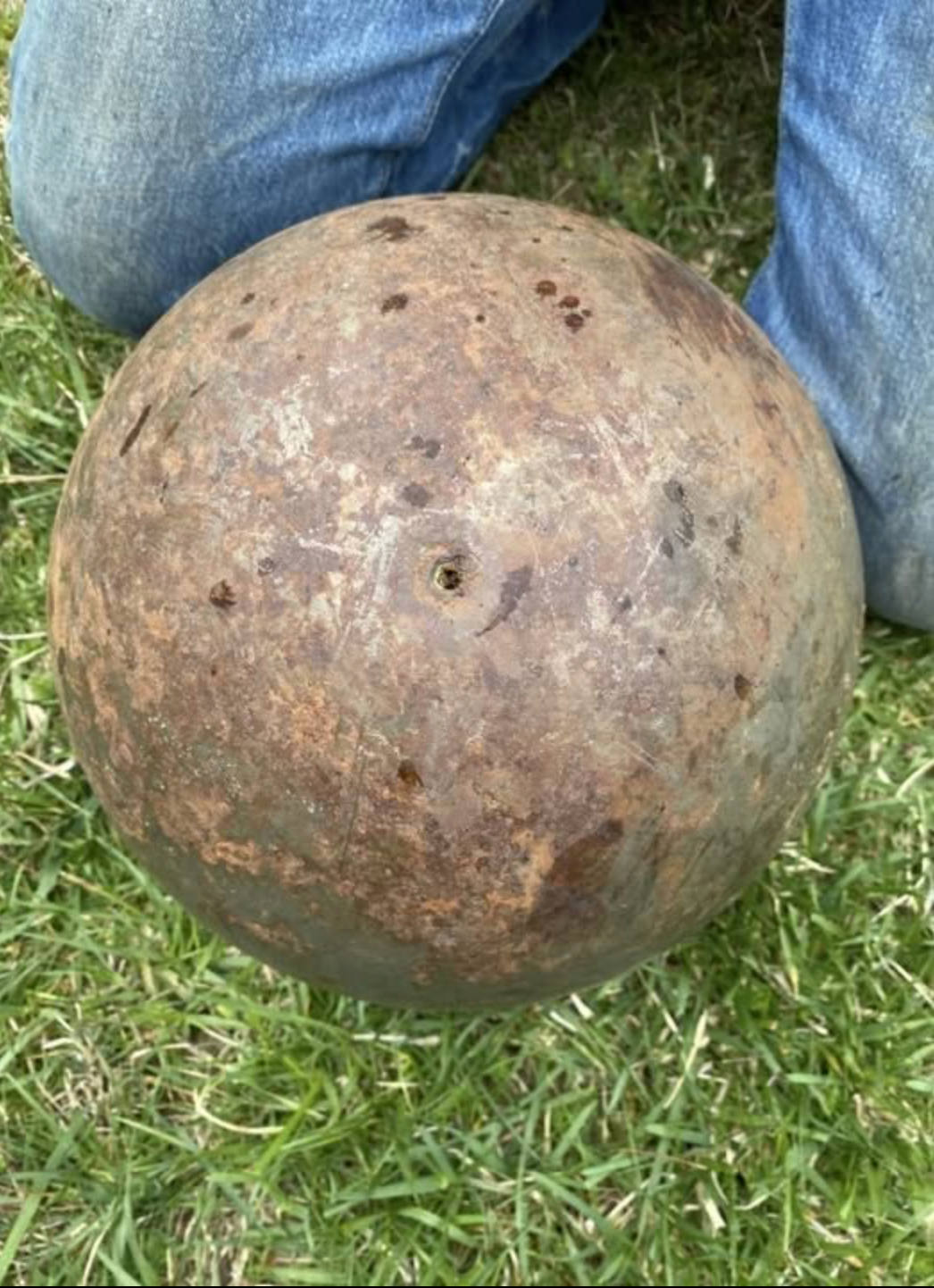
At first glance, it looked like something straight out of a mystery novel. Hidden beneath layers of mud and sediment in a quiet creek lay a gigantic steel sphere—dark, weathered, and seemingly out of place. For those who stumbled upon it, the object raised immediate questions. Was it a relic from a forgotten war? Part of an abandoned machine? A piece of industrial equipment lost decades ago? Or perhaps something even more unusual?
As photographs circulated and curiosity grew, speculation spread quickly. Yet the truth behind the mysterious sphere turned out to be far more fascinating than many imagined. Rather than being an unexplained artifact, it was likely a surviving component from one of the most important machines of the Industrial Age: a ball mill.
Though rarely seen outside mining operations and industrial facilities, these enormous steel balls once played a critical role in shaping the modern world. They helped process the raw materials needed to build cities, manufacture machinery, generate electricity, and fuel industrial growth across entire nations.
What appeared to be a strange object abandoned in a creek was actually a silent witness to a remarkable chapter in technological history.
A Discovery That Sparked Curiosity
Finding a perfectly round steel sphere in nature feels unusual because nature rarely creates objects with such precision.
Unlike rocks, which are shaped by erosion and geological forces, industrial steel balls are manufactured to exact specifications. Their smooth curves, massive weight, and unmistakable metallic appearance immediately suggest human engineering.
When such an object is discovered in an unexpected location, people naturally begin asking questions.
Common first reactions include:
- What is it?
- How old is it?
- Why is it here?
- Who put it there?
- How heavy is it?
- Could it be valuable?
The mystery deepens when there are no obvious signs of nearby industrial activity.
Yet industrial relics often travel far from their original locations through flooding, transportation accidents, demolition projects, or decades of environmental change.
What Is a Ball Mill?
To understand the sphere’s purpose, we must first understand the machine it likely came from.
A ball mill is a large industrial device used to grind materials into fine powders.
The concept is surprisingly simple.
A large rotating drum is partially filled with heavy steel balls. As the drum turns, the balls are lifted and then fall back down repeatedly.
This creates tremendous crushing and grinding force.
Materials placed inside the mill become trapped between the steel balls and are gradually broken down into smaller and smaller particles.
The process may sound straightforward, but it revolutionized industrial production.
Why Grinding Materials Matters
Many industries depend on finely processed materials.
Before raw materials can be used effectively, they often need to be reduced in size.
Examples include:
- mining ores
- cement production
- ceramics manufacturing
- chemical processing
- paint production
- glass manufacturing
- power generation
The finer the material, the easier it becomes to process, transport, or incorporate into finished products.
Ball mills made this possible on an industrial scale.
The Industrial Revolution’s Hidden Giants
When people think about the Industrial Revolution, they often imagine:
- steam engines
- locomotives
- factories
- smokestacks
However, behind these visible symbols were countless machines performing essential tasks.
Ball mills were among the unsung heroes.
Without them, industries would have struggled to process the enormous quantities of raw material needed to support rapid industrial expansion.
These machines transformed:
- rock into mineral concentrates
- limestone into cement ingredients
- coal into fine particles
- ores into usable resources
Their contribution was enormous, even if they remained largely unseen by the public.
The Role of Steel Grinding Balls
The steel sphere discovered in the creek was likely one of these grinding media balls.
Inside a ball mill, dozens—or even hundreds—of such balls work together.
Their purpose is simple but demanding:
- crush
- grind
- pulverize
Every rotation of the mill creates countless impacts.
The balls collide with:
- each other
- the mill walls
- the material being processed
These impacts gradually reduce solid materials into fine particles.
Why They Were Made So Heavy
Weight is essential to the grinding process.
The heavier the ball, the greater the force generated during impact.
Industrial grinding balls are typically made from:
- forged steel
- cast steel
- hardened alloys
These materials provide:
- durability
- impact resistance
- long service life
Some grinding balls weigh several kilograms, while larger versions can weigh hundreds of pounds.
The massive sphere found in a creek may have once been part of a mill processing thousands of tons of material every day.
A Life of Constant Impact
The working conditions inside a ball mill are extreme.
Grinding balls endure:
- continuous collisions
- abrasion
- friction
- intense mechanical stress
Over time, they gradually wear down.
A new steel ball begins as a perfect sphere.
After years of service, it becomes:
- smaller
- rougher
- less efficient
Eventually, worn balls are removed and replaced.
Many discarded balls entered scrap yards, industrial waste sites, or abandoned facilities.
Some found their way into rivers and creeks through floods, transportation mishaps, or changing landscapes.
How Did It End Up in a Creek?
One of the biggest mysteries surrounding these discoveries is location.
How does a giant industrial steel ball end up in a quiet creek?
Several explanations are possible.
Flooding
Heavy floods can move surprisingly large objects.
Over decades, floodwaters may transport industrial debris far from its original source.
Abandoned Industrial Sites
Many old mills, mines, and factories were eventually abandoned.
Equipment was often left behind.
As buildings deteriorated, machinery parts became scattered.
Scrap Disposal
In earlier eras, environmental regulations were often less strict.
Industrial waste was sometimes dumped near waterways.
Transportation Accidents
Heavy machinery components occasionally fell from trains, trucks, or barges during transport.
A steel ball lost many decades ago could remain hidden until erosion exposes it.
The Engineering Behind the Sphere
What makes these objects particularly fascinating is their simplicity.
A steel grinding ball contains:
- no electronics
- no moving parts
- no complex mechanisms
Yet it performs a highly specialized task.
Its effectiveness comes entirely from:
- mass
- shape
- material strength
This is engineering at its most fundamental level.
Sometimes the simplest designs are the most durable.
Symbols of Human Ingenuity
The steel sphere represents more than a machine component.
It symbolizes an era when engineers and inventors solved enormous challenges through mechanical innovation.
Ball mills allowed industries to process materials at scales previously unimaginable.
Their success helped support:
- railroads
- construction projects
- manufacturing plants
- mining operations
- infrastructure expansion
Each grinding ball contributed to these achievements.
The Hidden Story Behind Industrial Relics
Objects like this often inspire imagination because they connect us directly to history.
Unlike photographs or documents, physical artifacts provide tangible evidence of the past.
A rusted steel sphere reminds us that:
- people built these machines
- workers operated them
- industries depended on them
- communities grew around them
Every industrial artifact carries stories of labor, innovation, and technological progress.
Why Discoveries Like This Capture Attention
People are naturally drawn to mysteries.
When a strange object emerges from a creek or field, curiosity takes over.
Questions arise immediately.
The object becomes more than metal.
It becomes a puzzle.
Even after the explanation is known, fascination often remains because the object connects everyday people to larger historical narratives.
Industrial Archaeology: Preserving Forgotten History
The study of industrial artifacts is sometimes called industrial archaeology.
Researchers examine:
- machinery
- tools
- factory remains
- mining equipment
- transportation infrastructure
These objects reveal how previous generations worked, produced goods, and transformed natural resources.
A single steel grinding ball can provide valuable clues about:
- local industry
- economic history
- technological development
- regional growth
Lessons from a Steel Sphere
At first glance, the massive object discovered in the creek may appear insignificant.
It is just a ball of steel.
Yet its history tells a much larger story.
It represents:
- engineering innovation
- industrial growth
- human problem-solving
- economic transformation
The sphere once participated in processes that helped build the modern world.

Welcome to my kitchen!
I’m a passionate home cook and recipe creator who loves turning simple ingredients into delicious, comforting meals that everyone can enjoy. Through this website, I share carefully prepared recipes, practical cooking tips, and easy-to-understand food education to help you feel more confident in the kitchen.
My goal is to make cooking simple, enjoyable, and accessible. Whether you are looking for a quick family dinner, a delicious dessert, healthy meal ideas, or traditional recipes with a modern touch, you’ll find inspiration here.
More Than Just Recipes
I believe that cooking is also a way to learn. That’s why this website is not only about recipes. I also create educational articles about ingredients, cooking techniques, kitchen tips, food preparation, and the stories behind different dishes.
Each article is designed to give you useful knowledge that you can apply in your own kitchen. From understanding how ingredients work together to learning better cooking methods, my aim is to help you become a more confident and creative cook.
My Philosophy
Good food doesn’t always require complicated ingredients or professional equipment. With a little knowledge, patience, and creativity, simple ingredients can become something truly special.
I believe in sharing recipes that are practical, clearly explained, and enjoyable to make. I also love exploring new flavors while appreciating traditional cooking and the recipes passed down through generations.
Thank you for visiting my kitchen and being part of this food-loving community. I hope my recipes and articles inspire you to cook, learn, experiment, and most importantly, enjoy every bite!
Happy cooking!