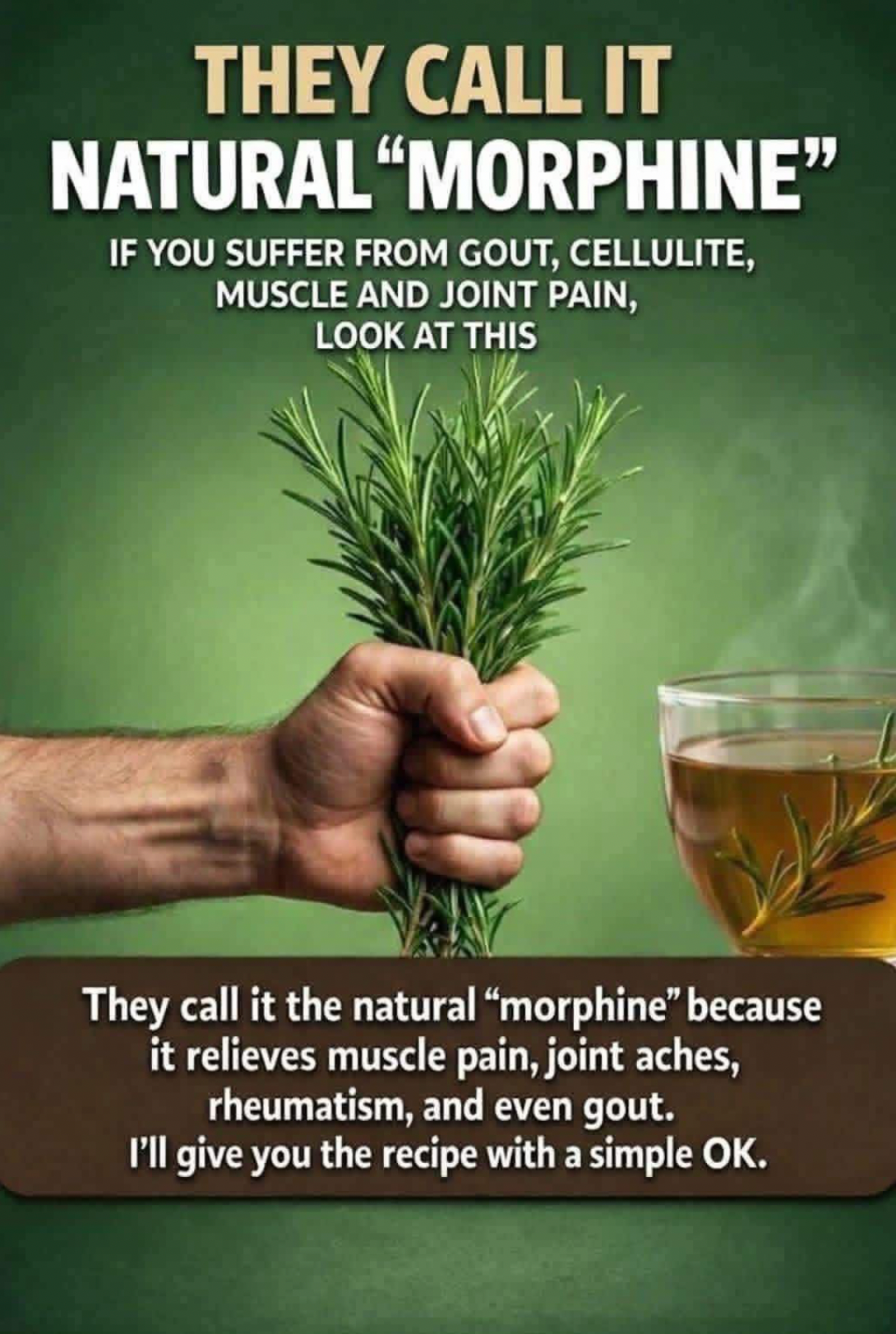
The phrase “natural morphine” has a powerful pull. It suggests that somewhere in nature there exists a simple, plant-based alternative capable of delivering the same relief as strong pharmaceutical painkillers—without the risks, side effects, or dependency concerns. For anyone dealing with persistent pain—whether from sore muscles, joint inflammation, or conditions like gout—that idea can feel especially hopeful.
But when we look closely at the science, the reality is more nuanced. Some herbs do have real, measurable effects on pain and inflammation. However, equating them to something like morphine is often an exaggeration.
Let’s break this down clearly and honestly.
What Is Morphine, and Why the Comparison Matters
Morphine is a powerful prescription medication derived from the opium poppy. It works by acting directly on the nervous system, binding to specific receptors in the brain and spinal cord to block pain signals.
Because of how it works, morphine:
- Provides strong and fast pain relief
- Is used for severe pain (surgery, injuries, cancer)
- Carries risks such as dependency and side effects
When people say “natural morphine,” they are implying something that works just as strongly and directly—and that is where the misunderstanding begins.
Do Any Herbs Work Like Morphine?
Short answer: No herb works exactly like morphine.
Herbs generally do not:
- Bind to opioid receptors in the same way
- Provide the same intensity of pain relief
- Act as quickly or as powerfully
However, this does not mean they are useless. It simply means their role is different.
What Herbs Can Actually Do
Many herbs can support pain relief through indirect but meaningful mechanisms:
- Reducing inflammation
- Relaxing muscles
- Improving circulation
- Supporting the body’s natural healing processes
These effects are often gentler and slower, but still valuable—especially for mild to moderate pain or long-term support.
Common Herbs Often Called “Natural Painkillers”
Let’s look at some of the most talked-about options and what they really do.
1. Turmeric – Anti-Inflammatory Support
turmeric is widely known for its active compound, curcumin.
It may help:
- Reduce inflammation
- Support joint health
- Ease mild pain over time
However, it does not provide immediate relief like strong medication. Its benefits come from consistent use.
2. Ginger – Gentle Pain and Nausea Relief
ginger has anti-inflammatory and antioxidant properties.
It may:
- Help with muscle soreness
- Reduce mild joint pain
- Support digestion
Again, its effect is supportive, not comparable to opioids.
3. Clove – Local Numbing Effect
clove contains eugenol, which has mild numbing properties.
It can:
- Provide temporary relief for tooth discomfort
- Offer localized soothing effects
But it is not suitable for systemic pain relief.
4. Willow Bark – A Natural Source Related to Aspirin
willow bark contains salicin, which the body converts into a compound similar to aspirin.
It may:
- Help reduce mild to moderate pain
- Lower inflammation
Even so, its effect is much milder and slower than pharmaceutical painkillers.
Why the “Natural Morphine” Claim Spreads
There are a few reasons this idea becomes popular:
- People want safer alternatives to strong medications
- Natural remedies feel more accessible and less intimidating
- Online content often exaggerates benefits to attract attention
But oversimplifying the comparison can lead to unrealistic expectations.
When Herbs Can Be Helpful
Herbs can be genuinely useful in situations like:
- Mild muscle soreness after activity
- Early stages of inflammation
- Long-term joint support
- Digestive discomfort
- General wellness routines
They work best as part of a broader approach, not as a direct replacement for medical treatment.
When Herbs Are Not Enough
There are situations where herbal remedies are not appropriate on their own:
- Severe or acute pain
- Post-surgical recovery
- Serious injuries
- Chronic conditions requiring medical supervision
In these cases, relying only on herbs may delay proper treatment.
Risks and Misconceptions
Even natural remedies come with considerations:
- Some herbs interact with medications
- High doses can cause side effects
- Not all “natural” products are safe for everyone
- Quality and concentration vary widely
“Natural” does not automatically mean risk-free.
A Balanced Perspective
Instead of asking, “What herb replaces morphine?” a better question is:
“How can natural remedies support pain management safely and realistically?”
The answer usually involves:
- Combining lifestyle habits (rest, movement, diet)
- Using mild natural supports where appropriate
- Seeking medical care when needed

Welcome to my kitchen!
I’m a passionate home cook and recipe creator who loves turning simple ingredients into delicious, comforting meals that everyone can enjoy. Through this website, I share carefully prepared recipes, practical cooking tips, and easy-to-understand food education to help you feel more confident in the kitchen.
My goal is to make cooking simple, enjoyable, and accessible. Whether you are looking for a quick family dinner, a delicious dessert, healthy meal ideas, or traditional recipes with a modern touch, you’ll find inspiration here.
More Than Just Recipes
I believe that cooking is also a way to learn. That’s why this website is not only about recipes. I also create educational articles about ingredients, cooking techniques, kitchen tips, food preparation, and the stories behind different dishes.
Each article is designed to give you useful knowledge that you can apply in your own kitchen. From understanding how ingredients work together to learning better cooking methods, my aim is to help you become a more confident and creative cook.
My Philosophy
Good food doesn’t always require complicated ingredients or professional equipment. With a little knowledge, patience, and creativity, simple ingredients can become something truly special.
I believe in sharing recipes that are practical, clearly explained, and enjoyable to make. I also love exploring new flavors while appreciating traditional cooking and the recipes passed down through generations.
Thank you for visiting my kitchen and being part of this food-loving community. I hope my recipes and articles inspire you to cook, learn, experiment, and most importantly, enjoy every bite!
Happy cooking!